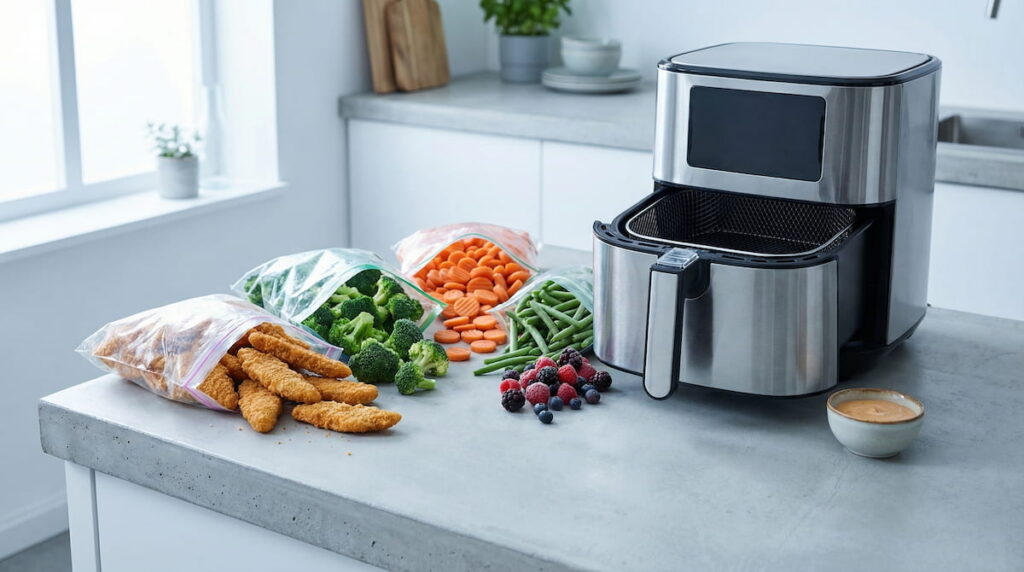
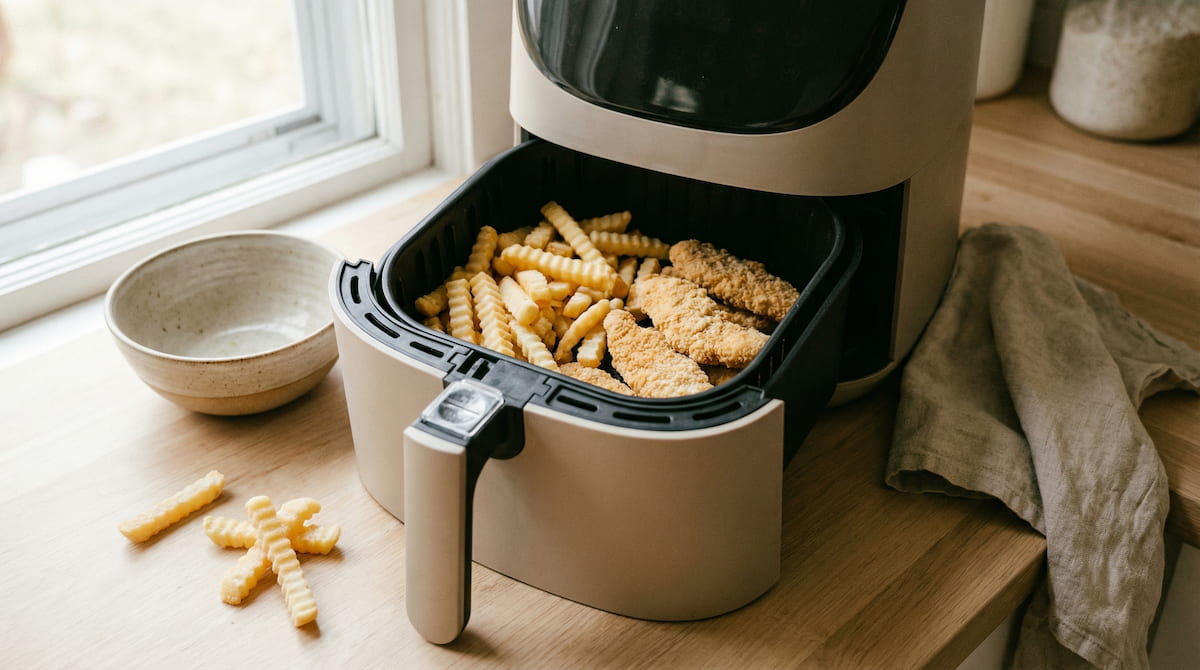
Is it safe to cook frozen food in an air fryer? That was basically the whole reason I bought one. Frozen fries, frozen chicken strips, frozen dumplings — fast, crispy, no oil. Perfect for busy evenings after a long shift driving.
But after spending time researching what’s actually inside air fryer coatings and how heating affects basket materials, I started wondering whether frozen food specifically made any of those concerns worse. Turns out, there’s more to it than I expected — and one specific safety issue most articles skip over entirely.
Why Frozen Food Actually Works Well in an Air Fryer
Air fryers work by circulating hot air at high speed around food. For frozen items, this is ideal. The rapid airflow pulls moisture away from the surface while the heat cooks through from the outside in — which is why you get that crispy exterior without needing to thaw first.
Compared to a conventional oven, air fryers reach cooking temperature faster and circulate heat more evenly. For something like frozen chicken tenders, that means less time in the temperature range where the outside is warm but the inside is still cold — a genuine food safety advantage.
The One Real Safety Concern: Internal Temperature
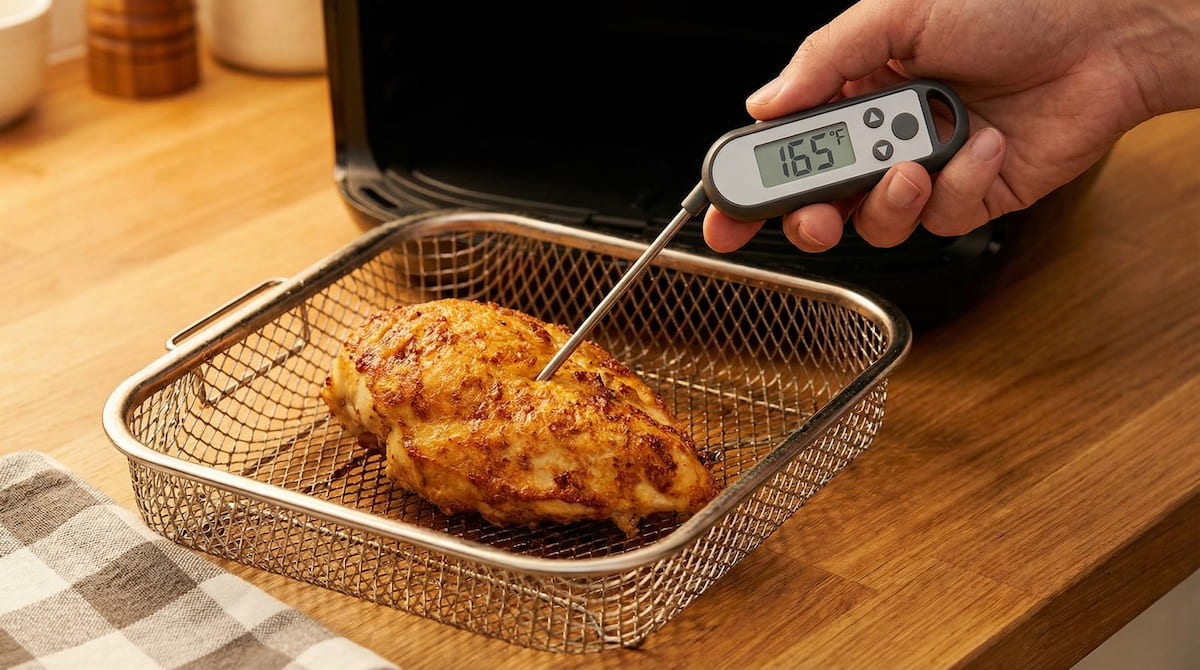
A meat thermometer is the only reliable way to confirm frozen meat is safely cooked — exterior browning tells you nothing about internal temperature.
This is what most articles skip over, and it’s the most important part. Frozen food — especially poultry and meat — needs to reach a safe internal temperature regardless of how it looks on the outside. An air fryer can brown the exterior of a frozen chicken breast beautifully while the center is still at 50°F. You’d never know by looking at it.
According to the USDA Food Safety guidelines, chicken must reach 165°F internally. Ground beef needs 160°F, and pork 145°F. These numbers don’t change because you’re using an air fryer.
I started keeping a meat thermometer next to my air fryer after realizing I’d been trusting the “recommended time” on frozen food packaging — which is calibrated for conventional ovens, not air fryers. Air fryers often cook faster, so you can hit a safe internal temperature in less time than the box suggests. But you can also undercook if you’re not checking.
What Most People Get Wrong About Frozen Food in Air Fryers
The most common mistake is trusting package cooking times. Frozen food packaging times are calibrated for conventional ovens — not air fryers. Air fryers typically cook 20–30% faster than oven instructions suggest. This means following the package time exactly can result in either overcooked food or, if you pull it early, undercooked meat.
The second mistake is overcrowding the basket. Frozen food releases steam as it thaws during cooking — and that steam needs somewhere to go. Stack pieces on top of each other and the bottom layer steams instead of crisps. Worse, steam trapped in an overcrowded basket slows the temperature rise in the food, extending time in the bacterial danger zone rather than reducing it.
The third mistake is assuming the coating concern doesn’t apply to frozen food cooking. A lot of frozen foods come pre-coated in oil or seasoning that splatters when it hits a hot basket at 400°F. Over time, that residue builds up on the coating and the heating element. On a PTFE-coated basket, that burnt residue accelerates coating degradation. On a ceramic basket, it’s an easier cleanup with less chemical concern — which is one reason our family switched to the Ninja AF150AMZ for daily frozen food cooking.
Frozen Food Air Fryer Safety Checklist
✅ Safe every time:
- Single layer in the basket — never stack frozen items
- Meat thermometer used for any frozen poultry or meat
- Basket cleaned after every use — oil and seasoning residue removed
- Window open or range hood running during cooking
- PTFE-free ceramic or stainless basket used
⚠️ Use caution with:
- Dense frozen items thicker than 1.5 inches — check temperature at multiple points
- Pre-marinated or heavily sauced frozen foods — more splatter, more residue buildup
- Package cooking times — always treat these as a starting point, not a guarantee
❌ Avoid:
- Cooking large, very dense frozen items like whole stuffed chickens — conventional oven is safer for these
- Walking away without checking internal temperature for any frozen meat
- Using a scratched or degrading PTFE basket — oil splatter from frozen food accelerates coating breakdown
Air Fryer vs Oven for Frozen Food
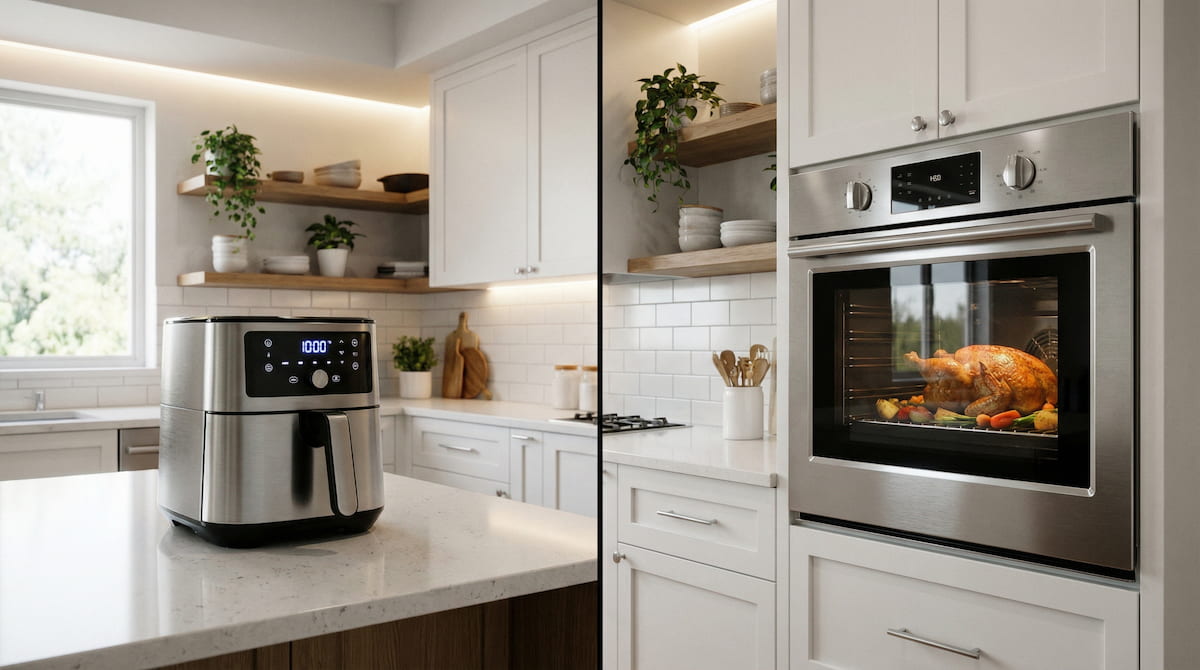
For most frozen foods, the air fryer’s faster preheat and rapid heat circulation gives it a genuine food safety advantage over a conventional oven.
For most frozen foods, the air fryer wins — and not just for speed. A conventional oven takes 10–15 minutes just to preheat. During that time, frozen food sitting on a tray is slowly warming on the outside while the inside stays cold — extended time in the USDA’s bacterial danger zone between 40°F and 140°F.
An air fryer preheats in under 3 minutes and starts cooking immediately. For thin frozen items like fries, fish fillets, or chicken strips, the faster transition through that danger zone is a genuine safety advantage.
The one area where an oven still has an edge: large, dense frozen items like a whole stuffed chicken or a thick frozen casserole. The air fryer’s basket size limits how evenly heat can penetrate something very thick. For those, a conventional oven with a thermometer is the safer call.
Does Cooking Frozen Food Affect Your Air Fryer’s Coating?
Frozen food itself doesn’t damage the coating any more than fresh food does. The concern isn’t the food — it’s what comes with it. A lot of frozen foods come pre-coated in oil or seasoning. When that hits a hot basket at 400°F, it splatters. Over time, that residue builds up on the coating and the heating element.
On a PTFE-coated basket, this residue buildup accelerates the coating breakdown that’s already a concern with older or scratched baskets. On a ceramic basket, the same residue is easier to clean and carries less chemical concern as it burns off. Our guide on air fryer burnt plastic smell explains exactly what that residue buildup produces and when it becomes a safety issue.
The fix is simple: clean the basket after every use, especially after anything with a heavy oil or sauce coating. For basket material guidance, see our Ninja ceramic basket safety guide.
Practical Tips for Safe Frozen Food Cooking
- Don’t overcrowd the basket — frozen food needs airflow to cook evenly. Single layer, always
- Add 2–3 minutes to your first cook — until you know how your specific air fryer handles frozen food, give yourself a buffer and check early
- Use a thermometer for anything with meat — a basic instant-read thermometer costs about $10 and removes all the guesswork
- Pat down excess ice crystals — if there’s a thick layer of frost, shake or pat it off before cooking. Excess ice creates steam that makes the exterior soggy
- Flip halfway through — most air fryers don’t circulate heat perfectly evenly. Flipping at the halfway point makes a noticeable difference for anything thicker than a fry
- Clean after every session — oil splatter from frozen food is the most common source of residue buildup on any basket coating
Which Air Fryer Is Best for Frozen Food?
After trying a few different models, our family uses the Ninja AF150AMZ for everyday frozen food cooking. The ceramic-coated basket handles oil splatter from frozen food better than our old PTFE-coated fryer did — and cleanup is genuinely faster with no coating degradation concern. For bigger batches like frozen chicken for four people, the Instant Pot Omni Plus 18L is worth the investment — the oven-style layout means no cramming everything into a single basket.
See Ninja AF150AMZ on Amazon → See Instant Pot Omni Plus on Amazon →Frequently Asked Questions
Is it safe to put frozen food directly in an air fryer?
Yes — you don’t need to thaw frozen food before air frying. The rapid heat circulation cooks from frozen safely for most items. The one condition: use a meat thermometer to confirm safe internal temperature for any frozen poultry or meat, since exterior browning doesn’t indicate doneness.
Can you get food poisoning from air frying frozen food?
Yes — if frozen meat doesn’t reach a safe internal temperature. This is the same risk as any cooking method. Chicken needs 165°F internally, ground beef 160°F, pork 145°F. The air fryer’s faster cooking means you can hit these temperatures in less time than package instructions suggest — but always verify with a thermometer rather than trusting time alone.
Does frozen food damage air fryer coating?
Frozen food itself doesn’t damage coating — but the oil and seasoning on many frozen products creates splatter that builds up on the basket surface over time. This residue is more of a concern on PTFE-coated baskets, where it can accelerate coating degradation. Cleaning after every use is the straightforward fix regardless of basket type.
Why does my air fryer smell when I cook frozen food?
The smell usually comes from oil and seasoning burning off the basket surface — not from the food itself. If the smell is smoky but food-like, cleaning the basket resolves it. If the smell is chemical or plastic-like, that points to coating degradation, not the frozen food. Our guide on air fryer burnt plastic smell explains the difference.
How long does frozen food take in an air fryer vs oven?
Air fryers typically cook frozen food 20–30% faster than conventional oven instructions. Use package times as a starting point, then check 3–5 minutes early on your first cook. For meat, internal temperature is the only reliable measure — time is a guideline, not a guarantee.
Is cooking frozen food in air fryer healthier than deep frying?
Yes — significantly. Air frying frozen food uses little to no added oil compared to deep frying, which dramatically reduces overall fat content. Combined with a PTFE-free ceramic basket, air frying is one of the healthiest methods for cooking frozen food available in a home kitchen.
The Bottom Line on Frozen Food in Air Fryers
Cooking frozen food in an air fryer is safe — and for most frozen items, it’s the fastest and most food-safe method available compared to conventional ovens. The one non-negotiable: use a meat thermometer for any frozen poultry or meat. Keep the basket clean after every session, choose a PTFE-free model if coating chemistry is a concern, and don’t overcrowd the basket.
For a full comparison of the safest air fryer models for everyday family cooking, our PFAS-free air fryer guide covers ceramic, stainless, and glass options at every price point.