Glass air fryer non toxic — is that claim actually accurate?
As concerns about PFAS, PTFE, and non-stick coatings grow, many buyers are turning to glass bowl air fryers believing they are the safest option available.
But does glass automatically mean 100% non-toxic?
In this guide, we’ll break down:
• Whether glass air fryers contain PFAS
• Hidden materials you should check
• How glass compares to ceramic and stainless steel
• The safest options available in 2026
Are Glass Air Fryers Truly Non-Toxic?
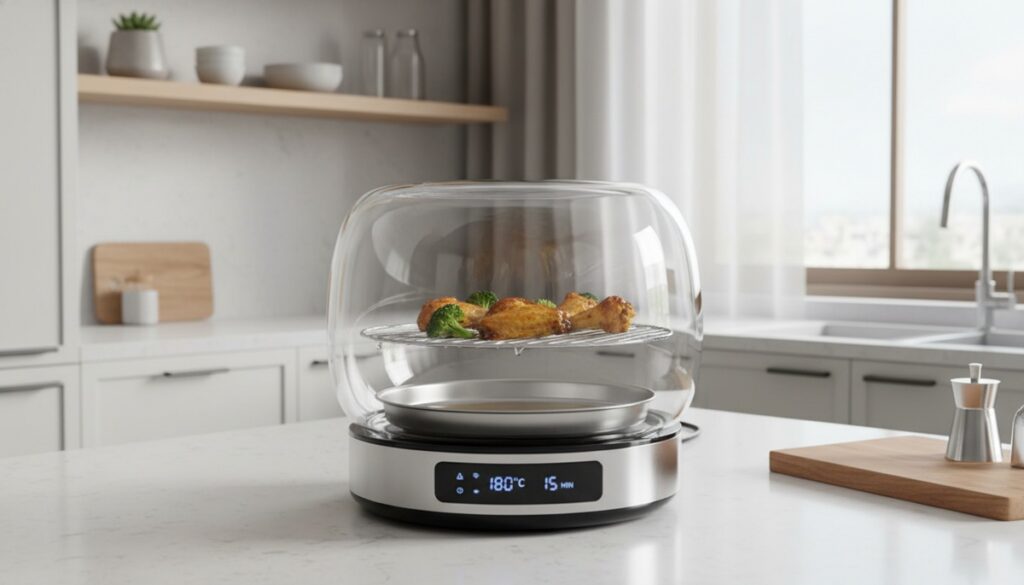
Most glass bowl air fryers use:
• A tempered glass cooking chamber
• A metal heating element above the bowl
• Minimal interior coating
Unlike traditional basket air fryers, glass bowl models do not rely on PTFE-based non-stick coatings inside the cooking chamber.
From a surface-contact perspective, glass is chemically stable and does not release PFAS.
However, “non-toxic” depends on more than just the bowl.
Do Glass Air Fryers Contain PFAS or PTFE?
In most glass bowl designs:
• The cooking surface is glass
• No interior basket coating exists
• Food does not contact synthetic non-stick layers
This makes glass air fryers appealing to buyers trying to avoid:
• PTFE
• PFOA
• PFAS-related coatings
That said, always verify:
• Rack materials
• Tray coatings
• Accessory components
If you want a direct material comparison:
Advantages of Glass Bowl Air Fryers
1️⃣ No Interior Coating
There is no coating layer to peel, chip, or degrade over time.
2️⃣ High Heat Stability
Tempered glass handles high cooking temperatures without chemical breakdown.
3️⃣ Visible Cooking
You can see food cooking, reducing overheating risk.
Limitations of Glass Models
While glass air fryer non toxic claims are generally accurate, there are trade-offs:
• Larger countertop footprint
• Bulkier design
• Heavier structure
• Accessories may still use metal or coating
Glass eliminates coating concerns — but not every component is glass.
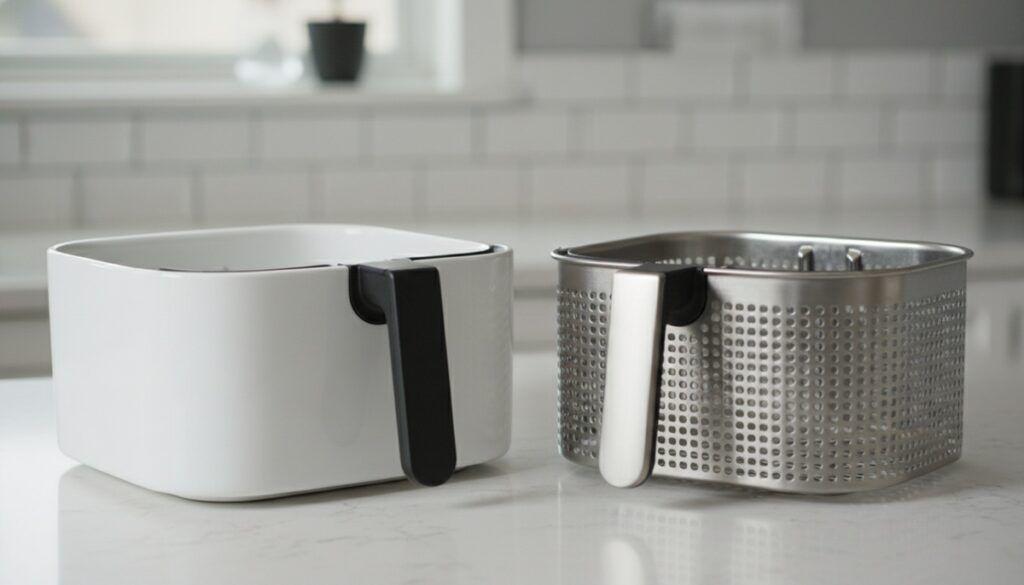
Glass vs Stainless vs Ceramic
Glass
Pros:
• No interior coating
• PFAS-free surface
• Chemically stable
Cons:
• Bulky
• Limited compact options
Stainless Steel
Pros:
• No synthetic coating
• Long-term durability
• High heat resistance
Cons:
• Food sticking possible
Ceramic
Pros:
• Smooth surface
• Easier cleaning
Cons:
• Coating may wear over time
Each material offers a different balance of durability and convenience.
Recommended Non-Toxic Air Fryer Options
1️⃣ Big Boss 16Qt (Glass Bowl)
• Full glass cooking chamber
• No interior coating
• High heat tolerance
2️⃣ Ninja AF150AMZ (Ceramic Alternative)
• Ceramic-coated
• Compact family size
3️⃣ Instant Pot Omni Plus 18L (Stainless Interior)
• Stainless steel interior
• Large 18L capacity
• No traditional non-stick basket coating
For a complete 2026 comparison guide:
Is Glass Air Fryer Non Toxic the Safest Choice?
From a surface-contact standpoint, glass is one of the most chemically stable cooking materials available.
However:
True safety also depends on:
• Proper ventilation
• Avoiding overheating
• Overall build quality
If eliminating coating-related uncertainty is your top priority, glass air fryers remain one of the most straightforward non-toxic options in 2026.