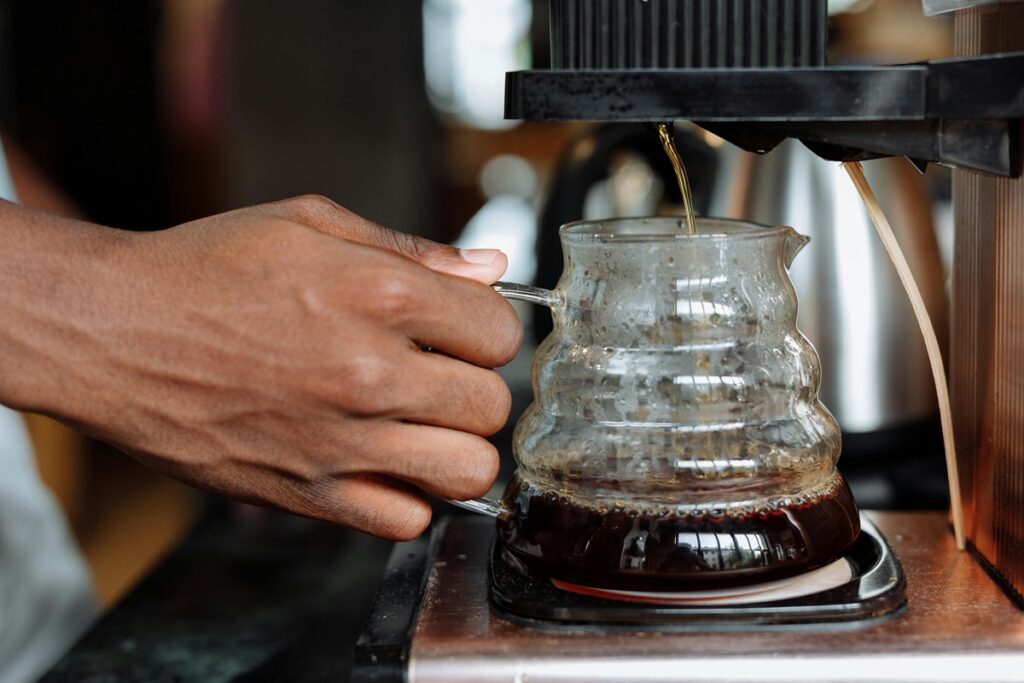
The best plastic free drip coffee makers focus on minimizing hot water contact with plastic components during brewing.
This guide focuses on plastic-free and low-plastic drip coffee makers, with an emphasis on internal components that come into contact with hot water during brewing.
Why Drip Coffee Makers Deserve Extra Attention
Drip machines operate under conditions that increase material exposure:
- Hot water passing repeatedly through internal tubing
- Long contact time between water and internal surfaces
- Daily or near-daily use
Even small material differences can matter when exposure is repeated over years.
What “Plastic-Free” Really Means in Drip Coffee Makers
Very few drip coffee makers are completely plastic-free.
In practice, safer designs share these traits:
- Stainless steel heating elements or boilers
- Minimal plastic in the hot-water path
- No non-stick or chemical coatings
- Simple internal layouts with fewer hidden parts
“Plastic-free” should be understood as plastic-minimized where heat and water interact, not marketing language.
Safer Drip Coffee Maker Designs to Look For
Stainless Steel–Focused Heating Systems
Drip machines with stainless steel heaters reduce reliance on coated metals or plastic-lined components.
These designs tend to be more durable and easier to evaluate over time.
Glass Carafes with Minimal Internal Tubing
Glass carafes avoid non-stick coatings and help keep the brew path transparent.
Paired with stainless steel heaters, they form some of the lowest-risk drip setups available.
Designs That Often Involve More Plastic
Some drip coffee makers prioritize convenience over material transparency:
- Ultra-compact or travel-sized machines
- Models with complex water routing systems
- Designs emphasizing programmability over simplicity
These machines are not automatically unsafe, but they usually involve more plastic exposure in hot zones.
How Plastic-Free Drip Makers Compare to Other Coffee Types
- Drip coffee makers offer the simplest brew path and lowest pressure
- Espresso machines introduce pressure but can still be safe with stainless steel boilers
- Pod machines trade convenience for increased plastic contact
For most households, a well-built drip machine with stainless steel components remains the most straightforward daily option.
How This Guide Fits Into a Non-Toxic Kitchen
Choosing a drip coffee maker follows the same logic as selecting cookware or appliances:
simpler designs, durable materials, and fewer coatings generally reduce long-term exposure.
Looking for a Complete Comparison?
Looking for a complete overview?
See our full guide to non-toxic coffee machines.
Final Thoughts
Plastic-free drip coffee makers are less about perfection and more about reduction.
By focusing on stainless steel heating elements and simple internal designs, it’s possible to significantly reduce plastic exposure without changing how you brew coffee every day.
This guide highlights what to look for, not just what to buy.
Looking for a complete safety comparison beyond drip models?
Leave a Reply