If you’re researching safer kitchen appliances, you may have asked yourself an important question: are glass air fryers better than plastic ones?
As air fryers have become one of the most popular kitchen appliances in the United States, many health-conscious buyers are paying closer attention to the materials used inside these machines. Traditional air fryers often include plastic components and non-stick coatings, which has raised concerns about potential chemical exposure at high temperatures.
Glass air fryers, on the other hand, are often marketed as a cleaner and more transparent alternative. Because glass is an inert material, it does not release odors, coatings, or chemical residues during cooking.
So the real question is simple: are glass air fryers actually safer than plastic ones?
In this guide, we’ll compare glass air fryers and plastic air fryers in terms of safety, materials, durability, and long-term kitchen use.
Why Some Buyers Worry About Plastic Air Fryers
Many traditional air fryers use plastic housing and baskets coated with non-stick materials. While these coatings make cleaning easier, they can raise concerns when exposed to high cooking temperatures.
Some buyers worry about:
• PFAS chemicals sometimes associated with non-stick coatings
• PTFE coatings breaking down over time
• Plastic odors when appliances heat up
• Long-term exposure to heated synthetic materials
Because of these concerns, many households now look for PFAS-free air fryers or appliances with safer cooking surfaces.
If you’re exploring safer options, materials matter more than brand names.
What Makes Glass Air Fryers Different
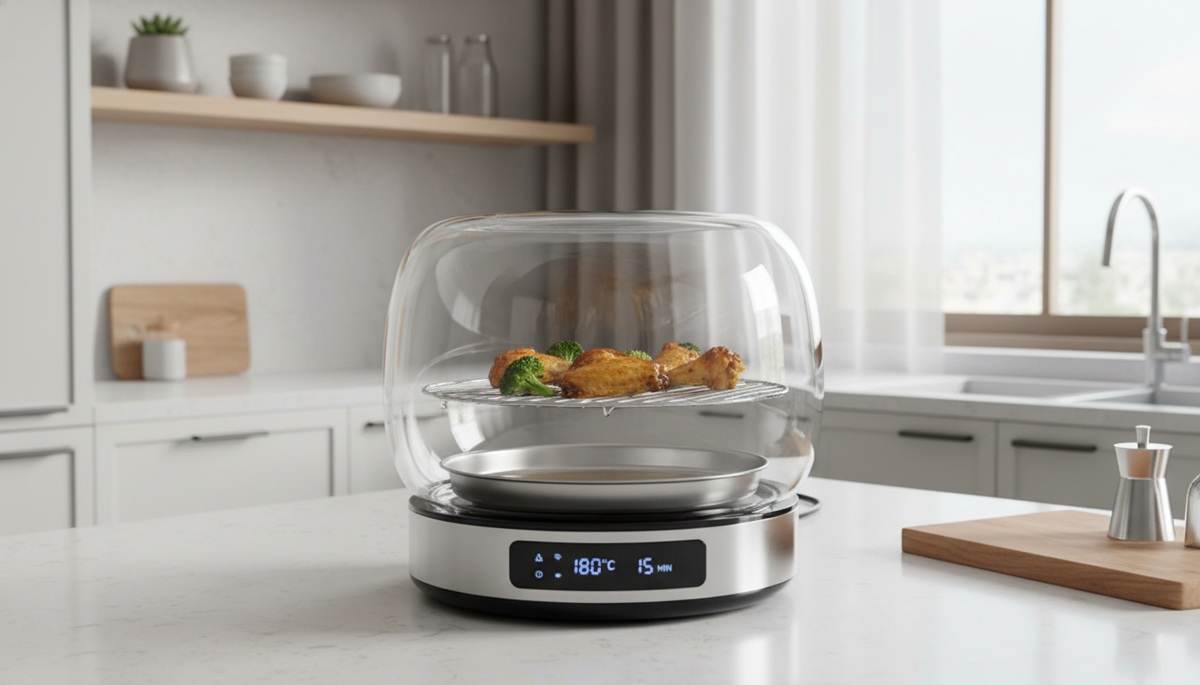
Glass air fryers use a transparent glass bowl as the primary cooking chamber instead of a coated metal basket.
Glass is considered an inert material, meaning it does not react with food, release fumes, or degrade under normal cooking temperatures.
Because of this, many buyers prefer glass air fryers for several reasons:
• No non-stick coating involved
• No synthetic materials touching the food
• Fully visible cooking chamber
• Easy to monitor food while cooking
One well-known example is the Big Boss 16Qt Glass Air Fryer, which uses a halogen heating system combined with a large glass bowl.
Are Glass Air Fryers Better Than Plastic Ones for Safety?
So are glass air fryers better than plastic ones when it comes to safety?
In many cases, yes — especially for buyers trying to avoid synthetic coatings.
Glass air fryers offer several safety advantages:
• Glass does not release chemicals during cooking
• No PFAS or PTFE coatings inside the cooking bowl
• Heat stability at high temperatures
However, glass air fryers are not perfect.
Potential downsides include:
• Larger countertop footprint
• Heavier than basket air fryers
• Different cooking style compared to modern basket models
For many families, the decision comes down to material preference rather than cooking performance.
Comparing Glass, Ceramic, and Stainless Steel Air Fryers
Instead of choosing between only glass and plastic, many buyers now consider three safer material categories.
Glass air fryers
Example: Big Boss 16Qt
Ceramic-coated air fryers
Example: Ninja AF150AMZ
Stainless steel interior air fryers
Example: Instant Pot Omni Plus
Each option provides a different approach to reducing exposure to synthetic coatings.
Glass focuses on fully inert materials.
Ceramic focuses on PFAS-free non-stick cooking surfaces.
Stainless steel focuses on durable metal interiors without coatings.
Best Non-Toxic Air Fryer Options to Consider
If you are trying to avoid plastic cooking surfaces, these air fryer types are often recommended.
⭐ Best Overall Ceramic Option
Ninja AF150AMZ
Ceramic-coated baskets can offer a balance between convenience and safety. Models like the Ninja AF150AMZ are marketed as PTFE- and PFOA-free while still providing easy cleaning and reliable performance.
⭐ Best Stainless Steel Interior
Instant Pot Omni Plus 18L
For buyers who prefer metal interiors with no coating at all, the Instant Pot Omni Plus provides a stainless steel cooking chamber and oven-style air frying capacity.
⭐ Best Fully Glass Air Fryer
Big Boss 16Qt Glass Air Fryer
If your priority is completely inert materials, the Big Boss glass air fryer offers a fully transparent cooking bowl with no non-stick coating involved.
Final Verdict: Are Glass Air Fryers Better Than Plastic Ones?
So, are glass air fryers better than plastic ones?
For buyers focused on chemical safety and material transparency, glass air fryers are often considered the safer option. Glass does not contain synthetic coatings and remains stable at high temperatures.
However, ceramic-coated and stainless steel air fryers can also provide safer alternatives compared to traditional non-stick plastic basket models.
The best choice ultimately depends on your priorities:
• Choose glass if you want the most inert cooking surface
• Choose ceramic if you want easier cleaning with PFAS-free coatings
• Choose stainless steel if you prefer durable metal interiors
If you want a complete breakdown of the safest air fryer materials available today, explore our full guide below.
Related Guides
Best PFAS-Free Air Fryers for 2026
Best Stainless Steel Air Fryer
Best Non-Toxic Air Fryer
Ceramic vs Stainless Steel Air Fryer
Leave a Reply