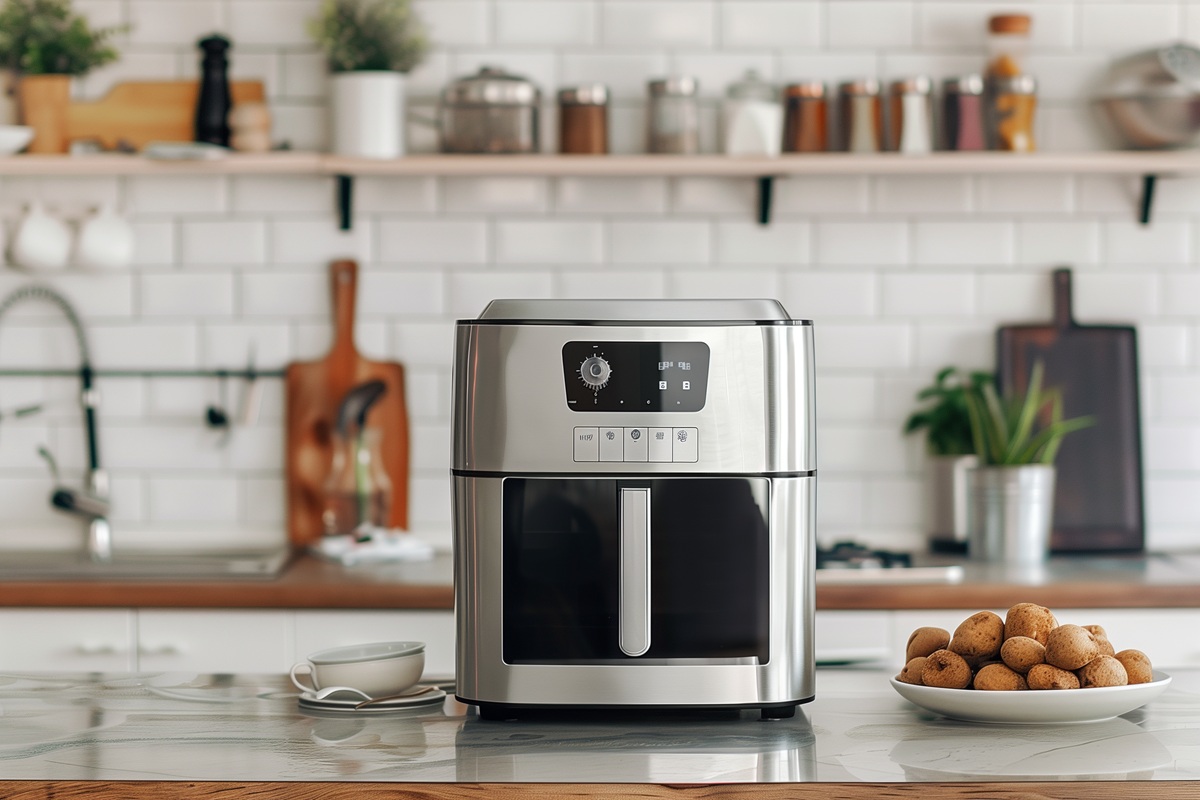
Understanding the safest air fryer materials is important for anyone who wants healthier and PFAS-free cooking.
But as air fryers become more common, many consumers are asking an important question:
The answer usually depends on the materials used inside the air fryer.
Some models use traditional nonstick coatings, which may contain chemicals such as PTFE or PFAS. Because of this, many people now prefer PFAS-free air fryers made with safer materials like ceramic, stainless steel, or glass.
If you want a full overview of PFAS-free options, you can also read our guide to the Best PFAS Free Air Fryer 2026.
In this guide, we’ll explain which materials are safest and which air fryer types are best for a non-toxic kitchen.
Why Air Fryer Materials Matter
The safety of an air fryer largely depends on what the cooking chamber is made of.
Traditional nonstick baskets are designed to prevent food from sticking, but some coatings may contain synthetic chemicals.
While modern coatings are often labeled PFOA-free, many consumers still prefer appliances that avoid chemical coatings entirely.
For a deeper comparison between common air fryer materials, you can read our guide on Ceramic vs Stainless Steel Air Fryer.
Understanding how these materials behave under high heat is essential when choosing a safe air fryer.
Safest Air Fryer Materials
When choosing the safest air fryer, three material types are generally considered the best options.
Ceramic-Coated Air Fryers
Ceramic-coated baskets are often marketed as PTFE-free and PFOA-free.
Advantages
- Easy to clean
- Good nonstick performance
- Widely available
Possible downside
- The coating may wear over time with heavy use.
Ceramic air fryers are often recommended as a safer alternative to traditional nonstick baskets.
Stainless Steel Interior Air Fryers
Stainless steel is one of the most durable and chemically stable cooking materials.
Advantages
- No synthetic coating
- Extremely durable
- Safe at high temperatures
Possible downside
- Food may stick slightly more than with coated baskets.
Stainless steel air fryers are often preferred by people who want maximum material transparency.
Glass Bowl Air Fryers
Glass air fryers use a heat-resistant glass bowl instead of a coated basket.
Advantages
- Completely coating-free
- No PFAS or PTFE materials
- Easy to see food while cooking
Possible downside
- Larger countertop footprint.
Glass air fryers are among the most chemically simple cooking appliances available.
Safest Air Fryer Options
Below are three air fryer models that represent the safest material categories.
Ninja AF150AMZ (Ceramic-Coated Basket)
⭐ Best Ceramic Option
The Ninja AF150AMZ uses a ceramic-coated basket designed to be PTFE- and PFOA-free. It offers strong cooking performance while avoiding traditional nonstick coatings.
Pros
- Ceramic coated basket
- Reliable brand quality
- Easy cleaning
Cons
- Larger footprint than compact models
Instant Pot Omni Plus 18L
⭐ Best Stainless Steel Interior
The Instant Pot Omni Plus functions more like a countertop oven air fryer, with a stainless steel interior cooking chamber.
Pros
- Stainless steel interior
- Multi-function cooking
- Large capacity
Cons
- Requires more counter space
Big Boss 16Qt Glass Air Fryer
⭐ Best Glass Air Fryer
The Big Boss air fryer uses a glass cooking bowl and halogen heating system, meaning there is no nonstick coating involved.
Pros
- Glass cooking chamber
- No PFAS coatings
- Easy visual monitoring
Cons
- Bulkier design than basket models
How to Choose the Safest Air Fryer
When buying a safe air fryer, consider three key factors.
1. Material Transparency
Look for clear labels such as:
- PFAS-free
- PTFE-free
- PFOA-free
These labels indicate safer material choices.
2. Cooking Chamber Construction
Safer materials include
- Ceramic coating
- Stainless steel interior
- Glass cooking bowls
Avoid appliances with unclear nonstick coating descriptions.
3. Cooking Style
Basket air fryers are compact and easy to use.
Oven-style air fryers offer larger cooking capacity.
Glass air fryers focus on coating-free cooking materials.
Final Verdict
The safest air fryer is usually one that avoids traditional nonstick coatings.
The best choices typically include:
- Ceramic coated air fryers
- Stainless steel interior air fryers
- Glass bowl air fryers
Each option provides a different balance between safety, convenience, and durability.
If your goal is building a PFAS-free kitchen, choosing an air fryer made with safer materials is an excellent place to start.
Frequently Asked Questions
What is the safest air fryer material?
The safest air fryer materials are generally ceramic, stainless steel, and glass.
These materials avoid traditional nonstick coatings that may contain PFAS or PTFE chemicals. Stainless steel and glass air fryers are often considered the most chemically stable options for high-temperature cooking.
Are air fryers toxic?
Most modern air fryers are safe when used properly. However, some models use nonstick coatings that may contain PFAS-related chemicals. This is why many people prefer PFAS-free air fryers made with ceramic, stainless steel, or glass materials.
Is stainless steel safer than nonstick air fryers?
Yes. Stainless steel air fryers are generally considered safer than traditional nonstick models because they do not rely on chemical coatings. Stainless steel is widely used in professional kitchens due to its durability and heat stability.
Are glass air fryers safe?
Glass air fryers are considered one of the safest types of air fryers because they do not use synthetic coatings. The cooking chamber is typically made from heat-resistant glass, which eliminates concerns about PFAS or PTFE coatings.
Do ceramic air fryers contain PFAS?
Most ceramic-coated air fryers are marketed as PFAS-free and PTFE-free. Ceramic coatings are often used as a safer alternative to traditional nonstick surfaces, although the coating may wear down over time with heavy use.
Leave a Reply