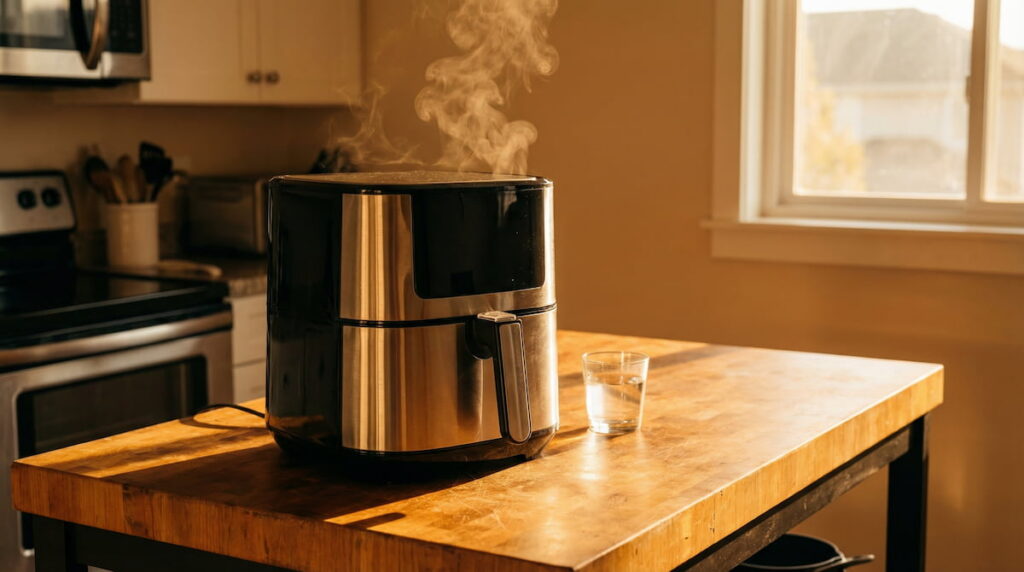
Do air fryers release chemicals when heating up? That was the first thing I searched after noticing a sharp, plastic-like smell coming from my brand-new air fryer the first time I turned it on. My wife walked into the kitchen and immediately asked what that smell was. My sons wanted to know if dinner was going to taste like chemicals.
I didn’t have a good answer. So I went looking for one. Here’s what I actually found after digging into the research — what that smell is, where it comes from, and what it means for everyday cooking safety.
Yes, Air Fryers Can Release Chemicals — But Context Matters
The short answer is yes, air fryers can release chemicals during heating. But “chemicals” is a broad word that covers everything from harmless manufacturing residue to compounds that genuinely warrant attention. The type, amount, and conditions under which they’re released matters enormously.
There are three main sources worth understanding.
Source #1: Manufacturing Residue (The New Appliance Smell)
That sharp smell during the first few uses of a new air fryer is almost always manufacturing residue — lubricants, protective coatings, and residues from the production process burning off during initial heating. It’s not unique to air fryers. New ovens, toasters, and even dishwashers do the same thing.
This is why most air fryer manufacturers recommend running the appliance empty at high heat for 10–15 minutes before first use — sometimes called a “burn-in” cycle. This burns off the residue before food ever touches the basket.
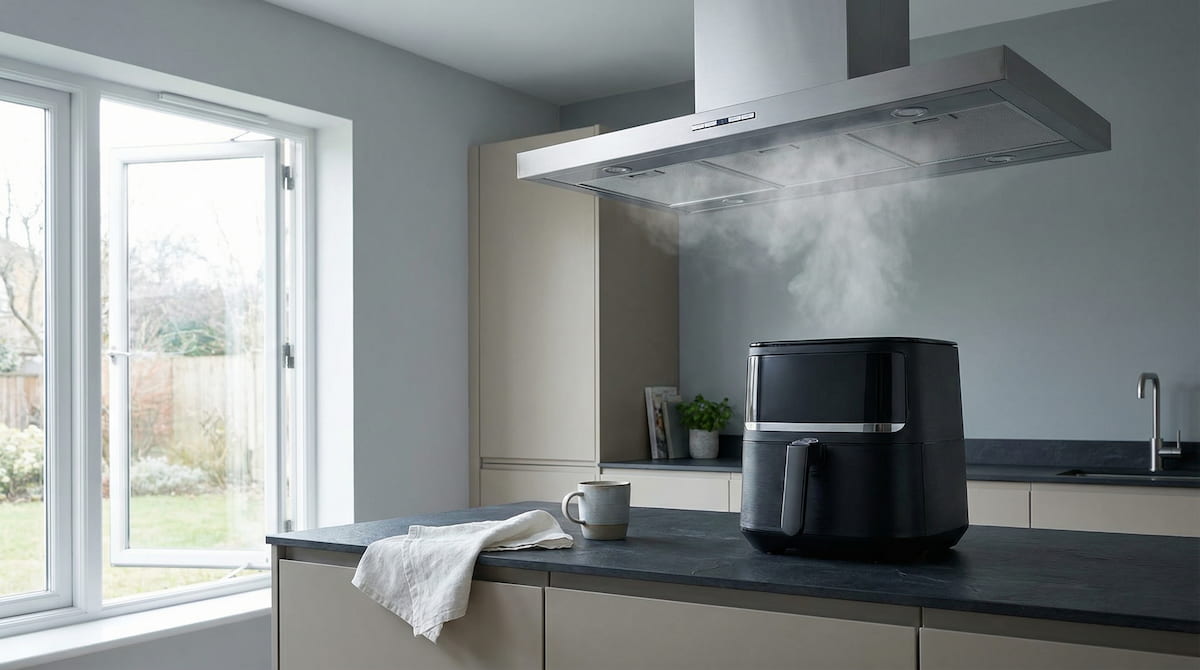
The smell is unpleasant but the compounds involved are generally present in very small amounts and dissipate quickly with ventilation. Opening a window and running your range hood during the first 2–3 uses takes care of most of it.
If the smell persists after 5–6 uses, that’s worth paying attention to. Ongoing chemical odors after the break-in period suggest something else is happening.
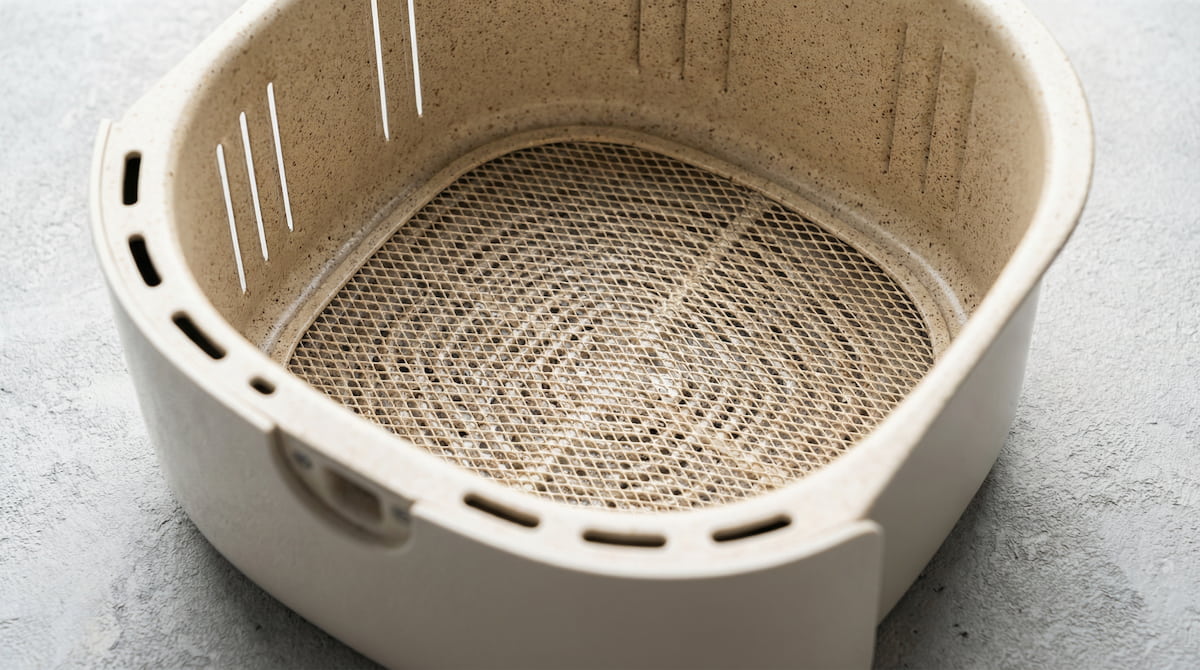
Source #2: Nonstick Coating Off-Gassing
This is the one I took most seriously after my research, and it’s the reason I eventually switched basket types.
Most air fryer baskets are coated with PTFE — polytetrafluoroethylene — the compound used in Teflon nonstick pans. At normal cooking temperatures (up to around 400°F / 205°C), PTFE is considered chemically stable. It doesn’t meaningfully off-gas at these temperatures.
The problem starts when the coating overheats. Above roughly 500°F (260°C), PTFE begins to break down and can release fluoropolymer fumes. These fumes can cause flu-like symptoms in humans — headache, chills, fever — sometimes called polymer fume fever. In birds, they’re known to be fatal even at low concentrations.
Here’s the relevant question: can an air fryer basket actually reach 500°F during normal cooking?
The air temperature inside an air fryer typically maxes out at 400°F on most consumer models. But the basket surface — especially near the heating element — can run hotter than the set temperature, particularly when the basket is empty and running at maximum heat for extended periods.
Normal cooking with food in the basket acts as a heat sink and keeps surface temperatures lower. The risk is highest when running an empty basket at maximum temperature for a long time — which isn’t something most people do intentionally, but might happen during a careless preheat.
The practical precautions: don’t run an empty basket at maximum heat for extended periods, keep cooking temperatures at or below 400°F when possible, and make sure your kitchen is ventilated.
Source #3: Cooking Byproducts From Food Itself
This one often gets overlooked, but food itself releases compounds during high-heat cooking — regardless of what appliance you use.
Fatty foods produce smoke and aerosols when fat drips onto the heating element. That smoke contains compounds including aldehydes and polycyclic aromatic hydrocarbons (PAHs), both of which are associated with health concerns at high occupational exposure levels. The amounts produced during normal home cooking are far below those levels, but they’re real.
Starchy foods produce acrylamide when they brown at high temperatures — a concern I’ve covered in more detail in my post on whether air fryers cause cancer.
None of this is unique to air fryers. Pans, ovens, grills, and woks all produce cooking byproducts. The air fryer’s enclosed design means those compounds are more concentrated in a smaller space — which is actually an argument for making sure your kitchen is ventilated when cooking, regardless of appliance.
What About PFAS Specifically?
PFAS (per- and polyfluoroalkyl substances) is the broader chemical family that includes PTFE. People often ask whether air fryer coatings contain PFAS and whether those chemicals leach into food during cooking.
PTFE itself is technically a fluoropolymer within the PFAS family, but it behaves differently from the shorter-chain PFAS chemicals — like PFOA and PFOS — that have been linked to health concerns in research. PTFE is a large, stable molecule that doesn’t readily migrate into food under normal cooking conditions.
PFOA, which was used in the manufacturing process for PTFE coatings and raised genuine health concerns, was phased out of U.S. production by 2013. Modern nonstick coatings don’t contain it.
That said, if you want to avoid any PFAS-adjacent chemistry in your cooking equipment entirely, ceramic-coated baskets and stainless steel options are the straightforward alternatives. I’ve covered those in detail in my guide to PFAS-free air fryers.
How to Minimize Chemical Release During Normal Use
Run a burn-in cycle before first use. Empty basket, 400°F, 15 minutes, windows open. Gets the manufacturing residue out before food is involved.
Ventilate every time. Range hood on, window cracked. This applies to all high-heat cooking, not just air fryers — but the air fryer’s compact design makes ventilation more important, not less.
Don’t run the empty basket at maximum heat. If you’re preheating, 3 minutes at your cooking temperature is enough. Avoid extended empty runs at 400°F+.
Stay at or below 400°F for daily cooking. Most foods cook perfectly well at 350–375°F. Reserving maximum heat for specific situations keeps the basket surface temperature in a safe range.
Consider the basket material. If PTFE off-gassing is a concern for your household — especially if you have pet birds — ceramic-coated or stainless steel baskets remove that variable entirely.
Quick Reference: Chemical Sources in Air Fryers
| Source | When It Happens | Risk Level | What To Do |
|---|---|---|---|
| Manufacturing residue | First 3–5 uses | ⚠️ Low | Burn-in cycle + ventilate |
| PTFE off-gassing | Empty basket above 500°F | ⚠️ Moderate if overheated | Avoid high empty-basket runs |
| Cooking smoke / PAHs | Fatty foods at high heat | ⚠️ Low at home levels | Ventilate, don’t char food |
| Acrylamide | Starchy foods over 248°F | ⚠️ Low at home levels | Don’t over-brown |
| PFOA from coatings | N/A — phased out 2013 | ✅ Not a current concern | Check age of appliance |
The Bottom Line
Air fryers do release chemicals when heating up — but the type and amount depends heavily on conditions. New appliance residue is temporary and manageable. PTFE off-gassing is a real concern at temperatures most home cooks won’t reach during normal use. Cooking byproducts from food itself exist in any high-heat cooking method.
None of this makes air fryers uniquely dangerous. It makes them appliances worth understanding and using with basic precautions — ventilation, reasonable temperatures, and awareness of what your basket is coated with.
That’s the same standard I’d apply to any cooking appliance. My air fryer still gets used almost every weeknight. I just open a window now.
Affiliate Disclosure: This site participates in the Amazon Services LLC Associates Program. If you click a link and make a purchase, I may earn a small commission at no extra cost to you. I only recommend products I’ve personally researched and would use for my own family.