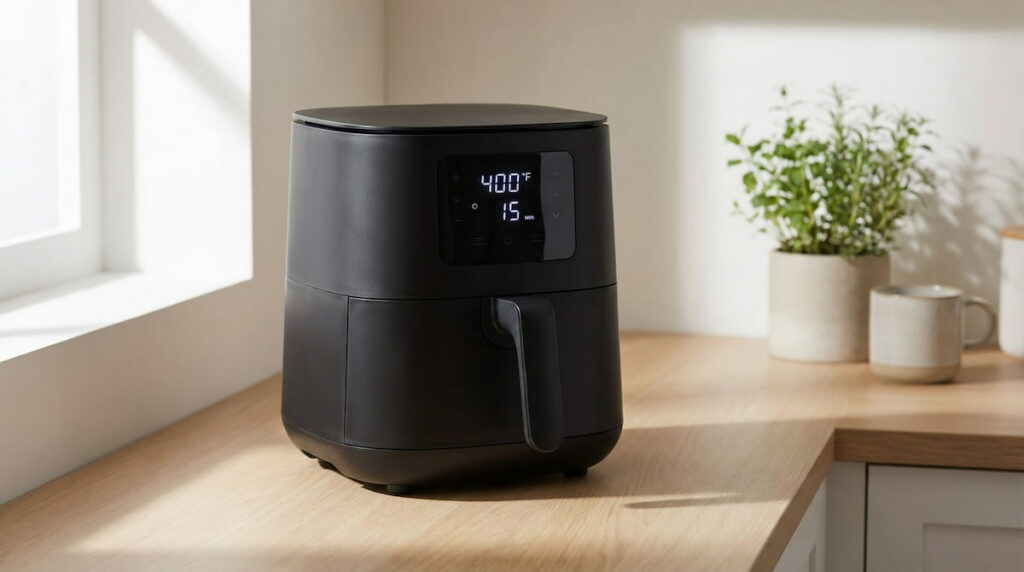
Looking for a pfas free air fryer that actually delivers on safety? I started researching PFAS-free air fryers after noticing something I couldn’t ignore — a faint chemical smell every time I cooked at high heat. At first I assumed it was just the new appliance smell that goes away. It didn’t. That’s when I started digging into what non-stick coatings are actually made of, and why more families are moving away from traditional non-stick surfaces. This guide covers the three best PFAS-free air fryer options in 2026 and what actually separates them from the rest.
At first I assumed it was just the new appliance smell that goes away. It didn’t. That’s when I started digging into what non-stick coatings are actually made of, and why more families are moving away from traditional non-stick surfaces. This guide covers the three best PFAS-free air fryer options in 2026 and what actually separates them from the rest.What Makes an Air Fryer PFAS-Free?
PFAS (per- and polyfluoroalkyl substances) are a broad family of synthetic chemicals used in many non-stick coatings — including PTFE, the substance most people know as Teflon. They’re sometimes called “forever chemicals” because they break down extremely slowly and can accumulate in the body and environment over time.
In kitchen appliances, PFAS show up mainly in PTFE-based non-stick coatings. A PFAS-free air fryer avoids these materials entirely, using ceramic, stainless steel, or glass instead. The EPA’s PFAS overview explains why avoiding these compounds matters, particularly for cookware used at high heat.
For the full breakdown on what these labels actually mean, see my PTFE vs PFAS guide. If you’re wondering whether your current air fryer is already a problem, the guide on what PTFE coating is in air fryers covers the material breakdown in detail.
The Best PFAS-Free Air Fryers in 2026
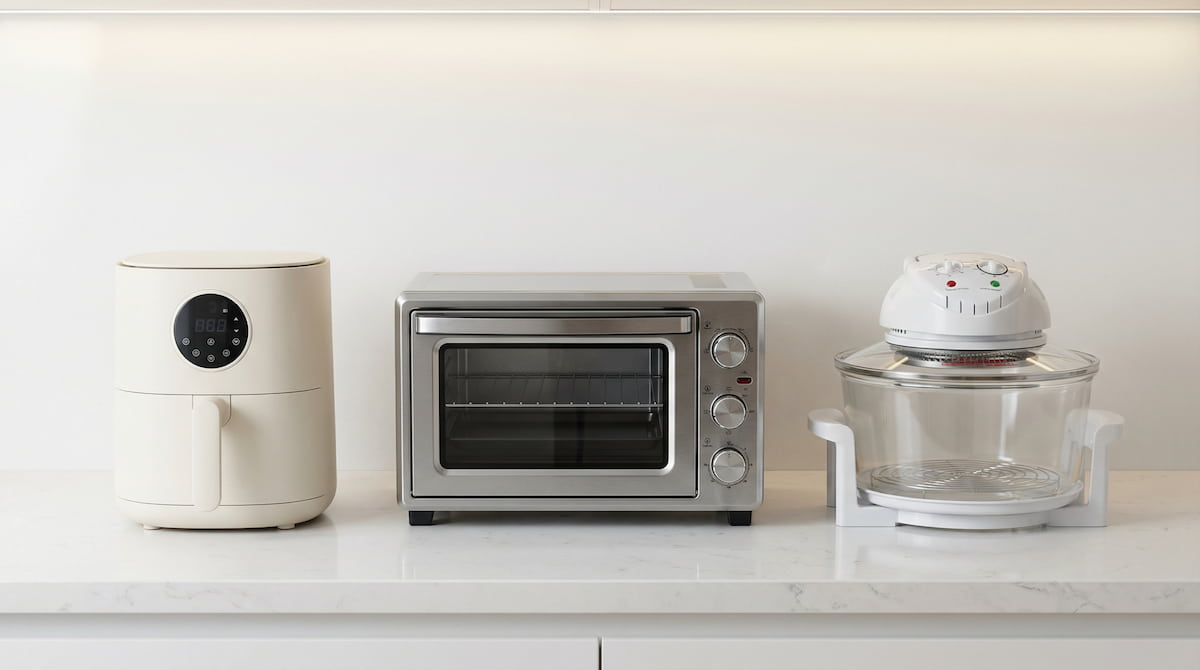
1. Ninja AF150AMZ — Best Ceramic PFAS-Free Option
The Ninja AF150AMZ is the most practical starting point for households switching to PFAS-free cooking. The ceramic-coated basket contains no PTFE and no PFOA — confirmed by material safety data and consistent with six months of daily family use. Compact, versatile, and available under $100.
Best for: Families who want a reliable everyday air fryer with a genuinely safer coating.
Trade-off: Ceramic coating thins over time — hand wash only, no metal utensils, no aerosol sprays.
For a full material breakdown: Is the Ninja ceramic basket actually PFAS-free? · Is the Ninja AF150AMZ PFAS-free?
2. Instant Pot Omni Plus 18L — Best Stainless Steel Option
For households that want to eliminate coated baskets entirely, the Omni Plus is the most practical stainless steel option available. Oven-style cooking chamber, stainless steel racks and trays throughout, 18L capacity — no coating anywhere in the cooking area.
Best for: Larger families who want maximum durability and zero coating concerns long-term.
Trade-off: Larger footprint, food sticks more without oil.
More detail: Is the Instant Pot Omni Plus actually PFAS-free? · Are stainless steel air fryers actually safer?
3. Big Boss 16Qt Glass Air Fryer — Best Glass Option
The most transparent material option available. Glass cooking bowl, halogen heating, 360° visibility while cooking — no coating of any kind in the cooking chamber. Heavy and bulkier than basket models, but if eliminating coating contact entirely is the priority, this is the cleanest option.
Best for: People who want complete material transparency and cook in larger batches.
Trade-off: Bulkier than basket models, halogen heating takes some adjustment.
More detail: Is the Big Boss glass air fryer PFAS-free? · Are glass air fryers safer than nonstick?
Quick Comparison: PFAS-Free Air Fryer Materials
| Model | Material | PFAS-Free | Best For | Capacity |
|---|---|---|---|---|
| Ninja AF150AMZ | Ceramic | ✅ Yes | Everyday use | 5.5 Qt |
| Instant Pot Omni Plus | Stainless Steel | ✅ Yes | Large families | 18 L |
| Big Boss 16Qt | Glass | ✅ Yes | Batch cooking | 16 Qt |
Why PFAS-Free Matters: The Safety Background
The concern with traditional non-stick coatings isn’t just about what happens when food touches the surface — it’s about what happens when the coating is damaged or overheated. PTFE begins to degrade above 500°F and releases detectable fumes above 570°F. For households with birds, this is a known danger; for families with young children or anyone with respiratory sensitivities, it’s worth taking seriously.
Ceramic and stainless steel surfaces don’t carry these risks at normal cooking temperatures. Glass has no coating at all. Related reading:
- Are air fryer fumes dangerous? What you’re actually breathing
- Do air fryers release toxic fumes?
- What happens when air fryer coating gets scratched?
- Is a Teflon air fryer safe? What the science actually says
- Can birds be around air fryers safely?
How to Choose the Right PFAS-Free Air Fryer
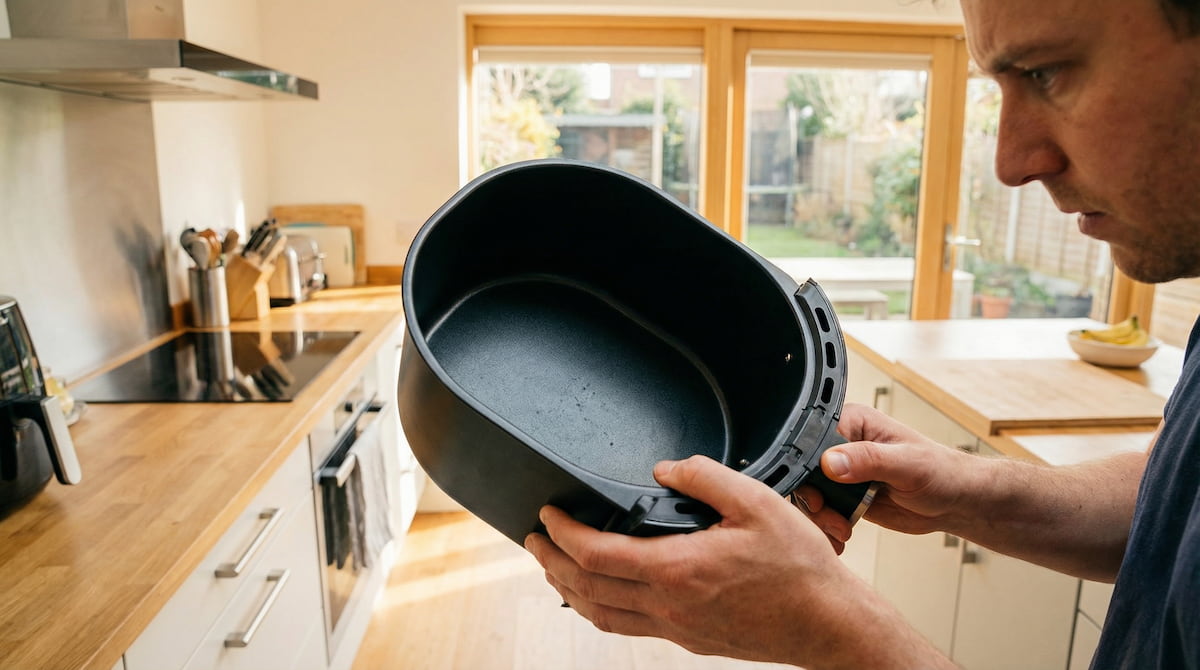
Choose ceramic if you want non-stick convenience without PTFE and cook for 1–4 people. The Ninja AF150AMZ is compact, practical, and genuinely PFAS-free.
Choose stainless steel if you want zero coating risk long-term and cook for a larger household. The Instant Pot Omni Plus eliminates the coating question entirely.
Choose glass if complete material transparency is the priority and you cook in larger batches. The Big Boss 16Qt has no coating anywhere in the cooking chamber.
For specific household situations, these guides go deeper:
- Best PFAS-free air fryer for a family of 4
- Safest air fryer for a family of 5 or more
- Best air fryer for elderly parents
- Safest air fryers for kids and families
- Is air fryer safe during pregnancy?
- Best air fryers for pet owners
Material Safety Deep Dives
If you want to go deeper on specific materials before deciding, these guides cover each option in full:
- Are ceramic air fryers safe? The full material truth
- Ceramic vs glass air fryer: which is safer?
- Glass vs stainless steel air fryer: which is safer?
- Stainless steel vs ceramic air fryer basket
- Is ceramic better than Teflon for air fryers?
- PFOA vs PTFE in air fryers: what’s the real difference?
Frequently Asked Questions
What does PFAS-free mean on an air fryer?
A pfas free air fryer means the cooking surfaces contain no per- and polyfluoroalkyl substances — the family of synthetic chemicals that includes PTFE (Teflon) and related compounds. PFAS-free air fryers use ceramic, stainless steel, or glass instead. See the full explanation in the PFAS in air fryers guide.
Is ceramic coating really PFAS-free?
Yes — ceramic coatings used in cookware are silica-based and don’t contain PTFE or PFAS compounds. The key is keeping the coating intact: a well-maintained ceramic basket stays safe and effective. A damaged one exposes the underlying aluminum, which is why coating condition matters. Full detail in the Ninja ceramic basket safety guide.
Is stainless steel safer than ceramic in an air fryer?
Both are PFAS-free. Stainless steel has no coating to degrade, making it more durable long-term. Ceramic offers better non-stick performance but requires careful maintenance. The right choice depends on how you cook. Comparison: stainless steel vs ceramic air fryer basket.
Are cheap air fryers more likely to contain PFAS?
Generally yes — lower-cost models are more likely to use PTFE-based coatings without clear labeling. The guide on whether cheap air fryers are toxic covers what to look for inside budget models.
Which pfas free air fryer is best for families with kids?
The Ninja AF150AMZ for smaller families, the Instant Pot Omni Plus for larger households. Both are genuinely pfas free air fryer options that are practical for daily family cooking. See the full guide: safest air fryers for kids and families.
Bottom line: The best pfas free air fryer in 2026 depends on how you cook and how many people you’re feeding. Ceramic for daily convenience, stainless for long-term durability, glass for complete material transparency. All three avoid traditional PTFE-based coatings — the choice is about which trade-offs fit your kitchen.
This article is for informational purposes only. Always verify manufacturer specifications before purchasing.