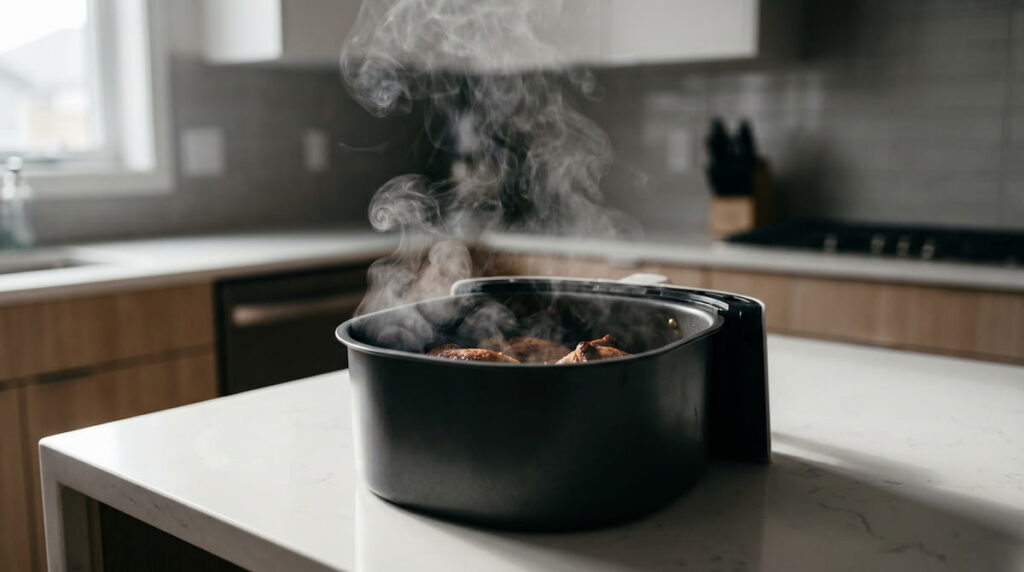
Do air fryers release toxic fumes? The honest answer is: it depends almost entirely on what your basket is coated with. A ceramic or stainless steel air fryer used with basic ventilation produces no meaningful toxic fume risk. A scratched or overheated PTFE-coated basket is a different story — and most families don’t realize the difference until something goes wrong.
I’m Wook, a bus driver and dad of two teenage boys. We cook with our air fryer five to six nights a week. After dealing with detector alarms and a chemical smell we couldn’t explain, I spent months researching exactly what air fryers release and when it becomes a genuine health concern. Here’s the complete picture.
Do Air Fryers Release Toxic Fumes? The Coating Is the Key Variable
An air fryer is just a compact convection oven. The heating element and fan produce no toxic byproducts on their own. The fume question comes down entirely to what surfaces your food contacts during cooking — specifically, whether those surfaces release compounds under heat.
There are three common basket materials, and their fume profiles are very different:
| Basket Material | Fume Risk | Conditions That Increase Risk |
|---|---|---|
| PTFE (Teflon) | ⚠️ Medium-High | Scratched surface, temps above 500°F, closed kitchen |
| Ceramic (PTFE-free) | ✅ Low | Heavily scratched surface at very high temps |
| Stainless Steel | ✅ Minimal | No coating — no fume risk from basket surface |
| Glass | ✅ None | Completely inert at any cooking temperature |
What PTFE Fumes Actually Are — and When They’re Released
PTFE (polytetrafluoroethylene) is the fluoropolymer used in Teflon-style nonstick coatings. When intact and used below 500°F, PTFE is considered chemically stable. The fume risk emerges in two specific situations:
Situation 1: Overheating Above 500°F
Above 500°F, PTFE begins to decompose and release fluoropolymer gases. Most air fryer recipes call for 350–400°F — safely below this threshold under normal use. However, preheating an empty basket, cooking very small amounts of food at maximum temperature, or using a unit with an inaccurate thermostat can push surface temperatures higher than the displayed setting.
Situation 2: Scratched or Degrading Coating
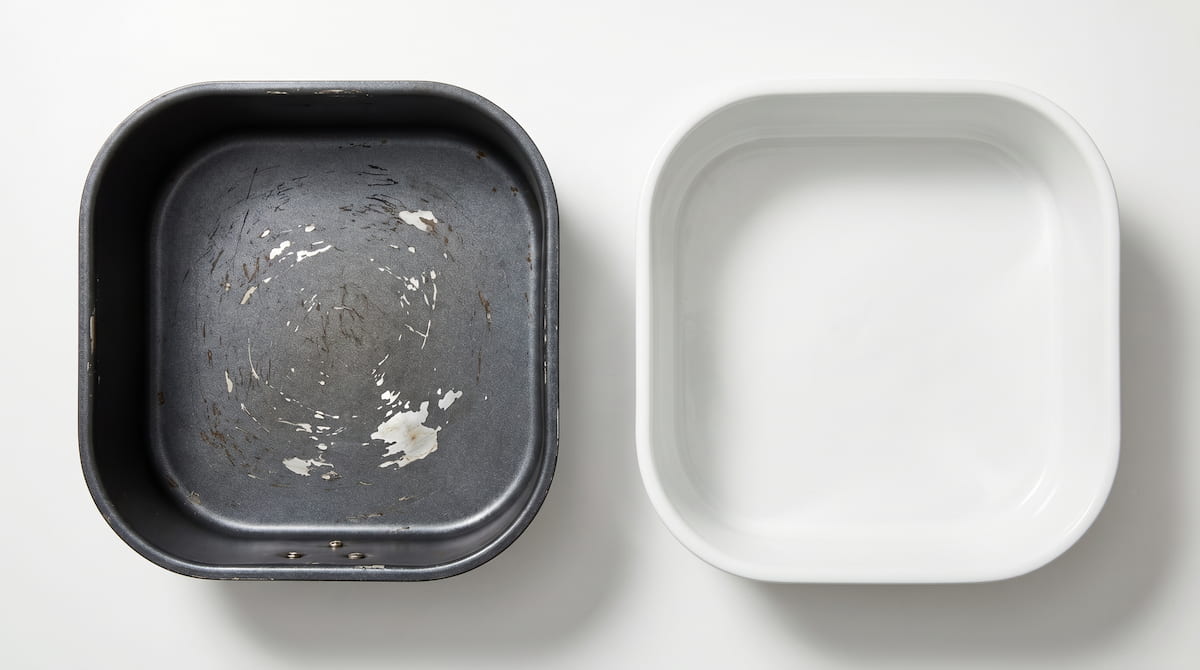
This is the more common real-world risk. A scratched PTFE coating has compromised surface integrity — meaning it begins releasing compounds at lower temperatures than an intact coating would. Families using scratched baskets daily at 380–400°F may be exposing their households to fluoropolymer fumes without realizing it.
According to the EPA’s PFAS resource page, fluoropolymer breakdown products have raised health concerns with repeated long-term exposure, and birds are particularly sensitive to these fumes — a well-documented phenomenon known as polymer fume fever in avian populations.
What About Fumes From Food Itself?
Separate from coating fumes, the food you cook also contributes to kitchen air quality. These are food-related compounds that air frying can release:
- Acrolein — produced when cooking oils overheat; irritates airways in high concentrations
- Acrylamide — forms in starchy foods cooked at high heat; a known concern with frequent consumption
- Polycyclic aromatic hydrocarbons (PAHs) — produced when food is heavily charred or burnt
- Grease smoke particulates — from fatty foods cooking at high temperatures
These compounds are present with any high-heat cooking method — air frying, oven roasting, or stovetop grilling. They are not unique to air fryers, and basic kitchen ventilation handles them effectively. The coating fume issue is what makes air fryers specifically worth paying attention to.
What Our Family Did to Eliminate the Fume Concern
After identifying our scratched PTFE basket as the source of the chemical smell and detector alarms we were experiencing, we switched to the Ninja AF150AMZ. Its ceramic basket is PTFE-free and PFAS-free — meaning there are no fluoropolymers present to break down under heat regardless of cooking temperature or basket condition.
The chemical smell disappeared immediately. Our detector hasn’t triggered once since the switch. For a family cooking five nights a week, that peace of mind is worth far more than the cost of the upgrade.
Our full review of the Ninja ceramic basket covers exactly what the coating is made of and how it holds up with daily family cooking.
Quick Safety Checklist — Fume Risk Assessment
- ✅ Ceramic or stainless basket, intact surface, window open — minimal fume risk
- ✅ PTFE basket, no scratches, cooking below 400°F, good ventilation — low risk
- ⚠️ PTFE basket with light scratches — monitor closely, consider replacing soon
- ⚠️ Chemical smell during cooking — stop immediately, inspect basket
- ⚠️ Cooking at maximum temperature with PTFE basket regularly — elevated risk
- ❌ Scratched PTFE basket, closed kitchen, daily high-heat cooking — replace immediately
- ❌ Peeling coating visible in food — discard basket, do not continue using
The Safest Air Fryer Options for Fume-Conscious Families
Best Everyday Option: Ninja AF150AMZ
Ceramic basket, PTFE-free, PFAS-free. The most practical upgrade for families switching from a coated basket. Eliminates fluoropolymer fume risk entirely while keeping the convenience and capacity most families need.
See Today’s Price on Amazon →Best for Large Families: Instant Pot Omni Plus 18L
Stainless steel interior, no coating whatsoever. For families of four to six who want to eliminate the coating question permanently, this is the most spacious coating-free option available at a reasonable price point.
See Today’s Price on Amazon →Most Chemically Inert Option: Big Boss 16Qt Glass
Glass cooking bowl, stainless steel rack, zero coating of any kind. The only air fryer format where the cooking surface is completely and permanently inert at any temperature.
See Today’s Price on Amazon →For a full comparison of all three options and additional PFAS-free picks across every budget, our PFAS-Free Air Fryer Guide covers everything families need to make the right choice.
Frequently Asked Questions
Are air fryer fumes dangerous to breathe?
With a PFAS-free ceramic or stainless basket and basic ventilation, the fume profile from an air fryer is not considered dangerous for healthy adults. The concern is specifically with PTFE coatings that are scratched, overheated, or degrading — those conditions produce fluoropolymer fumes that warrant real attention, especially with daily exposure.
How do I know if my air fryer is releasing toxic fumes?
The most reliable signs are a chemical or plastic smell during cooking, recurring CO or smoke detector alarms, and visible scratching or peeling on a PTFE-coated basket. An indoor air quality monitor can also provide objective PM2.5 readings during cooking sessions.
Are ceramic air fryers completely fume-free?
Ceramic baskets don’t contain PTFE or PFAS, so they don’t produce fluoropolymer fumes. Normal cooking vapors, grease smoke from food, and steam are still present — but those are present with any cooking method and are handled by standard kitchen ventilation.
Is it safe to use an air fryer around babies or young children?
With a PFAS-free basket and an open window or range hood running, yes. For households with infants or toddlers, we’d specifically recommend avoiding PTFE-coated baskets — even undamaged ones — simply because young children spend more time at floor level where heavier airborne particles settle.
Do new air fryers release fumes?
New air fryers typically release a chemical smell during the first few uses as protective coatings and manufacturing residues burn off. This is normal and temporary. Running the unit empty at 350°F for 10–15 minutes with good ventilation before first food use eliminates most of this initial off-gassing.
Next in this cluster: why does your air fryer smell like burnt plastic — and is that smell a warning sign or a normal part of using the appliance? We cover every cause and what to do about each one in our next guide.