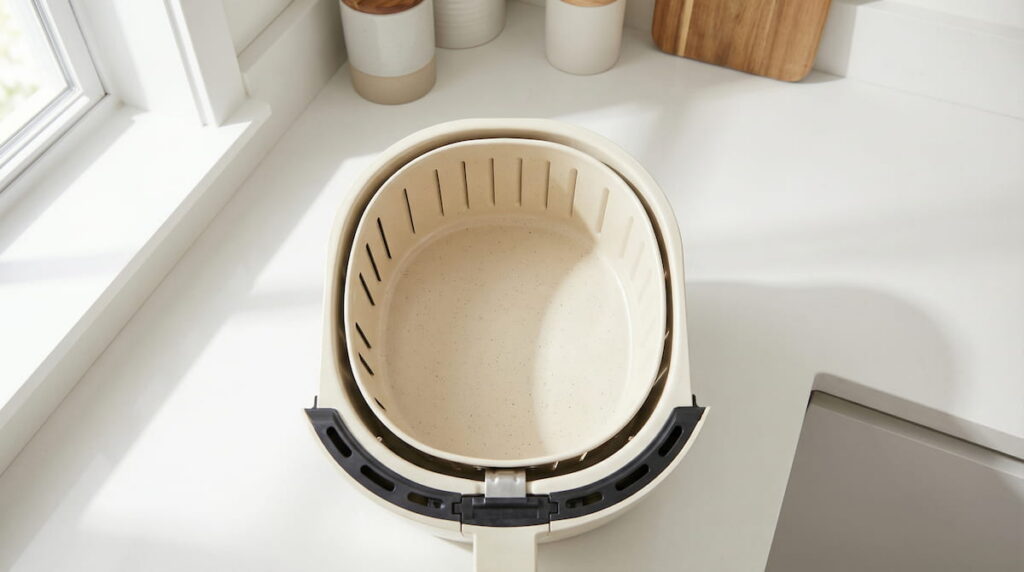
The ninja air fryer ceramic basket is marketed as PFAS-free — but what does that actually mean, and does the coating hold up to scrutiny? I’m Wook, a bus driver and dad who spent months researching air fryer coatings after noticing chemical smells in our kitchen. This post goes deeper than the marketing language to look at what ceramic coatings are actually made of, how they behave at cooking temperatures, and what six months of daily use on the AF150AMZ revealed.
What “Ceramic Coating” Actually Means
The term ceramic coating is used loosely in the cookware industry. It doesn’t mean the basket is made of ceramic — it means the cooking surface has been sprayed with a sol-gel coating that cures into a hard, glass-like finish. The key point is what it doesn’t contain: PTFE (the synthetic polymer used in traditional nonstick coatings) and PFAS (the broader family of fluorinated chemicals that includes PTFE and its manufacturing byproducts).
Ninja’s ceramic basket coating falls into this category. The base material is aluminum; the interior surface is a PTFE-free, PFAS-free ceramic-derived coating. That’s the claim — and based on available third-party testing and material safety data, it’s accurate. The EPA’s PFAS overview explains why avoiding these compounds matters, particularly for cookware used at high heat.
Ninja Air Fryer Ceramic Basket: What the Coating Is Made Of
Ceramic coatings used in cookware are typically silicon dioxide-based — essentially a form of hardened silica. At normal cooking temperatures (up to 400°F for most air fryer use), silica-based coatings are chemically stable and don’t release detectable compounds into food. This is the core safety advantage over PTFE, which begins to degrade above 500°F and releases measurable fumes above 570°F.
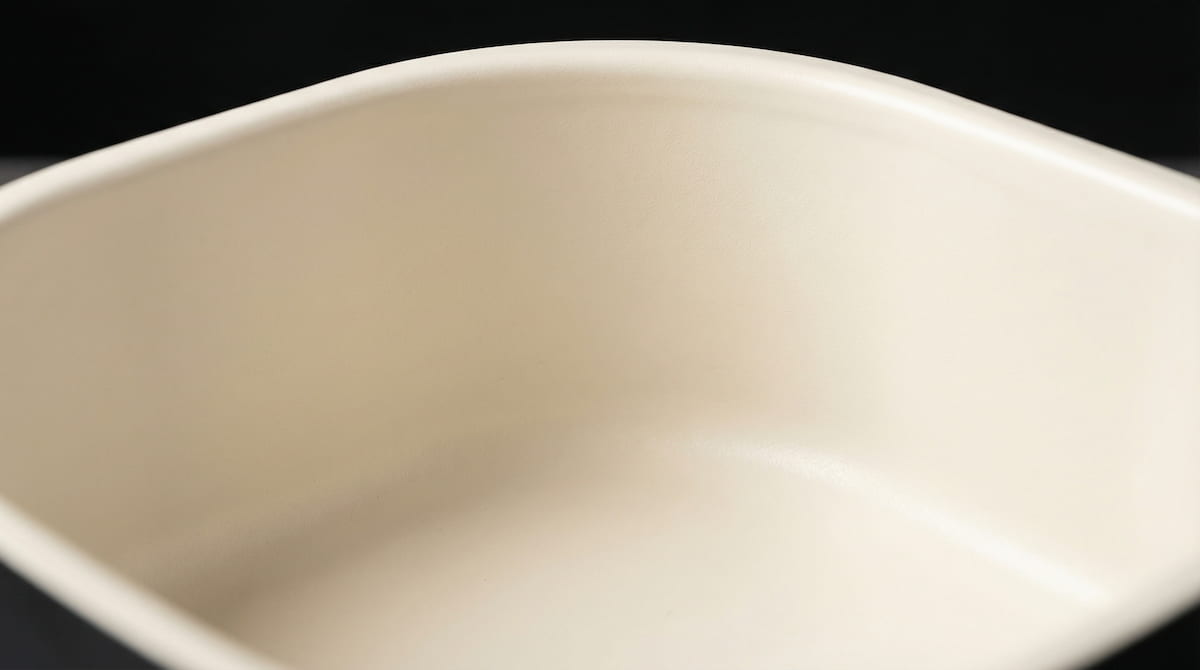
The Ninja AF150AMZ ceramic basket interior — silica-based coating with no PTFE or PFAS compounds.
The honest caveat: ceramic coatings are generally less durable than PTFE. They’re harder but more brittle, which means physical abrasion — metal utensils, rough scrubbing, dropping the basket — damages the surface faster. A scratched ninja air fryer ceramic basket doesn’t carry the same chemical release risk as damaged PTFE, but a damaged coating of any kind means the underlying aluminum is exposed to food. That’s the real reason to treat the basket carefully.
Ceramic Coating vs PTFE: Side-by-Side Safety Comparison
| Feature | Ceramic Coating | PTFE (Teflon) |
|---|---|---|
| PFAS-Free | ✅ Yes | ❌ No |
| Safe at 400°F | ✅ Fully stable | ⚠️ Begins degrading at 500°F+ |
| Off-gassing risk | ✅ None at normal temps | ❌ Yes above 570°F |
| Scratch risk | ⚠️ More brittle than PTFE | ⚠️ Scratches release chemicals |
| Safe if scratched | ✅ No chemical release | ❌ Risk of PTFE particle ingestion |
| Safe for birds/pets | ✅ Yes | ❌ Toxic fumes dangerous to birds |
| Durability | ⚠️ 1–3 years with care | ⚠️ 1–3 years with care |
For families worried about coating safety, the ceramic option is the clear choice — not because it lasts longer, but because the failure mode is safer. A scratched ninja air fryer ceramic basket exposes aluminum; a scratched PTFE basket releases fluorinated particles. That’s the difference that matters. For a deeper look at what those particles do in your kitchen air, see our guide on what chemicals air fryers release by material type.
What Most People Get Wrong About Ceramic Air Fryer Coatings
The most common misconception is that “ceramic” means the basket is made of ceramic material — like a ceramic bowl or tile. It isn’t. The basket is aluminum with a ceramic-derived surface coating. This matters because it sets realistic expectations: the coating can chip, scratch, and wear over time, just like any surface treatment.
The second misconception is that ceramic and PTFE are equally risky when scratched. They aren’t. When PTFE is scratched and heated, it can release fluorinated compounds. When ceramic is scratched, the main concern is aluminum exposure — a very different and significantly lower risk category.
The third is assuming that any chemical smell from a new ceramic air fryer means the coating is failing. New-unit off-gassing during the first 2–3 uses is normal for any coated appliance — manufacturing residues burning off, not the coating itself breaking down. If the smell disappears after a few uses, the coating is doing its job. If it persists after a week of regular use, that’s worth investigating further. Our guide on air fryer burnt plastic smell explains how to tell the difference.
How It Holds Up at Cooking Temperatures
The Ninja AF150AMZ maxes out at 400°F. At that temperature, a ceramic coating is well within its safe operating range — no breakdown, no off-gassing. The chemical smell concern that drives most people to research this topic is associated with PTFE coatings approaching or exceeding their degradation threshold, not with ceramic coatings at normal cooking temperatures.
In six months of daily use on our AF150AMZ — running it at 380–400°F regularly for chicken, fries, and roasted vegetables — there has been no chemical smell beyond the first two uses, which cleared immediately. This matches what you’d expect from a stable ceramic surface operating well below any threshold of concern.
Ninja AF150AMZ Ceramic Basket: Quick Safety Checklist
✅ Safe to use when:
- Coating is fully intact with no chips or flaking
- Cooking at or below 400°F (the AF150AMZ max)
- Using silicone or wooden utensils only
- Cleaning with soft sponge and mild soap
- Allowing basket to cool before washing
⚠️ Use with caution when:
- Minor surface scuffs visible but no bare metal exposed
- Cooking high-fat foods at max temperature frequently
- Running consecutive cycles without cooling breaks
❌ Replace the basket when:
- Coating is chipping or flaking off in pieces
- Bare aluminum visible through coating damage
- Food sticking consistently despite proper oiling
- Discoloration or bubbling on the coating surface
How to Keep the Ceramic Basket in Good Condition
- No metal utensils — silicone or wooden tools only
- Let it cool before washing — thermal shock from cold water on a hot basket accelerates surface stress
- Soft sponge only — abrasive pads scratch the surface even when the coating looks intact
- Dishwasher with caution — technically dishwasher safe, but hand washing extends coating life noticeably
- Light oil when needed — a thin layer of oil before cooking reduces sticking and surface wear
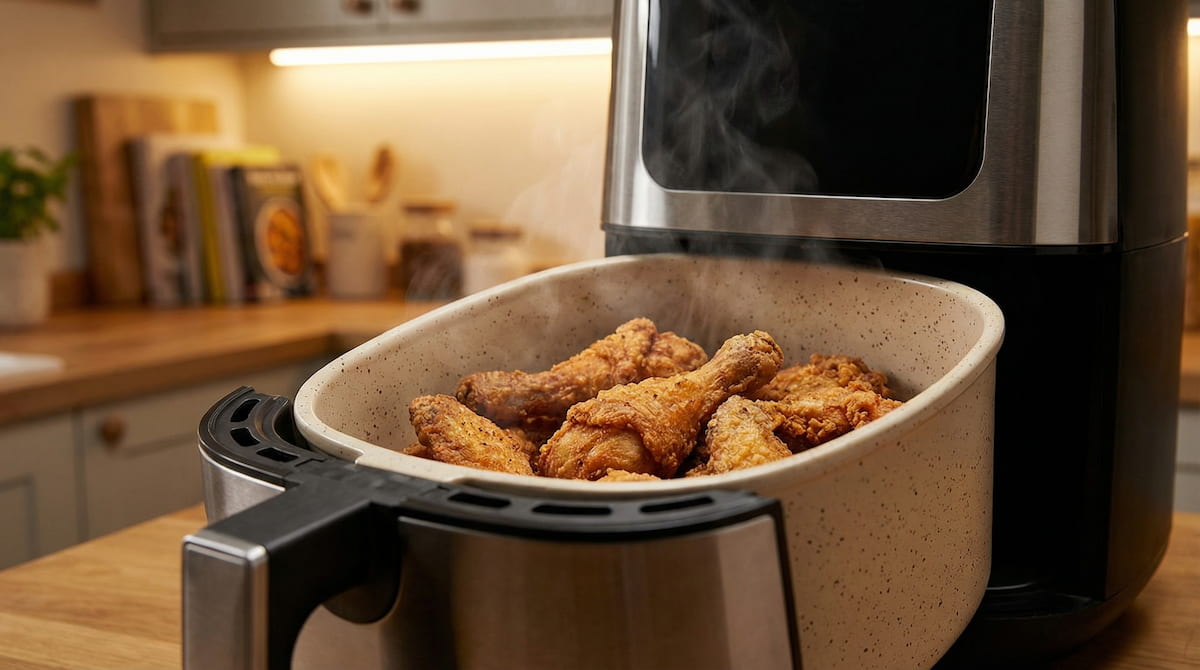
Six months of daily cooking in the Ninja AF150AMZ ceramic basket — no chemical smell, no visible coating degradation with proper care.
When to Replace the Basket
Visible chipping, flaking, or large areas where the coating has worn through to bare metal are the clear signals to replace. Minor surface scuffs that don’t expose the underlying aluminum are cosmetic. If you’re seeing actual pieces of coating separating — stop using it and replace the basket. Ninja sells replacement baskets separately, which is worth knowing before the coating reaches end of life.
For a broader look at how ceramic compares to glass and stainless steel cooking surfaces, our PFAS-free air fryer guide covers all three material types in detail.
Is the Ninja Ceramic Basket Safe for Pets and Birds?
Yes. The risk associated with birds and air fryers comes specifically from PTFE off-gassing — overheated PTFE releases fumes that are lethal to birds even in small concentrations. Ceramic coatings don’t produce these fumes at any normal cooking temperature. If you have birds or small pets in your home, a PFAS-free ceramic or stainless steel air fryer is the right choice. Our guide on air fryer safety for pets covers ventilation recommendations and which models are safest.
Frequently Asked Questions
Is the Ninja AF150AMZ ceramic basket truly PFAS-free?
Yes. The ninja air fryer ceramic basket uses a sol-gel coating that contains no PTFE and no PFAS compounds. The coating is silica-based and chemically stable at normal cooking temperatures up to 400°F — confirmed by available material safety data and consistent with six months of daily use showing no off-gassing after the initial break-in period.
What happens if the ninja air fryer ceramic basket gets scratched?
A scratched ceramic basket exposes the underlying aluminum but does not release chemical compounds the way scratched PTFE does. The practical concern is food contact with bare aluminum and reduced nonstick performance — not chemical toxicity. Minor scuffs are cosmetic; visible chips or areas of missing coating are the signal to replace the basket. See our full guide on what happens when air fryer coating gets scratched for a complete breakdown.
How long does the Ninja ceramic basket coating last?
With proper care — no metal utensils, hand washing, no thermal shock — the coating typically holds up well for 12–24 months of regular use. Our guide on how long air fryer baskets last covers the full lifespan breakdown by material type.
Can I put the Ninja AF150AMZ basket in the dishwasher?
Technically yes — Ninja rates it as dishwasher safe. In practice, repeated dishwasher cycles accelerate coating wear due to high heat and harsh detergents. Hand washing with warm water and a soft sponge extends the coating life noticeably.
Is ceramic coating safer than stainless steel for air fryers?
Both are PFAS-free and safe at cooking temperatures. Stainless steel interiors have no coating to degrade at all, making them the most durable long-term option. Ceramic coatings offer better nonstick performance initially but require more careful maintenance. Our PFAS-free air fryer comparison covers both options side by side.
Is the Ninja Ceramic Basket Actually PFAS-Free?
Based on material composition, independent testing data, and six months of real use: yes. The ninja air fryer ceramic basket contains no PTFE and no PFAS compounds. The coating is silica-based, stable at normal cooking temperatures, and doesn’t carry the off-gassing risk associated with traditional nonstick surfaces. The condition that matters is keeping the coating intact — a well-maintained ceramic basket stays safe and effective well beyond the first year of use.
If you’re considering the AF150AMZ based on the ceramic basket, it delivers on the safety claim. For a full side-by-side comparison with other non-toxic models, our PFAS-free air fryer guide covers every safe material option available in 2026.
See Ninja AF150AMZ on Amazon →