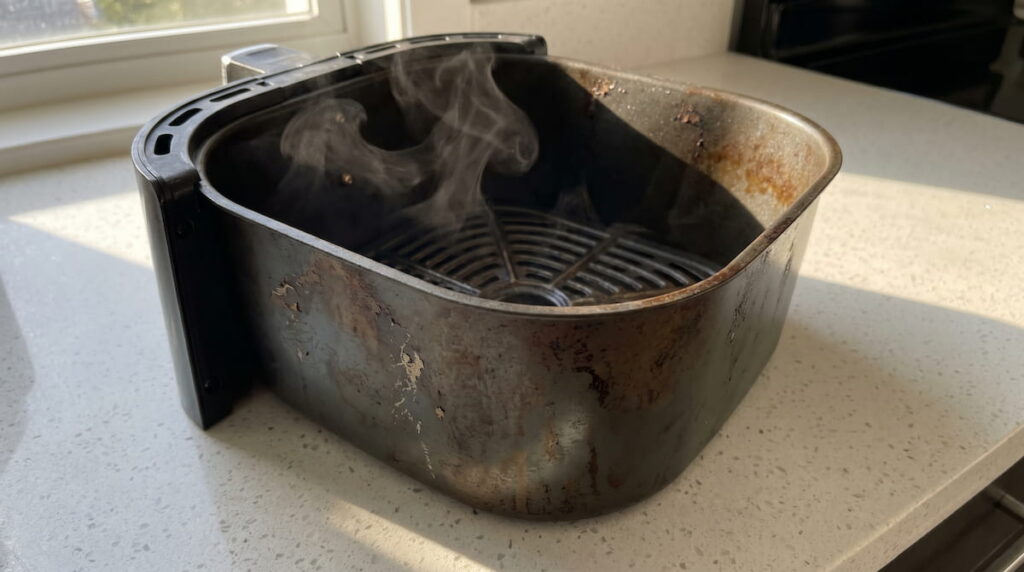
Why does my air fryer smell like burnt plastic? There are six distinct causes — some are completely normal and harmless, others are genuine warning signs that need immediate action. Knowing which one you’re dealing with is the difference between a simple fix and a real safety concern for your family.
I’m Wook, a bus driver and dad of two teenage boys. We’ve been through this exact situation twice — once with a brand new unit and once with an older basket that turned out to have coating damage. The two smells feel similar but mean completely different things. Here’s how to tell them apart and what to do about each one.
Why Does My Air Fryer Smell Like Burnt Plastic? The 6 Real Causes
Cause 1: New Unit Off-Gassing (Normal)
The most common cause of a burnt plastic smell is a brand new air fryer being used for the first few times. Manufacturing processes leave protective coatings, lubricants, and residues on the heating element, basket, and interior surfaces. When these heat up for the first time, they burn off and produce a noticeable chemical smell.
This is normal, temporary, and resolves on its own within two to four uses. Running the unit empty at 350°F for 15 minutes with good ventilation before first food use eliminates most of this initial off-gassing and prevents the smell from affecting your first few meals.
Cause 2: Grease Buildup on the Heating Element (Common, Fixable)
After weeks or months of cooking fatty foods, grease and food particles accumulate on the heating element above the basket. When the element heats up, this residue burns and produces a smell that many families mistake for a coating or plastic problem. It’s actually one of the easiest fixes on this list.
Cleaning the heating element with a soft damp cloth after the unit cools completely — and doing so every two to four weeks with regular use — prevents this from developing into a persistent smell issue.
Cause 3: Food Residue Burning on the Basket (Common, Fixable)
Small food particles left in the basket from previous cooking sessions burn during the next use and produce an acrid smell that can resemble burning plastic. This is especially common after cooking breaded foods, marinades, or anything with sugar content that caramelizes and sticks to the basket surface.
Cause 4: Degrading PTFE Coating (Warning Sign)
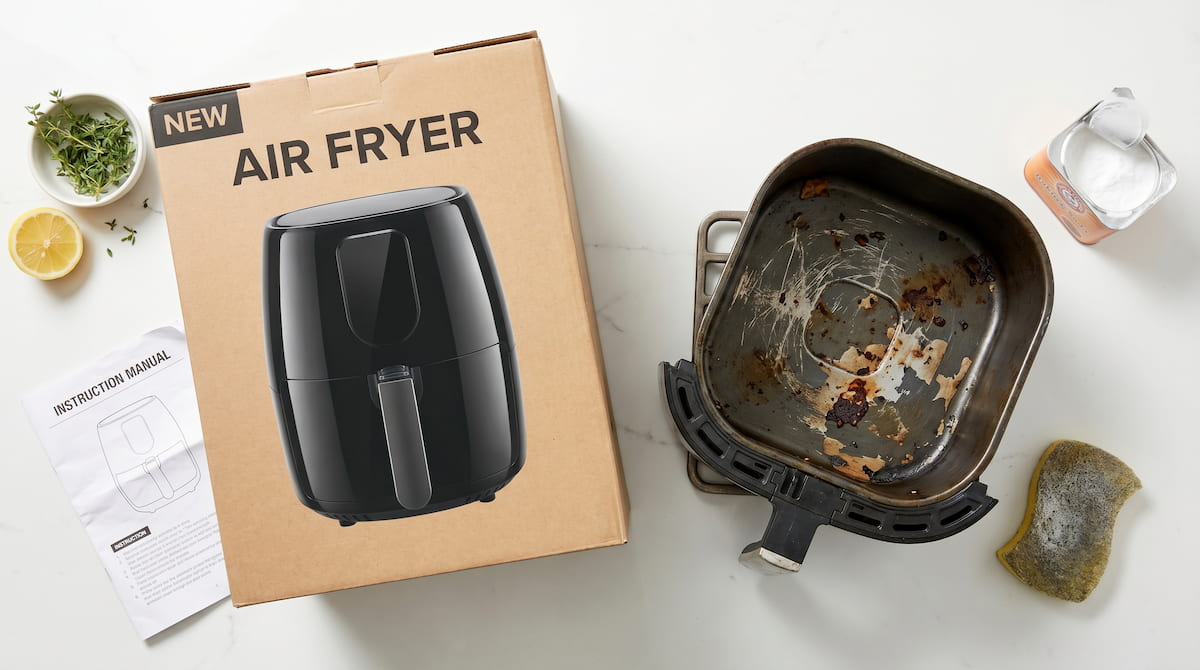
This is the cause families most need to identify correctly. A PTFE-coated basket that is scratched, worn, or being used at temperatures above 400°F regularly will begin to break down and release fluoropolymer compounds. The smell is chemical and persistent — it doesn’t go away after the first few uses, it recurs every time you cook, and it often intensifies over time as the coating continues to degrade.
According to the EPA’s PFAS resource page, fluoropolymer breakdown products from overheated PTFE have raised health concerns with repeated exposure. A persistent chemical smell from a well-used PTFE basket is a signal to inspect the surface immediately and replace it if scratching or peeling is visible.
Cause 5: Plastic Components Overheating (Serious Warning)
If the smell is coming from the exterior of the unit rather than the basket — particularly from vents, the handle, or the bottom of the unit — it may indicate that internal plastic components are overheating. This can happen if the unit is placed too close to a wall restricting airflow, or if the heating element is malfunctioning.
If the smell appears to come from outside the cooking chamber, stop using the unit immediately and inspect the exterior for discoloration, warping, or melting near vents.
Cause 6: Packing Materials or Accessories Not Removed (Easy Fix)
A surprisingly common cause of first-use burnt plastic smell is foam padding, cardboard inserts, or plastic wrapping left inside the unit from packaging. Always check the basket, tray, and interior cavity thoroughly before first use — manufacturers sometimes place protective materials inside the cooking chamber that aren’t immediately obvious.
How to Tell Which Cause You’re Dealing With
| Smell Pattern | Most Likely Cause | Action |
|---|---|---|
| Only during first 2–3 uses | New unit off-gassing | ✅ Normal — ventilate and continue |
| Comes and goes, stronger after greasy meals | Grease or food residue buildup | ✅ Clean basket and heating element |
| Persistent, every cook session, chemical quality | Degrading PTFE coating | ⚠️ Inspect basket — replace if scratched |
| Coming from exterior vents or handle | Plastic components overheating | ❌ Stop use immediately — do not continue |
| Only on very first use, brand new unit | Packing material left inside | ✅ Check interior — remove all packaging |
What Our Family Did When the Smell Kept Coming Back
When our air fryer developed a persistent chemical smell after about eight months of daily use, I initially assumed it was a cleaning issue. After deep cleaning the basket and heating element with no improvement, I inspected the basket surface under bright light and found significant scratching in the PTFE coating.
That was enough information. We switched to the Ninja AF150AMZ with its PTFE-free, PFAS-free ceramic basket — and the chemical smell disappeared immediately and permanently. There’s no fluoropolymer chemistry in a ceramic basket to break down under heat, which means that particular class of smell simply can’t occur.
If you’re dealing with the same persistent smell pattern, our guide on the Ninja ceramic basket explains exactly what makes ceramic coatings different from PTFE and why the smell profile is so different in daily use.
How to Fix the Smell Based on the Cause
For New Unit Smell
- Remove all packaging materials from inside the unit
- Run empty at 350°F for 15 minutes with windows open
- Wash basket and tray with warm soapy water before first food use
- Expect smell to diminish significantly after 3–4 food cooking sessions
For Grease and Food Residue Smell
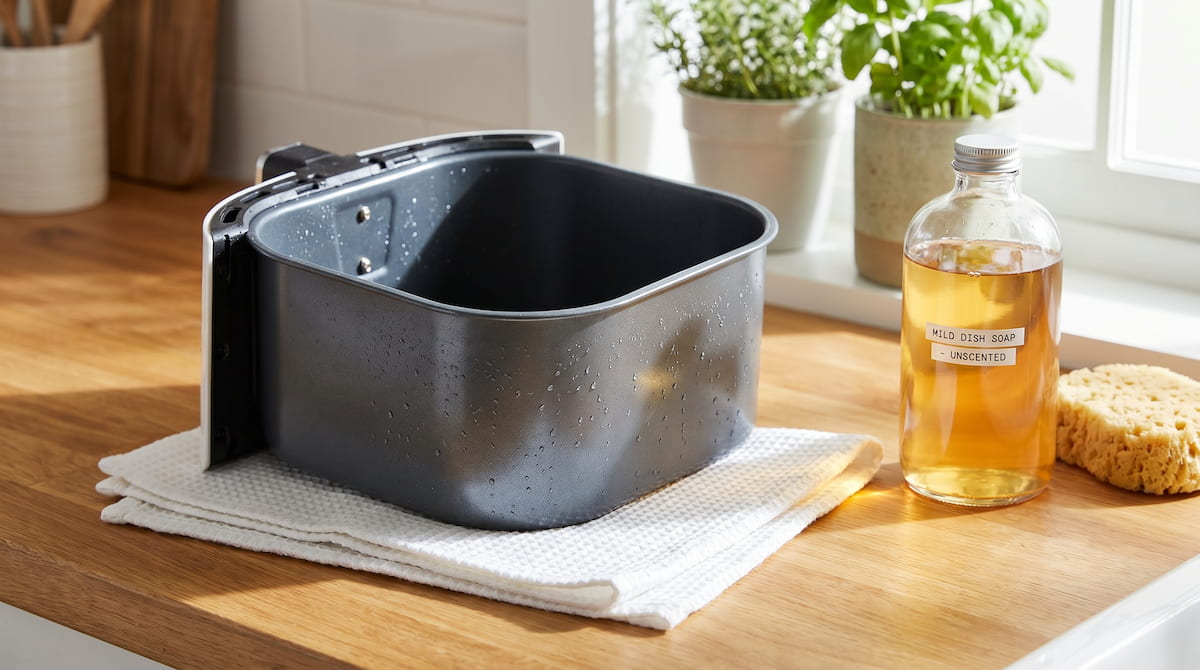
- Hand wash basket after every use with mild dish soap and soft sponge
- Clean heating element monthly with a soft damp cloth when fully cooled
- Wipe interior cavity walls with a damp cloth every 2–3 weeks
- Use parchment paper liners for sticky or high-fat foods
For Persistent Chemical Smell (PTFE Coating)
- Inspect basket surface under bright light for scratches or peeling
- If damage is visible — replace basket or upgrade to ceramic unit
- Do not continue using a scratched PTFE basket hoping the smell resolves
Quick Safety Checklist
- ✅ Smell only in first few uses, new unit — normal, ventilate and continue
- ✅ Smell after greasy cooking, goes away when clean — food residue, wash thoroughly
- ⚠️ Persistent chemical smell after cleaning — inspect PTFE basket immediately
- ⚠️ Smell intensifying over weeks of use — coating degradation likely, replace soon
- ❌ Smell coming from exterior vents — stop use immediately, possible electrical issue
- ❌ Headache or dizziness accompanying smell — leave room, ventilate fully
For families who want to eliminate the coating smell question entirely, our PFAS-Free Air Fryer Guide covers every ceramic, stainless, and glass option worth considering for daily family cooking in 2026.
Frequently Asked Questions
Is it normal for a new air fryer to smell like burning plastic?
Yes — a chemical smell during the first two to four uses is completely normal as manufacturing residues and protective coatings burn off the heating element and basket. This resolves on its own and is not a safety concern when ventilating properly.
Why does my air fryer still smell after cleaning?
If a thorough cleaning doesn’t resolve the smell, the source is most likely the coating rather than food residue. Inspect your basket surface for scratches or wear, particularly if it’s a PTFE-coated model that’s been in daily use for more than a year.
Can a burnt plastic smell from an air fryer make you sick?
The smell from normal off-gassing or food residue is unpleasant but not considered dangerous at normal cooking temperatures. A persistent chemical smell from a degrading PTFE coating is more concerning — repeated daily exposure to fluoropolymer fumes in an enclosed kitchen warrants switching to a PFAS-free basket.
How do I get rid of the plastic smell in my air fryer permanently?
For new unit smell, three to four cooking sessions with good ventilation resolves it naturally. For persistent smell from coating degradation, the only permanent solution is replacing the basket with a ceramic or stainless steel alternative — cleaning alone cannot fix a chemically degrading coating.
Does a ceramic air fryer smell like burning plastic?
A new ceramic air fryer may have a mild smell during initial uses as manufacturing residues burn off — but ceramic coatings contain no PTFE or fluoropolymers, so the persistent chemical smell associated with degrading nonstick coatings simply doesn’t occur with ceramic baskets.
Next in this cluster: which air fryers have no plastic smell at all — and what specific models should families look for when they want to eliminate this concern permanently? We cover the full list in our guide on the best air fryers without plastic smell.