Affiliate Disclosure: This post contains affiliate links. If you purchase through my links, I may earn a small commission at no extra cost to you. I only recommend products I’ve personally researched and trust for my own family.
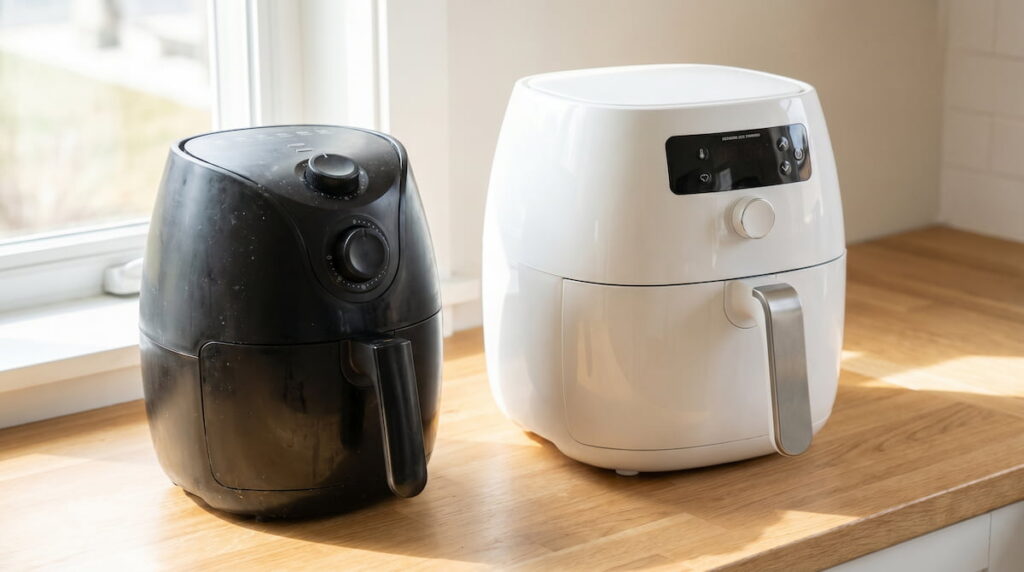
Are cheap air fryers toxic? It’s a fair question — when a $25 air fryer and a $100 one look nearly identical on the outside, it’s worth asking what corners got cut on the inside. After researching what budget models are actually made of and how they hold up over time, here’s what I found.
What Makes a Cheap Air Fryer Different From a Quality One?
Price differences in air fryers rarely come from the heating element or the fan — those components are cheap to manufacture regardless of brand. The cost cutting almost always happens in two places: the basket coating and the plastic components.
Thinner, Lower-Quality Nonstick Coatings
Budget air fryers typically use thinner PTFE coatings applied over lower-grade aluminum. A thinner coating wears faster, scratches more easily, and degrades at lower temperatures than a higher-quality application. The practical result is that a cheap air fryer basket that might look fine on day one can start showing coating damage within weeks of regular use — especially if you’re using metal utensils or putting it through the dishwasher.
When PTFE coating degrades, the risks go up. Scratched or flaking PTFE means particles in your food and a lower threshold for fume release at high heat. I covered both risks in detail in my posts on what happens when air fryer coating gets scratched and whether air fryer fumes are dangerous.
Lower-Grade Plastics in Housing and Components
Budget air fryers often use cheaper plastic grades in the housing, handle, and interior components. At high operating temperatures, low-grade plastics can off-gas volatile organic compounds (VOCs) — particularly when the appliance is new. The “new appliance smell” that many people notice during first use is largely this off-gassing process. It typically diminishes after the first few uses, but the quality of plastics used determines how much off-gassing occurs and for how long.
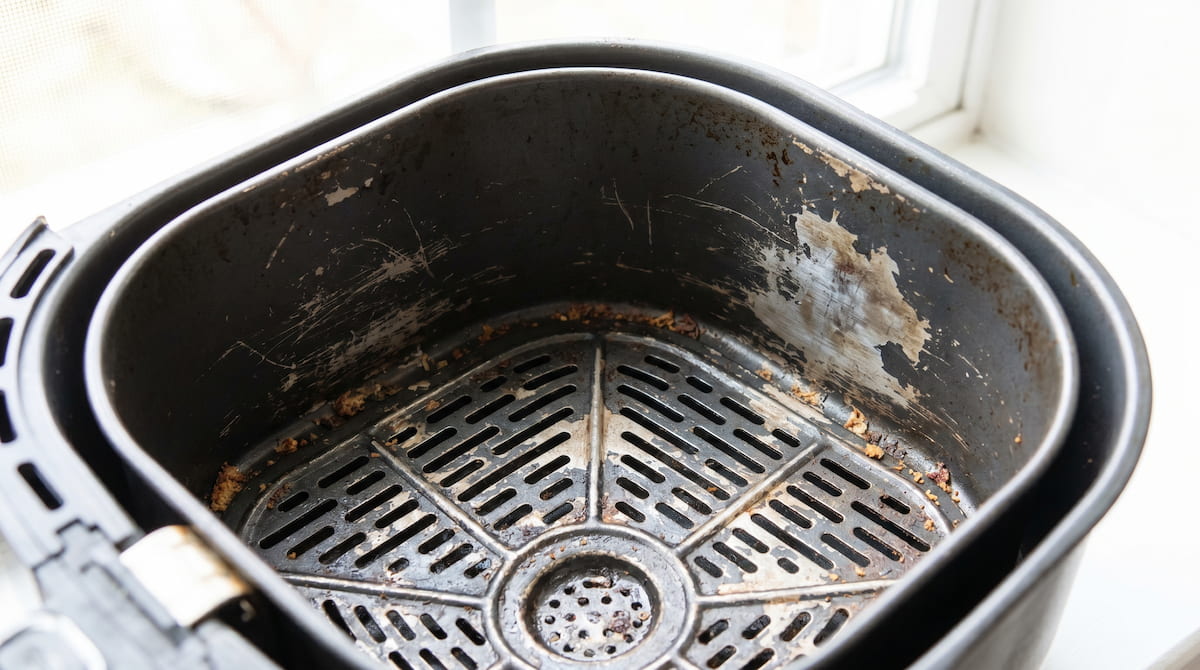
Coating damage on budget air fryer baskets often appears much earlier than on higher-quality models — and damaged PTFE carries real health risks.
Are Cheap Air Fryers Toxic? The Honest Risk Assessment
| Risk Factor | Budget Air Fryer | Quality Ceramic Air Fryer |
|---|---|---|
| Coating type | Thin PTFE — wears fast | Ceramic — no PTFE or PFAS |
| Coating durability | 🔴 Low — scratches quickly | 🟢 Good with proper care |
| Fume risk | 🟡 Moderate — PTFE present | 🟢 Very low — no fluoropolymers |
| Plastic off-gassing | 🟡 Higher — lower grade plastics | 🟢 Lower — quality materials |
| Lifespan | 🔴 Short — 6–12 months typical | 🟢 2–4 years with care |
| Long-term cost | 🔴 Higher — frequent replacement | 🟢 Lower — lasts significantly longer |
What to Look for Instead of the Cheapest Option
The good news is that you don’t need to spend a fortune to get a safe, non-toxic air fryer. The key is knowing what to look for on the product listing:
- Look for “ceramic coating” specifically — not just “nonstick” or “PFOA-free.” Ceramic means no PTFE, no fluoropolymers.
- Check for “PTFE-free” labeling — this is the clearest indicator that the basket coating is genuinely non-toxic.
- Avoid unknown brands with no material disclosure — if a listing doesn’t say what the basket is made of, that’s a red flag.
- Read recent reviews for coating durability — users who’ve had the product for 6+ months will mention if the coating is wearing or flaking.
For a full guide on how to evaluate air fryer materials before buying, see my post on how to choose a non-toxic air fryer.
The Best Affordable Non-Toxic Air Fryer
The Ninja AF150AMZ sits in the sweet spot — it’s not the cheapest air fryer on the market, but it’s far from expensive, and it uses a genuine ceramic basket that’s PTFE-free and PFOA-free. After six months of daily use in my household, the coating is intact, cleanup is still effortless, and I have zero concerns about what my family is eating.
Compared to replacing a $25 budget model every year, the Ninja AF150AMZ is the better long-term value — and the safer daily choice. I covered it in full detail in my Ninja AF150AMZ review.
See Today’s Price on Amazon →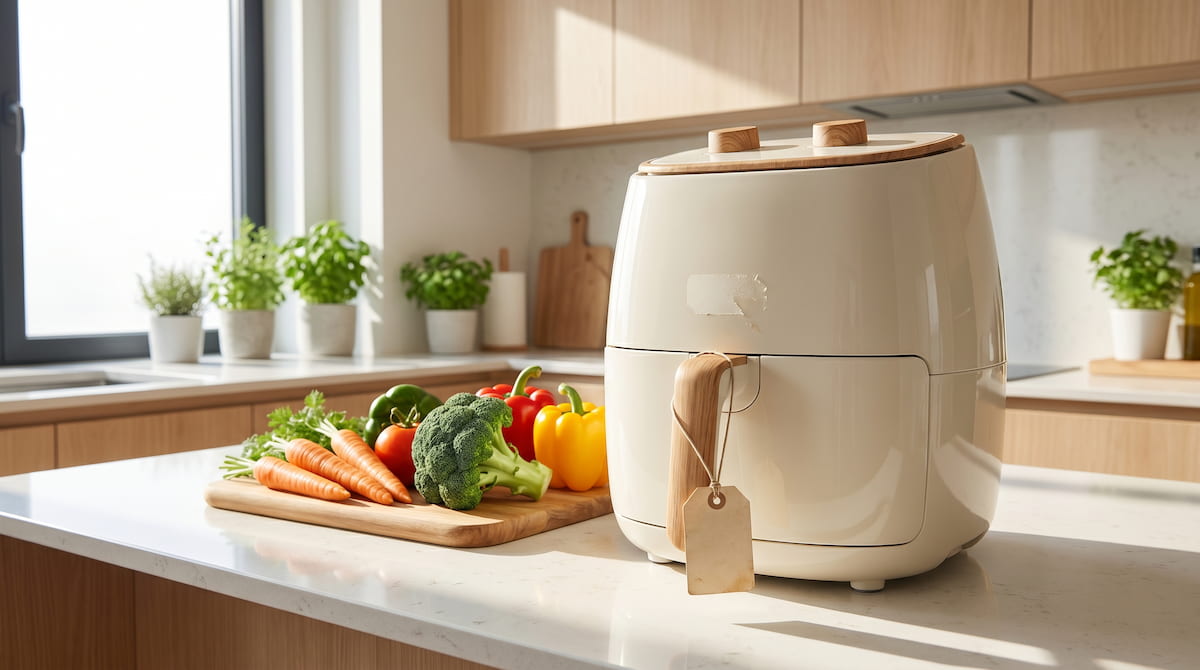
A quality ceramic air fryer at a reasonable price point outperforms cheap nonstick models in both safety and longevity.
What to Do If You Already Own a Cheap Air Fryer
If replacing isn’t in the budget right now, these steps reduce your risk significantly:
- Inspect the coating before every use — any scratching or flaking means stop using it immediately
- Use only silicone or wooden utensils — never metal inside the basket
- Hand wash only, never dishwasher — dishwasher cycles accelerate coating wear on budget models
- Always ventilate — open a window or run the range hood every time you cook
- Never preheat empty at max temperature — highest fume risk scenario for any PTFE-coated basket
My full air fryer cleaning guide covers the safest care routine for any basket type.
Are Cheap Air Fryers Toxic — Bottom Line
Cheap air fryers aren’t automatically toxic, but they carry meaningfully higher risk than quality ceramic models — thinner coatings that wear faster, lower-grade plastics that off-gas more, and shorter lifespans that mean more frequent replacement cycles. The cost saving at purchase often disappears quickly when you factor in replacement frequency and the health trade-offs. A quality ceramic air fryer like the Ninja AF150AMZ costs more upfront but delivers safer, more reliable daily cooking for years.
For a full overview of the safest non-toxic air fryer options at every price point, visit my main guide: Best PFAS-Free Air Fryers (2026).