Affiliate Disclosure: This post contains affiliate links. If you purchase through my links, I may earn a small commission at no extra cost to you. I only recommend products I’ve personally researched and trust for my own family.
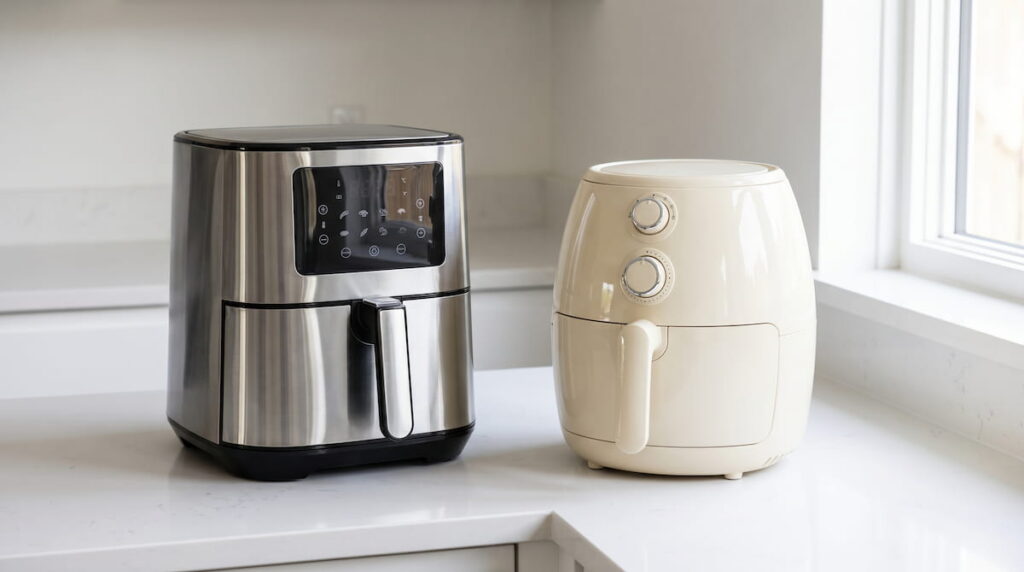
Is stainless steel air fryer safer than ceramic? When I started researching non-toxic air fryer options, this was one of the comparisons I kept coming back to. Both materials eliminate PTFE and PFAS concerns — but they’re not identical in how they perform or how they hold up over time. Here’s the honest breakdown.
Why Both Stainless Steel and Ceramic Beat Conventional Nonstick
Before comparing the two, it’s worth establishing what they have in common — and why both are meaningfully better than standard PTFE-coated baskets. Conventional nonstick air fryer coatings use polytetrafluoroethylene, which releases fluoropolymer fumes above 500°F and poses a real risk when the coating is scratched or degraded. Both stainless steel and ceramic eliminate that concern entirely.
Neither stainless steel nor ceramic contains PTFE, PFOA, or PFAS compounds. From a chemical safety standpoint, both are solid choices. The differences between them come down to practical factors: food release, durability, cleanup, and cooking performance. I covered the broader PFAS picture in my guide on whether air fryers contain PFAS.
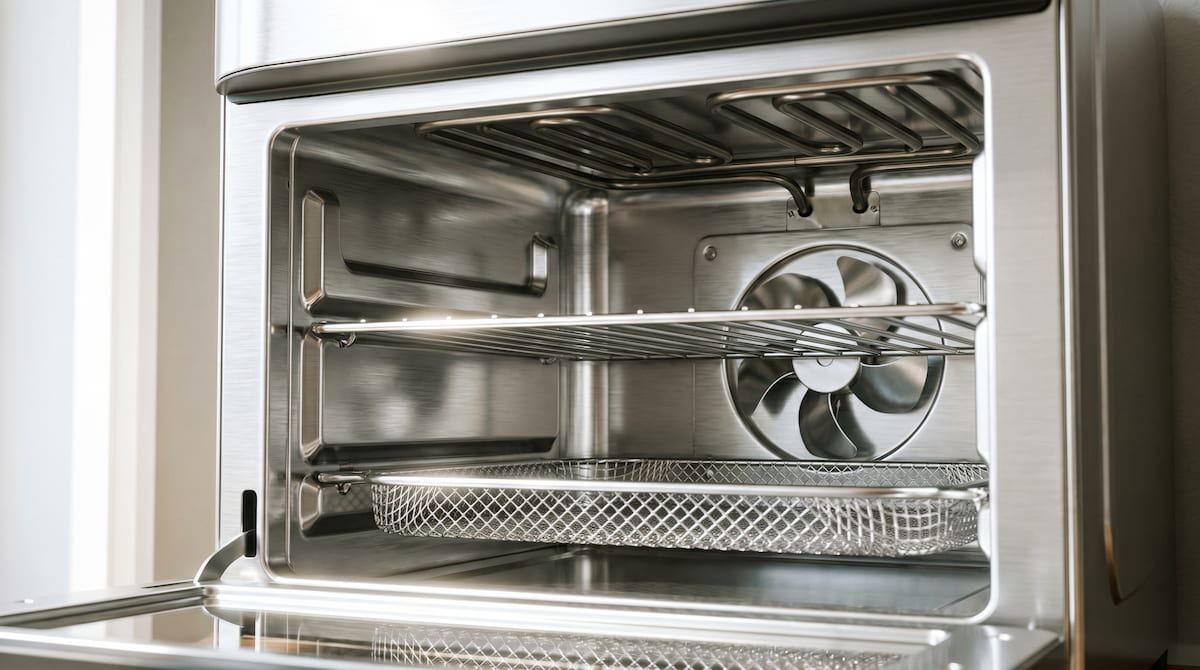
A stainless steel interior has no coating at all — nothing to flake, degrade, or release fumes at any temperature.
Is Stainless Steel Air Fryer Safer Than Ceramic? A Direct Comparison
| Feature | Stainless Steel | Ceramic |
|---|---|---|
| PTFE / PFAS free | 🟢 Yes — no coating at all | 🟢 Yes — mineral-based coating |
| Fume risk at high heat | 🟢 None — bare metal only | 🟢 Very low — no fluoropolymers |
| Food release / nonstick | 🟡 Moderate — food can stick | 🟢 Good — naturally nonstick surface |
| Durability | 🟢 Excellent — no coating to wear | 🟡 Good — coating wears over time |
| Cleanup ease | 🟡 Moderate — food can stick and bake on | 🟢 Easy — wipes clean quickly |
| Safe for birds/pets | 🟢 Yes | 🟢 Yes |
| Price range | 🟡 Usually higher | 🟢 More accessible |
Where Stainless Steel Has the Edge
Stainless steel wins on longevity and absolute chemical inertness. There’s no coating to scratch, no surface to degrade, and no fume risk at any temperature. For households with pet birds, young children, or anyone with serious chemical sensitivity concerns, stainless steel is the most conservative choice available.
The Instant Pot Omni Plus 18L is the standout stainless steel option I recommend — a large-capacity oven-style unit with a stainless interior, versatile cooking functions, and solid build quality. I covered it in full in my Instant Pot Omni Plus review.
See Today’s Price on Amazon →Where Ceramic Has the Edge
Ceramic wins on everyday usability. The nonstick surface means food releases cleanly, cleanup takes under two minutes, and the cooking experience is closer to what most people are used to with conventional nonstick. For daily family cooking where convenience matters, ceramic is the more practical non-toxic choice.
The Ninja AF150AMZ uses a ceramic-coated basket that’s PTFE-free and PFOA-free — compact, easy to use, and genuinely non-toxic. I’ve used it daily for over six months and it remains my top recommendation for most households. Full details in my Ninja AF150AMZ review.
See Today’s Price on Amazon →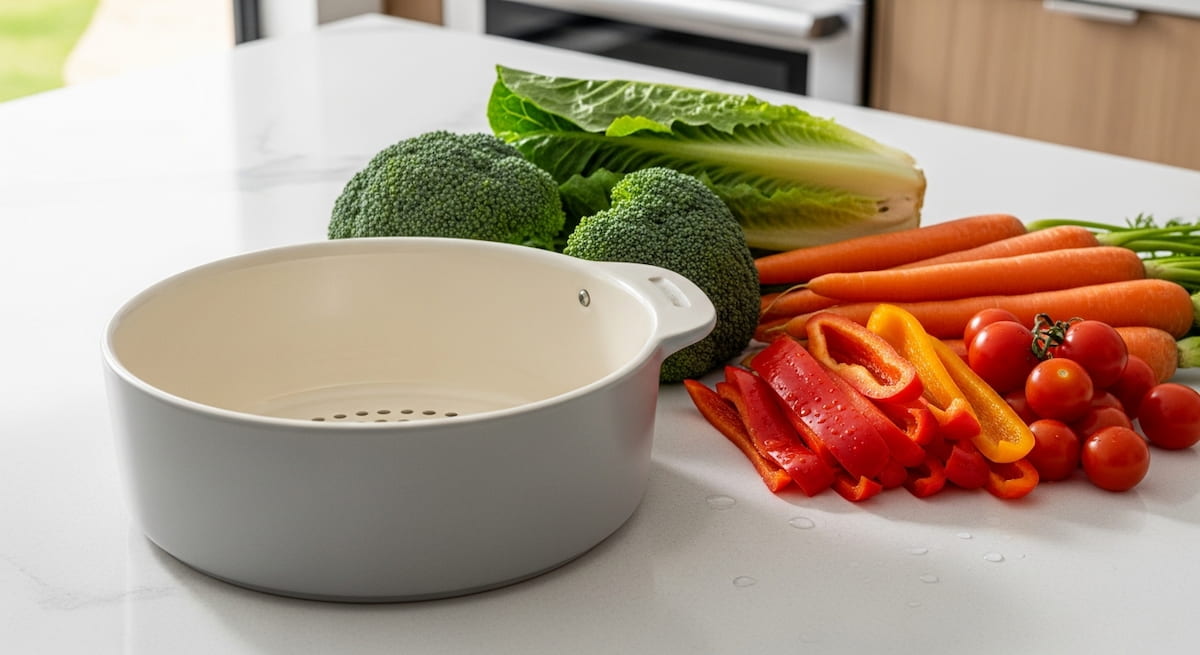
Ceramic baskets offer a naturally nonstick surface without any fluoropolymers — making daily cooking and cleanup significantly easier than stainless steel.
Which Should You Choose?
The right answer depends on your priorities:
- Choose stainless steel if: you have pet birds, you want zero coating variables, you prioritize maximum longevity, or you’re cooking for a large family and need oven-style capacity
- Choose ceramic if: you want easy daily cleanup, you’re replacing a conventional nonstick air fryer and want a similar experience, you’re working with a tighter budget, or you need a compact countertop size
Both are meaningfully safer than PTFE-coated alternatives. For a broader comparison of all three main safe materials, see my guide on ceramic vs nonstick air fryers and my post on whether stainless steel air fryers are safer.
Is Stainless Steel Air Fryer Safer Than Ceramic — Bottom Line
From a pure chemical safety standpoint, stainless steel has a slight edge — no coating means nothing to degrade or release fumes under any conditions. But ceramic is genuinely safe for normal home use, significantly easier to cook with day-to-day, and more accessible in terms of price and size. For most households, ceramic is the more practical non-toxic choice. For households with birds or serious chemical sensitivities, stainless steel is the conservative pick.
For a full list of the safest PFAS-free air fryer options, visit my main guide: Best PFAS-Free Air Fryers (2026).