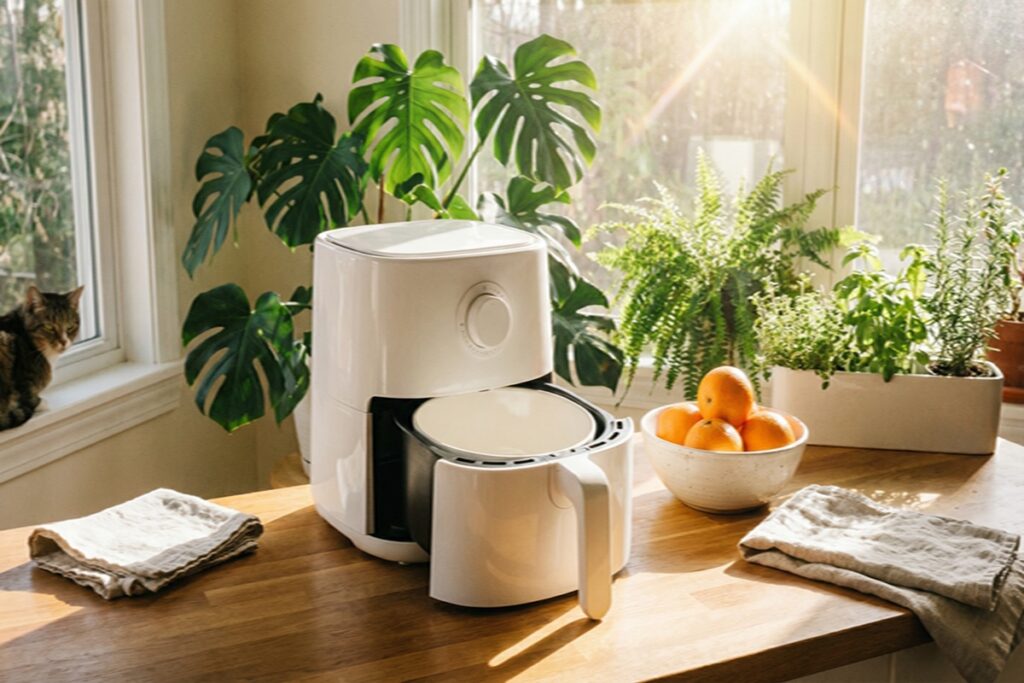
What is a non toxic air fryer? I started asking this question after using an air fryer almost every day for quick meals. At first, I didn’t think much about what it was made of — I assumed all air fryers were basically the same.
But after noticing a faint chemical smell when cooking chicken at higher temperatures, I became more curious about the materials inside. That’s when I realized that not all air fryers are built the same, and the materials actually matter more than most people think.
What “Non Toxic Air Fryer” Actually Means
A non toxic air fryer generally refers to a model designed with materials that reduce or avoid traditional synthetic non-stick coatings. Instead of relying on chemical-based surfaces, these air fryers use stainless steel, ceramic coatings, or glass cooking chambers.
In most standard air fryers, you’ll find PTFE-based non-stick coatings — the same family of chemicals linked to PFAS concerns. “Non toxic” isn’t a strict regulated category. It’s more about understanding what materials are being used and how they behave over time at high heat.
The Three Main Materials
Stainless Steel Interiors
Stainless steel is one of the most trusted materials in kitchen appliances. No coating required, stable under high heat, and nothing to degrade over time. The trade-off is that food sticks more — you need a light coat of oil for most proteins. For a full breakdown, see my stainless steel air fryer guide.
Ceramic Coated Baskets
Ceramic coatings are the most practical PFAS-free option for everyday cooking. They’re easier to clean than stainless, non-stick without PTFE chemistry, and widely available at reasonable price points. Quality varies significantly between brands — always look for FDA or LFGB certification. More detail in my ceramic air fryer safety guide.
Glass Cooking Chambers
Glass eliminates the coating question entirely. No synthetic surface touches your food at all. The downside: heavier, bulkier, and more fragile than basket models. Best for people who want maximum material transparency. See my glass air fryer guide for the full picture.
For a direct side-by-side, see the ceramic vs stainless steel comparison and the glass vs stainless steel guide.
Are Traditional Air Fryers Toxic?
Most modern air fryers are considered safe under normal cooking conditions. The concern isn’t everyday use — it’s edge cases like overheating, scratched coatings, and long-term wear. Once I started noticing that faint smell at high temperatures, I stopped trusting “safe under normal use” as a complete answer and started paying attention to materials instead.
For more on the chemistry involved: Do Air Fryers Contain PFAS? and PTFE vs PFAS Explained.
How to Choose
Check interior materials first. The basket, tray, and cooking chamber matter far more than the exterior design or feature list. If the product listing doesn’t clearly state the interior material, that’s a red flag.
Match size to your cooking habits. Oven-style stainless models are better for families. Compact ceramic basket models work well for one to three people.
Think about cleaning. Ceramic is the easiest daily option. Stainless requires more effort but lasts longer without degradation concerns.
Best Non Toxic Options in 2026
| Model | Material | Best For |
|---|---|---|
| Ninja AF150AMZ | Ceramic | Everyday use |
| Instant Pot Omni Plus | Stainless Steel | Large families |
| Big Boss 16Qt | Glass | Batch cooking |
Best Ceramic: Ninja AF150AMZ
The most balanced option for everyday PFAS-free cooking. Compact, easy to clean, and from a brand that’s transparent about materials.
Best Stainless Steel: Instant Pot Omni Plus
No coating whatsoever. Large capacity, multi-function, and built to last without degradation concerns.
Best Glass: Big Boss 16Qt
Full glass cooking chamber, nothing between your food and the heat. The most transparent material option available.
For the complete breakdown across all materials and budgets, see the full non-toxic air fryer guide.
The Bottom Line
A non toxic air fryer is less about a single definition and more about understanding which materials touch your food. Stainless steel, ceramic, and glass all offer different trade-offs — but all three are meaningfully safer than a worn-out PTFE basket.
In my case, I still use an air fryer regularly. I just pay a lot more attention to what it’s made of and how I maintain it.
This article is for informational purposes only. Always verify manufacturer specifications before purchasing.