Affiliate Disclosure: This post contains affiliate links. If you purchase through my links, I may earn a small commission at no extra cost to you. I only recommend products I’ve personally researched and trust for my own family.
Is Teflon air fryer safe for everyday cooking? This was one of the first questions I asked after noticing a strange chemical smell coming off my old nonstick air fryer during the first few uses. I spent a lot of time reading through research and regulatory guidance to get a straight answer. Here’s what the science actually says.
What Is Teflon and Why Is It in Air Fryers?
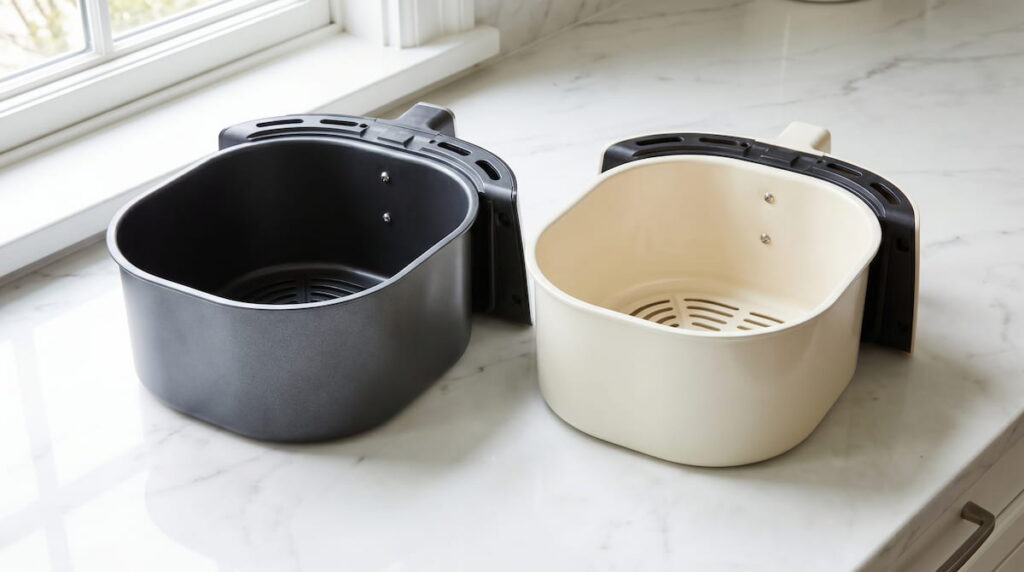
Teflon is the brand name for PTFE — polytetrafluoroethylene — a synthetic fluoropolymer that creates an extremely slippery, heat-resistant surface. It’s been used in cookware since the 1940s because it’s effective, inexpensive to apply, and makes cleanup easy. The vast majority of conventional air fryer baskets on the market today use PTFE-based nonstick coatings.
The appeal is obvious: food doesn’t stick, cleanup is fast, and the coating is durable under normal use. The concern is what happens when conditions aren’t normal — and with air fryers running at high heat, that’s a realistic scenario worth understanding.
When Does a Teflon Air Fryer Become Unsafe?
At normal cooking temperatures — typically 350°F to 400°F — an intact PTFE coating is considered chemically stable and low-risk for healthy adults. The safety picture changes in three specific situations:
1. Overheating Above 500°F
PTFE begins to break down at temperatures above 500°F (260°C), releasing fluoropolymer fumes. These fumes can cause polymer fume fever in humans — flu-like symptoms including chills, headache, and fever — and are potentially fatal to pet birds due to their highly sensitive respiratory systems. I covered the exact temperature thresholds in my post on what temperature PTFE starts to break down.
2. Damaged or Scratched Coating
A scratched or flaking Teflon basket is a different risk profile than an intact one. When the coating is compromised, small particles can end up in your food — and the degraded surface is more susceptible to further breakdown at lower temperatures. If your basket is visibly scratched or the coating is peeling, it’s time to replace it. My guide on how to tell if your air fryer coating is damaged walks through exactly what to look for.
3. Poor Ventilation in Small Spaces
Even at normal cooking temperatures, any fumes produced in a small, poorly ventilated kitchen accumulate faster than they disperse. This is especially relevant for apartment cooking or dorm use where windows are limited. Always run the range hood or open a window when using any air fryer — Teflon-coated or not.
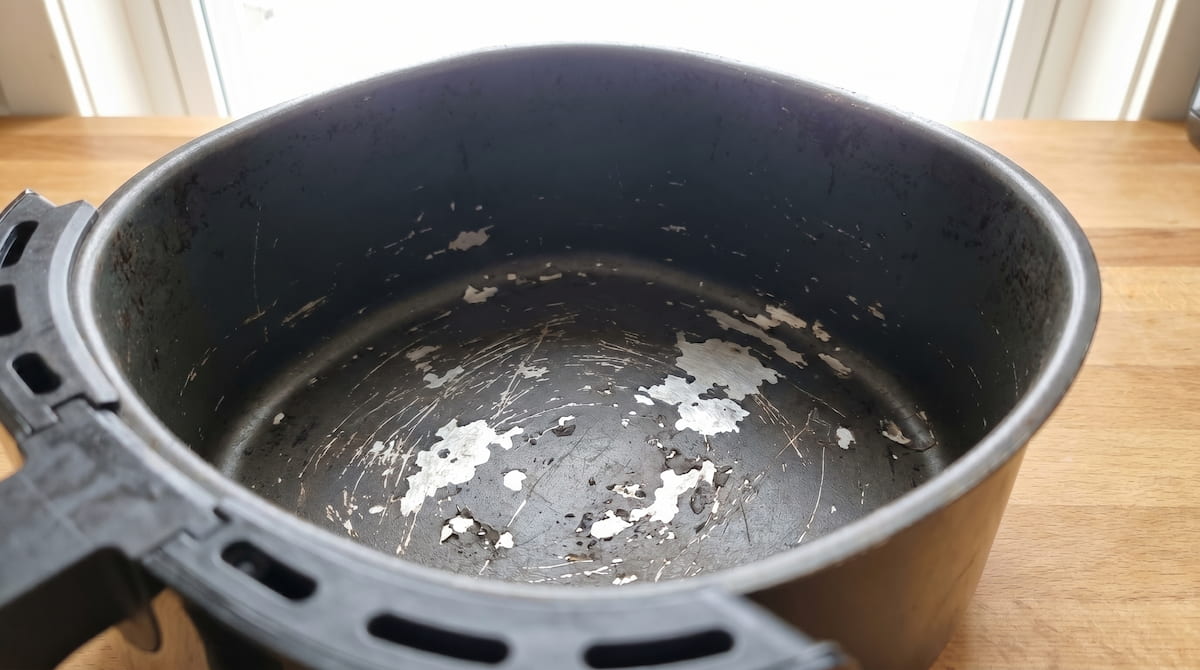
A scratched or worn Teflon coating is a clear signal to stop using the basket — damaged PTFE poses a higher risk than intact coating.
Is Teflon Air Fryer Safe? What Regulatory Bodies Say
The picture from regulators is nuanced. According to the U.S. Environmental Protection Agency (EPA), PTFE itself is considered stable and low-risk at normal use temperatures. The bigger historical concern was PFOA — the chemical formerly used to manufacture PTFE — which was phased out of US production by 2013 after being linked to serious health effects.
Most modern air fryers are PFOA-free, which is a genuine improvement. But PTFE is still present in most nonstick coatings, and its behavior at high heat remains a legitimate concern — particularly for households with birds, young children, or people with respiratory sensitivities.
Teflon Air Fryer Safety: Risk Level by Scenario
| Scenario | Risk Level | Recommendation |
|---|---|---|
| Normal temp, intact coating, good ventilation | 🟢 Low | Generally acceptable for healthy adults |
| High temp, empty basket, no ventilation | 🔴 High | Avoid — highest fume release scenario |
| Scratched or flaking coating | 🔴 High | Replace basket immediately |
| Household with pet birds | 🔴 Very High | Switch to ceramic or stainless steel |
| Young children or pregnant women present | 🟡 Moderate | Consider switching to PTFE-free model |
If You Want to Eliminate the Risk Entirely
The simplest solution is to switch to an air fryer that doesn’t use Teflon at all. There are two main alternatives worth considering:
Ninja AF150AMZ — Ceramic Coating, No PTFE
The Ninja AF150AMZ uses a ceramic-coated basket that contains no PTFE, no PFOA, and no PFAS compounds. At high heat it stays stable, produces no fluoropolymer fumes, and cleans up just as easily as a nonstick model. It’s the air fryer I switched to after my research, and after six months of daily use the coating remains intact with no concerns. Full details in my Ninja AF150AMZ review.
See Today’s Price on Amazon →Instant Pot Omni Plus 18L — Stainless Steel, No Coating at All
For families who want zero coating concerns, the Instant Pot Omni Plus 18L uses a stainless steel interior — no PTFE, no ceramic, nothing to degrade or flake. It’s a larger oven-style unit that handles family-sized portions easily. See my full Instant Pot Omni Plus review for details.
See Today’s Price on Amazon →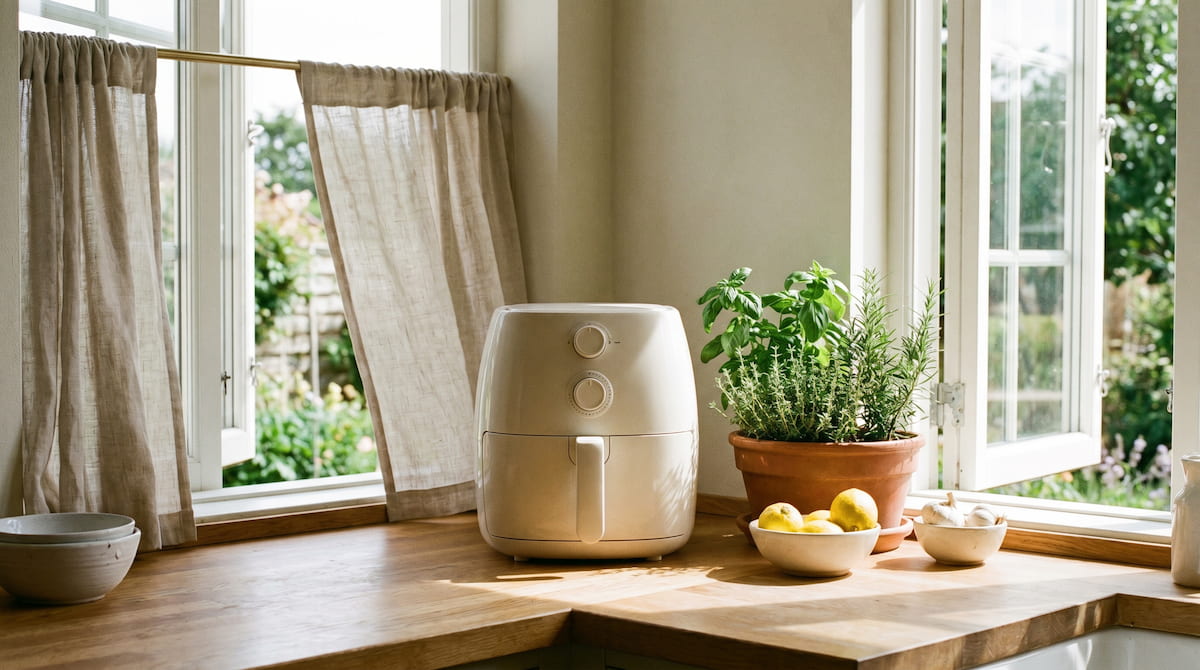
Switching to a Teflon-free ceramic air fryer removes the guesswork about coating safety completely.
If You’re Keeping Your Teflon Air Fryer for Now
If replacing isn’t an option right now, these habits significantly reduce your risk:
- Never preheat empty at maximum temperature — always have food in the basket before starting
- Stay within the recommended temperature range — avoid running above 400°F regularly
- Always ventilate — open a window or run the range hood every time you cook
- Inspect the coating regularly — any scratching or flaking means it’s time to replace
- Keep birds out of the kitchen — PTFE fumes are dangerous to birds even at moderate temperatures
- Clean gently — no abrasive scrubbers, no metal utensils. See my air fryer cleaning guide for the safest method
Is Teflon Air Fryer Safe — Bottom Line
A Teflon-coated air fryer used correctly — intact coating, normal temperatures, good ventilation — carries a low risk for healthy adults. The risk increases meaningfully with coating damage, overheating, poor ventilation, or the presence of birds in the household. If any of those factors apply to your situation, switching to a ceramic or stainless steel model is the straightforward, low-stress solution.
For a full comparison of the safest PTFE-free air fryer options available right now, visit my main guide: Best PFAS-Free Air Fryers (2026).