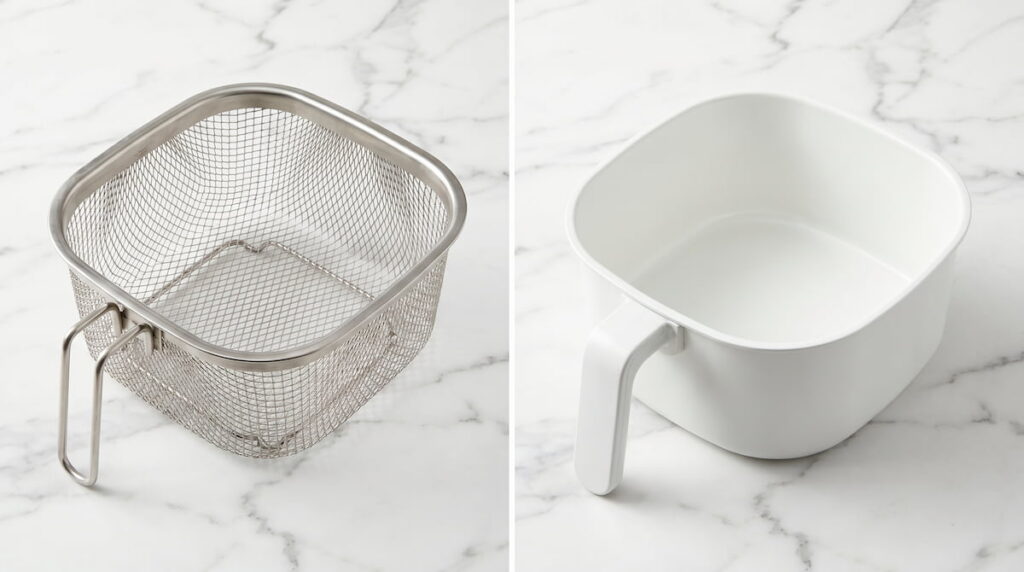
Stainless steel vs ceramic air fryer basket — which is actually safer for daily family cooking? Both are PFAS-free and genuinely non-toxic, but they have meaningfully different profiles on durability, cleaning, cooking results, and long-term maintenance. This guide gives you the complete honest comparison so you can choose the right surface for how your family actually cooks.
I’m Wook, a bus driver and dad of two teenage boys. Our family has used both a ceramic basket and a stainless steel tray system over the past two years. Here’s what the real-world difference looks like beyond the marketing claims.
Stainless Steel vs Ceramic Air Fryer Basket: The Core Safety Comparison
Both stainless steel and ceramic are PFAS-free and represent a genuine upgrade from PTFE-coated baskets. The safety difference between them is smaller than the difference between either one and PTFE — but it’s still worth understanding clearly.
| Factor | Stainless Steel | Ceramic |
|---|---|---|
| PFAS-free | ✅ Yes — no coating at all | ✅ Yes — silica-based coating |
| Fume risk when heated | ✅ Zero — nothing to off-gas | ✅ Minimal — inert at normal temps |
| Flake risk when scratched | ✅ None — no coating to flake | ✅ Low — inert silica particles |
| Safe for birds and pets | ✅ Yes | ✅ Yes |
| Safety degradation over time | ✅ None — same safety profile always | ✅ Low — wear affects convenience not safety |
| Chemical smell risk | ✅ Zero | ✅ None after initial burn-off |
From a pure safety standpoint, stainless steel has a marginal edge — there is literally no coating present to degrade, scratch, or release anything under any condition. Ceramic is essentially equivalent for practical family cooking purposes, with the understanding that ceramic wear affects convenience before it affects safety.
Cooking Performance: Where the Real Difference Shows
This is where the two surfaces diverge most noticeably in daily use.
Nonstick Performance
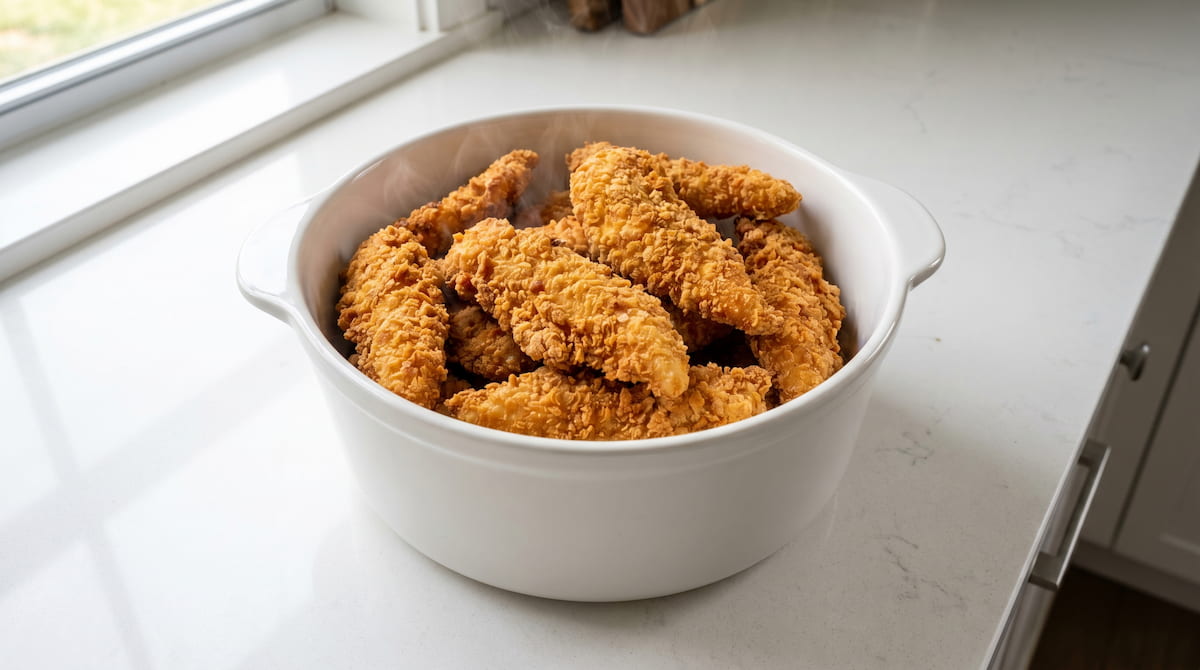
Ceramic wins clearly here. A ceramic basket’s silica surface has genuine nonstick properties — delicate foods like fish, eggs, and breaded items release cleanly without preparation. Stainless steel has no nonstick properties whatsoever, requiring either parchment paper liners, a light oil spray, or silicone mats to prevent sticking with most foods.
Crispiness Results
Stainless steel mesh baskets often produce slightly crispier results because the open mesh design allows better airflow around all surfaces of the food. Ceramic baskets are typically solid-bottomed with perforations, which can create slightly less even crisping on the underside of flat foods.
High-Heat Performance
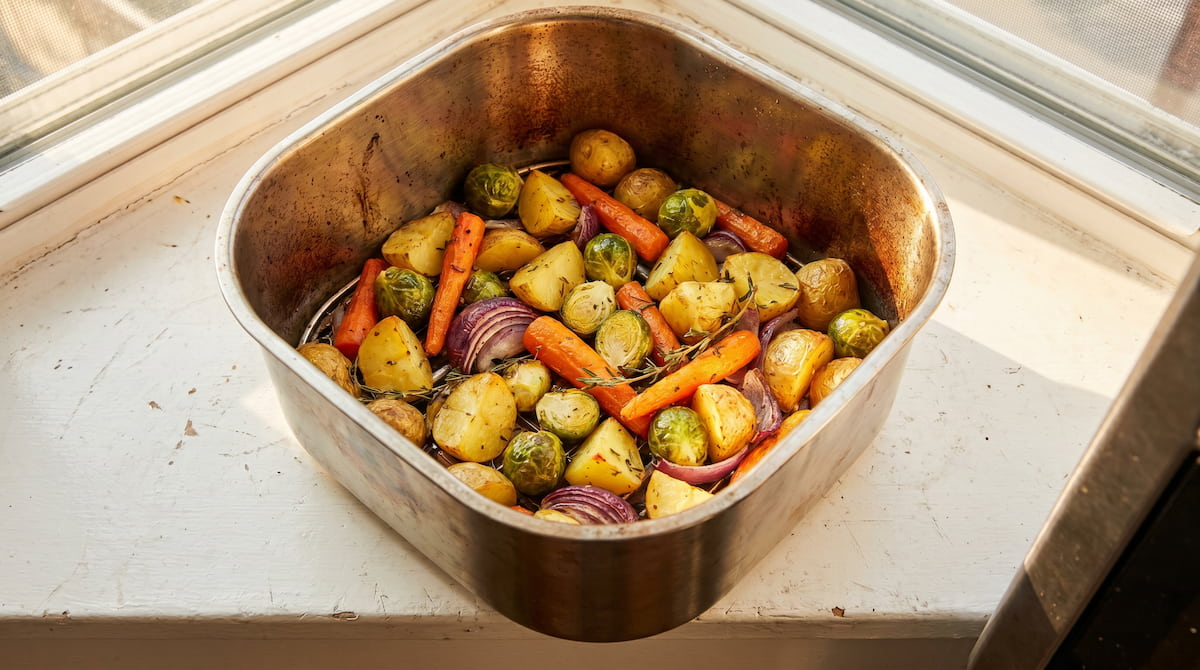
Both surfaces perform reliably at the temperatures air fryers operate — typically 300–400°F. Stainless steel has no upper temperature concern of any kind. Ceramic coatings remain stable well above normal air fryer operating temperatures, so this is a non-issue for practical family cooking.
Cleaning and Maintenance
Ceramic: Easier Daily Cleaning
The nonstick surface of a ceramic basket means food releases easily and most residue wipes away with minimal effort. A soft sponge and mild dish soap handles daily cleaning in under two minutes. The tradeoff is that ceramic surfaces require gentle treatment — no metal scrubbers, no dishwasher, no abrasive cleaners.
Stainless Steel: More Effort, More Forgiveness
Stainless steel requires more soaking time for baked-on residue but is completely forgiving about cleaning method. You can scrub firmly with a stiff brush, use baking soda paste for stubborn spots, or put stainless trays in the dishwasher without any coating damage concern. The surface is essentially indestructible compared to any coated alternative.
Longevity and Replacement
| Factor | Stainless Steel | Ceramic |
|---|---|---|
| Lifespan | ✅ Indefinite with proper care | 🟡 1.5–3 years before nonstick loss |
| Replacement needed | ✅ Rarely — surface doesn’t degrade | 🟡 Every 2–3 years for optimal performance |
| Replacement cost | ✅ Not needed | 🟡 $18–$30 per replacement basket |
| Metal utensil safe | ✅ Yes — no damage possible | ❌ No — accelerates coating wear |
| Dishwasher safe | ✅ Yes | ❌ Not recommended |
Which Should Your Family Choose?
The right answer depends on how your household actually cooks:
Choose Ceramic If:
- You cook delicate foods regularly — fish, eggs, breaded items
- You want easy daily cleanup with minimal effort
- Your household cooks in smaller batches for 2–4 people
- Convenience in daily use matters as much as long-term durability
Choose Stainless Steel If:
- You want a cooking surface that never needs replacing
- You have birds or chemically sensitive family members
- You prefer using metal utensils without concern
- You’re cooking for a larger family and want oven-style capacity
Our Family’s Recommendation
For most families cooking daily, the Ninja AF150AMZ ceramic basket delivers the best balance of safety, convenience, and practical cooking performance. For larger families or households that want a permanent coating-free solution, the Instant Pot Omni Plus 18L stainless interior is the most practical upgrade available.
See Ninja AF150AMZ on Amazon → See Instant Pot Omni Plus on Amazon →For a full breakdown of every PFAS-free option across both basket types, our PFAS-Free Air Fryer Guide covers every verified non-toxic model worth considering in 2026. And if you’re specifically evaluating the Ninja ceramic option, our Ninja ceramic basket guide goes deep on material certification and real-world performance.
Frequently Asked Questions
Is stainless steel or ceramic safer for an air fryer basket?
Both are PFAS-free and genuinely safe for daily family cooking. Stainless steel has a marginal safety edge because there’s no coating present to wear or degrade under any condition. Ceramic is essentially equivalent for practical purposes, with the understanding that surface wear affects convenience before it affects safety.
Does food taste different in stainless steel vs ceramic?
No — neither stainless steel nor ceramic transfers flavor to food. Taste differences between the two are entirely a function of cooking technique and food preparation, not the basket material itself.
Which is easier to clean — stainless steel or ceramic?
Ceramic is easier for daily cleaning because food releases more easily from the nonstick surface. Stainless steel requires more soaking effort for baked-on residue but is more forgiving about cleaning method — you can scrub firmly without any damage concern.
How long does a ceramic air fryer basket last compared to stainless steel?
A quality ceramic basket lasts 1.5 to 3 years before significant nonstick performance loss with daily use. Stainless steel trays and baskets last indefinitely with normal care — there’s no coating to wear out.
Can I use the same recipes in stainless steel as ceramic?
Yes — with one adjustment. Recipes developed for nonstick surfaces may require parchment paper liners or a light oil spray when using stainless steel to prevent sticking. Everything else — temperatures, timing, and results — is essentially identical between the two surfaces.
Next up is the final article in Cluster 3 — the buyer’s guide that brings everything together: the best air fryers without Teflon in 2026, covering every verified PTFE-free option across ceramic, stainless, and glass formats.