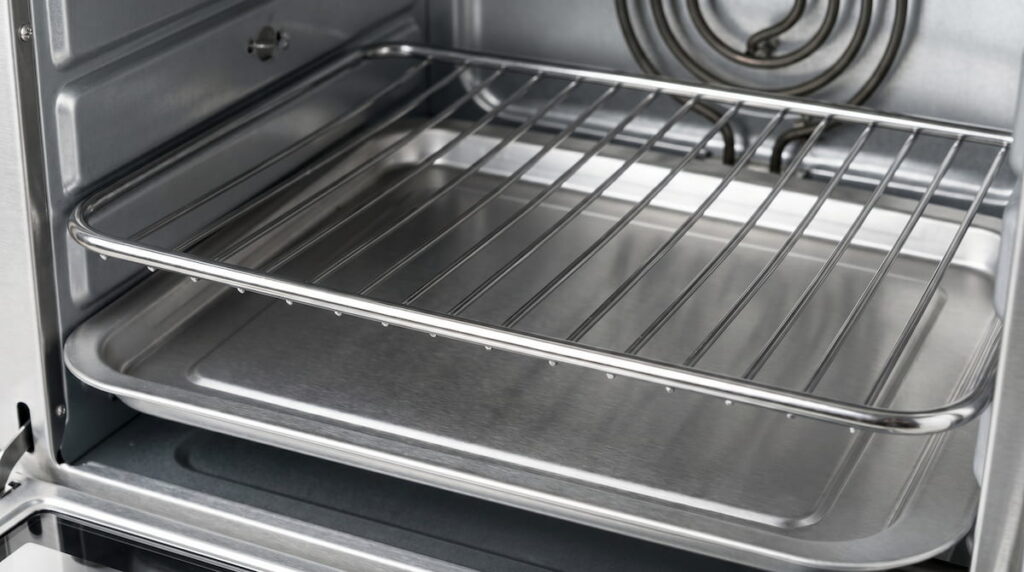
Is a stainless steel air fryer really non toxic? Yes — but only if the stainless steel is actually the cooking surface, not just the exterior shell. This distinction matters more than most product listings make clear, and getting it wrong means paying a premium for a “stainless steel” air fryer that still has a coated basket inside.
I’m Wook, a bus driver and dad of two teenage boys. When I started researching coating-free air fryers after our PTFE basket problems, “stainless steel” kept coming up as the gold standard. But after reading dozens of product listings carefully, I realized the label means very different things depending on the model. Here’s exactly what to look for.
What “Stainless Steel Air Fryer” Actually Means
The phrase “stainless steel air fryer” is used in three distinct ways by manufacturers — and only one of them means what most families think it means:
| What the Label Says | What It Actually Means | Non-Toxic? |
|---|---|---|
| Stainless steel exterior | Metal outer shell only — basket still coated inside | ⚠️ Depends on basket coating |
| Stainless steel interior | Cooking chamber walls are stainless — trays may vary | 🟡 Check tray material too |
| Stainless steel cooking surface | Basket, tray, and rack all stainless — no coating anywhere | ✅ Genuinely non-toxic |
The only version that delivers genuine non-toxic cooking is the third one — where the actual surface your food contacts during cooking is stainless steel throughout. Everything else is primarily an aesthetic choice.
Is Stainless Steel Actually Non-Toxic?
Food-grade stainless steel — typically 18/8 or 304 grade — is one of the most thoroughly tested materials in food contact applications. It contains no PTFE, no PFAS, no fluoropolymers, and no coating chemistry of any kind. The chromium oxide layer that gives stainless steel its corrosion resistance is stable, inert, and does not transfer to food under any normal cooking condition.
According to the EPA’s PFAS resource page, the health concerns around nonstick cookware are specifically tied to fluoropolymer chemistry — a category that stainless steel is completely outside of. There are no PFAS, no coating degradation, and no fume concerns with a true stainless steel cooking surface.
The Honest Tradeoffs of Stainless Steel
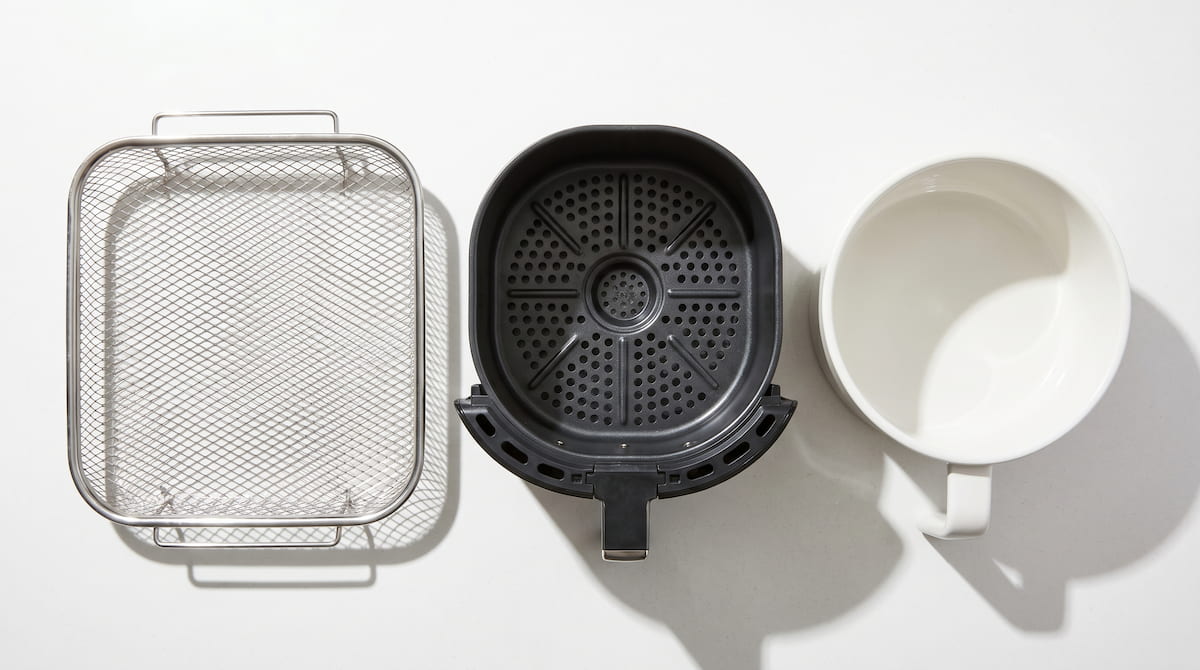
Stainless steel is the most chemically inert air fryer cooking surface available — but it comes with practical tradeoffs that families should understand before switching:
Food Sticks More
Stainless steel has no nonstick properties on its own. Foods with sugar, marinades, or high moisture content will stick to stainless surfaces without preparation. Parchment paper liners, a light spray of high-smoke-point oil, or silicone mats inside the tray handle this effectively — but it requires a habit adjustment compared to coated surfaces.
Cleaning Takes More Effort
Baked-on food residue on stainless steel requires soaking in warm soapy water before scrubbing. A soft brush and dish soap handles most situations, but it takes longer than wiping a nonstick surface. The tradeoff is that you can scrub stainless steel firmly without any coating damage concern.
Oven-Style Format Is Most Common
True stainless steel cooking surfaces are most commonly found in oven-style air fryers rather than basket-style units. This means a larger countertop footprint and a different cooking workflow than basket models — worth considering before committing.
The Best True Stainless Steel Air Fryer for Families
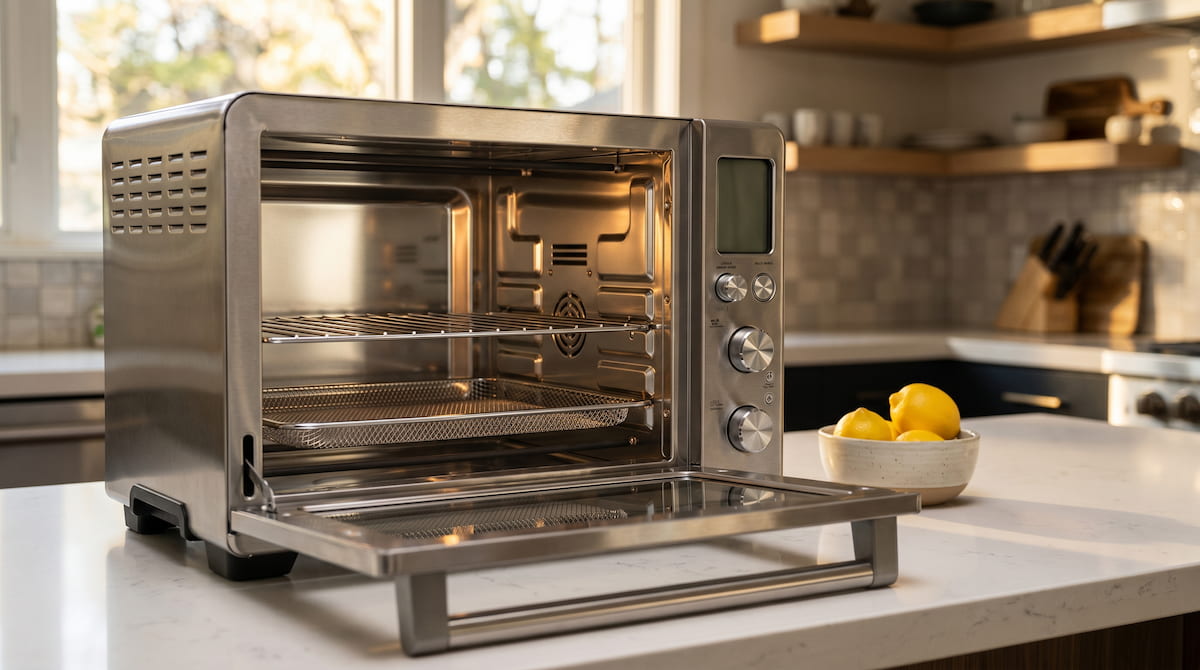
The Instant Pot Omni Plus 18L is the clearest recommendation for families who want a genuinely non-toxic stainless steel cooking surface. Its interior chamber and included trays are stainless steel throughout — no PTFE, no ceramic coating, no compromise on any cooking surface your food contacts.
At 18 liters it handles full family meals in one batch, which matters practically for households of four to six. The oven-style format means flat stainless trays rather than a basket, which some families find easier to load and unload for larger cuts of meat or whole vegetables.
Stainless Steel vs Ceramic vs Glass: Full Non-Toxic Comparison
| Surface | PFAS-Free | Fume Risk | Nonstick | Durability |
|---|---|---|---|---|
| Stainless Steel | ✅ Yes | ✅ None | ❌ No | ✅ Excellent |
| Ceramic | ✅ Yes | ✅ Minimal | ✅ Yes | 🟡 Moderate |
| Glass | ✅ Yes | ✅ None | 🟡 Moderate | 🟡 Moderate |
| PTFE Nonstick | ❌ No | ⚠️ Medium-High | ✅ Excellent | 🟡 Moderate |
How to Verify a Model Is Truly Stainless Steel
Before purchasing any air fryer marketed as stainless steel, verify these three things in the product listing:
- Check the basket or tray material specifically — not just the exterior or chamber walls
- Look for “PTFE-free” and “PFAS-free” in the description — confirms no hidden coatings on any surface
- Read the Q&A section on Amazon — other buyers often ask directly about coating materials and the answers are revealing
Our PFAS-Free Air Fryer Guide lists every verified non-toxic model with confirmed surface materials — no guesswork required. And if a ceramic PTFE-free basket is a better fit for your household, our guide on the Ninja ceramic basket covers the most popular PFAS-free option in that category.
Quick Safety Checklist When Evaluating a Stainless Steel Air Fryer
- ✅ Product listing confirms stainless steel basket or tray — not just exterior
- ✅ Explicitly PTFE-free and PFAS-free on all food contact surfaces
- ✅ Food-grade stainless steel grade confirmed (304 or 18/8 preferred)
- ✅ Capacity appropriate for your household size
- ⚠️ “Stainless steel look” or “stainless finish” — cosmetic only, check basket material
- ❌ Stainless exterior with coated basket inside — not a non-toxic upgrade
Frequently Asked Questions
Does stainless steel leach into food when heated?
Food-grade stainless steel (304/18/8 grade) is considered safe for food contact at cooking temperatures. Trace amounts of nickel and chromium can migrate into acidic foods during prolonged contact — the quantities involved are generally considered within safe dietary limits for healthy adults, and are far below any health threshold with normal air frying use.
Is stainless steel better than ceramic for air fryers?
From a purely non-toxic standpoint, stainless steel has a slight edge — there’s no coating of any kind to wear, scratch, or potentially degrade. For everyday convenience, ceramic is easier to cook with due to its nonstick properties. Both are PFAS-free and meaningfully safer than PTFE.
Can you use metal utensils in a stainless steel air fryer?
Yes — that’s one of the practical advantages of stainless steel. There’s no coating to protect, so metal tongs, spatulas, and skewers are completely fine. This makes daily cooking more convenient once you’re used to the non-nonstick surface.
Is the Instant Pot Omni Plus stainless steel throughout?
The cooking chamber interior and included trays are stainless steel with no PTFE coating. It’s one of the most genuinely non-toxic oven-style air fryers available at its price point for families who want a large-capacity coating-free option.
What grade of stainless steel is safe for cooking?
304 grade (also labeled 18/8) is the food-safe standard used in kitchen equipment. 316 grade offers slightly better corrosion resistance but is less common in consumer air fryers. Both are safe for cooking. Avoid unlabeled or unspecified stainless steel grades from unverified manufacturers.
Next in this cluster: how does stainless steel actually compare to ceramic in a direct head-to-head for daily family air frying — safety, durability, cleaning, and cooking results? We cover the full comparison in our stainless steel versus ceramic air fryer basket guide.