Affiliate Disclosure: This post contains Amazon affiliate links. If you purchase through my links, I may earn a small commission at no extra cost to you. I only recommend products I’ve personally tested or thoroughly researched.
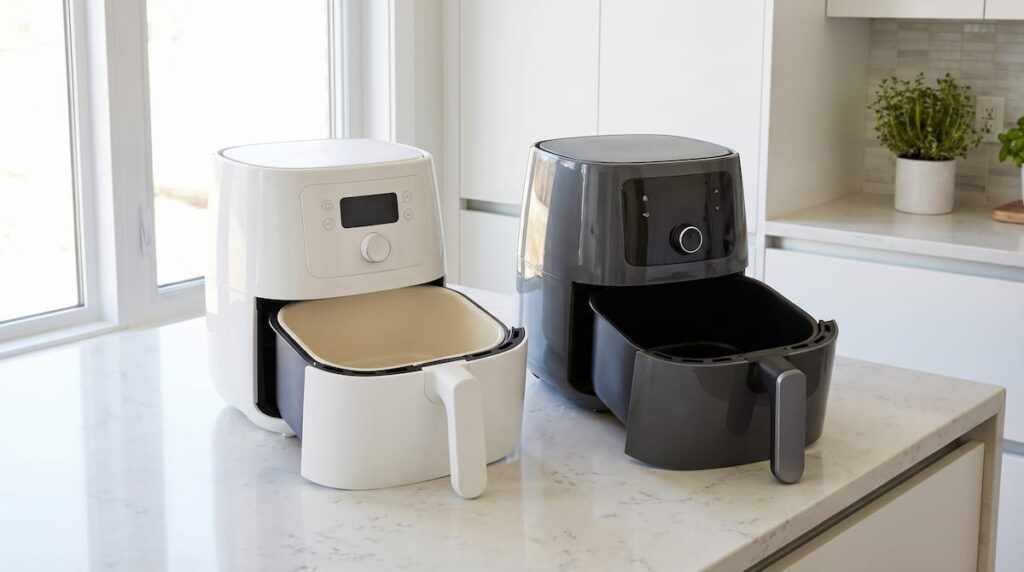
The non toxic air fryer vs regular question comes down to one thing: what’s actually touching your food every time you cook, and whether that matters to you.
I switched our household to a non-toxic air fryer after noticing a chemical smell coming off our old nonstick basket at high heat. That smell isn’t random — it’s what happens when PTFE-based coatings start to break down. Here’s what I learned after testing both sides of this comparison.
Non-Toxic vs Regular Air Fryer: Quick Comparison
| Factor | Non-Toxic Air Fryer | Regular Air Fryer |
|---|---|---|
| Basket coating | ✅ Ceramic, glass, or stainless | PTFE (Teflon) or PFAS-based |
| Chemical off-gassing risk | ✅ None | Yes — at temps above 500°F |
| Coating durability | ✅ Longer lasting | Chips and scratches over time |
| Food release | Good — slightly less than PTFE | ✅ Very slick when new |
| Price premium | $20–$60 more on average | Lower upfront cost |
| Long-term value | ✅ Better — coating lasts longer | May need replacing sooner |
| Safe for kids and families | ✅ Yes | Depends on usage and condition |
What Makes an Air Fryer “Regular”
Most air fryers sold under $80 use a PTFE-based nonstick coating on the basket — the same family of chemicals used in traditional Teflon cookware. When new, these coatings work well and food slides right off. The problem starts with time and heat.
PTFE coatings begin to degrade above 500°F (260°C). Air fryers regularly hit those temperatures, especially on preset high-heat settings. Once the coating starts to chip or scratch — from metal utensils, abrasive cleaning, or just daily wear — those particles end up in your food.
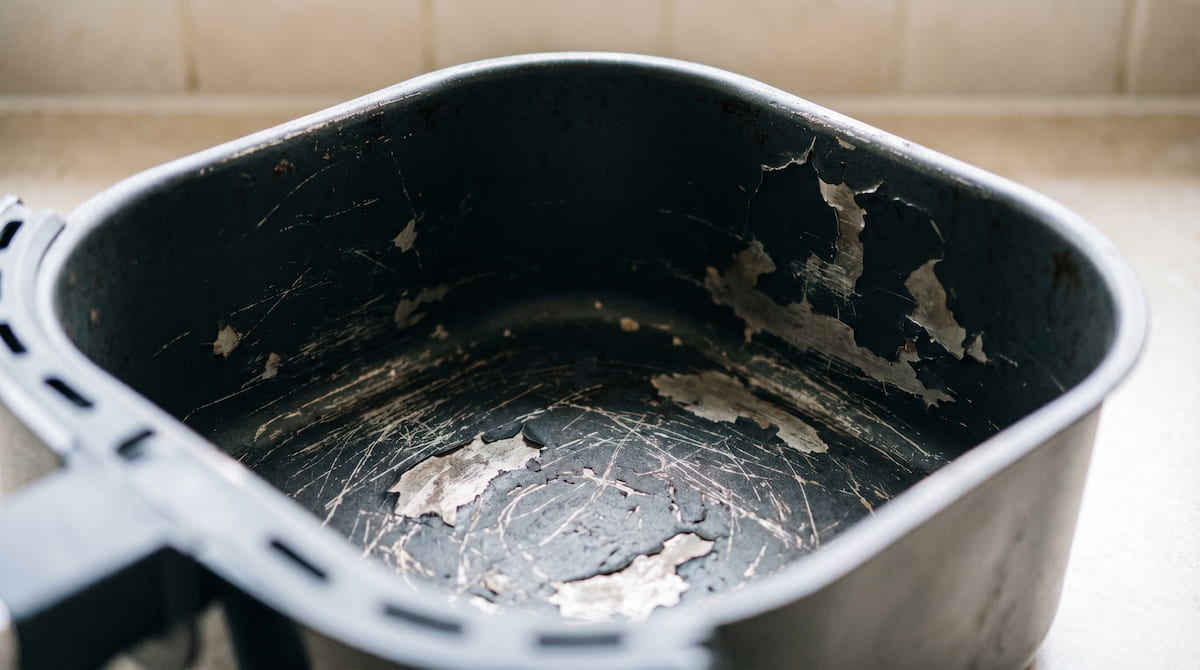
Nonstick coatings on regular air fryers chip and scratch with daily use — what you see here ends up in your food.
What Makes an Air Fryer “Non-Toxic”
A non-toxic air fryer uses a cooking surface that doesn’t rely on synthetic chemical coatings to prevent sticking. The three main alternatives are ceramic, stainless steel, and glass.
Ceramic coatings are mineral-based and don’t contain PTFE or PFAS compounds. Stainless steel interiors have no coating at all — just bare metal that won’t flake or degrade. Glass baskets (like the Big Boss 16Qt) let you see exactly what you’re cooking on, with zero coating concerns.
The EPA’s PFAS research identifies these chemicals as persistent in the human body and linked to long-term health effects. For a daily-use appliance that heats food at high temperatures, the coating material isn’t a trivial detail.
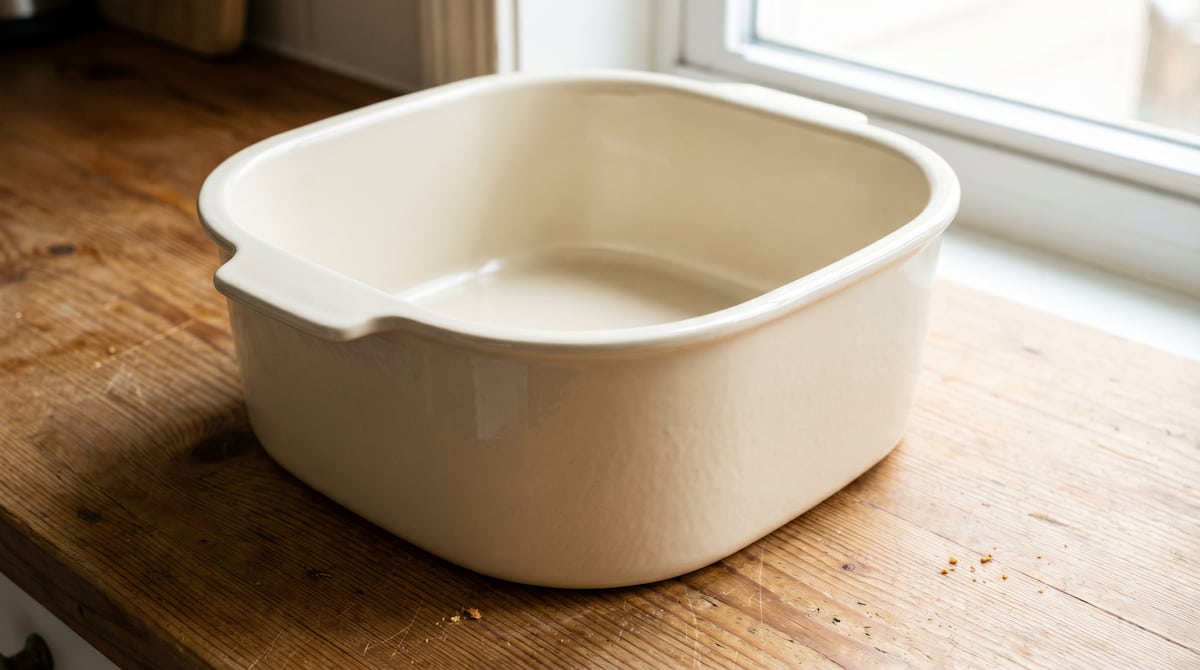
A ceramic basket stays smooth and intact with daily use — no flaking, no chemical off-gassing at high heat.
Is the Price Difference Actually Worth It?
Non-toxic air fryers typically cost $20 to $60 more than comparable regular models. Whether that’s worth it depends on how you think about the math.
A regular nonstick basket that chips after 18 months needs replacing — either the basket itself or the whole unit. A ceramic or stainless basket that holds up for three to four years of daily use ends up costing less per meal. The upfront premium shrinks considerably when you account for longevity.
Beyond cost, if you’re cooking for kids every day, the coating question becomes more pointed. Children are more vulnerable to chemical exposure than adults, and an air fryer runs at high heat multiple times per week. The $40 price gap looks different in that context.
My Recommendation
For most households: Yes, the non-toxic premium is worth it. The Ninja AF150AMZ uses a ceramic-coated basket that’s PFAS-free, compact, and built for daily use. It costs more than the budget nonstick options but holds up significantly longer.
For families of four or more: The Instant Pot Omni Plus 18L goes further — stainless steel interior walls with no coating at all, plus enough capacity to cook a full meal in one go.
For a full breakdown of the safest options across all styles and sizes, see my guide: Best PFAS-Free Air Fryers: Ceramic, Glass & Stainless Compared →