Affiliate Disclosure: This post contains Amazon affiliate links. If you purchase through my links, I may earn a small commission at no extra cost to you. I only recommend products I’ve personally tested or thoroughly researched.
Knowing how to clean air fryer basket correctly is what separates a coating that lasts three years from one that starts flaking after six months.
I’ve been cleaning the Ninja AF150AMZ basket after almost every use for over a year. Here’s the exact method I use, what to avoid, and why the cleaning approach matters more than most people realize.
Why Cleaning Method Matters for Coating Safety
Most air fryer baskets — even ceramic-coated ones — are more vulnerable than they look. Abrasive scrubbers, harsh dish soaps, and soaking for too long all degrade the coating faster than normal cooking wear does. Once the surface is scratched or compromised, two things happen: food starts sticking more, and coating particles start ending up in your meals.
For PTFE-based nonstick baskets, this is a serious concern — those particles contain the same PFAS chemicals the EPA has identified as persistent and potentially harmful. For ceramic baskets, degraded coating means reduced food release and shorter lifespan. Either way, how you clean it determines how long it lasts.
What You’ll Need
- Soft non-abrasive sponge or microfiber cloth
- Mild dish soap (no harsh degreasers)
- Warm water
- Soft-bristle brush for stubborn spots (optional)
- Dry towel or dish rack
How to Clean an Air Fryer Basket: Step by Step
Step 1 — Let it cool completely. Never run cold water over a hot basket. The thermal shock can warp the metal and crack the coating from the inside. Give it at least 20 to 30 minutes after cooking before you touch it with water.
Step 2 — Remove loose food first. Shake or wipe out any crumbs or loose bits into the trash before getting the basket wet. This prevents residue from baking onto the surface during washing.
Step 3 — Soak briefly if needed. For stuck-on grease, fill the basket with warm soapy water and let it sit for 5 to 10 minutes. Do not soak longer than that — prolonged soaking breaks down ceramic and nonstick coatings faster than anything else.
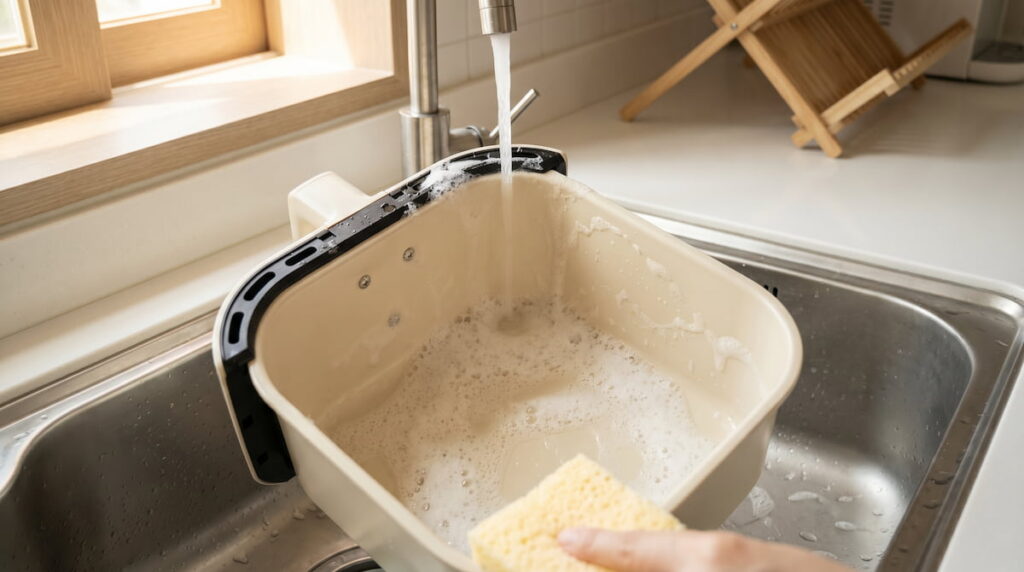
Step 4 — Wash with a soft sponge. Use gentle circular motions with a non-abrasive sponge. Apply just enough pressure to remove residue — no scrubbing, no metal pads, no rough sponge surfaces. The coating doesn’t need force; it needs patience.
Step 5 — Rinse thoroughly. Make sure all soap is rinsed off. Soap residue left on a ceramic coating can cause discoloration and affect food release over time.
Step 6 — Dry completely before storing. Air drying is fine, but patting dry with a soft towel and letting it finish air drying before reassembling prevents moisture from sitting on the coating or the metal frame.
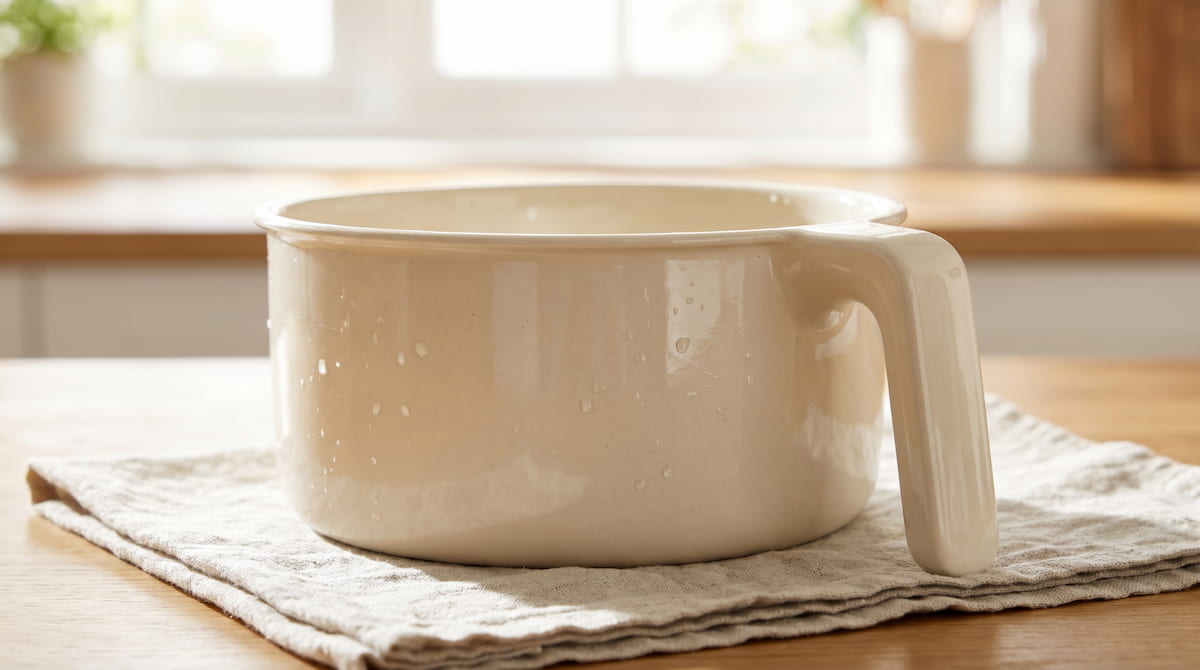
A properly cleaned ceramic basket stays smooth and intact — this is what consistent gentle washing looks like after a year of daily use.
What Never to Do to an Air Fryer Basket
- No steel wool or abrasive scrubbers. These scratch ceramic and nonstick surfaces in a single use. Once the surface is scratched, the damage is permanent.
- No dishwasher — even if the label says dishwasher-safe. Dishwasher detergents are more abrasive than hand soap, and the high heat of the drying cycle degrades coatings faster. Hand washing always extends coating life.
- No soaking overnight. Extended soaking causes the coating to soften and separate from the metal base beneath it.
- No cooking sprays. Aerosol cooking sprays leave a sticky residue that builds up over time and is nearly impossible to remove without abrasive scrubbing — which then damages the coating. Use a pastry brush with a small amount of oil instead.
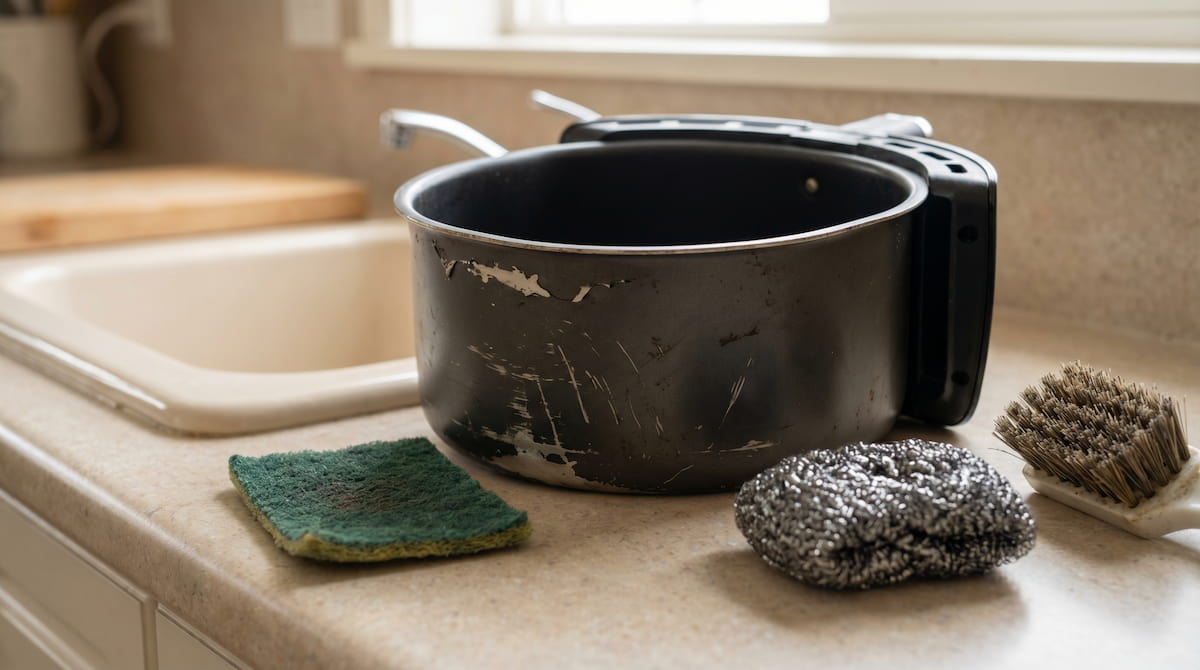
One session with an abrasive scrubber can do this. Scratched coating means particles in your food — and a basket that needs replacing far sooner than it should.
How Often Should You Clean It?
After every use — at minimum a quick rinse and wipe. Grease and food residue that sits on the coating between cooks gets baked on during the next session, making it progressively harder to remove without scrubbing. A two-minute rinse after every cook prevents the buildup that causes people to reach for abrasive tools in the first place.
For a deeper clean, once a week is enough for daily users. The 5-minute soak method handles anything that a quick rinse missed.
Does the Basket Material Change the Cleaning Routine?
Slightly. Ceramic-coated baskets are more forgiving than PTFE-based nonstick — they tolerate mild soap better and are less prone to scratching from soft sponges. Stainless steel baskets like those in the Instant Pot Omni Plus are the most durable — you can use a slightly stiffer brush without damage concerns, since there’s no coating to protect.
If you’re still using a PTFE-coated basket and noticing visible scratches or flaking, that’s the signal to replace it. Continuing to cook on a compromised nonstick surface is where the real exposure risk comes in.
The Ninja AF150AMZ uses a ceramic-coated basket specifically because it holds up better to daily cleaning than PTFE alternatives — and it’s PFAS-free from the start.
For a full guide to PFAS-free air fryer options that are built to last, see: Best PFAS-Free Air Fryers: Ceramic, Glass & Stainless Compared →