Affiliate Disclosure: This post contains Amazon affiliate links. If you purchase through my links, I may earn a small commission at no extra cost to you. I only recommend products I’ve personally tested or thoroughly researched.
Learning how to use air fryer first time correctly takes about ten minutes — but skipping a few key steps at the start is exactly how people damage coatings, trip safety issues, or end up with food that comes out wrong from day one.
I’ve set up several air fryers over the past few years, including switching our household from a nonstick model to a ceramic one after realizing what was happening to the coating. Here’s the complete first-use process I follow, with the safety checks that most guides leave out entirely.
Before You Plug It In: The Coating Check
This is the step nobody talks about. Before doing anything else with a new air fryer, identify what the basket is coated with. Look for the word “ceramic,” “stainless,” or “glass” — or look for an explicit “PFAS-free” or “PTFE-free” label. If the listing just says “nonstick” with no further detail, that coating is almost certainly PTFE-based.
This matters because everything that follows — how you season it, how you clean it, how long it lasts — depends on the coating material. The EPA’s PFAS research is clear that these compounds accumulate in the body over time. Knowing what you’re working with before the first cook is the most important safety step of all.
Step 1 — Wash the Basket Before First Use
Every new air fryer basket carries factory residue, packaging oils, and dust from shipping and storage. Wash it before you cook anything in it — warm water, mild dish soap, soft sponge, thorough rinse, complete dry. This applies to ceramic, stainless, and glass surfaces equally.
Do not run the dishwasher on a brand new basket. Hand wash only, even if the label says dishwasher-safe. Dishwasher detergent is more abrasive than hand soap, and starting a new coating in the dishwasher shortens its life from the very first cycle.
Step 2 — Season the Basket (Ceramic Models)
If your air fryer has a ceramic-coated basket, season it before the first cook. Apply a thin layer of neutral high-smoke-point oil — avocado or grapeseed — using a pastry brush. Run the empty basket at 300°F for five minutes. Let it cool completely before wiping out any excess oil.
This step bonds oil to the microscopic pores in the ceramic surface and dramatically improves food release from day one. Skipping it is the main reason ceramic baskets start sticking within the first few months of use.
Stainless steel and glass surfaces don’t require seasoning — just the wash and dry before first use.
Step 3 — Place the Unit Correctly
Air fryers exhaust hot air through vents — usually at the back or sides. That exhaust needs clearance or it recirculates, overheats the unit, and degrades performance over time. Leave at least five inches of space on all sides and above the unit. Never push it flush against a wall or under a cabinet during operation.
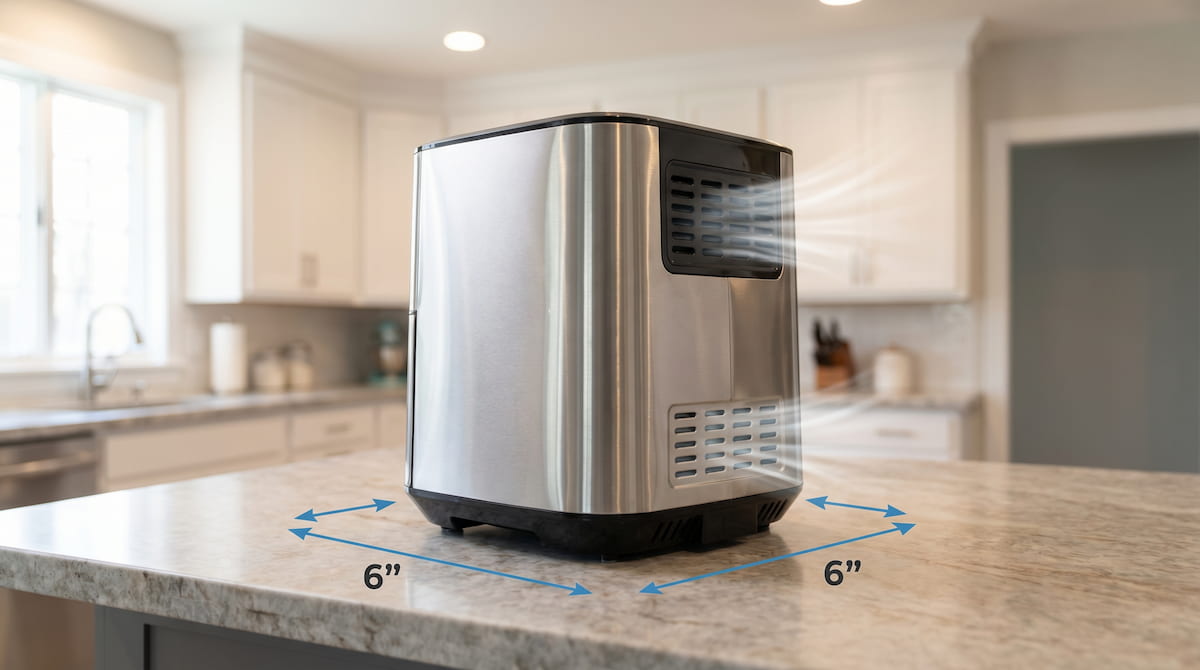
Five inches of clearance on all sides isn’t optional — it’s what keeps the unit running at full performance and prevents heat buildup.
Place it on a heat-resistant surface. The underside of an air fryer gets hot during operation — granite and tile countertops handle this fine, but some laminate surfaces can warp with repeated exposure to sustained heat.
Step 4 — Run an Empty Burn-Off Cycle
Before your first real cook, run the air fryer empty at 400°F for three to five minutes. This burns off any residual manufacturing oils or protective coatings applied at the factory. You may notice a faint smell during this cycle — that’s normal and expected. Open a window and run your kitchen fan.
If the smell is strong, chemical, or plastic-like beyond the first two minutes, that’s not normal factory burn-off — it may indicate a coating issue worth investigating before you cook food in it.
Step 5 — Your First Cook
Start with something simple — frozen fries, chicken tenders, or sliced vegetables. These give you a feel for your specific unit’s hot spots and timing without risking a more involved meal while you’re still learning the appliance.
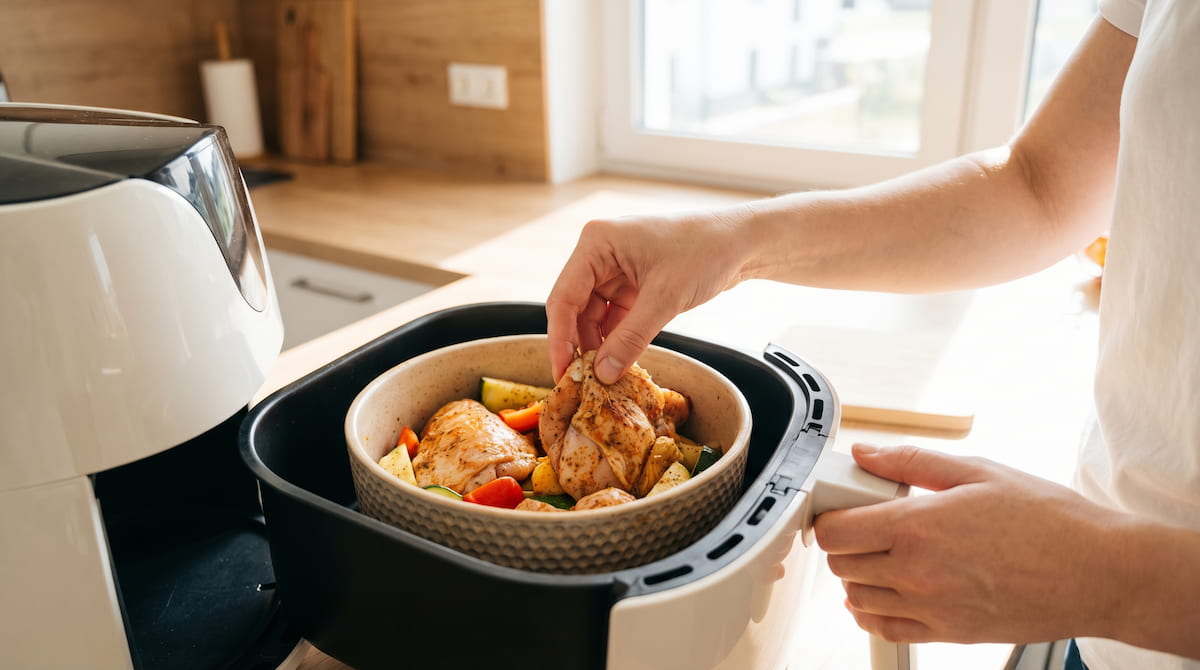
First cook: keep it simple. Frozen foods and vegetables let you learn the unit’s timing and hot spots before committing to a full meal.
A few first-cook rules that apply to every air fryer:
- Don’t overcrowd the basket. Food needs airflow around it to crisp properly. A single layer with space between pieces will always outperform a packed basket.
- No aerosol cooking sprays. Use a pastry brush with a small amount of oil. Aerosol sprays leave a sticky polymer residue that builds up on ceramic and nonstick surfaces and is nearly impossible to remove without abrasive scrubbing.
- No metal utensils. Silicone tongs and spatulas only — from the very first use.
- Shake or flip halfway. Most basket-style air fryers cook more evenly when food is redistributed at the midpoint. Check your manual for the specific timing on your model.
Safety Rules That Apply Every Time You Use It
- Never leave the air fryer unattended when cooking fatty foods — grease buildup in the drip tray can smoke or ignite at high heat.
- Empty and clean the drip tray after every use. Accumulated grease is the most common cause of air fryer smoke and odor over time.
- Let the basket cool before washing — thermal shock from cold water on a hot ceramic or metal surface can crack the coating from the inside.
- Check the basket surface periodically for scratches or peeling. Any visible coating damage is the signal to replace the basket before continuing to cook in it.
Which Air Fryer Makes the Safest First Unit
For most households using an air fryer for the first time, the Ninja AF150AMZ is the easiest starting point — PFAS-free ceramic basket, compact size, simple controls, and a coating that holds up to daily use far better than standard nonstick alternatives.
For families of four or more cooking their first meal in a larger unit, the Instant Pot Omni Plus 18L covers every cooking function with a fully stainless steel interior — no coating anywhere in the cooking chamber.
For a full guide to the safest air fryer options across every style and size, see: Best PFAS-Free Air Fryers: Ceramic, Glass & Stainless Compared →