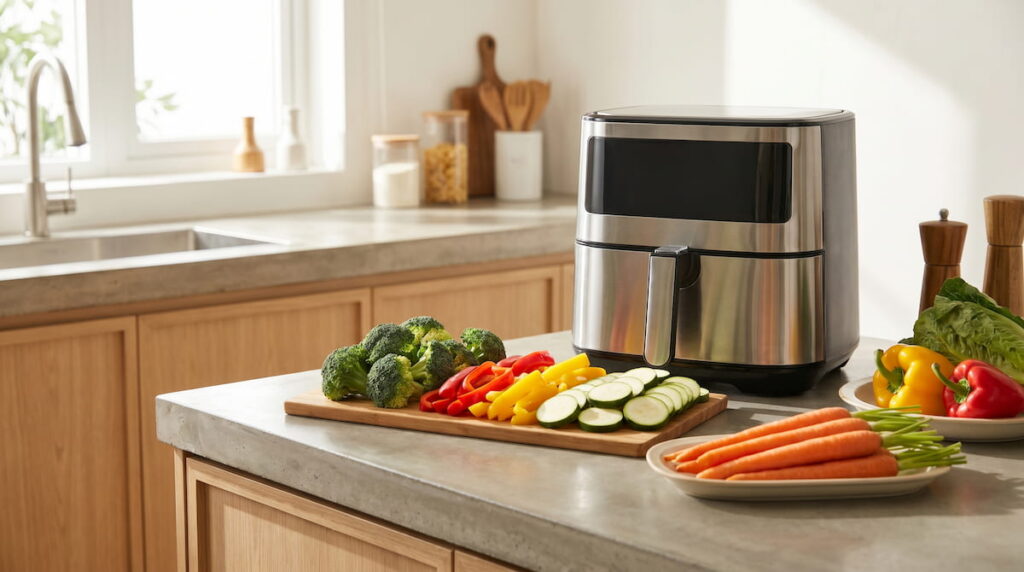
Safe to cook fresh vegetables in air fryer — that’s the short answer, but whether every meal is truly non-toxic depends less on the vegetables and more on what your basket is made of.
Why the Basket Coating Matters More Than the Vegetable
Fresh vegetables are about as clean and safe a food as you can put into any appliance. The real question is what they’re touching inside the basket. Many conventional air fryers use non-stick coatings that contain PTFE — the same family of chemicals as Teflon. When these coatings reach temperatures above 500°F (260°C), they can begin to degrade and release fumes into your food and your kitchen air.
Most air fryers operate between 350°F and 400°F for vegetables, which is technically below that threshold — but scratched or worn coatings can release particles at much lower temperatures. If your basket has any visible chips or scratches, that risk goes up significantly.
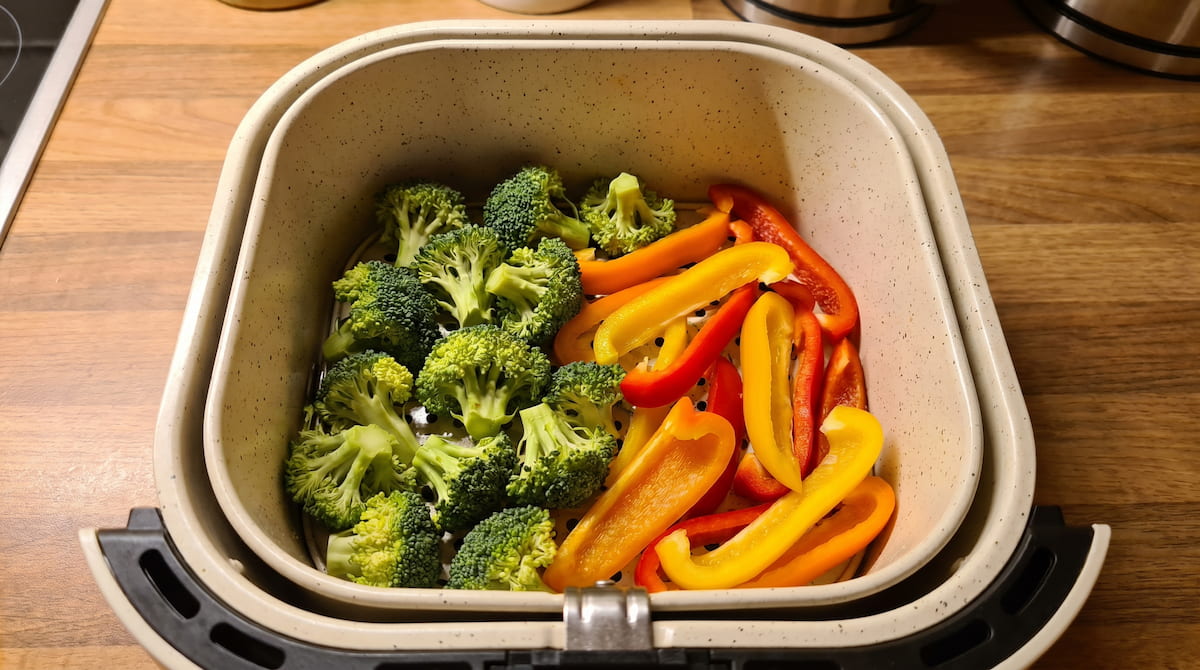
A ceramic-coated basket keeps your vegetables away from PTFE and PFAS chemicals during cooking.
Safe to Cook Fresh Vegetables in Air Fryer: What the Research Says
The FDA has flagged PFAS chemicals — which include PTFE coatings — as a category of concern for human health, particularly with repeated long-term exposure. Cooking fresh vegetables daily means your basket is heating up every single day. Over weeks and months, that cumulative exposure adds up, especially in a home with children.
Ceramic-coated and stainless steel air fryers avoid this problem entirely. They use no PTFE, no PFOA, and no PFAS in the basket surface, which means you get the same crispy results without the chemical uncertainty.
Best Vegetables to Cook in a Non-Toxic Air Fryer
Almost every fresh vegetable performs well in an air fryer. Here are the ones my family cycles through most often, along with safe temperature ranges:
| Vegetable | Temp (°F) | Time | Notes |
|---|---|---|---|
| Broccoli | 375°F | 8–10 min | Toss lightly in olive oil |
| Bell Peppers | 380°F | 10–12 min | Slice into strips for even cook |
| Zucchini | 370°F | 9–11 min | Cut into coins, no need to peel |
| Carrots | 380°F | 12–15 min | Cut thin — dense texture needs more time |
| Cherry Tomatoes | 360°F | 7–9 min | Whole is fine; they burst and caramelize |
| Brussels Sprouts | 390°F | 12–14 min | Halve them; shake basket halfway |
Signs Your Air Fryer Basket Is No Longer Safe for Daily Cooking
Even a good non-stick basket eventually wears out. Watch for these warning signs that it’s time to upgrade to a ceramic or stainless steel option:
- Visible scratches or flaking — dark specks in your food after cooking are a red flag
- Chemical or plastic smell — especially during the first few minutes of preheating
- Food sticking more than usual — means the coating has thinned and may be breaking down
- Discoloration inside the basket — uneven browning or dark patches on the coating surface
If you’re seeing any of these, the safest move is to stop using that basket for food and replace it — or upgrade the whole unit.
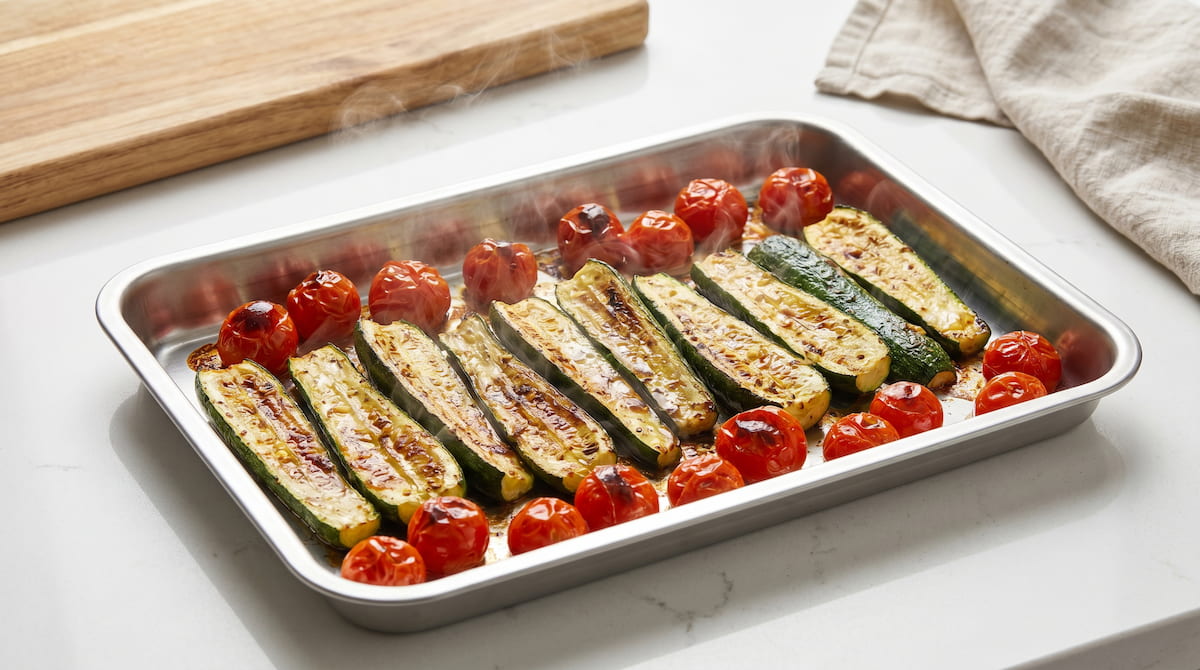
Stainless steel trays give you perfectly roasted vegetables with zero coating concerns.
Which Air Fryer Is Safest for Cooking Vegetables Every Day?
For daily vegetable cooking, I use the Ninja AF150AMZ. It has a ceramic-coated basket that’s free of PTFE, PFOA, and PFAS — which means every batch of broccoli, peppers, and zucchini comes out clean. The 5.5-quart capacity handles a full family portion in one go, and cleanup is genuinely easy without any chemical-heavy sprays needed.
If you want even more capacity for big vegetable batches — or you prefer no coating at all — the Instant Pot Omni Plus 18L uses stainless steel trays. Zero coating, zero compromise.
For a full breakdown of both options side by side, check out our PFAS-Free Air Fryer Guide.
How to Get the Best Results Cooking Vegetables Safely Every Day
A few habits make a meaningful difference when you’re using an air fryer daily:
- Preheat for 2–3 minutes before adding food — this stabilizes the cooking temperature and reduces the chance of hot spots stressing the basket coating
- Use silicone or wooden utensils only — metal tongs and spatulas are the number one cause of ceramic basket scratches
- Don’t overcrowd — single layers allow even air circulation and prevent steaming, which keeps temperatures consistent
- Clean gently — warm water and a soft sponge after every use; avoid abrasive scrubbers that wear down any coating over time
- Let the basket cool before washing — sudden temperature changes can stress the coating material
You can also take a look at our post on how to clean an air fryer basket without ruining the coating for a step-by-step cleaning routine that makes the basket last longer.
The Bottom Line
Cooking fresh vegetables in an air fryer every day is genuinely one of the healthiest cooking habits you can build — as long as your basket material is up to the task. Ceramic and stainless steel options eliminate the PFAS risk entirely, so your family gets all the benefits of fast, crispy vegetable cooking without any chemical trade-offs. If you’re still using an old non-stick basket, now is a good time to make the switch.