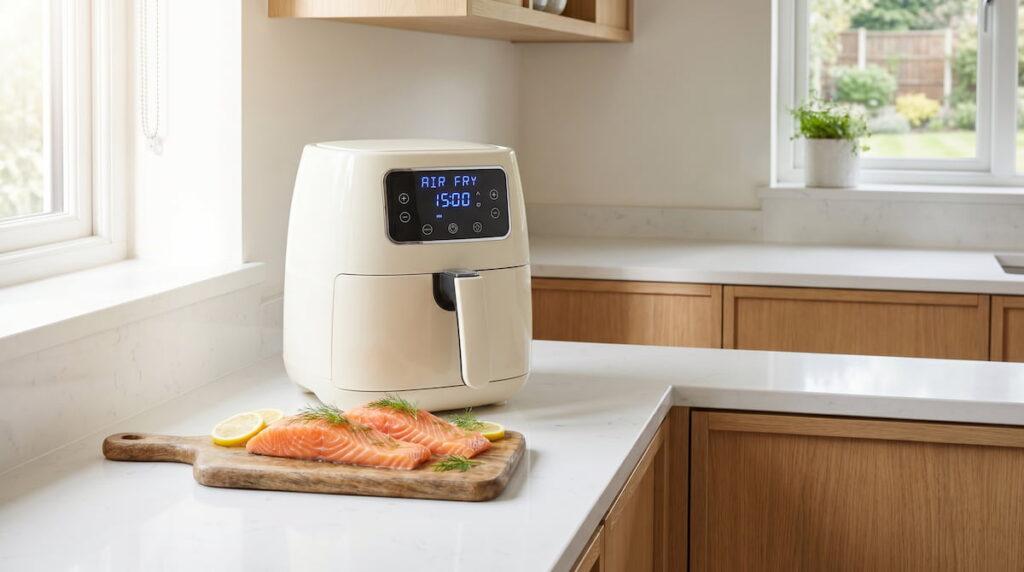
How to cook salmon in air fryer safe is a question worth taking seriously — salmon sits directly on the basket surface, absorbs heat quickly, and releases natural oils during cooking that can interact with degraded non-stick coatings in ways you really don’t want happening in a family meal.
Why Salmon and Toxic Coatings Are a Bad Combination
Salmon is a fatty fish. That’s what makes it taste so good — but it also means the natural oils released during cooking create direct, sustained contact between the food and the basket surface. If that surface has a worn or scratched PTFE-based coating, those oils essentially act as a carrier, pulling coating particles and chemical residues right into the flesh of the fish.
The EPA has flagged PFAS compounds — the chemical family that includes most non-stick coatings — as persistent environmental and health contaminants. For a food like salmon that’s already high in beneficial omega-3 fatty acids, the last thing you want is to cancel out those benefits with coating exposure at the dinner table.
Ceramic-coated and stainless steel baskets solve this completely. No PTFE, no PFOA, no PFAS — and salmon actually releases cleanly from ceramic without needing any additional oil spray.
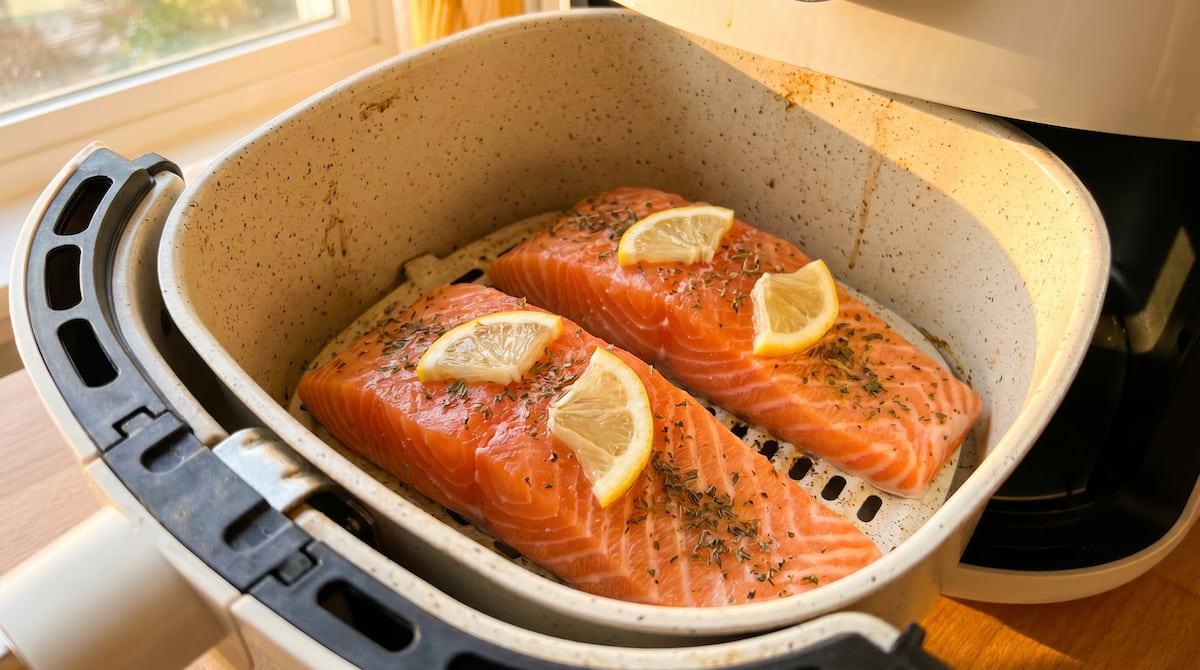
Ceramic-coated baskets let salmon cook in its own natural oils without any PFAS contact.
How to Cook Salmon in Air Fryer Safe: Step-by-Step
Salmon cooks fast in an air fryer — faster than most people expect. The goal is to hit the safe internal temperature of 145°F without pushing your basket into the temperature range where coating degradation becomes a concern.
| Step | Action | Why It Matters |
|---|---|---|
| 1 | Preheat to 380°F for 3 minutes | Even heat from the start prevents undercooked centers |
| 2 | Pat fillets dry with paper towel | Removes surface moisture for better texture |
| 3 | Season lightly, skin side down | Skin protects flesh from direct basket contact |
| 4 | Cook at 380°F for 10–12 minutes | No flip needed — skin side down the whole time |
| 5 | Check internal temp reaches 145°F | FDA minimum safe temperature for fish |
Safe Cooking Times by Fillet Thickness
Salmon fillets vary a lot in thickness depending on where they’re cut from. Tail-end pieces cook much faster than center-cut fillets. Getting this right means you’re not overcooking thin pieces while waiting for thick ones to finish — which also means less time at high heat for your basket.
| Fillet Thickness | Temp | Time | Notes |
|---|---|---|---|
| Thin (under 1 inch) | 375°F | 8–10 min | Check at 8 min — easy to overcook |
| Medium (1–1.5 inch) | 380°F | 10–12 min | Standard center-cut fillet |
| Thick (over 1.5 inch) | 370°F | 13–15 min | Lower temp prevents outside burning before center is done |
Signs Your Air Fryer Basket Is Not Safe for Cooking Fish
Fish is more unforgiving than chicken or vegetables when it comes to basket condition. Because of the natural oils and longer surface contact time, even minor coating damage becomes a bigger issue. Watch for these warning signs before you cook salmon — or any fish — in your current basket:
- Dark flakes or specks appearing in the cooked fish or on the basket surface after cooking
- Chemical or plastic smell during preheating, especially in the first minute
- Fish sticking to the basket even when it didn’t before — coating is thinning
- Visible scratches or bubbling on the interior surface of the basket
If you’re seeing any of these, it’s time to upgrade. Our guide on how to tell when your air fryer needs to be replaced walks through the full safety timeline.
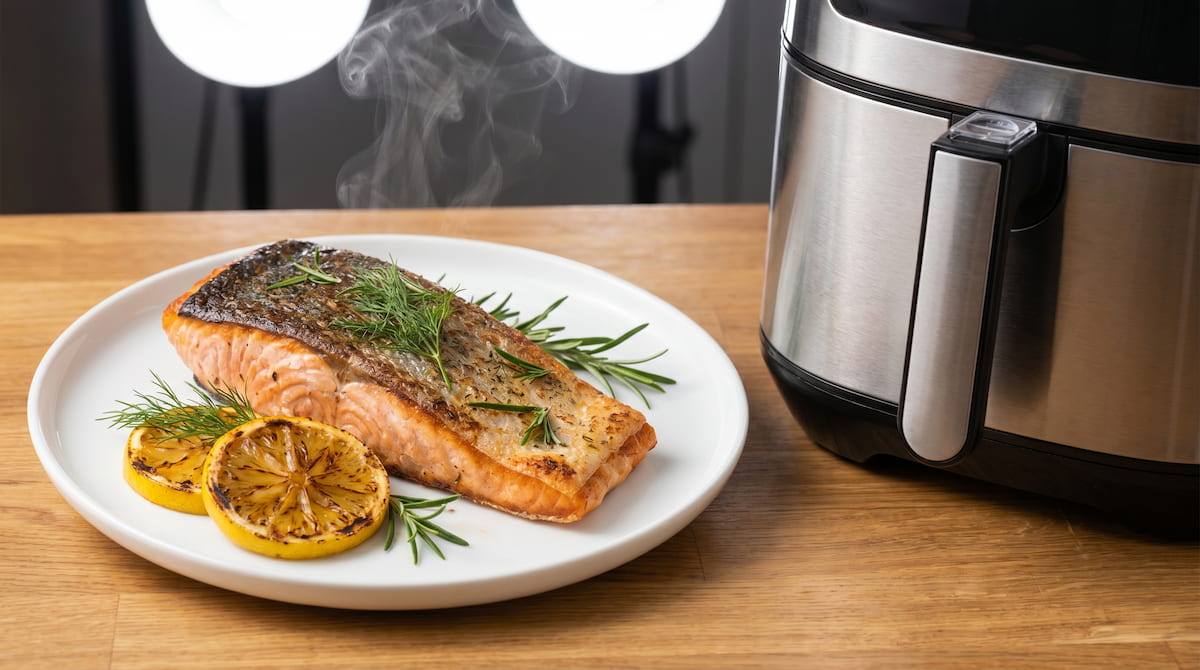
Salmon cooked in a non-toxic air fryer — clean results with no PFAS or coating risk.
Best Air Fryer for Cooking Salmon Without PFAS Risk
The Ninja AF150AMZ is what I use for salmon in our house. The ceramic basket is completely PTFE-free, and salmon releases from it cleanly every single time — no sticking, no residue, no smell. At 5.5 quarts, it fits two large fillets side by side with room for air to circulate properly.
If you regularly cook fish for a larger group, the Instant Pot Omni Plus 18L is worth considering. It uses stainless steel trays with no coating at all — which means zero PFAS risk regardless of how often you use it or how worn the surface gets over time.
For a full breakdown of which materials are safest for fish and high-fat foods, see our PFAS-Free Air Fryer Guide.
Extra Tips for Perfect Salmon Every Time
- Don’t skip the skin — cooking skin-side down creates a natural barrier between the fish oils and the basket surface, and keeps the flesh moist
- Avoid aerosol cooking sprays — the propellants in spray cans can degrade ceramic coatings over time; use a brush with olive oil instead
- One layer only — overlapping fillets trap steam and lead to uneven cooking; give each piece its own space
- Let it rest 2 minutes after cooking — carryover heat finishes the center gently without overcooking the outside
- Frozen salmon works too — add 5–7 minutes to cook time and check internal temp carefully
The Bottom Line
Salmon is one of the best things you can cook in an air fryer — fast, healthy, and genuinely delicious when the temperature is right. The only thing that can undermine it is the wrong basket. Switch to ceramic or stainless steel and you’re getting all the nutritional benefits of salmon with none of the coating risk. That’s a trade worth making for any family cooking fish regularly.