
Knowing what to look for buying non toxic air fryer options in 2026 means going beyond the marketing language and checking specific material facts. “Healthy cooking,” “eco-friendly,” and “safe for families” are phrases that appear on packaging regardless of what the basket is actually made of. Here’s the practical checklist that cuts through the noise.
The 6 Things That Actually Matter When Buying a Non-Toxic Air Fryer
1. Basket or Interior Coating Material
This is the single most important factor. The coating is what your food sits in contact with at high temperatures — everything else is secondary. The three safe options are:
- Ceramic coating: PFAS-free, PTFE-free, chemically stable at cooking temperatures. Look for explicit “ceramic” labeling — not just “non-stick.”
- Stainless steel: No coating at all. The most durable and chemically inert option. Standard in oven-style units like the Instant Pot Omni Plus.
- Glass: Completely inert, no coating, no reaction with any food type. Found in the Big Boss 16Qt and similar glass bowl air fryers.
Anything labeled “non-stick” without specifying ceramic, stainless, or glass should be assumed to contain PTFE — the Teflon-type coating associated with PFAS concerns. Our full guide on PFAS-free air fryer materials explains exactly what each option means in practice.
2. PFAS Disclosure Specificity
Safe brands disclose specifically. Look for all three of these on the product listing:
- PTFE-free
- PFOA-free
- PFAS-free
“PFOA-free” alone is not sufficient — PFOA was phased out years ago and its absence is no longer meaningful as a safety indicator. A basket can be PFOA-free and still contain PTFE or other PFAS compounds. All three disclosures together are the current standard for genuine non-toxic credentials.
3. Brand Transparency
Does the brand disclose what the coating is made of? Can you find the material specification on the product page rather than just in marketing copy? Brands that use genuinely safe materials have no reason to be vague about what those materials are. Vague language like “healthy coating” or “eco non-stick” without chemical specifics is a red flag.
4. Model-Specific Verification
Non-toxic credentials are almost always model-specific, not brand-wide. Ninja makes models with ceramic baskets and models with standard nonstick — buying “a Ninja” without checking the specific model could mean getting either. Always verify the basket material for the exact model number you’re purchasing.
5. Capacity for Your Household
A non-toxic air fryer that’s too small for your household leads to multiple cooking batches — which means more heat cycles on the basket coating and more time cooking. Get the right size the first time:
- 1–2 people: 4–5 quart basket fryer
- 3–4 people: 5–6 quart basket fryer or 18L oven-style
- 5+ people: 16Qt+ glass bowl or 18L+ oven-style with stainless interior
6. Accessory Material Safety
The basket isn’t the only thing that touches your food. Racks, drip trays, and included accessories should also be stainless steel or food-grade safe materials. A nonstick-coated drip tray in an otherwise stainless unit is a gap worth addressing — replace with stainless or line with foil.
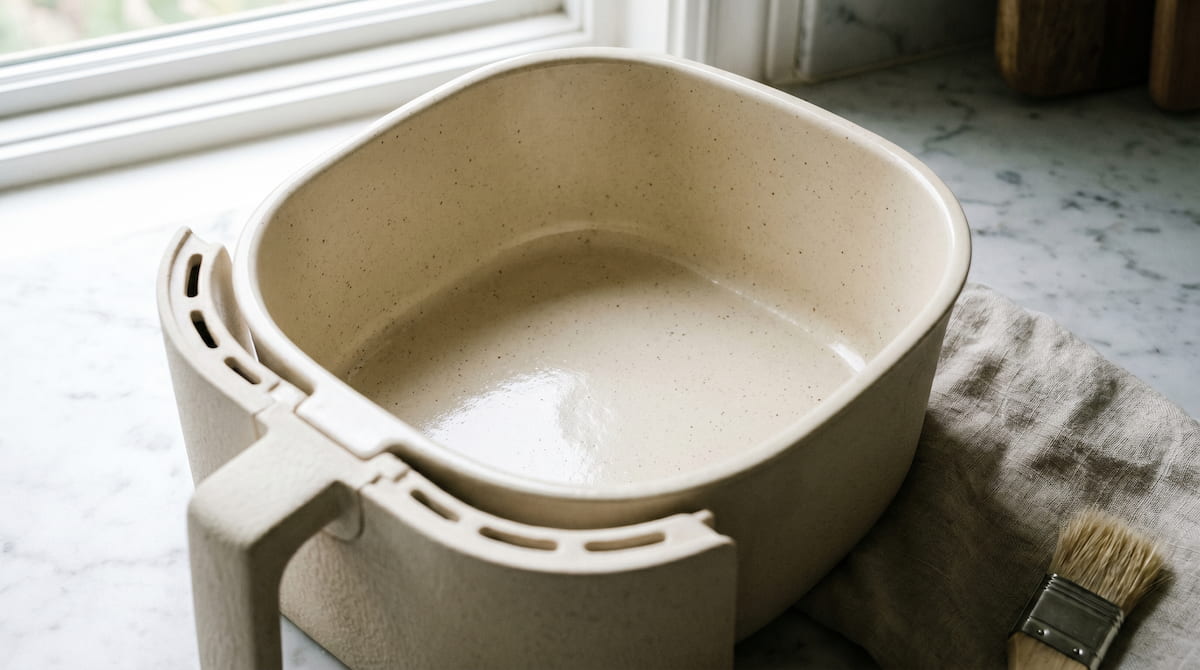
Inspecting the basket coating before buying — smooth, even ceramic with explicit PTFE-free and PFAS-free disclosure is what you’re looking for.
Non-Toxic Air Fryer Buying Guide by Household Type
| Household | Best Format | Our Pick | Material |
|---|---|---|---|
| Solo / couple | Compact basket 4–5Qt | Ninja AF150AMZ | Ceramic basket |
| Family of 3–4 | 6Qt basket or 18L oven | Cosori TurboBlaze / Instant Pot Omni Plus | Ceramic / Stainless |
| Family of 5+ | Large oven-style or glass bowl | Instant Pot Omni Plus / Big Boss 16Qt | Stainless / Glass |
| Chemical sensitivity | Glass bowl | Big Boss 16Qt Glass | Glass + stainless |
| Pet birds in home | Any ceramic or stainless | Ninja AF150AMZ or Omni Plus | Ceramic / Stainless |
| Small apartment | Compact basket under 12″ wide | Ninja AF150AMZ | Ceramic basket |
Red Flags to Watch for When Buying
These are the warning signs that a unit marketed as “non-toxic” or “healthy” may not actually meet that standard:
- “PFOA-free” only: PFOA has been phased out — this claim alone means nothing about PTFE or other PFAS compounds
- “Eco non-stick” or “healthy coating”: Marketing language that doesn’t specify ceramic, stainless, or glass
- No material specification on the product page: If you can’t find what the basket is made of, assume it’s standard nonstick
- Unusually low price for a “ceramic” basket: Genuine ceramic baskets have a cost floor — sub-$30 “ceramic” air fryers are worth scrutinizing
- No brand transparency about coating composition: Brands using safe materials disclose them clearly — vagueness is a signal
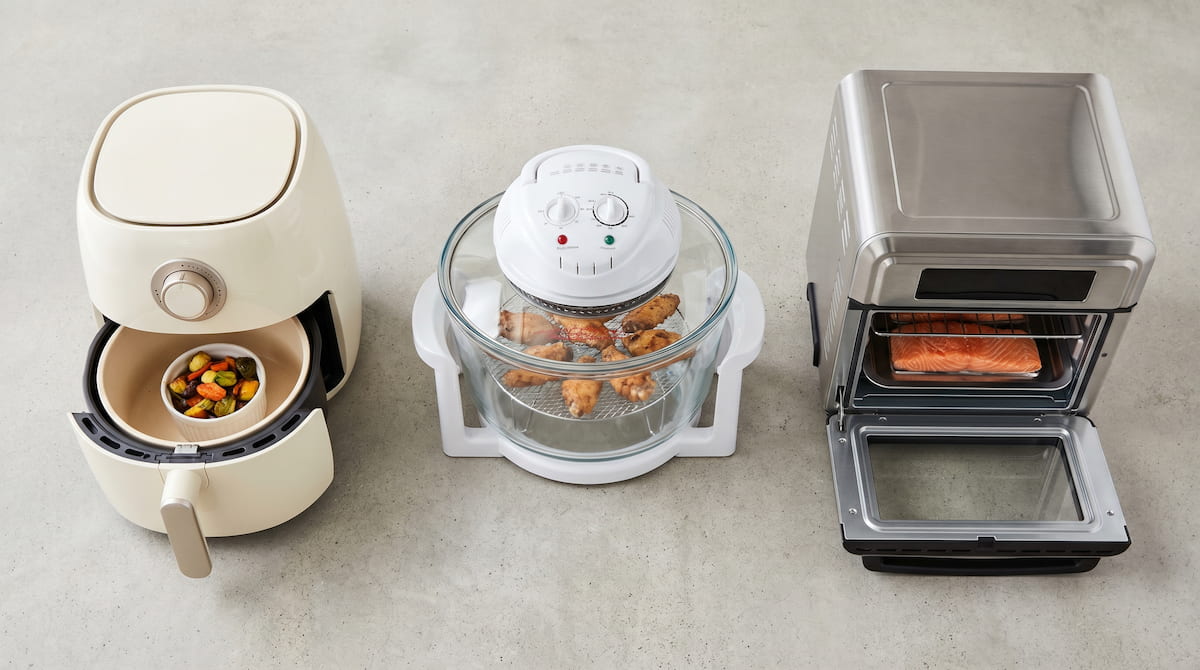
Ceramic basket, glass bowl, and stainless interior — the three material categories that define a genuinely non-toxic air fryer in 2026.
Our Top Non-Toxic Picks for 2026
Best Compact: Ninja AF150AMZ
Ceramic basket, PFAS-free, compact footprint, straightforward controls. The most practical starting point for households switching from standard nonstick. Extensively reviewed with a strong real-world performance track record.
Best for Families: Instant Pot Omni Plus
Stainless steel interior throughout, 18-liter capacity, 11 cooking functions. The most versatile non-toxic option for families cooking large portions daily.
Best for Maximum Safety: Big Boss 16Qt Glass
Glass cooking bowl, stainless rack, no coating anywhere in the food contact zone. The most chemically inert option available — ideal for chemical sensitivity or households that want zero coating variables.
Quick Buying Checklist: Non-Toxic Air Fryer
✅ Before you buy, confirm:
- Basket or interior is ceramic, stainless steel, or glass — not generic “non-stick”
- Product page explicitly states PTFE-free, PFOA-free, and PFAS-free
- Capacity matches your household size
- Brand discloses specific coating material — not just marketing language
- Accessories (racks, trays) are also safe materials
- Model-specific verification — not just brand-level claim
❌ Walk away if:
- Only “PFOA-free” is claimed — PTFE and other PFAS not addressed
- No material specification on the product listing
- Vague “healthy” or “eco” coating language without chemical specifics
- No brand contact or transparency about coating composition
FAQ
What should I look for when buying a non-toxic air fryer?
The three essentials: ceramic, stainless steel, or glass cooking surface; explicit PTFE-free, PFOA-free, and PFAS-free disclosure on the product page; and model-specific verification rather than brand-level claims. Everything else — capacity, controls, price — is secondary to getting the material right.
Is “PFOA-free” enough to make an air fryer non-toxic?
No — PFOA was phased out of production years ago, so “PFOA-free” is no longer a meaningful safety indicator. The standard you want is PTFE-free, PFOA-free, and PFAS-free — all three together, not just one.
How do I know if an air fryer basket is really ceramic?
Look for explicit “ceramic coating” labeling combined with PTFE-free and PFAS-free disclosure. Real ceramic baskets are typically described with specific coating terminology. “Ceramic-inspired” or “ceramic-style” without further detail is marketing language worth scrutinizing.
What size non-toxic air fryer should I buy?
4–5 quart for 1–2 people, 5–6 quart for 3–4 people, and 16+ quart or 18-liter oven-style for families of 5 or more. Getting the right size reduces the need for multiple batches, which reduces total heat cycles on the basket coating over time.
Is it worth paying more for a non-toxic air fryer?
Yes — the price difference between a standard nonstick basket fryer and a ceramic basket model is typically modest, while the material safety difference is significant for daily cooking. A ceramic basket that lasts 2–3 years without coating concerns is better value than a cheaper nonstick unit that needs replacing when the coating degrades. For our complete 2026 non-toxic model comparison visit the PFAS-free air fryer guide.