I went back and forth between glass and stainless steel for a long time before making a decision. Both eliminate the coating question entirely — no PTFE, no PFAS, nothing synthetic touching your food. But they’re very different appliances in practice.
Here’s the honest breakdown after using both.
Why These Two Materials Stand Out
Most air fryer safety concerns come down to one thing: the coating on the basket. Traditional non-stick baskets use PTFE — the substance in Teflon — which can degrade over time and has raised legitimate PFAS exposure concerns.
Glass and stainless steel both sidestep this entirely. Neither requires a coating. The cooking surface is just the material itself — chemically stable, non-reactive, and nothing to wear down over time. For the full background on why coatings matter, see my guide on PFAS in air fryers.
Glass Air Fryers: What They’re Actually Like
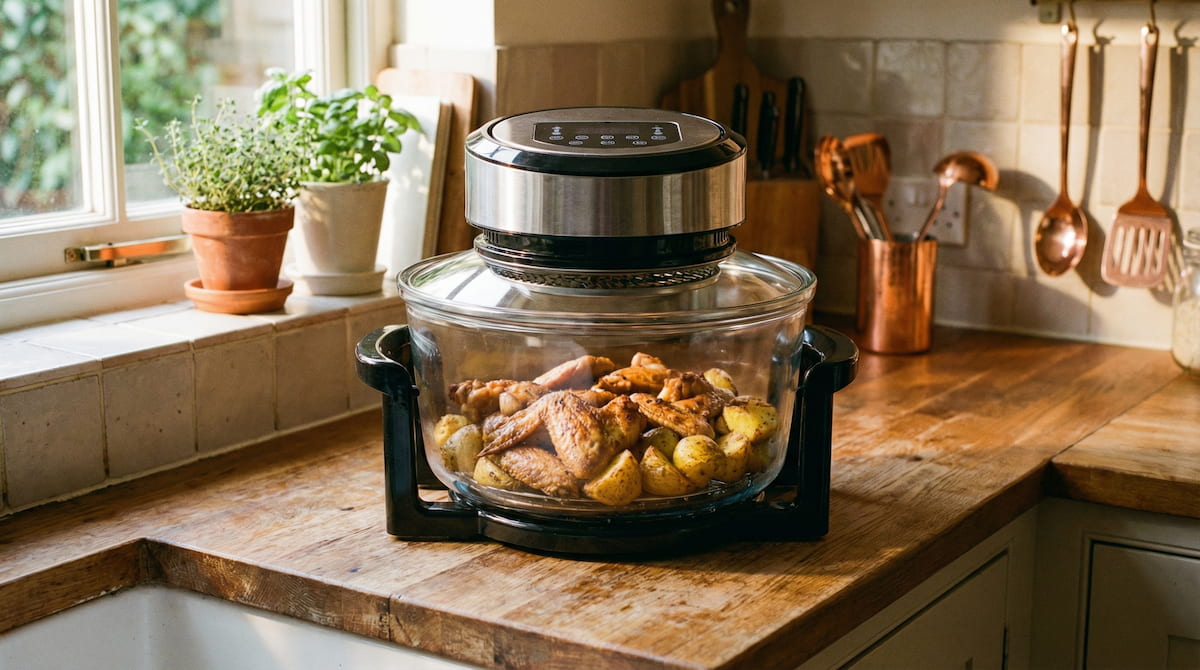
A glass air fryer uses a large heat-resistant bowl — usually borosilicate glass — with a halogen heating element and fan. The food cooks inside the bowl, visible through the glass the entire time.
The practical advantages: no coating of any kind, easy to clean, and the 360° visibility is genuinely useful. You can monitor food without lifting a lid, which means fewer overcooking mistakes.
The practical disadvantages: significantly heavier than basket models, larger footprint, and the glass bowl is fragile. Dropping it is expensive. The halogen element is also bright during cooking, which some people find annoying.
The most widely available model is the Big Boss 16Qt — large capacity, full glass chamber, no coating anywhere.
Stainless Steel Air Fryers: What They’re Actually Like
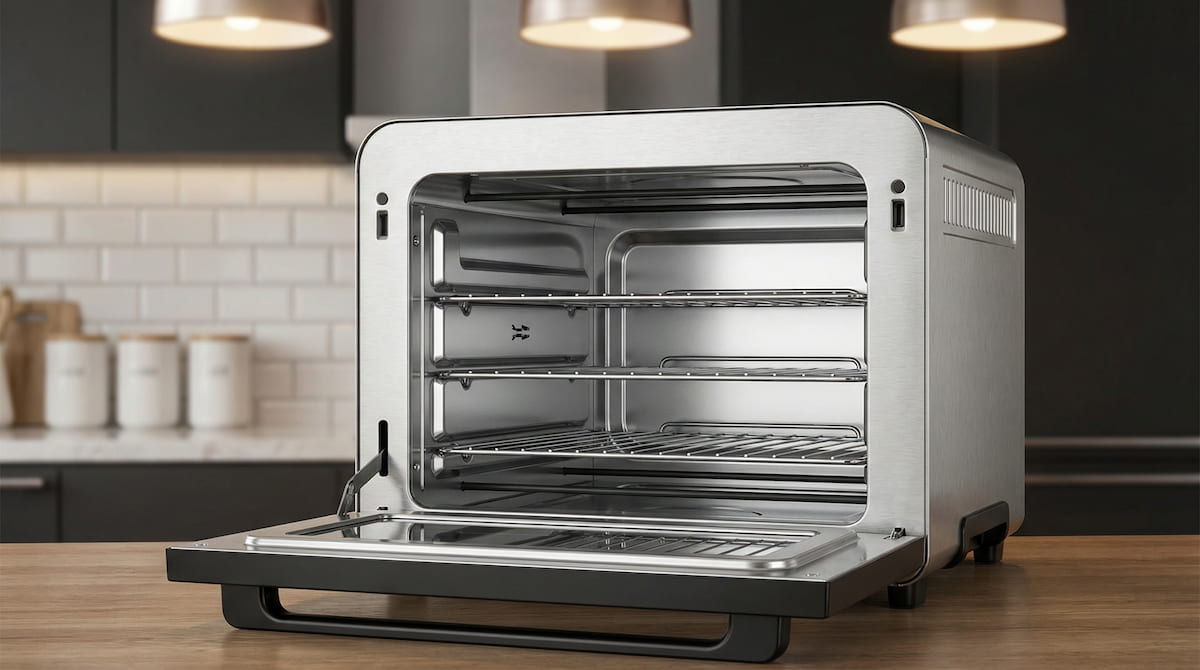
A true stainless steel air fryer is almost always an oven-style unit — metal racks and trays inside a stainless steel cooking chamber. No basket, no coating, just metal throughout.
The practical advantages: extremely durable, multi-function capability (air fry, bake, roast, broil), and large capacity for family cooking. Nothing to degrade or verify — stainless steel is stainless steel.
The practical disadvantages: food sticks more without a non-stick surface, so you need oil. Larger footprint than compact basket models. And cleaning the racks takes more effort than wiping a ceramic basket.
The Instant Pot Omni Plus is the go-to recommendation — 18L capacity, true stainless interior, 10-in-1 functionality.
Glass vs Stainless Steel: Head to Head
| Feature | Glass | Stainless Steel |
|---|---|---|
| Coating | None | None |
| Visibility | Full 360° | None |
| Durability | Low — breakable | Very high |
| Non-stick | Fair | Poor — needs oil |
| Size | Large, heavy | Large |
| Cleaning | Easy | More effort |
Which One Is Actually Safer?
Both are safe — genuinely, equally safe from a material standpoint. Glass is chemically inert and non-reactive. Stainless steel is food-grade metal that’s been used in professional kitchens for decades. Neither contains PFAS, neither degrades under normal cooking temperatures, and neither has any coating to worry about.
The safety difference between the two is essentially zero. The choice comes down to how you cook and what trade-offs you can live with.
How to Choose
Choose glass if: You want full visibility while cooking, you’re cooking for a family and need large capacity, and you don’t mind a heavier appliance that requires careful handling.
Choose stainless steel if: You want maximum long-term durability, you cook for a family and want multi-function capability, and you’re comfortable using a bit of oil and spending more time on cleanup.
If neither feels like the right fit — counter space is limited, or you want non-stick convenience — a certified ceramic basket is the practical middle ground. PFAS-free, compact, and easy to cook on daily.
FAQ
Is glass safer than stainless steel for air frying?
Both are equally safe from a material standpoint. Glass is chemically inert, stainless steel is food-grade metal. The choice is about practical trade-offs, not safety.
Do glass air fryers contain PFAS?
No. Glass bowl air fryers have no coating at all — the cooking surface is pure glass.
Are stainless steel air fryers non-toxic?
Yes. Food-grade stainless steel contains no PFAS coatings and has been used safely in cookware for decades.
The Bottom Line
Glass and stainless steel are the two most material-transparent options in air fryers. Both eliminate the coating question entirely. Glass wins on visibility and ease of cleaning. Stainless steel wins on durability and long-term reliability.
For a full comparison across all non-toxic materials including ceramic, see the complete non-toxic air fryer guide.
Related: Best Glass Air Fryer · Best Stainless Steel Air Fryer Without Teflon · Ceramic vs Stainless Steel
This article contains affiliate links. As an Amazon Associate I earn from qualifying purchases, at no extra cost to you.