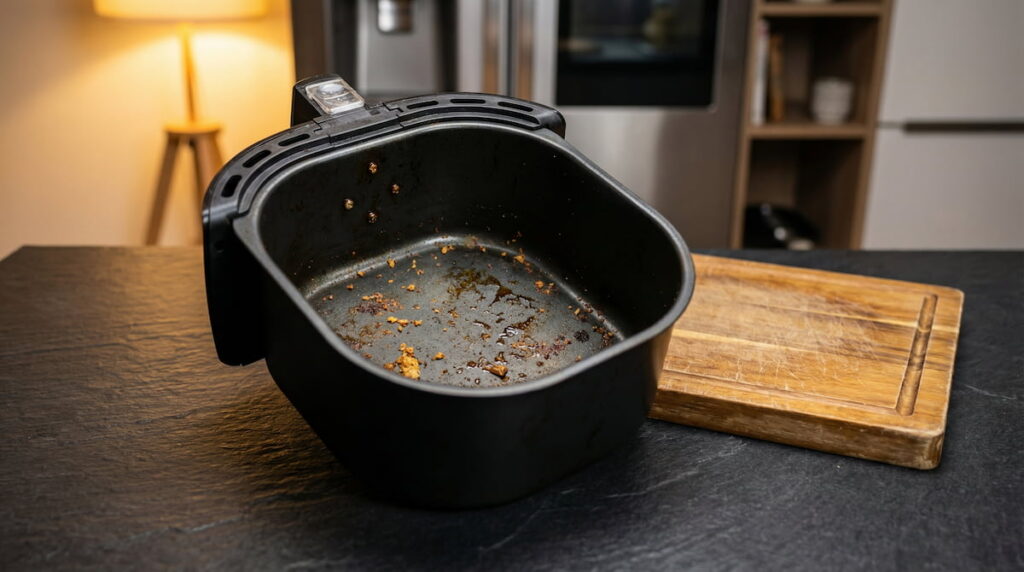
What happens if you don’t clean your air fryer? I found out the hard way. For the first few weeks of owning mine, I barely cleaned it — a quick wipe here, a rinse there. I figured cooking at 400°F would take care of anything left behind.
Turns out, pretty dirty. And in ways I wasn’t expecting.
What’s Actually Building Up in There
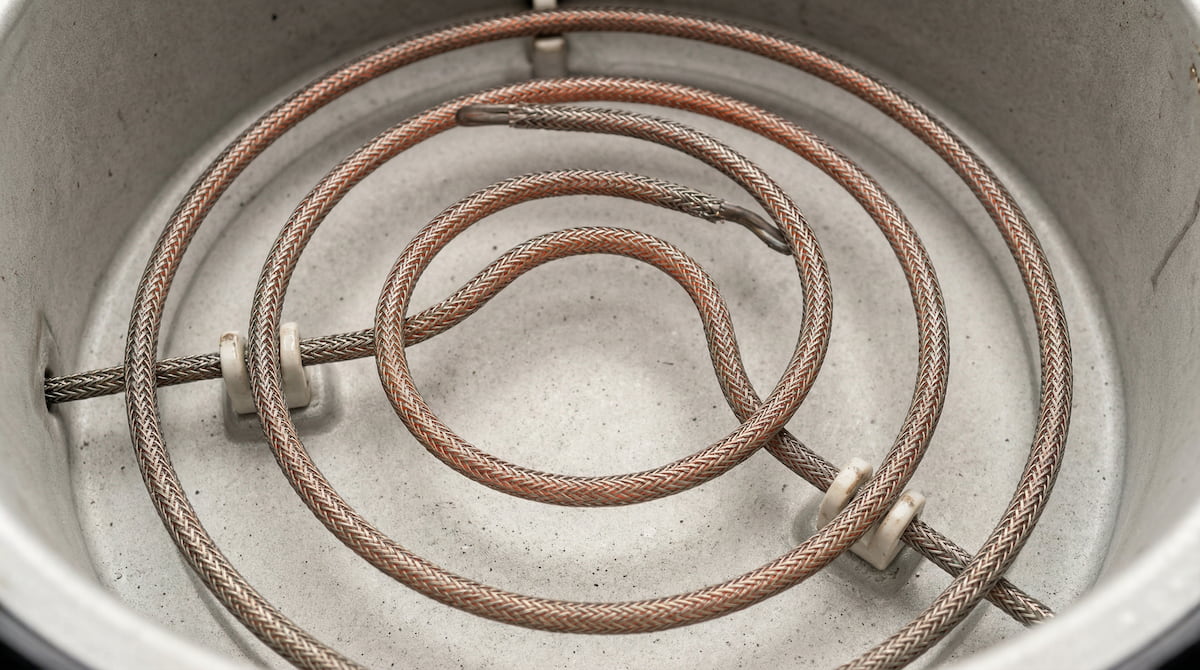
Every time you cook, tiny droplets of oil and food particles splatter onto the heating element and interior walls. You can’t always see it after just one or two uses. But it’s there, coating every surface like a thin film.
The problem is what happens the next time you turn it on. That residue gets reheated. The oils oxidize and break down. And because air fryers work by blasting hot air at high speed, those compounds don’t just sit there — they get circulated directly around your food and into your kitchen air.
Researchers at the University of Birmingham tested an air fryer used more than 70 times without a deep clean. Compared to a clean unit, it released 23% more cooking-related volatile organic compounds (VOCs) and more than twice as many ultrafine particles. After everything I’ve already learned about air fryers and indoor air pollution, those numbers aren’t something I can ignore.
Week by Week: What Neglect Actually Looks Like
After one use: Food bits and grease start settling into the basket, tray, and crevices around the heating element. Nothing dramatic yet — but the clock is already ticking.
After a week of skipping: The grease gets sticky. You’ll notice a stale smell when you preheat. Food may start cooking unevenly because burnt residue is partially blocking airflow.
After a month: Air circulation drops noticeably. The smell becomes constant. Some models start smoking. The grease buildup is now stubborn enough that a quick wipe won’t cut it — you need to soak and scrub.
Leave it long enough and you’re looking at a potential fire risk. Grease is flammable, and the heating element runs hot.
The Health Risks Most People Don’t Think About
The VOC issue bothered me, but the bacteria angle surprised me even more.
Salmonella can survive on a dry surface for up to 32 hours. So if you cooked chicken, didn’t fully clean the basket, and cooked something else the next day — you’ve got a cross-contamination problem. The air fryer’s heat kills most things while food is actively cooking, but it doesn’t sterilize a dirty basket sitting cold on your counter overnight.
This matters even more if you’re cooking for kids or anyone with a compromised immune system. My family uses ours almost every evening, which is what made me take this seriously. I covered the air quality side in more detail in my piece on whether air fryers are bad for your lungs.
The Cleaning Routine That Actually Works
Nothing fancy. Here’s what I do after almost every use:
- Let it cool completely. Never clean a hot basket — and never run cold water over a hot ceramic or non-stick surface. Thermal shock can crack the coating.
- Remove the basket and tray. Wash with warm soapy water and a soft sponge. That handles 90% of it.
- Wipe down the interior. A damp cloth gets the walls and the area around the heating element. Don’t soak it — just wipe.
- Check the heating element monthly. This is the one people always skip. Grease accumulates up there and it’s out of sight. A soft brush or dry cloth handles it once cooled.
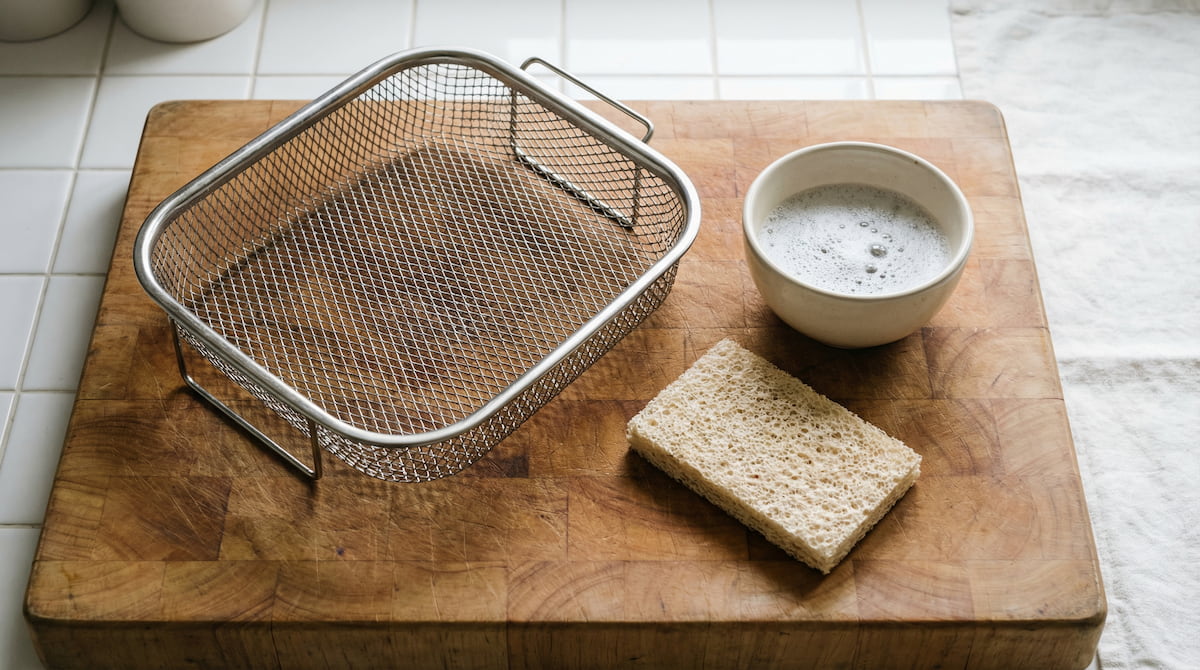
The whole thing takes about three minutes. It’s why my air fryer still performs the same as it did on day one.
One more thing: if you’re using a non-stick basket, avoid aerosol sprays like PAM. The lecithin builds up a sticky residue that bonds to the surface and makes everything harder to clean over time. I switched to a glass spritzer with avocado oil — the difference was immediate, both for cleaning and for how long the coating lasted.
Does the Basket Material Change How You Clean?
Cleaning frequency matters, but so does what you’re cleaning. A ceramic basket is easier to maintain than a standard non-stick one — the surface doesn’t trap grease as aggressively, and there’s no PTFE coating to worry about degrading over time.
Stainless steel interiors are the most durable but require a bit more effort to keep clean. Glass is the easiest to inspect — you can actually see what’s building up.
The basket I use now is the Ninja AF150AMZ — ceramic-coated and PFAS-free. After switching away from a standard non-stick basket, cleanup genuinely got faster. The ceramic surface doesn’t hold grease the same way, and I’m not stressing about degraded coating getting into my food.
I put together a full breakdown of the material differences in my ceramic air fryer safety guide if you want to go deeper on that side.
Three Minutes Is All It Takes
Skipping the cleanup isn’t just a hygiene issue — it’s an air quality issue, a food safety issue, and eventually an appliance lifespan issue. Three minutes after each use genuinely prevents all of it.
I used to think the heat would handle everything. It doesn’t. The heat is what makes a dirty air fryer worse.
Have you ever noticed that stale smell when preheating? That’s the residue. Drop a comment below — I’m curious how many people have run into this.
Affiliate Disclosure: This post contains Amazon affiliate links. If you purchase through these links, I earn a small commission at no extra cost to you. I only recommend products I’ve personally researched or used.