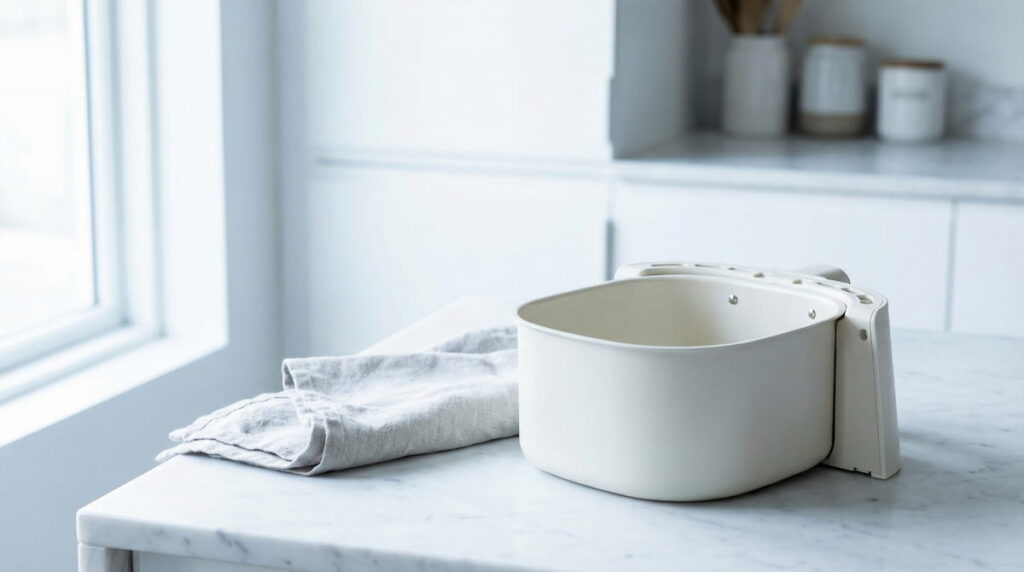
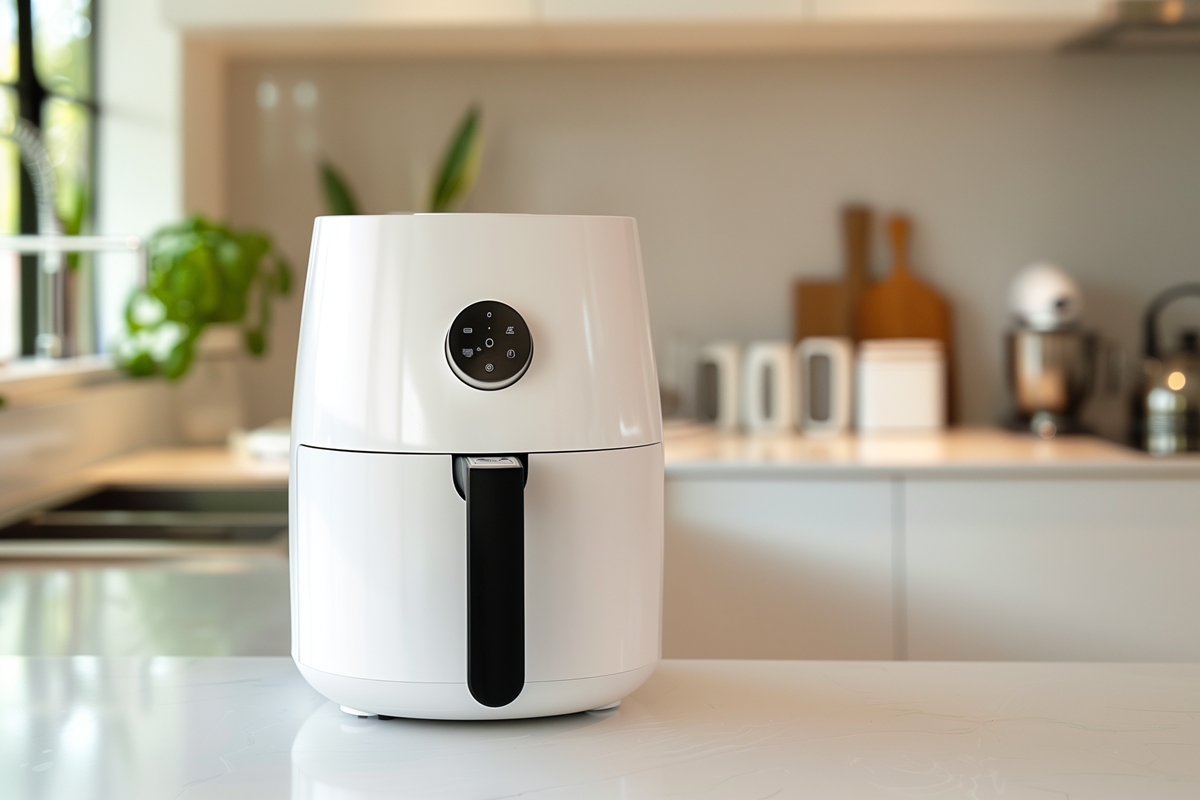
I didn’t start out caring about ceramic air fryer baskets. I bought my first air fryer because it was on sale and everyone on YouTube seemed to love it. It worked great — until I noticed a faint chemical smell one evening while cooking chicken at high heat.
I ignored it the first time. By the third time, I couldn’t. So I started looking into what was actually coating that basket. What I found made me stop using it immediately.
That’s when I went down the rabbit hole of PFAS in air fryers — and eventually landed on ceramic as my answer. Here’s everything I learned along the way.
The Problem with Traditional Non-Stick Baskets
Most standard air fryer baskets are coated with PTFE — the same substance in Teflon pans. It’s slick, easy to clean, and completely fine until you push the temperature. Above 500°F, PTFE starts breaking down and releasing fumes. For humans, that means flu-like symptoms. For pet birds, it can be fatal.
But what bothers me more than the fumes is the micro-scratches. The moment you nick that coating with a fork or metal tongs, the aluminum underneath is exposed. Along with the chemical bonding agents holding the whole thing together. That stuff ends up in your food.
I wrote more about this when I looked into whether air fryers can release toxins. The short answer: yes, but it depends heavily on the material.
Why Ceramic Coating Is Different
Ceramic coatings are made from silica — basically sand — baked onto a metal surface through a process called Sol-Gel. No synthetic polymers. No fluorine-based chemicals. Just a glass-like mineral layer that happens to be naturally non-stick.
A few things stood out after switching:
- No chemical smell at high heat. I cook chicken thighs at 400°F regularly. With my old basket, there was always that faint “hot plastic” smell by the 15-minute mark. Gone with ceramic.
- The surface stays slick — if you treat it right. More on this below, because I learned this the hard way.
- Cleanup is genuinely easier. Warm water and a soft sponge. That’s it.
Ceramic is also heat-stable up to around 800°F — well above anything your air fryer will ever reach. That margin matters.
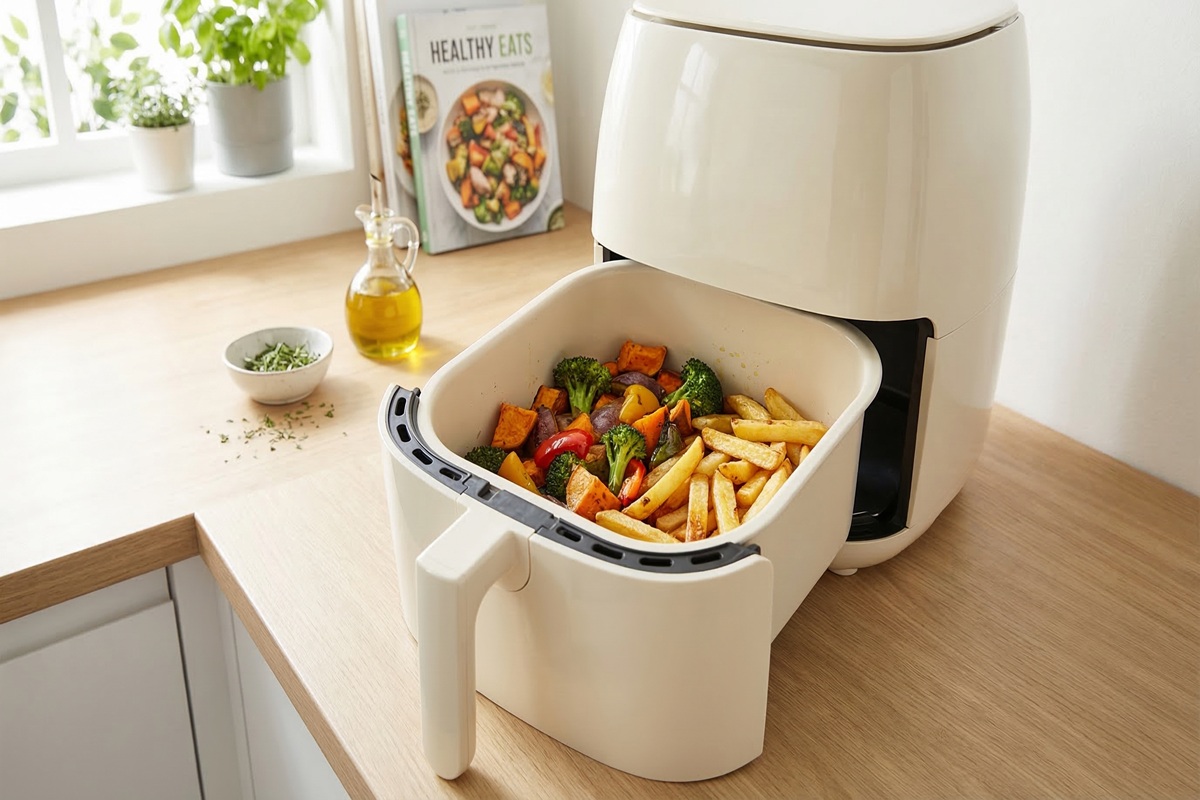
Ceramic baskets distribute heat evenly without the coating concerns that come with traditional non-stick.
Is Ceramic Actually Safe? (The Honest Answer)
Not all ceramic coatings are equal. High-quality brands go through rigorous testing — look for FDA compliance and LFGB certification (a stricter European standard). Those certifications mean the coating has been tested for lead, cadmium, and other heavy metals.
The cheap stuff? Not always. Some budget ceramic-coated baskets use additives to improve durability that haven’t been properly vetted. If the price seems too good to be true, it usually is.
I put together a full breakdown of what to look for in my ceramic air fryer safety guide — including which certifications actually matter and which are just marketing.
Ceramic vs. Stainless Steel vs. Glass
I’ve tested all three. Here’s my honest breakdown:
| Feature | Ceramic | Stainless Steel | Glass |
|---|---|---|---|
| Non-Stick Ability | Excellent (when maintained) | Poor — needs oil every time | Fair |
| Durability | Medium — can chip if dropped | High — practically lifetime | Low — breakable |
| Cleaning Ease | Very easy | Harder — scrubbing required | Easy |
| Toxin Risk | Low (buy certified brands) | Lowest — no coating at all | Lowest — no coating at all |
My take: if you want the easiest daily cooking experience with minimal chemical concern, ceramic wins. If you want the absolute safest material and don’t mind using a little oil, go stainless. I actually wrote a full comparison on whether stainless steel air fryers are safer if you want to dig into that side.
The One Mistake That Ruins Ceramic Baskets (I Made It)
About two months into owning my ceramic basket, the non-stick stopped working. Food was sticking everywhere. I almost returned it.
Turns out, I had been using PAM spray. The lecithin in aerosol cooking sprays builds up a sticky, gummy residue on ceramic that is nearly impossible to remove. It doesn’t wash off. It bonds to the surface and gets worse every time you cook.
Once I figured that out, I switched to a glass oil spritzer with avocado oil. Problem solved within a week.
A few other rules I now follow without exception:
- Hand wash only. Even if the label says dishwasher safe, harsh detergents degrade the surface over time. Soft sponge, mild soap, done.
- No thermal shock. Don’t run cold water over a hot basket. Let it cool on the counter first or the ceramic can crack.
- Keep it under 400°F for daily cooking. Even though ceramic is rated much higher, I give it a buffer for longevity.
The Ceramic Air Fryer I Actually Use
After trying a few options, I landed on the Ninja AF150AMZ. The ceramic-coated basket is PFAS-free, the build quality is solid, and it hasn’t given me any of the smell issues I had with my old Teflon-coated fryer. Two years in and the coating is still holding up — because I stopped using aerosol spray.
FAQ
Q: Is ceramic safer than stainless steel?
A: Both are safe choices. Stainless steel has no coating at all, which technically makes it the most inert. But ceramic is easier to cook on daily without adding oil. For most people, ceramic is the more practical safe option.
Q: Do ceramic baskets contain lead?
A: Quality brands like Ninja and GreenPan test rigorously for lead and cadmium. Always check for FDA or LFGB compliance on the product listing before buying.
Q: How long does a ceramic coating last?
A: With proper care — no aerosol sprays, hand washing, no metal utensils — a good ceramic basket should last 2–3 years of daily use. After that, the coating naturally thins and it’s time to replace.
Switching to Ceramic Was Worth It
Ceramic isn’t perfect — the coating does eventually wear down, and you have to be more careful with it than stainless steel. But the non-stick convenience without the PFAS anxiety makes it the right daily choice for my family.
If you’re still deciding, start with my full ceramic safety guide before buying anything. Knowing what certifications to look for will save you from wasting money on a cheap basket that loses its coating in three months.
And if you’ve already run into the aerosol spray problem — you’re not alone. Drop a comment below.
Affiliate Disclosure: This post contains Amazon affiliate links. If you purchase through these links, I earn a small commission at no extra cost to you. I only recommend products I’ve personally researched or used.