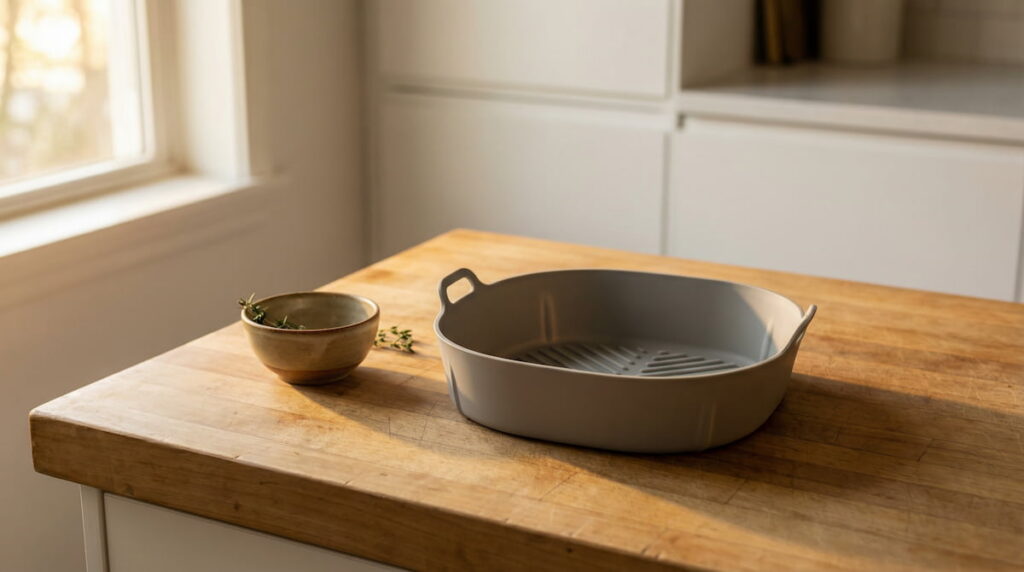
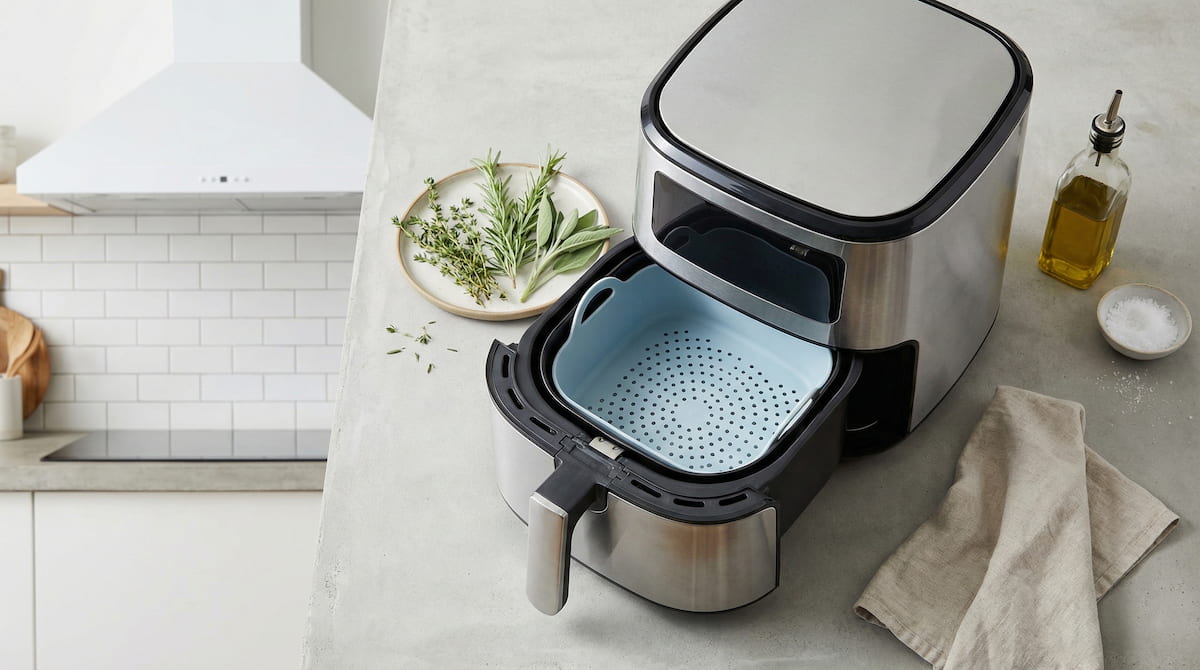
Are air fryer silicone liners safe? I asked myself this exact question after dropping $5 on a cheap set and immediately noticing a strange smell the first time I used it. No more scrubbing burnt cheese off the basket — that part sounded great. But then my older son walked into the kitchen and said, “Dad, it smells weird in here.” That’s when I started digging.
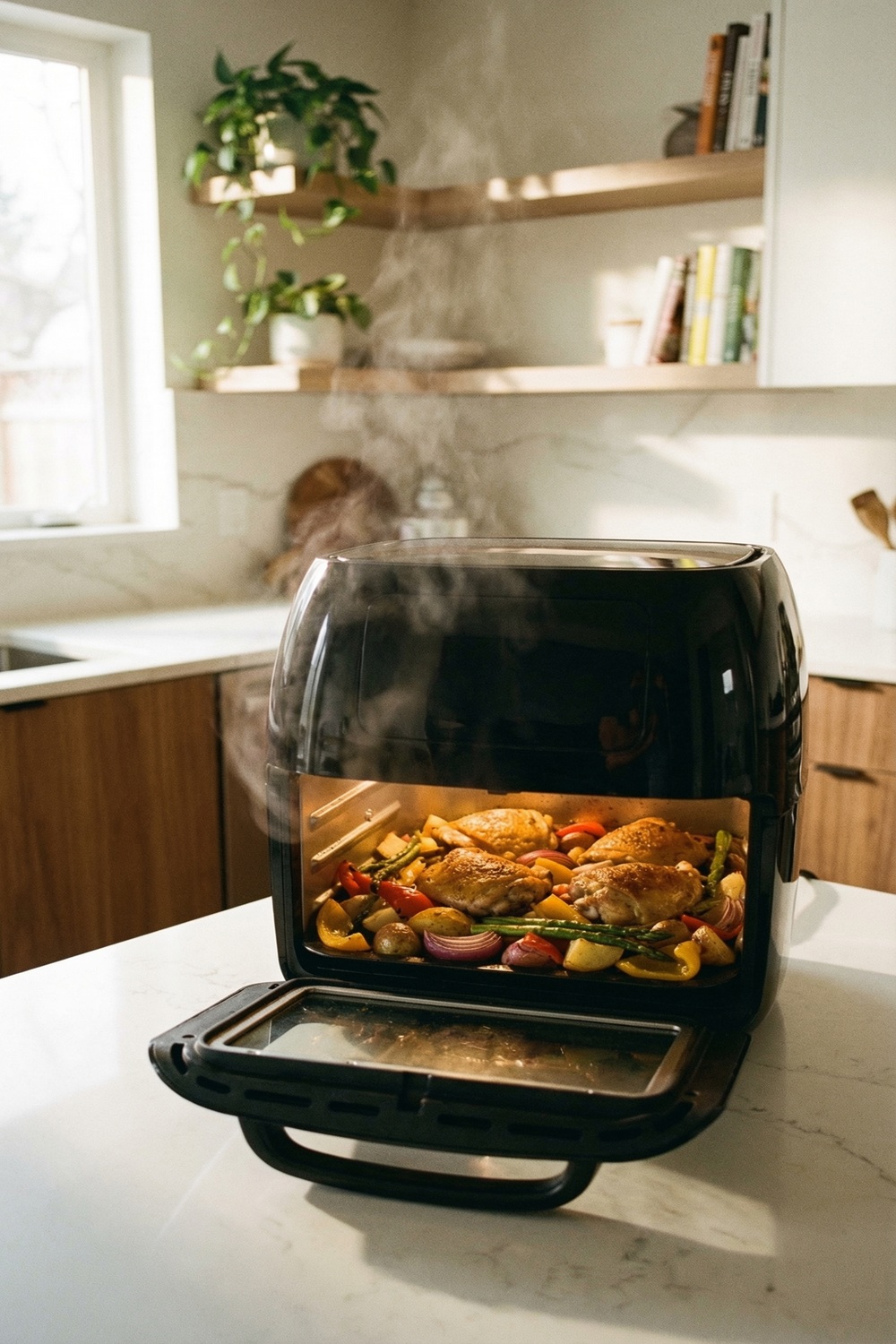
If you’ve been following this site, you know I’ve been deep in research on whether air fryers contain PFAS. Most of us grab silicone liners specifically to get away from those chemicals. But what if we’re trading one problem for another?
What “Food-Grade” Silicone Actually Means
Silicone is a synthetic polymer made from silica — basically processed sand. The “food-grade” label is supposed to mean it won’t leach harmful compounds into your food. The key word there is supposed to.
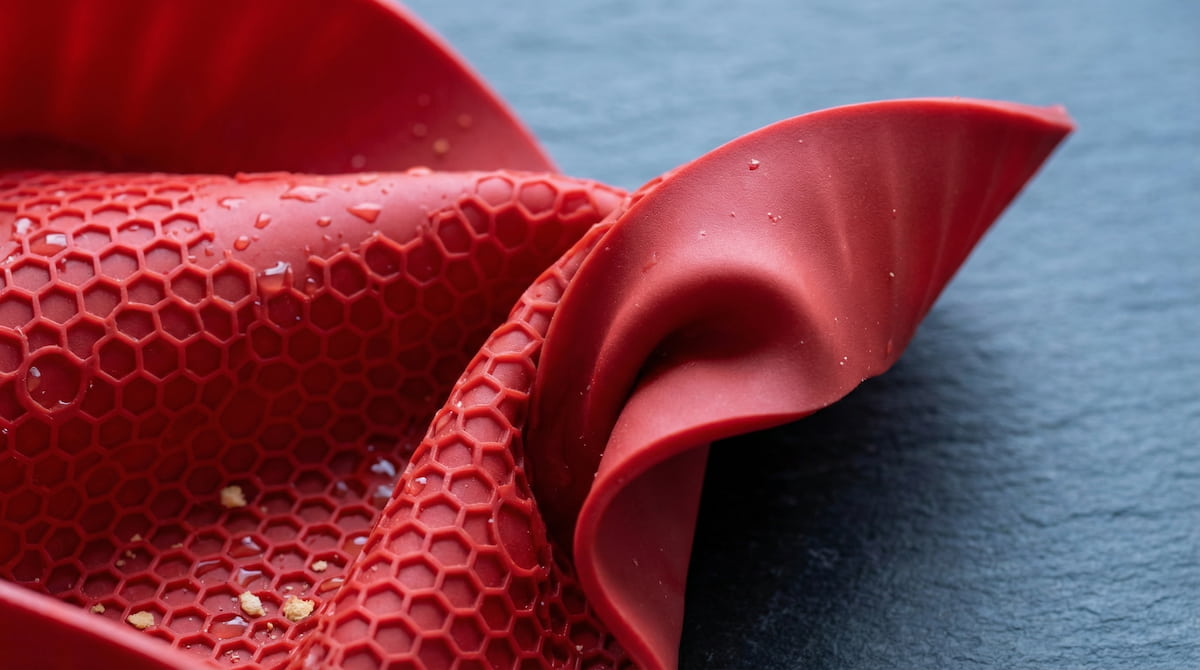
The real problem is that the market is flooded with cheap knockoffs. When I did the pinch test on that $5 set I mentioned — squeezing and twisting it firmly — a white filler showed right through the red color. That’s a major red flag. Pure, high-quality silicone holds its color when twisted. The filler material in cheap versions is often what produces the chemical smell people report.
The term to look for is “platinum cured” silicone. This manufacturing process avoids the peroxide catalysts used in cheaper production, which are the main source of off-gassing smells. It’s more expensive, but it’s the only kind I’d consider using around my family now.
Do Silicone Liners Release Toxic Fumes?
This is the question that actually matters. Most silicone is rated safe up to 425°F–450°F (about 230°C). Air fryers work by blasting high-speed hot air directly onto the surface, which means thin or poorly-placed liners can exceed their temperature threshold faster than you’d expect.
When silicone overheats, it can release compounds called siloxanes. Research on low-level siloxane exposure is still developing, but I’m not interested in inhaling anything I don’t have to. I’ve written about whether air fryers are bad for your lungs — adding a low-quality silicone liner to the equation definitely doesn’t help.
My own observation: cooking at 400°F for more than 20 minutes with a liner, I’d notice the kitchen air feeling noticeably heavier. It could be imagination, but I stopped experimenting when my wife mentioned the same thing independently. That was enough for me.
Pros and Cons of Silicone Liners
| Reasons People Love Them | The Risks Worth Knowing |
|---|---|
| Protects your basket’s coating from scratching | Blocks air circulation holes — food gets less crispy |
| Saves serious time on cleanup and scrubbing | Potential off-gassing at high temperatures |
| Reusable — better than disposable parchment paper | No easy way to verify “platinum cured” claims at a glance |
| Widely available and inexpensive | Fire hazard if left in an empty fryer during preheat |
A Cleaner Alternative I Actually Switched To
After a few months of research, the most obvious solution became clear: stop using a coated basket that needs protecting in the first place.
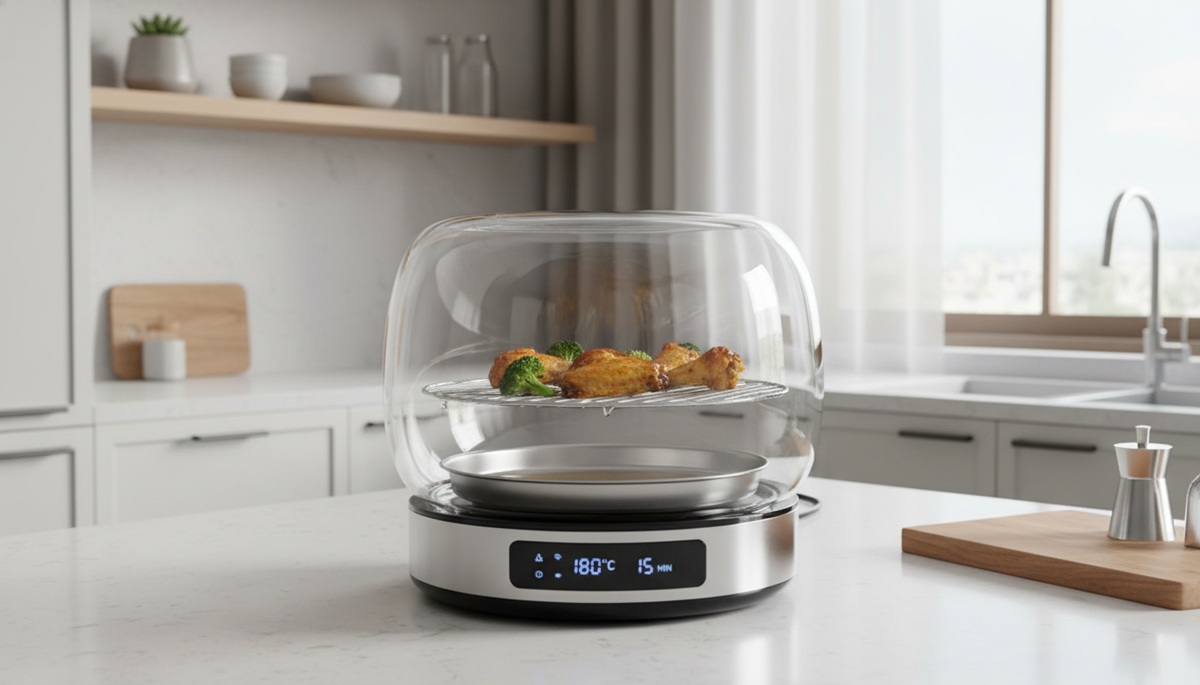
Switching to a glass air fryer changed how I think about this whole issue. Glass is non-reactive — it doesn’t off-gas, doesn’t need protecting from utensils, and you can watch your food cook through the side. The Big Boss 16Qt is the one we use at home now, and I haven’t needed a liner since.
If you prefer a basket-style fryer, the Ninja AF150AMZ uses a ceramic-coated basket that’s PFAS-free — meaning even if you don’t use a liner, you’re not cooking on Teflon. It’s what I used for two years before switching to glass.
If You Do Use Silicone Liners — Follow These Rules
Sometimes you just need a liner for a messy recipe. I’m not here to tell you never to use them. But after everything I’ve learned, I follow these rules strictly:
- Platinum cured only. Check the product description before buying. If it doesn’t say platinum cured, assume it isn’t.
- Stay under 380°F. Even if the box claims 450°F rated, give yourself margin.
- Ventilate the kitchen. Run your range hood on high the entire time.
- Never preheat with an empty liner. Lightweight silicone can fly into the heating element and catch fire.
- Do the pinch test before first use. Twist firmly. If white shows through, return it.
Safe Cooking Materials — The Bigger Picture
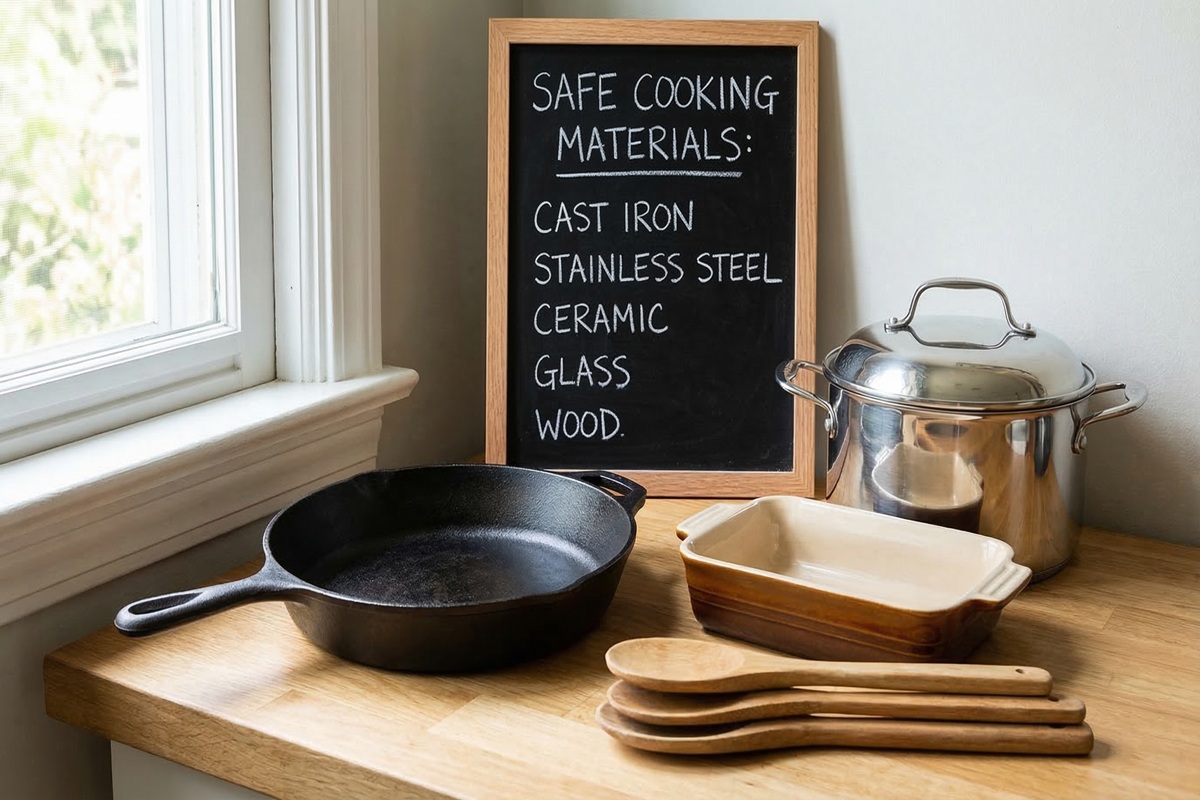
Silicone liners are one small piece of a larger question: what materials do you actually want touching your family’s food every day? I’ve put together a full guide on choosing safe cooking materials that covers ceramics, stainless steel, cast iron, and glass side by side.
Should You Use Air Fryer Silicone Liners?
If you’re buying platinum-cured silicone, staying under 380°F, and running ventilation — yes, they’re reasonably safe for occasional use. But they’re not as clean as glass or stainless steel as a long-term daily choice.
Personally, I save my silicone liner for the rare occasion I’m making something extremely messy. For regular meals, I’ve moved away from it entirely. My kids haven’t complained about kitchen smells since, which honestly tells me more than any study.
Have you noticed a chemical smell when using silicone liners? Leave a comment — I read every one.
Affiliate Disclosure: This post contains Amazon affiliate links. If you purchase through these links, I earn a small commission at no extra cost to you. I only recommend products I’ve personally researched or used.