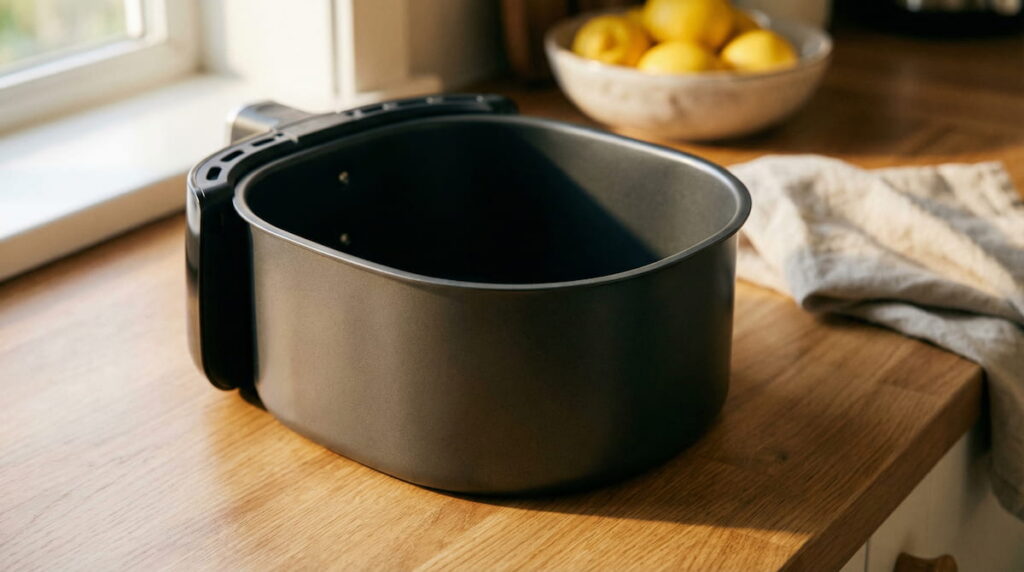
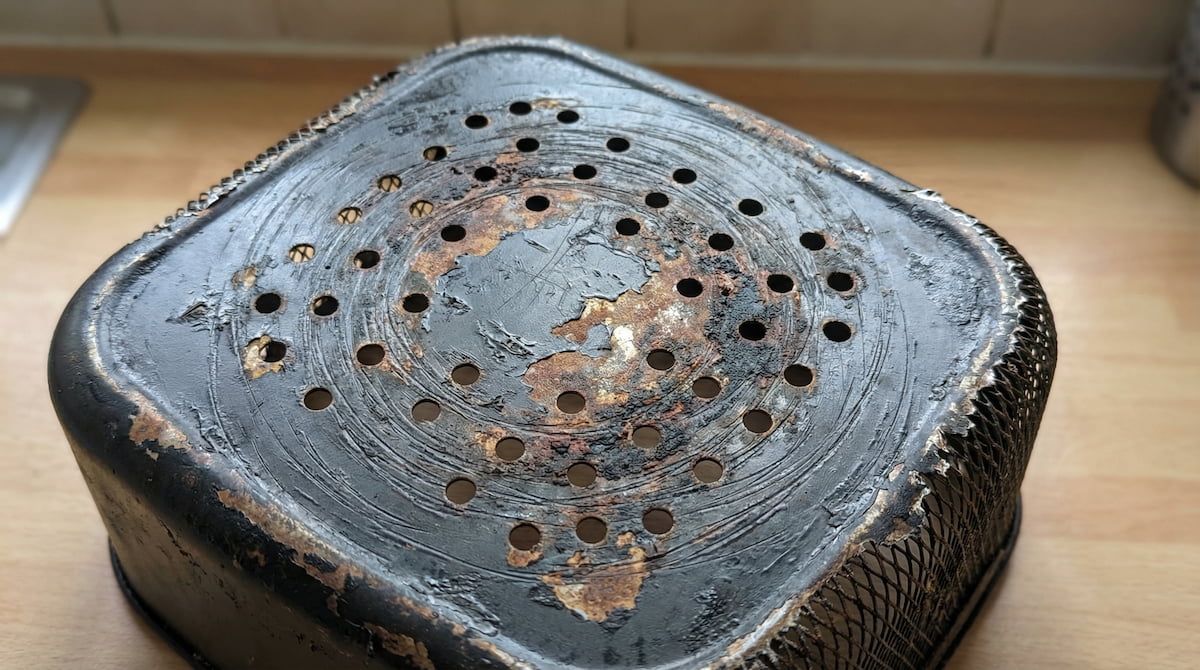
I kept using my first air fryer for about six months longer than I should have. The basket looked fine at a glance — a few scratches, some discoloration near the edges, but nothing that seemed serious. It wasn’t until I started researching what air fryer coatings are actually made of that I realized what those scratches meant. A damaged non-stick coating doesn’t just look bad — it changes what may end up in contact with your food.
Here’s how to tell if your air fryer coating is damaged, and what to do if it’s time to stop using it.
Why a Damaged Coating Actually Matters
Most standard air fryer baskets are coated with PTFE — the same substance in Teflon pans. According to the U.S. FDA, PTFE coatings are considered safe under normal cooking conditions. When the coating is intact, it creates a smooth barrier between the metal underneath and your food.
When it’s significantly scratched or peeling, that barrier is compromised. Coating fragments may potentially transfer to food, and the exposed metal underneath can come into direct contact with what you’re cooking — especially at high heat. This is a gradual, everyday concern that’s easy to miss until the damage is already significant.
This is separate from the fume concern at very high temperatures — that’s a different issue. Coating wear is slower and more common.
The Signs Your Coating Is Damaged
1. Visible Scratches or Gouges
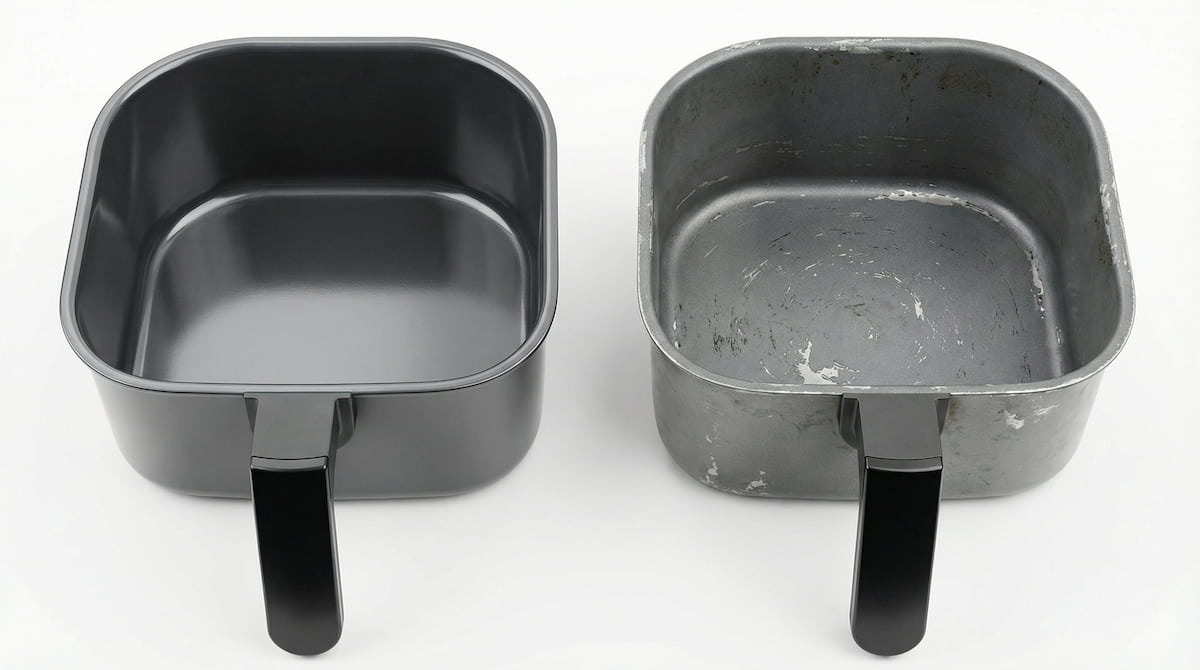
Run your finger across the basket surface. A healthy coating feels smooth and slightly slick. If you can feel raised edges, grooves, or rough patches, the coating has been physically broken. Light surface scuffs are normal wear — deep scratches that catch your fingernail are not.
2. Peeling or Flaking
This is the most obvious sign and the one that should stop you immediately. If you can see pieces of coating lifting away from the surface — even small flakes — those pieces may be transferring to your food. Stop using the basket.
3. Discoloration or Dark Spots
Some darkening from use is normal, especially with high-fat foods. But patches where the coating has worn through to a noticeably different color — often darker or metallic — indicate the coating layer has thinned significantly in that area.
4. Food Sticking More Than Usual
A non-stick coating that’s working properly releases food easily. If you’re suddenly having to scrub things off a basket that used to clean up easily, the surface properties have changed — usually because the coating is worn. This is often the first functional sign before visible damage becomes obvious.
5. The White Residue Test
For ceramic coatings specifically: twist or pinch a small area of the basket firmly between your fingers. If white residue transfers to your skin, the coating contains fillers that may be breaking down. Pure high-quality ceramic shouldn’t leave any residue.
Normal Wear vs. Serious Damage
Normal wear: Light surface dulling after months of use, minor discoloration from cooking oils, very fine surface marks that don’t catch your fingernail. This is cosmetic and doesn’t affect safety.
Worth watching: Scratches you can feel but not see clearly, small areas of uneven color, coating that’s starting to look thinner in high-use spots. Start thinking about replacement soon.
Stop using it: Any visible flaking or peeling, scratches deep enough to expose the metal underneath, large areas where the coating is clearly gone.
What Causes Coating Damage
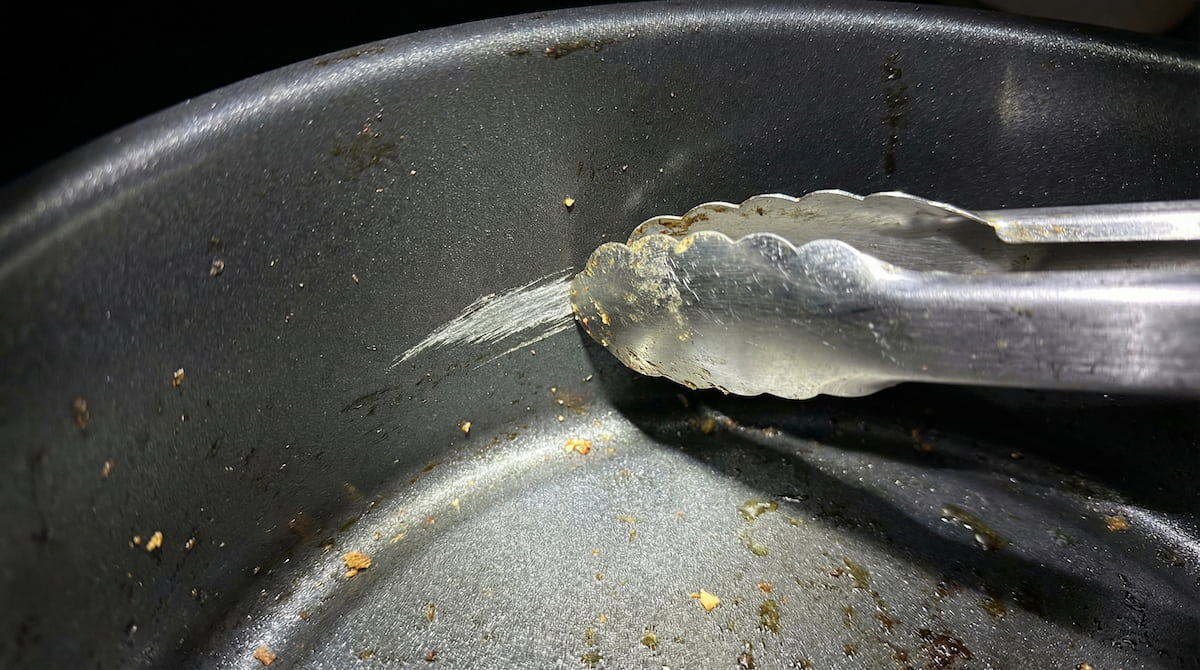
Most coating damage comes from three sources, and all of them are avoidable:
- Metal utensils. Tongs, forks, spatulas with metal tips — one careless scrape can cut through a coating layer. Silicone or wooden utensils only.
- Aerosol cooking sprays. The lecithin in sprays like PAM builds up a sticky residue that bonds to the coating surface and degrades it over time. A glass spritzer with avocado oil is a simple fix — I covered this in more detail in my ceramic air fryer guide.
- Harsh cleaning. Steel wool, abrasive sponges, or dishwasher cycles with harsh detergent all accelerate coating wear. Warm water and a soft sponge is all you need — I wrote about the full cleaning routine in my post on what happens when you don’t clean your air fryer.
When to Replace Your Air Fryer Basket
If the coating is peeling, replace the basket — or the whole unit if a replacement basket isn’t available for your model. There’s no repair option for a damaged non-stick coating.
If you’re replacing anyway, it’s worth considering whether a ceramic-coated basket or a stainless steel interior model makes more sense for your household. Both are more durable than standard PTFE coatings and eliminate the PFAS concern entirely.
The basket I replaced mine with was the Ninja AF150AMZ — ceramic-coated, PFAS-free, and two years in with no flaking or peeling. The difference from my old Teflon basket was noticeable within the first week.
For a full breakdown of which material holds up best over time, see the non-toxic air fryer comparison guide.
30-Second Check Before Your Next Cook
Before your next use, take 30 seconds and go through these:
- Run your finger across the basket — does it feel smooth or rough?
- Look for any flaking or peeling, especially around the edges and corners
- Check for deep scratches that expose a different color underneath
- Notice whether food is sticking more than it used to
If any of those flag something, trust what you’re seeing. A replacement basket costs less than the peace of mind is worth.
Learn more about how I research kitchen products on my About page.
Affiliate Disclosure: This post contains Amazon affiliate links. If you purchase through these links, I earn a small commission at no extra cost to you. I only recommend products I’ve personally researched or used.