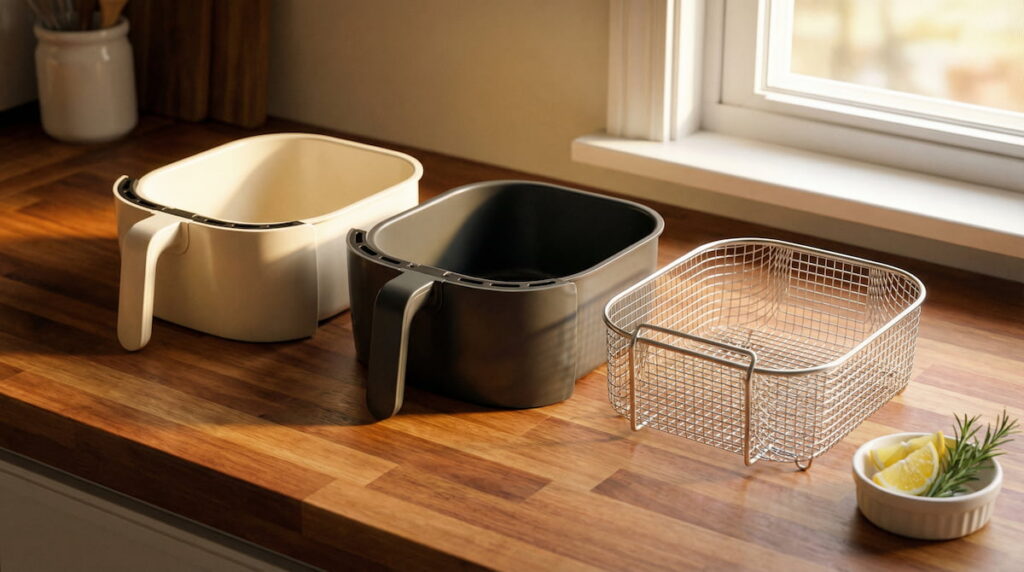
What are air fryer baskets made of? I didn’t think much about it until the coating on ours started wearing down after almost a year of daily use. My wife had been using it nearly every day, and there were visible scratches near the handle where she’d been flipping things with a metal fork.
That’s when I started looking into what these baskets are actually constructed from — and what it means when the surface starts to go.
The Base Material: Almost Always Metal
The structural part of an air fryer basket — the part that holds its shape and conducts heat — is typically made from one of two metals:
Aluminum is the most common. It’s lightweight, heats up quickly, and is inexpensive to manufacture. Most basket-style air fryers use an aluminum base with a coating applied on top. The aluminum itself doesn’t touch your food — the coating does.
Stainless steel is used in higher-end models, particularly oven-style air fryers. It’s heavier, more durable, and doesn’t require a non-stick coating — food can be cooked directly on stainless steel racks or trays. This is one reason stainless steel models appeal to people trying to avoid coatings entirely.
The Coating: This Is the Part That Varies
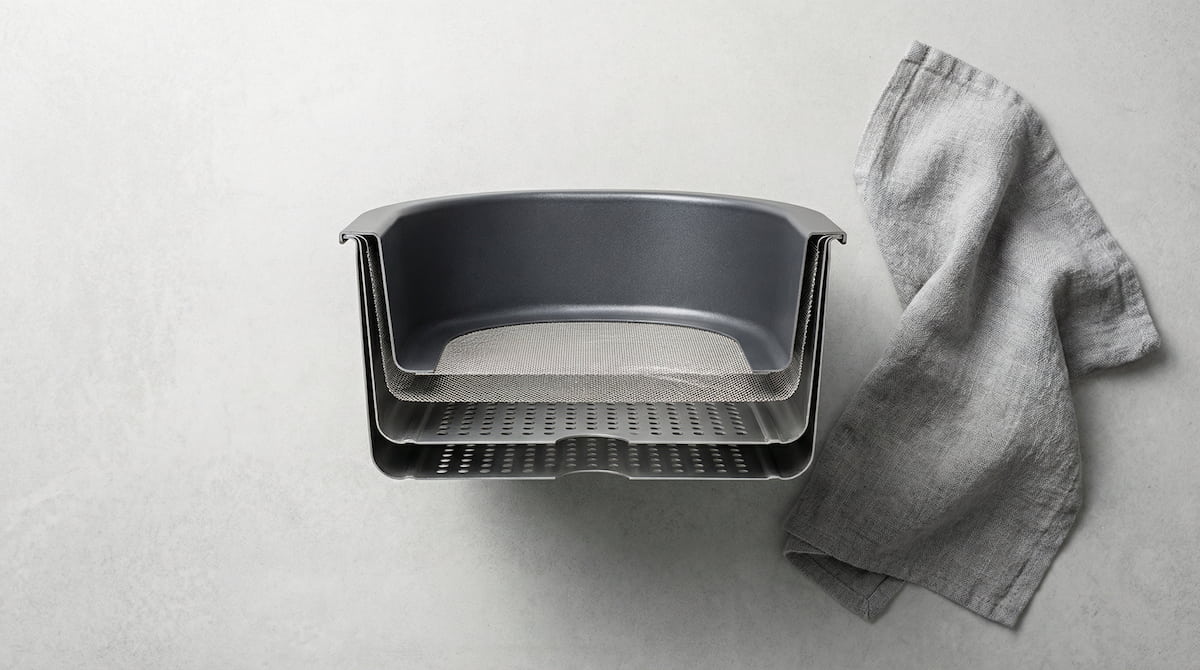
The coating is applied over the metal base to prevent food from sticking and make cleanup easier. There are three main types you’ll encounter:
PTFE (Teflon-Type) Coatings
PTFE — polytetrafluoroethylene, commonly known by the brand name Teflon — is the most widely used non-stick coating in air fryers. It creates an extremely slippery surface that releases food easily and wipes clean in seconds.
PTFE is part of the PFAS chemical family. At normal cooking temperatures (under 500°F), it’s considered chemically stable. The concern arises when the coating is scratched, peeling, or overheated. For more on this: How to Tell If Your Air Fryer Coating Is Damaged.
Ceramic Coatings
Ceramic coatings use a silica-based formula instead of fluoropolymers. They’re marketed as PFAS-free, which is why they’ve become popular with health-conscious buyers. The cooking surface feels slightly different from PTFE — a bit more matte, slightly less slippery when new.
The main limitation is durability. Ceramic coatings are more sensitive to metal utensils and dishwasher use than PTFE. With proper care, a good ceramic basket lasts 1–2 years. Without it, noticeably less. For a direct comparison: Ceramic vs Nonstick Air Fryer.
No Coating (Stainless Steel or Glass)
Some air fryers skip the coating entirely. Stainless steel interior models use metal racks and trays — food contacts bare metal, which means you’ll need a light coat of oil to prevent sticking. Glass bowl air fryers use a transparent glass chamber with no coating at all.
Both options eliminate the coating question entirely. The trade-off is convenience — neither is as effortless to cook on as a well-maintained non-stick surface.
Why the Basket Design Matters Beyond the Coating
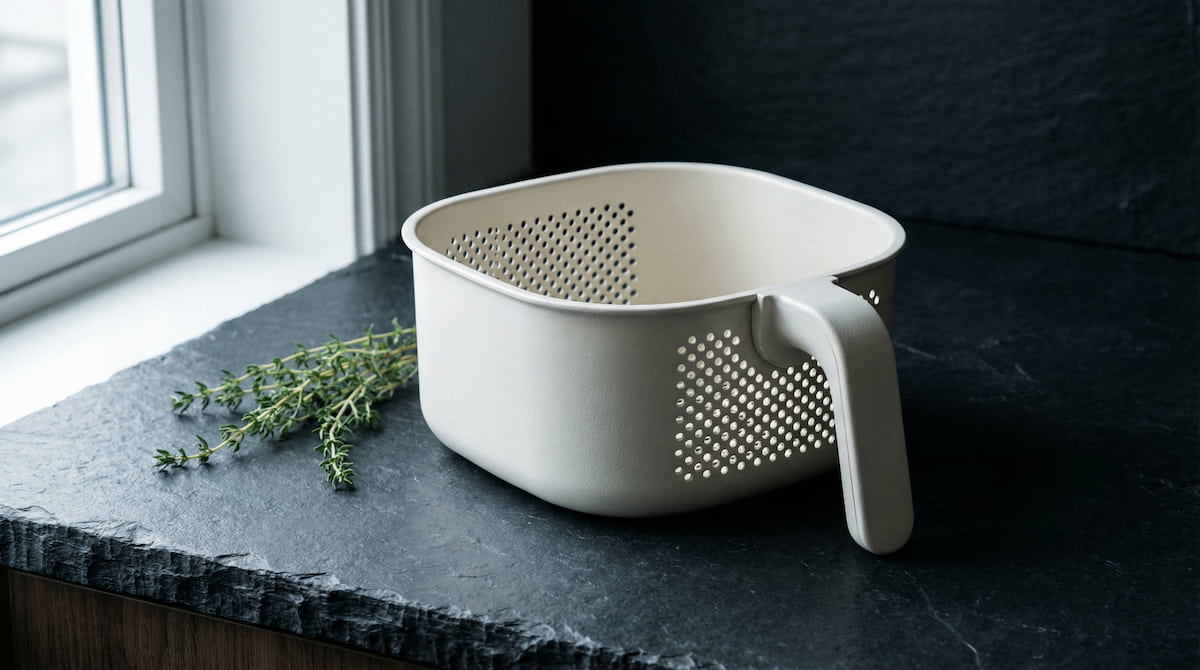
The physical design of the basket affects cooking performance more than most buyers realize. A basket with larger perforations allows more hot air to circulate around food, which is what makes air frying work. A basket with a fine mesh or solid sections can create uneven cooking and steaming rather than crisping.
Depth matters too. A shallow basket spreads food out more, which generally improves crispiness. A deep basket holds more food but can lead to uneven results if you overcrowd it.
If you’re choosing between basket and oven styles, I covered this in detail here: Basket vs Oven Air Fryer.
What to Look for When Buying
Based on what I’ve learned researching this for my own kitchen, here’s how I’d approach it:
If you want the easiest cooking experience and aren’t concerned about PTFE: a standard nonstick basket works well and lasts. Just replace it when the coating shows wear.
If you want PFAS-free cooking without changing your habits much: ceramic is the practical middle ground. Hand wash only, no metal utensils, and expect to replace it every couple of years. The Ninja AF150AMZ is the one I use — ceramic-coated, PFAS-free, and two years in with no flaking.
Ninja AF150AMZ — See Today’s Price on Amazon →
If you want to eliminate the coating question entirely: stainless steel or glass. More effort to cook on, but no coating variables at all. The Big Boss 16Qt Glass Air Fryer is worth looking at if you want full visibility and zero coating concerns. The Instant Pot Omni Plus 18L is what I’d recommend for families — oven-style stainless interior, large enough for a full meal.
Big Boss Glass Air Fryer — See Today’s Price on Amazon →
Instant Pot Omni Plus — See Today’s Price on Amazon →
I keep an updated list of these options here: Best Non-Toxic Air Fryers.
FAQ
Are air fryer baskets safe?
Most are safe for normal cooking use. The main thing to watch is coating condition — a scratched or peeling basket is worth replacing regardless of material type.
Do air fryer baskets contain BPA?
The metal baskets themselves don’t contain BPA. Some plastic components like handles or outer housings may, but these don’t contact food during cooking.
Can I replace just the basket?
Yes, for most popular models. Replacement baskets are available from the manufacturer and third-party sellers. It’s often cheaper than buying a new unit.
How long do air fryer baskets last?
PTFE-coated baskets: 2–3 years with proper care. Ceramic-coated baskets: 1–2 years. Stainless steel: indefinitely with normal maintenance.
Affiliate Disclosure: This post contains Amazon affiliate links. If you purchase through these links, I earn a small commission at no extra cost to you. I only recommend products I’ve personally researched or used.