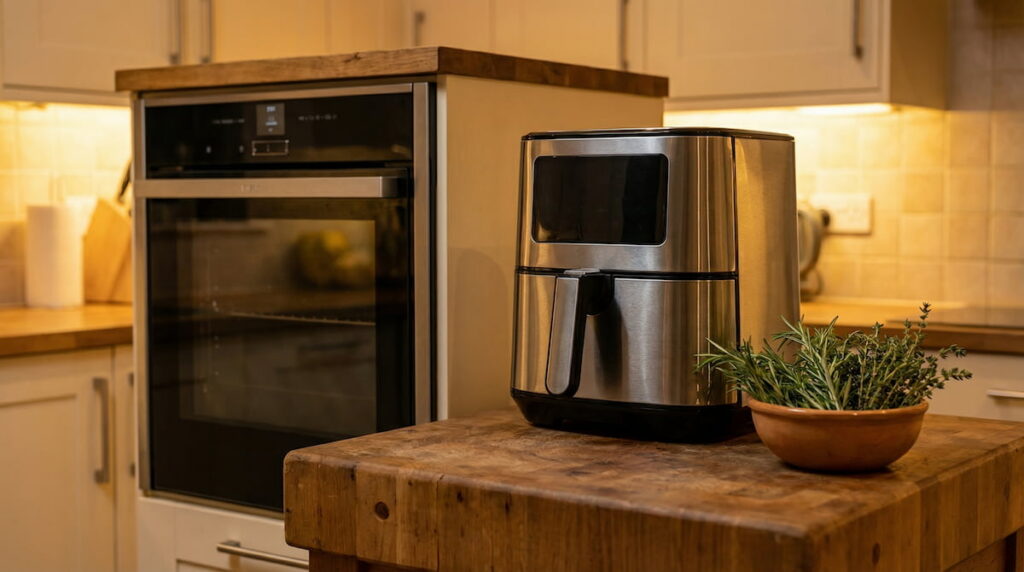
When it comes to air fryer vs oven, healthier cooking is what most families are really after — not just convenience.I used to think the oven was the “safe” choice. It’s been in kitchens forever. My mom used it. Her mom used it. No weird smells, no strange coatings — just radiant heat and a timer.
Then I got an air fryer, and my teenage sons started asking me to make everything in it. Crispy chicken, roasted vegetables, even reheated pizza. The results were undeniably better in a lot of ways. But it got me thinking: is the air fryer actually healthier, or is this just a convenience upgrade?
I spent a few weeks digging into the research between bus shifts, and here’s what I actually found — no hype, no filler.
The Basic Difference: How Each One Cooks
A conventional oven heats air inside a large chamber. Food sits on a rack or pan, and heat radiates from the top, bottom, or both. Convection ovens add a fan to circulate that air, which speeds things up.
An air fryer is essentially a compact convection oven. It circulates very hot air at high speed around food in a small basket. Because the space is smaller and the airflow is more intense, it cooks faster and produces crispier results — often without oil, or with just a light spray.
That’s the first clue that this isn’t a simple comparison. A lot depends on how you’re using each one.
Fat and Calories: Where Air Fryers Win
This is the most straightforward category. When you air fry, you typically use little to no added oil. When you oven-roast, you often use more — a tablespoon here, a drizzle there.
Research backs this up. Studies have found that air-fried foods can contain significantly less fat than traditionally fried versions of the same food. Compared to deep frying, the difference is dramatic. Compared to oven cooking, it’s more modest — but it’s still real.
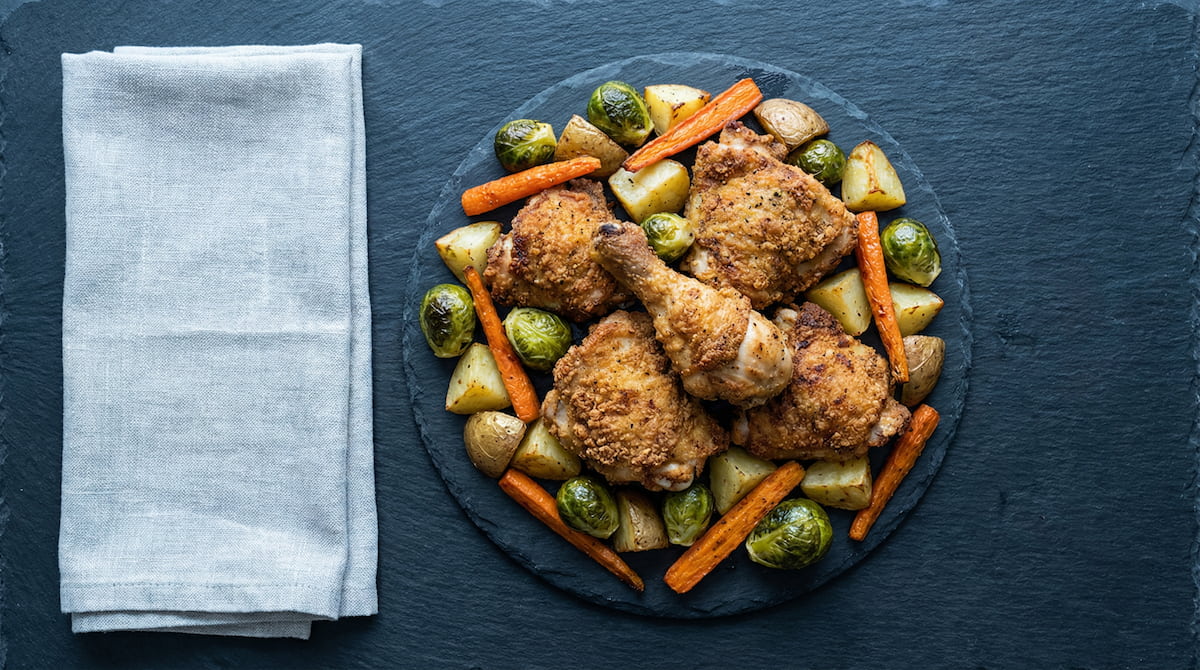
For my family, this mattered. My sons were going through a phase of wanting fries and chicken wings every other night. Using the air fryer with a light mist of avocado oil instead of oven-roasting with a heavy pour made a difference over time.
If reducing daily fat intake is a goal, the air fryer has a genuine edge here.
Nutrient Retention: It’s Complicated
High heat destroys some nutrients — that’s true regardless of whether you’re using an air fryer or an oven. Vitamin C, B vitamins, and certain antioxidants are heat-sensitive.
The question is which method causes more loss.
Because air fryers cook faster, there’s a reasonable argument that shorter exposure to high heat means less nutrient degradation. Some studies on specific foods (like broccoli and potatoes) have supported this idea. But it’s not universal — results vary by food type, temperature, and cook time.
The honest answer: the difference in nutrient retention between air frying and oven roasting is probably small for most foods. Neither method is dramatically better or worse in this category. What matters more is not overcooking your vegetables — in either appliance.
Acrylamide: The Bigger Health Question
This one surprised me when I first came across it. Acrylamide is a chemical compound that forms when starchy foods — potatoes, bread, cereals — are cooked at high temperatures. It develops through a reaction between sugars and an amino acid called asparagine when food reaches around 250°F (120°C) or higher.
Health agencies including the FDA and European food safety authorities have flagged acrylamide as a potential concern. Animal studies have linked high doses to cancer risk, though the evidence in humans is less clear.
Here’s the relevant part: air fryers can produce acrylamide too — but research suggests they produce less than deep frying. One study found air frying reduced acrylamide formation in potatoes by up to 90% compared to deep frying.
Compared to a conventional oven, the difference is smaller and depends heavily on temperature and cook time. Cooking at lower temperatures and not over-browning food in either appliance is the most practical way to reduce acrylamide exposure.
The takeaway: air fryers aren’t acrylamide-free, but they’re likely better than deep frying. Against a conventional oven, the gap is narrower.
Chemical Off-Gassing: What I Actually Care About
This is the issue that started my whole research journey. I noticed a chemical smell from my first air fryer during the initial uses. It got me wondering what was actually coming off those coatings.
Most air fryer baskets are coated with nonstick materials — often PTFE (polytetrafluoroethylene), which is the same compound used in traditional Teflon pans. At normal cooking temperatures, PTFE is considered stable. But when it overheats — above around 500°F (260°C) — it can begin to break down and release fumes.
Conventional ovens don’t have this issue in the same way, unless you’re using nonstick bakeware inside them. A bare metal pan or a cast iron skillet in the oven produces no coating-related fumes.
This is one area where oven cooking has a potential advantage — if you’re using uncoated pans. And it’s one reason I’ve shifted toward air fryers with ceramic-coated or stainless steel baskets for my family’s daily cooking.
If this is a concern for you, I’ve covered it in more detail in my guide on PFAS-free air fryers.
Cooking Speed and Energy Use
This isn’t strictly a health topic, but it affects how often people actually cook at home — which does affect health outcomes.
Air fryers preheat in 2–3 minutes. A conventional oven can take 10–15 minutes to reach temperature. For weeknight cooking with two hungry teenagers waiting, that gap matters.
Air fryers also use less energy. They heat a smaller space with more efficient airflow. A typical air fryer uses 1,200–1,800 watts for 15–20 minutes. A full-size oven running at 375°F for 30–45 minutes uses considerably more.
Faster cooking plus lower energy use = a more practical tool for daily home cooking. And regular home-cooked meals, regardless of appliance, are healthier than takeout most of the time.
Where the Oven Still Wins
Capacity: A full-size oven can cook a whole chicken, a large casserole, and a sheet of roasted vegetables simultaneously. Most air fryers max out at 5–7 quarts — enough for 2–3 people, but not a full family spread.
Baking: Cakes, bread, and layered bakes do better in an oven. The intense circulating heat of an air fryer can over-brown exteriors before interiors cook through.
Delicate foods: Lightly seasoned fish, custards, and soufflés generally prefer the gentler, more even heat of a conventional oven.
No coating concerns: If you use uncoated stainless or cast iron in your oven, there’s no nonstick coating to think about.
Side-by-Side Comparison
| Factor | Air Fryer | Conventional Oven |
|---|---|---|
| Fat / Calorie Content | ✅ Lower (less oil needed) | Moderate (more oil typical) |
| Nutrient Retention | ✅ Slightly better (faster cook) | Similar |
| Acrylamide Formation | ✅ Less than deep frying | Similar (depends on temp) |
| Chemical Off-Gassing | ⚠️ Risk if overheated nonstick | ✅ None (with uncoated pans) |
| Cook Time | ✅ Faster (20–30% less) | Slower preheat + cook |
| Energy Use | ✅ Lower | Higher |
| Capacity | Limited (2–4 servings) | ✅ Large batches |
| Baking | Limited | ✅ Better |
What I Actually Do at Home
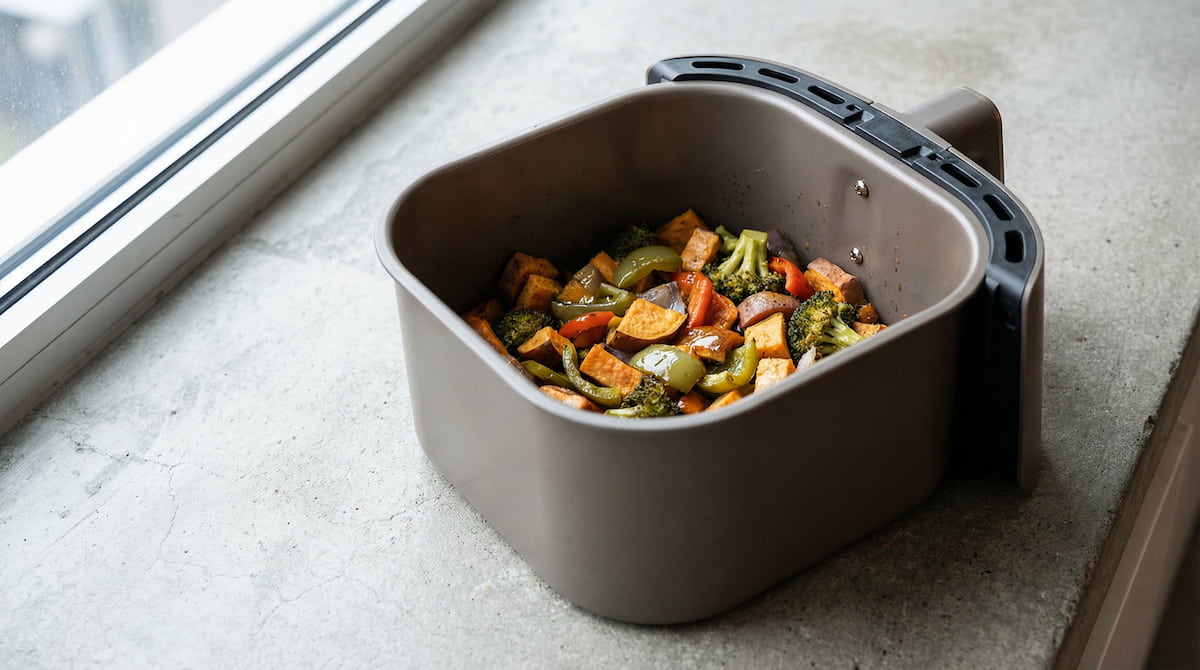
I use both, and I think that’s the honest answer most families will land on.
Weeknights: air fryer. Salmon fillets, chicken thighs, frozen vegetables, leftover pizza — it handles all of that faster and cleaner than the oven, and my family eats better because we’re not waiting 40 minutes for something to roast.
Weekends or larger meals: oven. Sheet pan dinners, whole roasted chicken, anything that needs serious capacity.
The one thing I do pay attention to is the basket coating. I’ve moved toward ceramic-coated options and avoid running the air fryer at maximum temperature unnecessarily. That addresses my biggest concern about air fryers without giving up the convenience I’ve come to rely on.
If you’re considering which appliance to buy or use more, the air fryer is genuinely healthier for everyday cooking — mostly because it makes it easier to use less oil and cook more often at home. But it’s not magic, and a conventional oven used thoughtfully is a solid choice too.
Affiliate Disclosure: This site participates in the Amazon Services LLC Associates Program. If you click a link and make a purchase, I may earn a small commission at no extra cost to you. I only recommend products I’ve personally researched and would use for my own family.