Affiliate Disclosure: This post contains Amazon affiliate links. If you purchase through my links, I may earn a small commission at no extra cost to you. I only recommend products I’ve personally tested or thoroughly researched.
How to season ceramic air fryer basket is one of those first-use steps most people skip — and skipping it is exactly why ceramic coatings lose their food release faster than they should.
I learned this the hard way with our first ceramic basket. Food started sticking within a few months, and I assumed the coating was just low quality. Turns out the problem was that I never seasoned it before the first cook. One simple step at the start extends coating life significantly and improves performance from day one. Here’s exactly how to do it.
Why Seasoning a Ceramic Basket Matters
Ceramic coatings are mineral-based and PFAS-free — which is why they’re the safer choice over PTFE nonstick. But unlike PTFE, ceramic doesn’t have the same built-in slickness right out of the box. A light seasoning fills in the microscopic pores in the ceramic surface, creates a thin protective layer, and gives the coating the food-release properties that make it worth using.
Without seasoning, those pores stay open. Food particles get into them during the first few cooks, begin to bake on, and the surface becomes progressively stickier over time — not because the coating failed, but because it was never properly prepared.
What You’ll Need
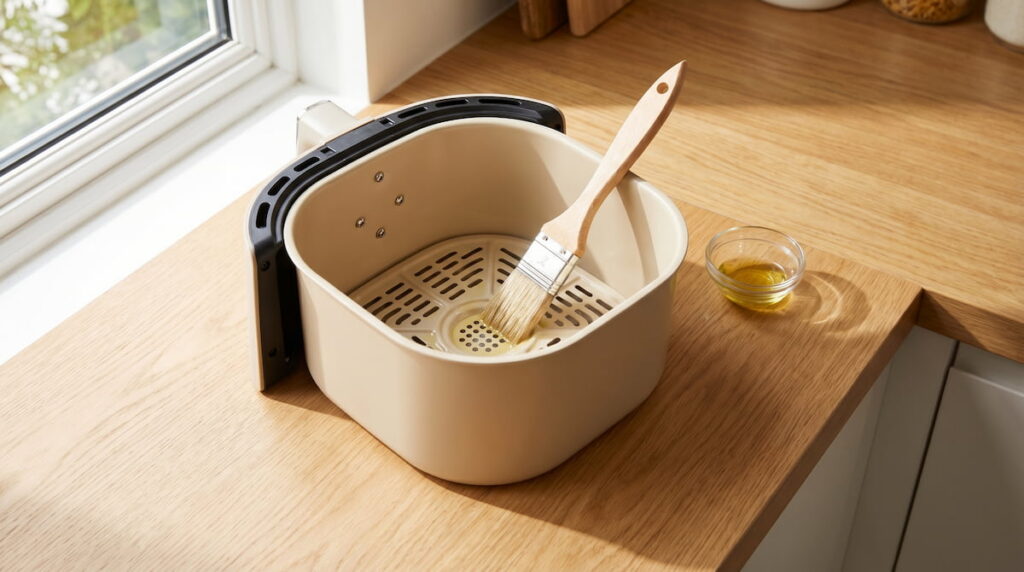
- Neutral high-smoke-point oil — avocado oil, grapeseed oil, or light olive oil
- Pastry brush or folded paper towel
- Clean dry ceramic basket
Do not use aerosol cooking sprays. They leave a polymer residue on ceramic surfaces that builds up with heat and is nearly impossible to remove without damaging the coating.
How to Season Ceramic Air Fryer Basket: Step by Step
Step 1 — Wash and dry the basket first. Before seasoning a brand new basket, wash it once with warm water and mild dish soap using a soft sponge. Rinse thoroughly and dry completely. This removes any factory residue or packaging oils.
Step 2 — Apply a thin layer of oil. Using a pastry brush or folded paper towel, apply a very thin, even coat of neutral oil to the entire interior surface of the basket — bottom and sides. The layer should be barely visible, not pooling or dripping. Too much oil will smoke heavily and leave a sticky residue instead of a protective layer.
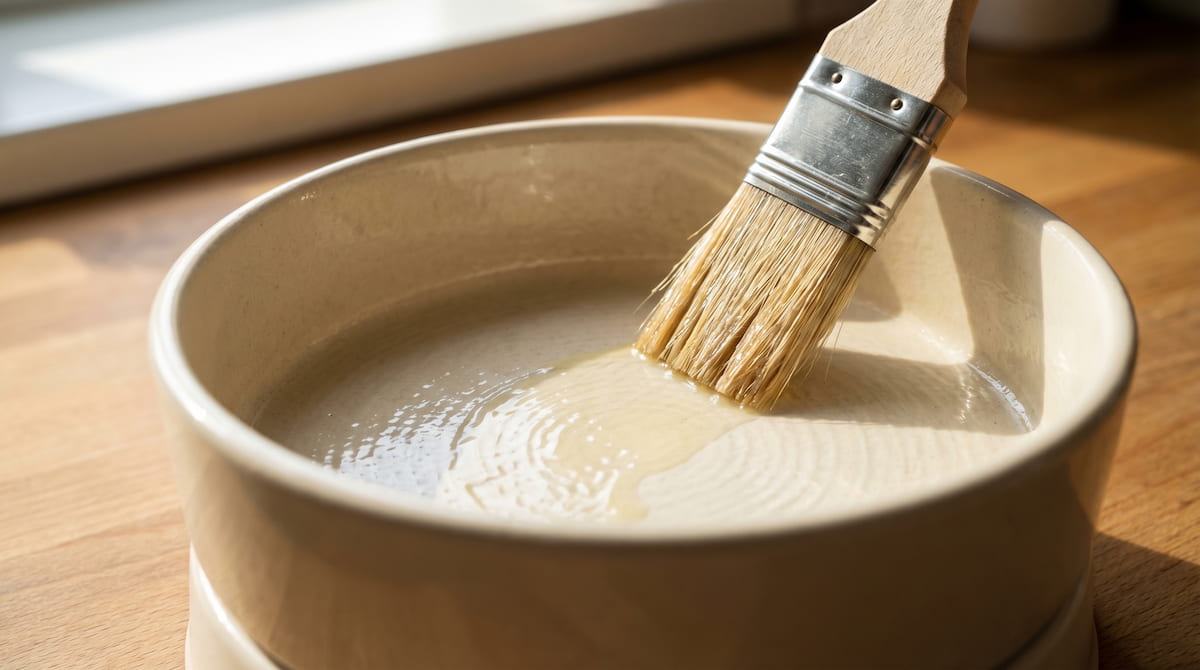
A thin, even coat is all you need — the oil should barely be visible. More than this will smoke and leave residue.
Step 3 — Run the air fryer empty at low heat. Place the oiled basket back in the air fryer. Set it to 300°F (150°C) and run it empty for 5 minutes. This bakes the oil into the ceramic surface, bonding it to the pores and creating the protective layer.
Step 4 — Let it cool completely. Turn off the air fryer and let the basket cool inside for 10 to 15 minutes before removing it. Do not run cold water over a hot basket — thermal shock can crack the coating from the inside.
Step 5 — Wipe out any excess. Once cooled, use a dry paper towel to wipe out any oil that didn’t fully absorb. The surface should feel smooth and slightly slicker than before — not oily or tacky.
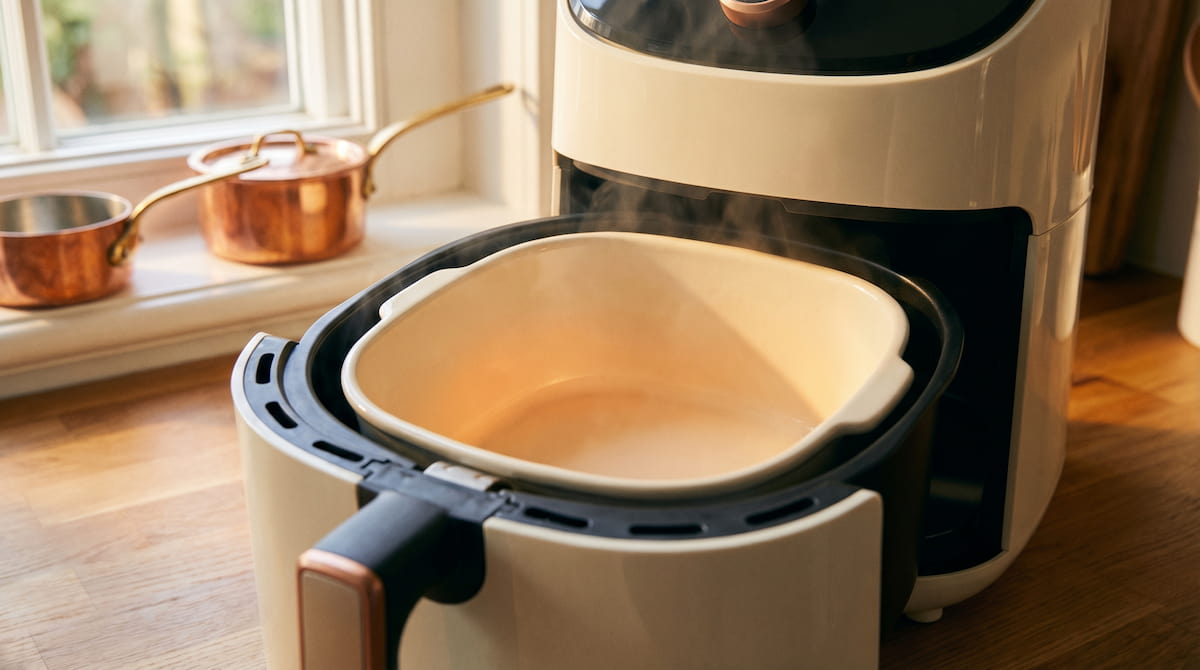
Running the basket empty at 300°F for five minutes bonds the oil to the ceramic surface — the step that makes the coating last.
How Often Should You Re-Season?
Once before first use is the minimum. After that, a light re-season every one to two months keeps the coating performing well — especially if you cook proteins or anything with high sugar content that tends to stick and caramelize.
Signs your basket needs re-seasoning rather than replacing:
- Food is starting to stick more than usual but the surface has no visible scratches
- The surface looks dull or dry compared to when it was new
- You’ve been cooking acidic foods (tomatoes, citrus marinades) frequently — these strip seasoning faster than other foods
What to Avoid During and After Seasoning
- No aerosol sprays. Ever. These damage ceramic surfaces with repeated use.
- No high-heat seasoning. Ceramic isn’t cast iron. Keep the seasoning temperature at or below 300°F — higher temps burn the oil before it can bond properly.
- No soaking after seasoning. The first wash after seasoning should be a quick rinse, not a soak. Extended water contact breaks down the fresh seasoning layer before it fully cures.
- No metal utensils. Seasoning protects the coating from food — it doesn’t protect it from physical scratching. Silicone and wooden utensils only.
Does the Ninja AF150AMZ Ceramic Basket Need Seasoning?
Yes — and it responds well to it. The Ninja AF150AMZ uses a PFAS-free ceramic-coated basket that holds up better than most nonstick alternatives, but like all ceramic surfaces, it performs best when properly seasoned before first use and maintained with a light re-season every couple of months.
It’s one of the reasons I recommend this model specifically for households that want a non-toxic daily driver — the ceramic coating is durable enough to reward proper care with years of reliable performance.
For a full guide to PFAS-free air fryers worth maintaining properly, see: Best PFAS-Free Air Fryers: Ceramic, Glass & Stainless Compared →