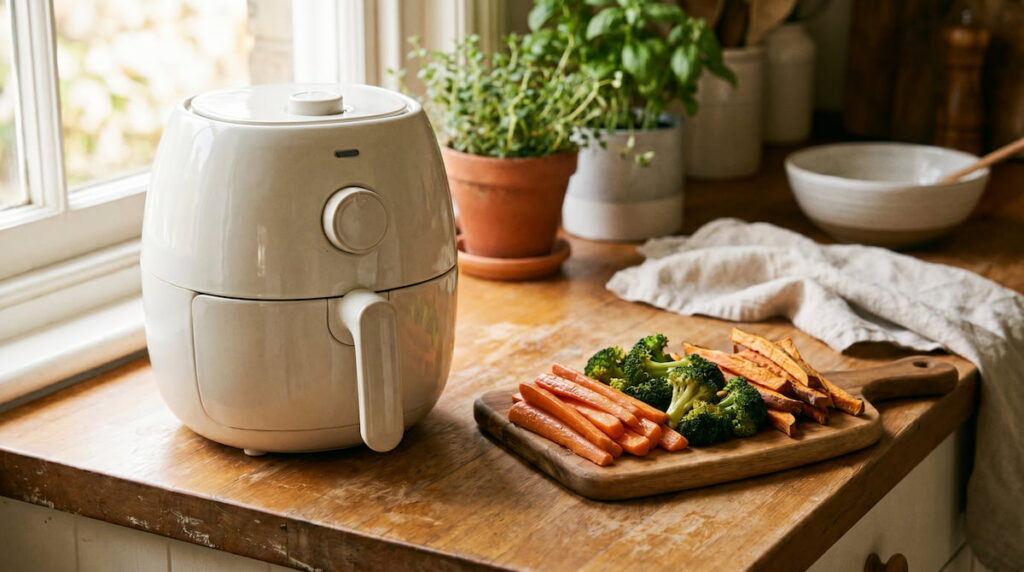
How to use air fryer for baby led weaning is a question more parents are asking as BLW becomes the preferred introduction-to-solids approach in households that want to skip purees. The air fryer is genuinely useful for BLW — it produces the soft-but-structured textures that make finger foods safe for babies to self-feed. But the coating question matters more here than almost anywhere else. Here’s what parents need to know before cooking BLW meals in an air fryer.
Why the Air Fryer Works Well for Baby Led Weaning
Baby led weaning requires a specific food texture — soft enough that a baby can mash with their gums, structured enough that they can pick it up and hold it. Steaming produces the right softness but no exterior structure. Roasting in a conventional oven produces good texture but takes significantly longer. The air fryer hits both targets: soft interior, lightly textured exterior, in 10 to 15 minutes at lower temperatures.
Sweet potato strips, broccoli florets, carrot sticks, zucchini spears, and soft chicken strips all cook to BLW-appropriate texture in an air fryer at 350°F to 375°F — lower than standard air fry temperatures, which produces a softer result without the exterior crispness that makes food harder to mash. The size and speed advantage over a conventional oven is particularly useful when you’re cooking small portions for one baby alongside a full family meal.
The Coating Question: Why It Matters More for BLW
Baby led weaning means your baby’s food is in direct contact with the air fryer basket surface. There’s no baking sheet between the food and the coating, no parchment paper buffer — just soft vegetable strips sitting directly on the basket at cooking temperature. That direct contact is why basket coating is the most important variable in BLW air fryer cooking.
PTFE-coated baskets release fluorinated compounds when scratched or overheated — compounds the EPA has flagged as an ongoing health concern. For adult cooking, this is a manageable concern with the right precautions. For an infant eating soft food directly off the basket surface multiple times per week, it’s a variable I wouldn’t accept at all. Ceramic-coated baskets contain no PTFE and no PFAS — no coating chemistry transfers to the food regardless of temperature or how often you use it.
For a full breakdown of safe air fryer materials, our PFAS-free air fryer guide covers every option worth considering.
How to Use Air Fryer for Baby Led Weaning: Step by Step
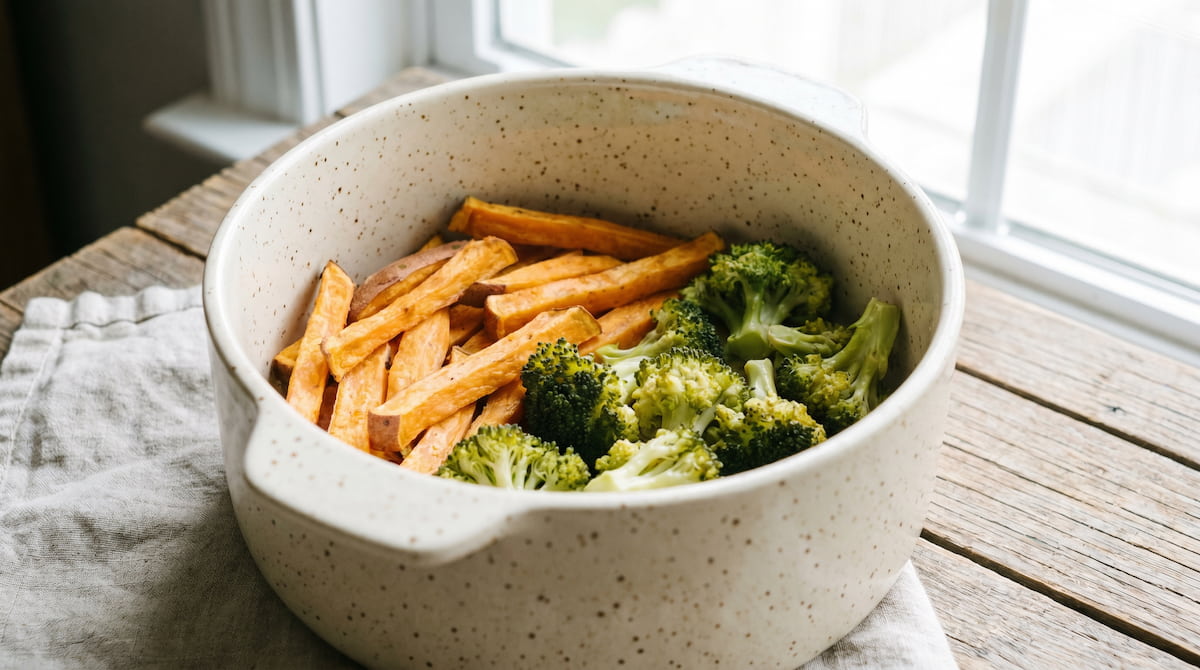
Sweet potato strips and broccoli florets cooked at 350°F in a ceramic basket reach BLW-appropriate softness without the exterior crispness that makes food hard for babies to manage.
The process for BLW air fryer cooking is straightforward once you understand the temperature and sizing adjustments that make it work for infants rather than adults.
Cut food into finger-sized pieces that a baby can grip — strips about the width and length of an adult finger work well for most vegetables. Too small and the baby can’t pick them up reliably. Too large and they become a choking concern. For broccoli, leave the floret stem long enough to serve as a natural handle.
Cook at lower temperatures than standard air fry settings. For most BLW vegetables, 350°F to 375°F produces the right softness. Standard air fry temperatures of 400°F produce a firmer, crispier exterior that’s harder for babies to mash with their gums. The lower temperature takes an extra two to three minutes but produces a consistently safer texture for self-feeding.
Test texture before serving. Press the food between two fingers — it should compress easily with moderate pressure, the same pressure a baby’s gums can generate. If there’s significant resistance, return to the basket for two more minutes and test again. Every air fryer runs slightly differently, so build your timing around the texture test rather than a fixed number.
Let food cool completely before serving. Air-fried food retains heat longer than you expect — the interior of a sweet potato strip can still be very hot two minutes after the basket comes out. Wait five full minutes after cooking before placing food on the highchair tray.
Best BLW Foods for the Air Fryer
| Food | Temperature | Time | BLW Notes |
|---|---|---|---|
| Sweet potato strips | 350°F | 14–16 min | Finger-width strips, test softness before serving |
| Broccoli florets | 350°F | 10–12 min | Leave stem long for grip |
| Carrot sticks | 375°F | 16–18 min | Denser than other veg, needs longer cook |
| Zucchini spears | 350°F | 8–10 min | Soft quickly, watch closely |
| Chicken strips (thin) | 375°F | 12–14 min | Internal temp must reach 165°F, verify with thermometer |
| Salmon strips | 375°F | 8–10 min | Flakes easily, excellent BLW texture |
What Air Fryer to Use for Baby Led Weaning
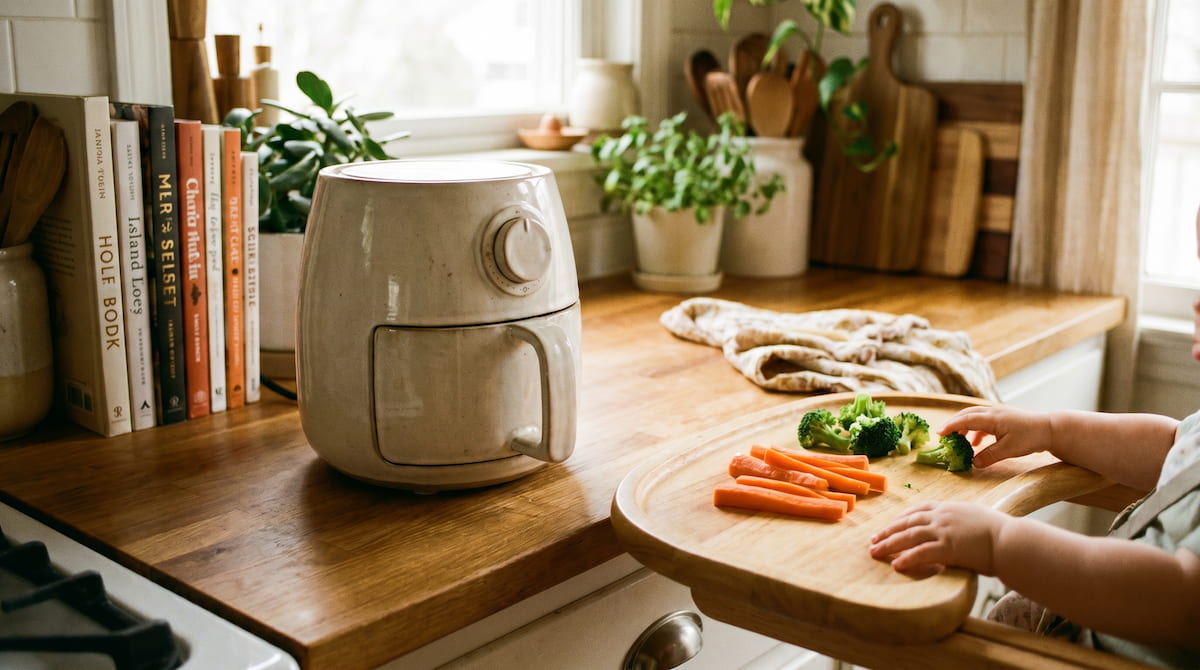
Soft finger foods from a ceramic air fryer go straight to the highchair tray — no coating concern, no chemical transfer to food your baby is handling directly.
For BLW specifically, a ceramic-coated basket is non-negotiable in my view. The Ninja AF150AMZ is the model I’d recommend — ceramic basket, compact size that works for single-portion BLW cooking, and a temperature range that goes low enough for the softer cook settings BLW requires. The basket is dishwasher safe, which matters when you’re cleaning up multiple times a day with an infant in the house.
Safety Rules for BLW Air Fryer Cooking
A few non-negotiable rules for using an air fryer for baby led weaning. Always verify internal temperature of any protein with a food thermometer — chicken must reach 165°F, fish 145°F, regardless of how the exterior looks. Never add salt to BLW food — babies’ kidneys cannot process sodium at adult levels. Avoid honey entirely in the first year. And always supervise eating — baby led weaning requires a parent or caregiver present throughout every meal, not just at the start.
For more on cooking safely for the youngest family members, our guide on how to make baby food in an air fryer safely covers puree-stage cooking alongside the finger food approach. And our safest air fryer for toddlers guide covers the transition from BLW to family meals as your child grows.