Affiliate Disclosure: This post contains affiliate links. If you purchase through my links, I may earn a small commission at no extra cost to you. I only recommend products I’ve personally researched and trust for my own family.
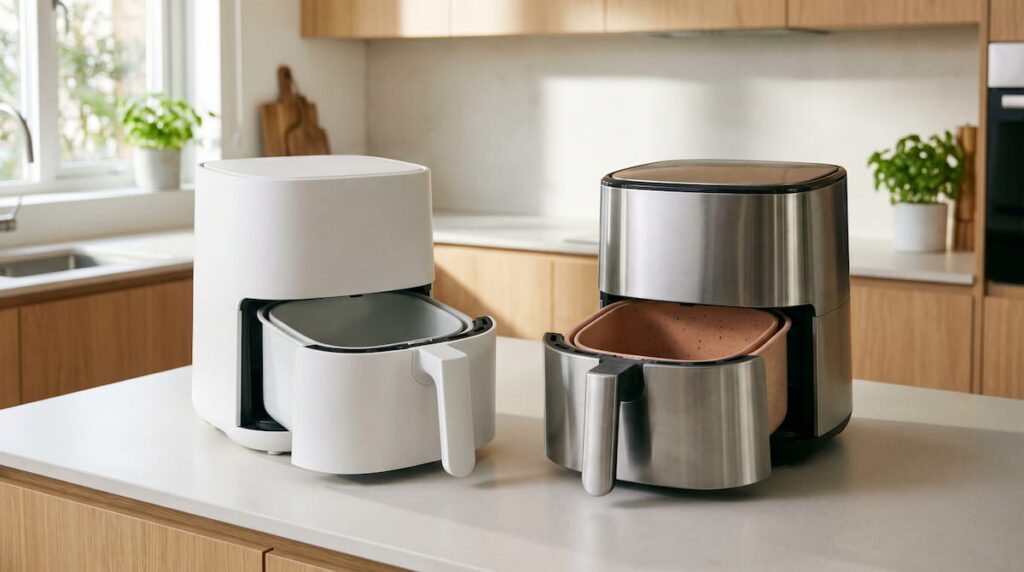
Ninja AF150AMZ vs Cosori ceramic basket — it’s one of the most common comparisons families make when shopping for a PFAS-free air fryer, and the answer isn’t as simple as comparing spec sheets. Both brands use ceramic coating language in their marketing. Both are positioned as safer alternatives to PTFE nonstick. But the details matter.
I went through both products’ coating specifications, manufacturer claims, and real-world performance before landing on the Ninja AF150AMZ for our kitchen. Here’s the full comparison — what’s actually different, what’s similar, and which one I’d recommend for families prioritizing coating safety.
How Both Brands Describe Their Ceramic Coatings
Ninja describes the AF150AMZ basket coating as ceramic nonstick, explicitly stating PTFE-free and PFAS-free in product documentation. The coating is a silica-based ceramic applied over the aluminum basket — the standard sol-gel ceramic nonstick construction used across non-PTFE cookware.
Cosori uses similar ceramic coating language across their air fryer lineup, describing baskets as ceramic-coated and PFAS-free in product listings. The coating construction is comparable — silica-based ceramic over aluminum basket.
At the specification level, both brands are making the same core claim: ceramic nonstick, PTFE-free, PFAS-free. The meaningful differences show up when you go deeper than the marketing language.
Coating Durability: Where the Differences Appear
Ceramic coatings vary in durability based on the thickness of the coating layer, the quality of the silica formulation, and the adhesion process used during manufacturing. These details are not publicly disclosed by either Ninja or Cosori at a specification level, which means the comparison comes down to observed performance over time rather than published data.
From extended use and community reports across both products, a few patterns emerge:
The Ninja AF150AMZ ceramic coating shows consistent durability under regular use with proper care — hand washing, silicone or wooden utensils, no metal contact. Users who follow those care guidelines report the ceramic surface holding up well over 12+ months of daily cooking without visible scratching or performance degradation.
Cosori ceramic baskets show more variable durability reports across their lineup. Some Cosori models — particularly older versions and lower-capacity variants — have accumulated more user reports of early ceramic coating wear than the Ninja AF150AMZ at comparable use frequencies. The more recent Cosori TurboBlaze models appear to have improved coating durability compared to earlier versions, but the long-term track record is shorter than the Ninja AF150AMZ at this point.
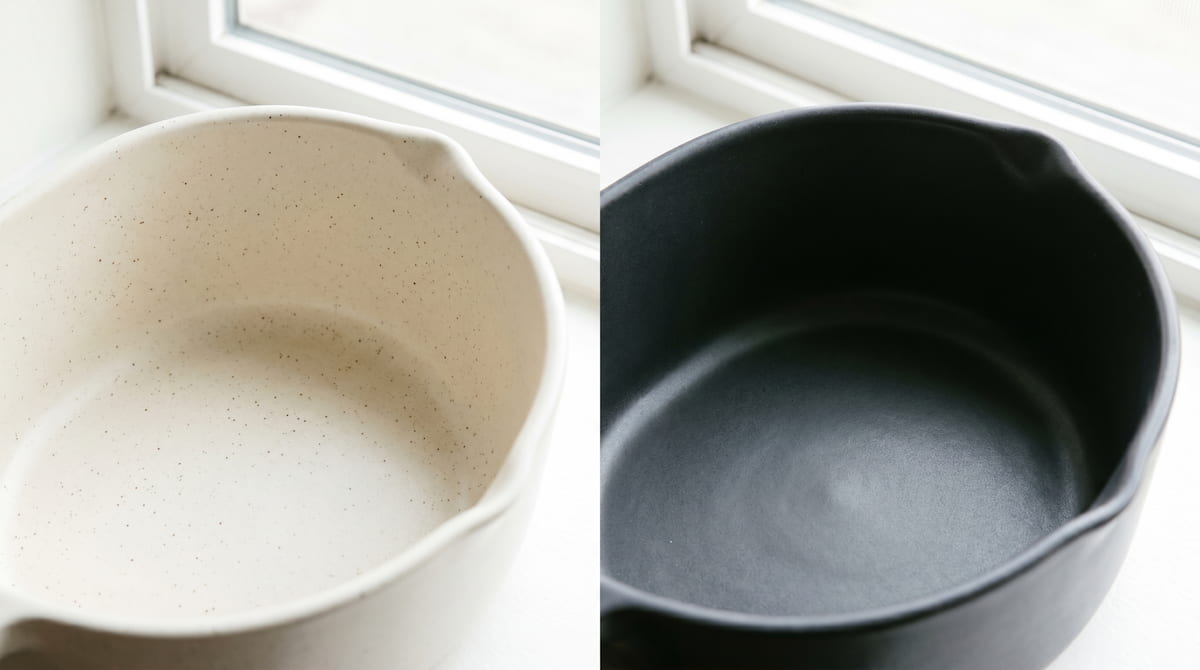
Both baskets use silica-based ceramic coatings — the differences in durability show up over months of daily use rather than on day one.
Head-to-Head Comparison
| Factor | Ninja AF150AMZ | Cosori TurboBlaze 6Qt |
|---|---|---|
| Basket coating | Ceramic nonstick | Ceramic nonstick |
| PTFE-free | ✅ Yes | ✅ Yes |
| PFAS-free | ✅ Yes | ✅ Yes |
| Capacity | 4 quarts | 6 quarts |
| Coating durability track record | ✅ Consistent long-term reports | ⚠️ Variable across models |
| Preheat speed | 2–3 minutes | 2–3 minutes |
| Max temperature | 400°F | 450°F |
| Dishwasher safe | Top rack (hand wash recommended) | Top rack (hand wash recommended) |
| Best for | 1–3 people, compact kitchens | 2–4 people, larger batches |
The Capacity Question
The most straightforward practical difference between these two models is capacity. The Ninja AF150AMZ is a 4-quart basket — right for one to three people cooking standard portions. The Cosori TurboBlaze 6Qt gives you 50% more basket space, which matters when you’re cooking for three to four people and want to avoid running multiple batches for a family serving of fries or nuggets.
If capacity is the primary driver and the ceramic coating safety question is answered to your satisfaction for both brands, the Cosori 6Qt is the more practical choice for households of three to four. For compact kitchens or one to two person households where counter space matters more than batch capacity, the Ninja AF150AMZ’s smaller footprint is the advantage.
What Happens When Either Ceramic Coating Wears
This is the question that matters most for families making a long-term decision. Both baskets use silica-based ceramic coatings over aluminum. When a ceramic coating scratches or wears, it exposes the underlying aluminum rather than a chemically concerning polymer layer. The safety profile of a worn ceramic basket is meaningfully different from a worn PTFE basket — there’s no fluoropolymer degradation concern, just reduced nonstick performance.
That said, worn ceramic coating does mean it’s time to replace the basket — not for chemical safety reasons, but because the nonstick benefit that justifies using ceramic over bare metal is gone. For more on when to replace, see my guide on how long air fryer baskets last.
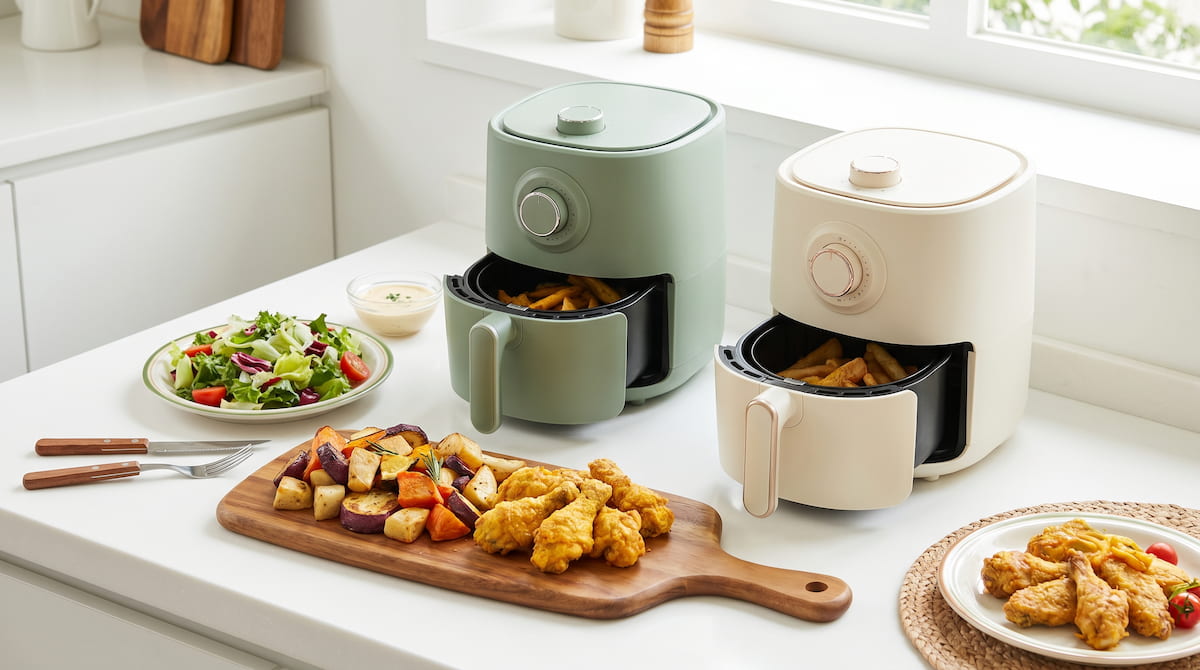
Both ceramic basket air fryers handle daily family cooking without PFAS concerns — the choice between them comes down to capacity and coating track record.
Which One I’d Recommend for Families
For families prioritizing coating safety above all else, both the Ninja AF150AMZ and Cosori TurboBlaze ceramic baskets meet the PFAS-free standard. The coating chemistry is comparable — silica-based ceramic, PTFE-free, PFAS-free — and neither presents a fluoropolymer concern under normal use.
The tiebreaker for me is coating durability track record. The Ninja AF150AMZ has more consistent long-term user reports of ceramic coating holding up under daily use than the Cosori lineup has accumulated at comparable use levels. For a family making nuggets, fries, and proteins multiple times a week, that consistency over time matters more than the 50% capacity advantage the Cosori 6Qt offers.
My recommendation for families of one to three: Ninja AF150AMZ. For families of three to four who need the larger basket and are comfortable with the more variable durability reports on Cosori’s coating: Cosori TurboBlaze 6Qt is a reasonable choice — with the caveat that hand washing and silicone utensils matter more, not less, for extending ceramic coating life.
See Ninja AF150AMZ on Amazon →
See Cosori TurboBlaze on Amazon →
Ninja AF150AMZ vs Cosori Ceramic Basket: The Bottom Line
Both are PFAS-free. Both use silica-based ceramic coatings. The differences come down to capacity — Cosori offers more — and coating durability track record — Ninja has the more consistent long-term reports. For families where coating safety is the primary concern and daily use is the reality, the Ninja AF150AMZ is the more reliable choice at this point in time.
For a full breakdown of the Ninja AF150AMZ coating and specifications, see the guide on whether the Ninja AF150AMZ is PFAS free. For a broader comparison of all three PFAS-free air fryer options across different surface materials and capacities, see the main guide on PFAS-free air fryers. And for families cooking larger batches who need more capacity than either basket-style model provides, the Instant Pot Omni Plus stainless steel option covers that need without any coating concerns.