Disclosure: This post contains affiliate links. If you purchase through them, I earn a small commission at no extra cost to you. I only recommend products I personally trust for my family.
What happens if you don’t preheat an air fryer is one of those questions where the answer matters more for some foods than others — and for one specific food category, skipping preheat is actually a food safety issue, not just a quality issue. I’m Wook, a bus driver and dad who cooks for my family almost every night. I skipped preheating for the first several months of using our air fryer, and understanding what I was actually doing to our food changed how I cook proteins entirely.
Does Preheating an Air Fryer Actually Matter?
Yes — but not equally for every food. The impact of skipping preheat ranges from negligible (for some vegetables and frozen foods) to significant (for proteins that require reaching safe internal temperatures). Understanding which category your food falls into determines whether preheating is optional or essential.
What Happens When You Skip Preheat: 5 Effects
1. Longer Total Cook Time
Without preheating, the air fryer starts cold and gradually ramps up to the set temperature while food is already inside. The total cook time extends by 3–5 minutes compared to a preheated start — which matters less for long cooks but significantly affects shorter recipes that assume a hot start.
2. Less Crispy Exterior on Proteins and Fried Foods
The crispy exterior that makes air fryer food appealing comes from immediate high-heat contact with the food’s surface. A cold start means the surface heats gradually rather than searing immediately — resulting in softer, less crispy results especially on chicken skin, breaded items, and anything you’re trying to get genuinely crunchy.
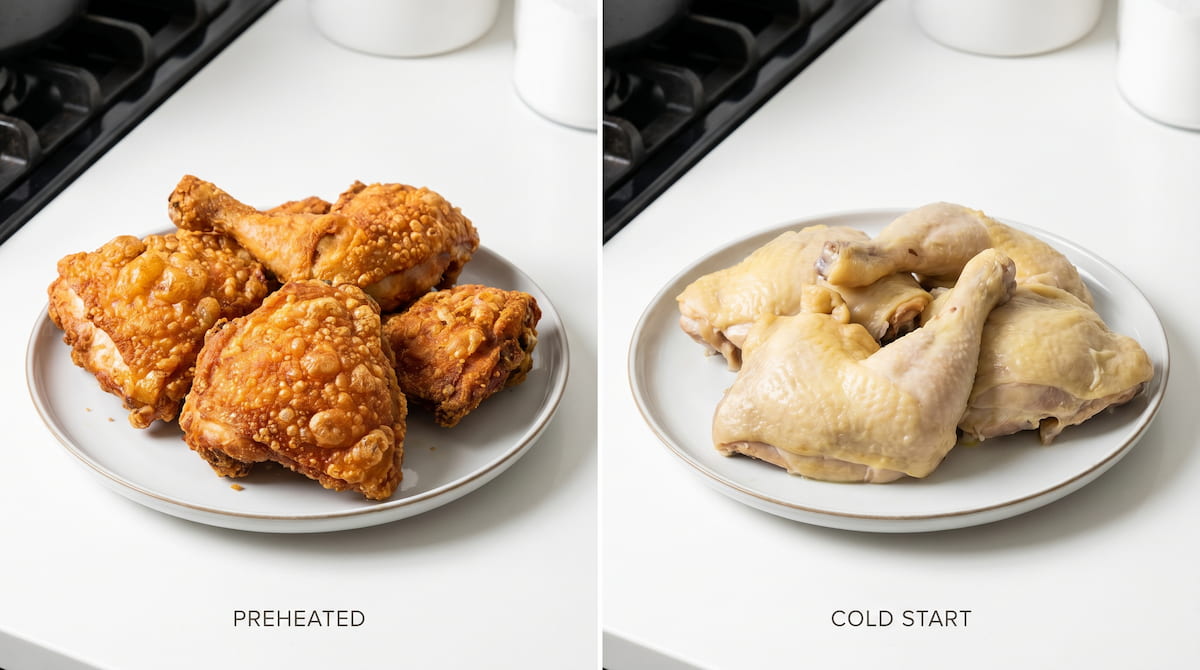
The difference between a preheated and cold-start air fryer is most visible on proteins — preheated produces significantly crispier results.
3. Uneven Cooking on Thicker Items
Thick cuts of meat — chicken thighs, pork chops, thick fish fillets — need consistent high heat from the start to cook evenly from outside to inside. A cold start creates a window where the outside surface is still soft while the air fryer ramps up, leading to uneven cooking that can leave the interior underdone even when the exterior looks ready.
4. Food Safety Risk for Raw Proteins
This is the most important effect. Raw chicken, pork, and fish need to reach specific safe internal temperatures to eliminate harmful bacteria. The USDA recommends chicken reach 165°F, pork 145°F, and fish 145°F internally. Recipes that specify cook times assume a preheated air fryer. Skipping preheat and using the same cook time means the food spends less total time at full cooking temperature — increasing the risk of undercooked centers that test done on the outside.
5. Steam Instead of Dry Heat on Vegetables
Vegetables release moisture as they heat. In a cold-start air fryer, that moisture steams the vegetables before the unit reaches crisping temperature — resulting in soft, steamed vegetables rather than roasted ones. Preheating ensures the vegetables hit dry high heat immediately, driving off surface moisture and producing proper roasted texture.
When Skipping Preheat Is Actually Fine
| Food Type | Preheat Needed? | Why |
|---|---|---|
| Raw chicken, pork, fish | Yes — always | Food safety — consistent cook time |
| Breaded / fried foods | Yes — strongly recommended | Immediate sear for crispy coating |
| Fresh vegetables | Recommended | Prevents steaming effect |
| Frozen foods (fries, nuggets) | Optional | Longer cook time compensates |
| Reheating leftovers | Optional | Already cooked — just heating through |
| Baked goods | No | Gradual heat rise helps even baking |
How to Preheat an Air Fryer Correctly
Preheating an air fryer is simple — run it empty at the cooking temperature for 3–5 minutes before adding food. Most modern air fryers reach set temperature within 2–3 minutes, so 3–5 minutes ensures the basket itself is fully heated, not just the air inside.
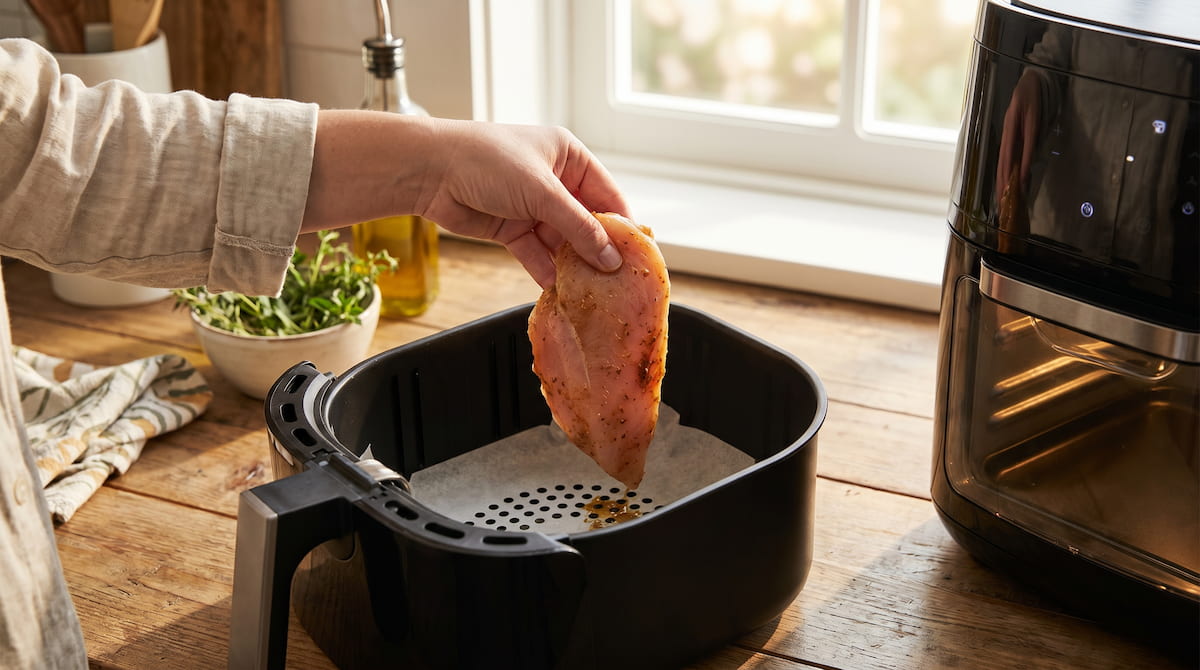
Adding food to a fully preheated basket ensures consistent cook times and safer results for raw proteins.
One important note: never use cooking spray directly on a hot basket. Apply any oil to the food before placing it in the preheated basket to avoid aerosol spray residue building up on the hot surface.
Preheating and Coating Safety
Preheating empty also helps identify coating issues before food is involved. If your air fryer produces an unusual smell during an empty preheat, that smell is coming from the unit itself — not from food. This is one of the earliest ways to catch coating degradation before it affects what your family eats.
For how to cook specific proteins safely with or without preheating in a non-toxic setup: How to Cook Chicken Breast in Air Fryer Without Toxic Coating Risk
And if your air fryer has been producing smells during the preheat cycle, this covers what those smells actually mean: Why Is My Air Fryer Smoking? (And How to Fix It Safely)
Bottom Line
What happens if you don’t preheat an air fryer depends entirely on what you’re cooking. For frozen foods and reheating, skipping preheat is a minor quality compromise. For raw proteins, breaded foods, and fresh vegetables, preheating genuinely matters — both for results and for food safety with proteins specifically. The habit takes 3–5 minutes and makes a measurable difference in every cook where it applies. For raw chicken and pork especially, treat preheating as non-negotiable rather than optional.