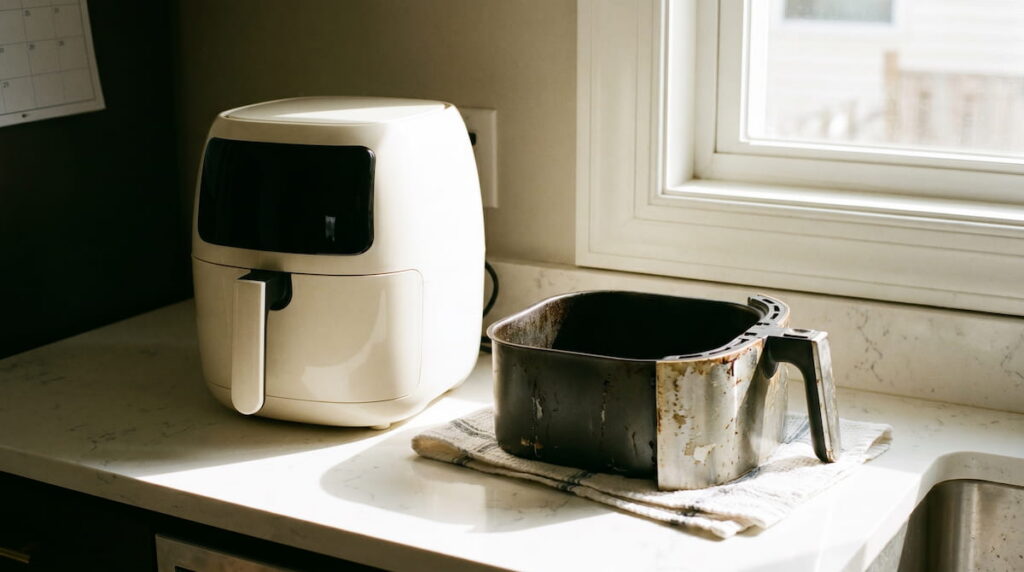
Why switch to non toxic air fryer? For me it started with a smell. I was making chicken for the family one evening and noticed a faint chemical odor coming from the air fryer — not smoke, not burnt food, something different. I looked at the basket and saw scratches I’d been ignoring for months. That evening I started researching what those scratches actually meant, and what I found changed how I thought about every appliance in our kitchen.
What I Found When I Started Researching
The basket in our old air fryer had a PTFE nonstick coating — the same chemical family as Teflon. Under normal conditions PTFE is considered stable. But when it’s scratched, the damaged surface starts to release compounds at cooking temperatures that an intact coating wouldn’t. The EPA has flagged PFAS-related compounds — the chemical family that includes PTFE decomposition products — as an area of ongoing health concern, with research linking chronic exposure to immune system effects and hormone disruption.
I had two teenage sons eating food from that basket multiple times a week. The scratched coating had been there for at least six months. The math wasn’t complicated — we needed a different basket.
Why Switch to Non Toxic Air Fryer — The Real Reasons
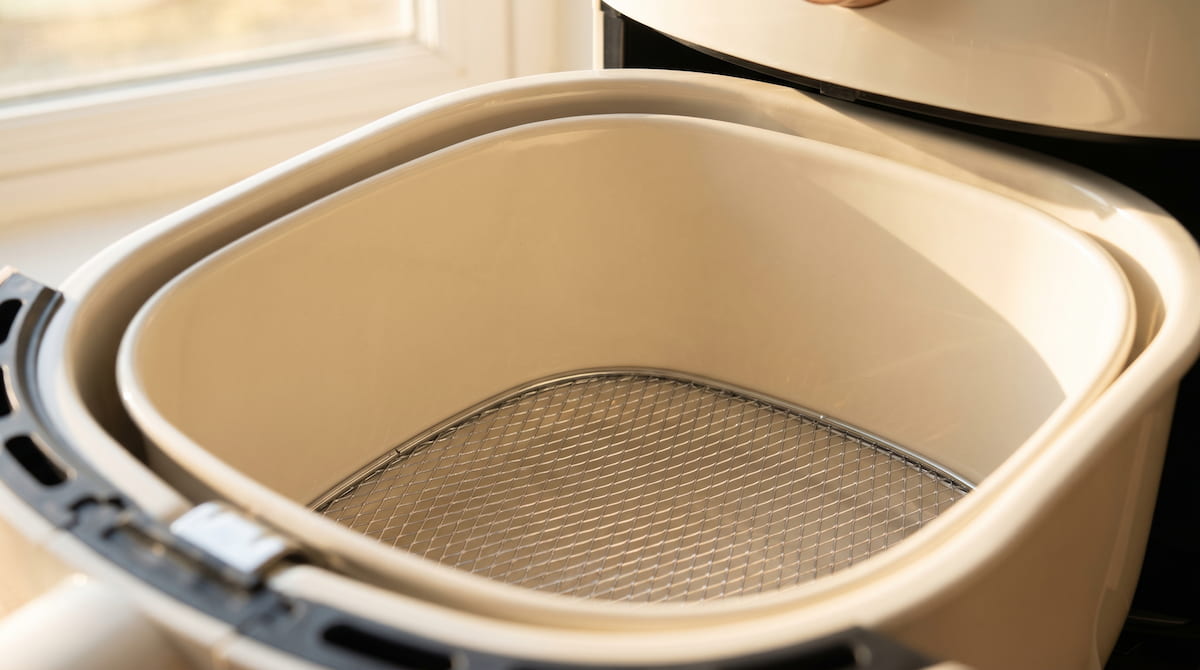
A ceramic basket with no PTFE and no PFAS — the surface that contacts your food at 400°F every night shouldn’t be something you have to second-guess.
There are three reasons most people switch to a non-toxic air fryer, and they’re not all the same reason I started with. Understanding which one applies to your situation helps clarify why the switch is worth making regardless of where you’re starting from.
The first reason is coating damage — which is where I started. A scratched or worn PTFE basket is releasing compounds into the air and potentially into the food cooking against it. If your current basket shows visible wear, this isn’t a theoretical concern anymore. The switch at that point isn’t a lifestyle upgrade, it’s a repair.
The second reason is frequency. If you use an air fryer once a week, the PTFE risk from a well-maintained basket is low. If you use it daily — for a family dinner every night, for meal prep on weekends, for your kids’ after-school snacks — the cumulative exposure picture changes. Daily high-heat use accelerates coating wear and increases the frequency of exposure. Families who cook in an air fryer every day have a stronger case for ceramic than occasional users.
The third reason is household composition. Pregnant family members, infants, toddlers, and children generally are more sensitive to chemical exposures than adults. If any of those apply to your household, the coating question shifts from “is this a risk worth managing” to “is this a risk worth eliminating.”
What Actually Changed After the Switch
I switched to the Ninja AF150AMZ — a 4-quart basket-style air fryer with a ceramic coating that contains no PTFE and no PFAS. Here’s what actually changed in our kitchen after making the switch, beyond the obvious coating upgrade.
The chemical smell disappeared. I hadn’t fully connected the faint background odor during cooking to the basket coating until it was gone. The ceramic model produces no odor beyond normal food cooking vapor — nothing that makes you wonder what you’re breathing.
The basket is easier to clean. Ceramic surfaces release food more readily than worn PTFE and clean up faster with less effort. I stopped soaking the basket overnight to loosen stuck-on residue after the switch — warm water and a sponge handles it in two minutes.
I stopped worrying about utensils. With a PTFE basket, every time I reached for tongs I mentally checked whether they were silicone or metal. With ceramic, the stakes of an accidental scratch are lower — ceramic is more durable under normal use than a worn PTFE surface.
The food tastes the same. This was the thing I was genuinely uncertain about. It tastes identical — crispy where it should be crispy, tender where it should be tender, with no detectable difference in the final result.
The Switch in Numbers: PTFE vs Ceramic at a Glance
| Factor | PTFE-Coated Basket | Ceramic Basket |
|---|---|---|
| PFAS in coating | ⚠️ Yes (PTFE family) | ✅ None |
| Fume risk when scratched | ⚠️ Yes | ✅ No |
| Durability under daily use | 12–18 months before visible wear | 3–5+ years with proper care |
| Chemical odor during cooking | ⚠️ Possible (worn coating) | ✅ None beyond food vapor |
| Cooking performance | Good when new | Good — consistent over time |
| Cleanup ease | Good when new, harder as coating wears | Consistent — releases food cleanly |
What I’d Tell Someone Still On the Fence
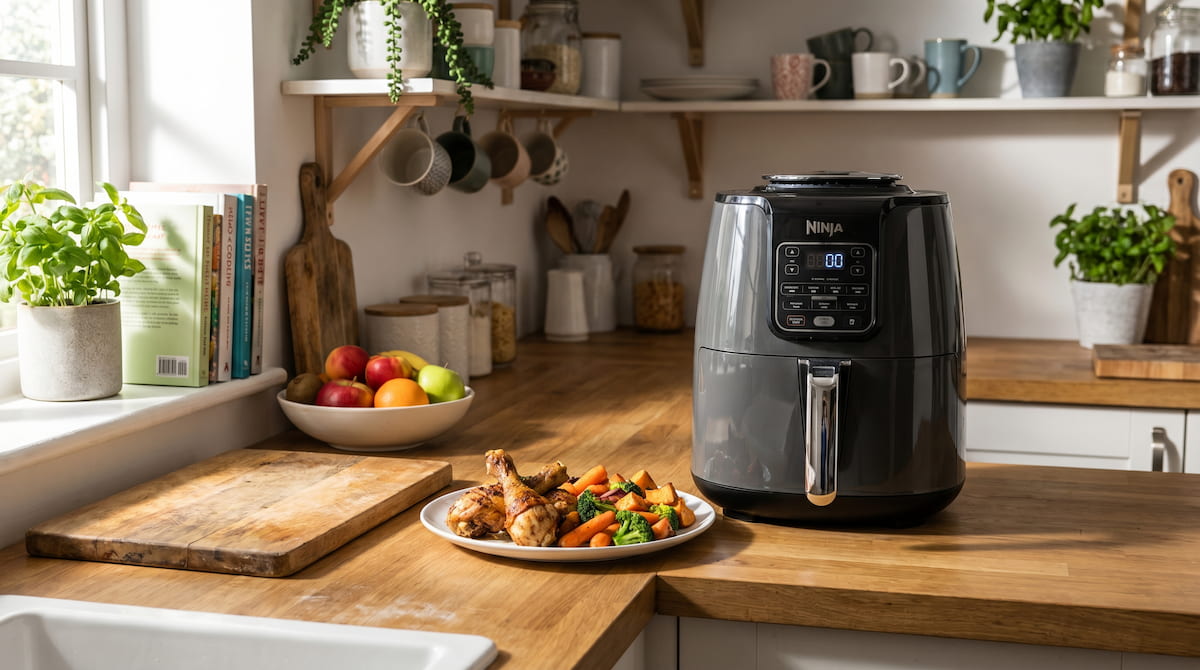
After the switch — the same family meals, the same results, with a basket that doesn’t require a second thought about what it’s releasing at 400°F.
If your current air fryer basket looks fine — no scratches, no discoloration, no chemical smell — and you use it occasionally, there’s no emergency. Monitor the basket, use silicone utensils, and clean it carefully. The risk from a well-maintained PTFE basket under light use is low.
If your basket is scratched, if you cook with it daily, or if you have young children or a pregnant family member eating food from it regularly — the case for switching is straightforward. The upgrade isn’t expensive relative to how many meals an air fryer cooks over its lifetime, and the peace of mind of not wondering what the basket is releasing into dinner is worth something real.
I’ve been using the Ninja AF150AMZ daily for over six months. The ceramic basket looks the same as it did on day one. The food tastes the same. And I haven’t thought once about the coating while cooking — which is exactly the point.
Where to Go From Here
If you’re ready to make the switch, our PFAS-free air fryer guide covers every ceramic and stainless model worth buying in 2026 — with a full breakdown of materials, capacity, and what each model is best suited for. If you want to understand the coating science before deciding, our post on what PFAS are and why they matter in your air fryer covers the chemistry without the jargon. And if you’re thinking about extending the non-toxic approach beyond the air fryer, our PFAS-free kitchen guide maps the full swap priority order from highest to lowest impact.
The switch starts with the basket. Everything else follows from there.