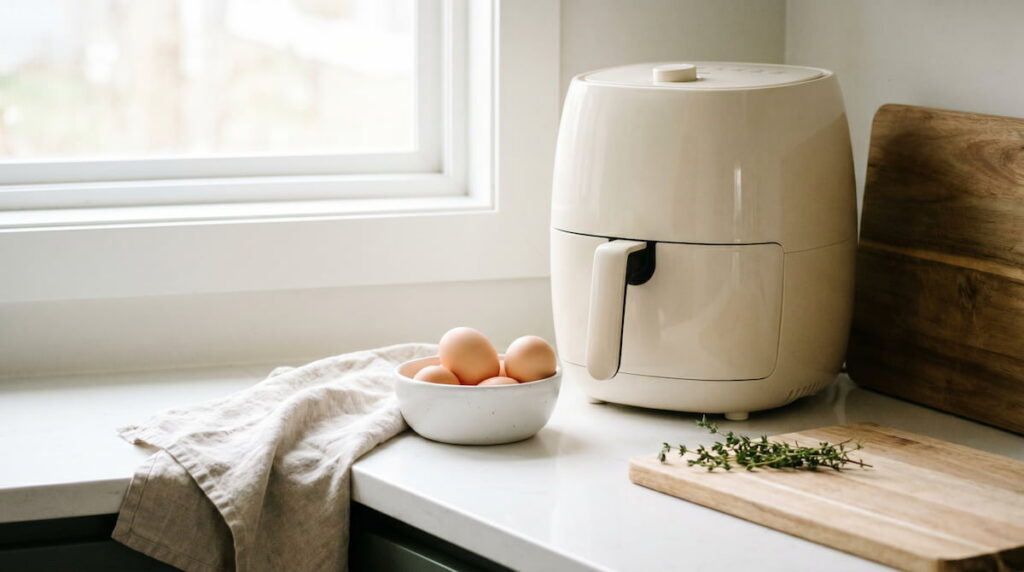
How to cook eggs in air fryer safely is something worth getting right from the start — eggs are one of the most commonly cooked foods in any family kitchen, and because they’re often cooked in small containers or directly in the basket at moderate temperatures, the material of whatever surface they touch matters every single morning.
Why Egg Cooking Exposes Coating Risks Most People Miss
Eggs cooked directly in an air fryer basket — whether fried, scrambled in a ramekin, or hard-boiled in the shell — involve prolonged contact between protein and the cooking surface at temperatures between 250°F and 320°F. That’s lower than steak or bacon, which might seem safer, but it’s actually in the temperature range where certain PTFE-based coatings are most prone to slow, low-level off-gassing rather than dramatic breakdown.
The FDA has identified repeated PFAS exposure as a long-term health concern. Eggs cooked daily in a worn non-stick basket represent exactly the kind of repeated, low-level exposure that accumulates over months and years in a family that eats eggs every morning.
The solution is straightforward: use a ceramic basket for direct egg cooking, or place eggs in a ceramic or stainless steel ramekin inside the air fryer. Either approach eliminates the PFAS contact entirely.
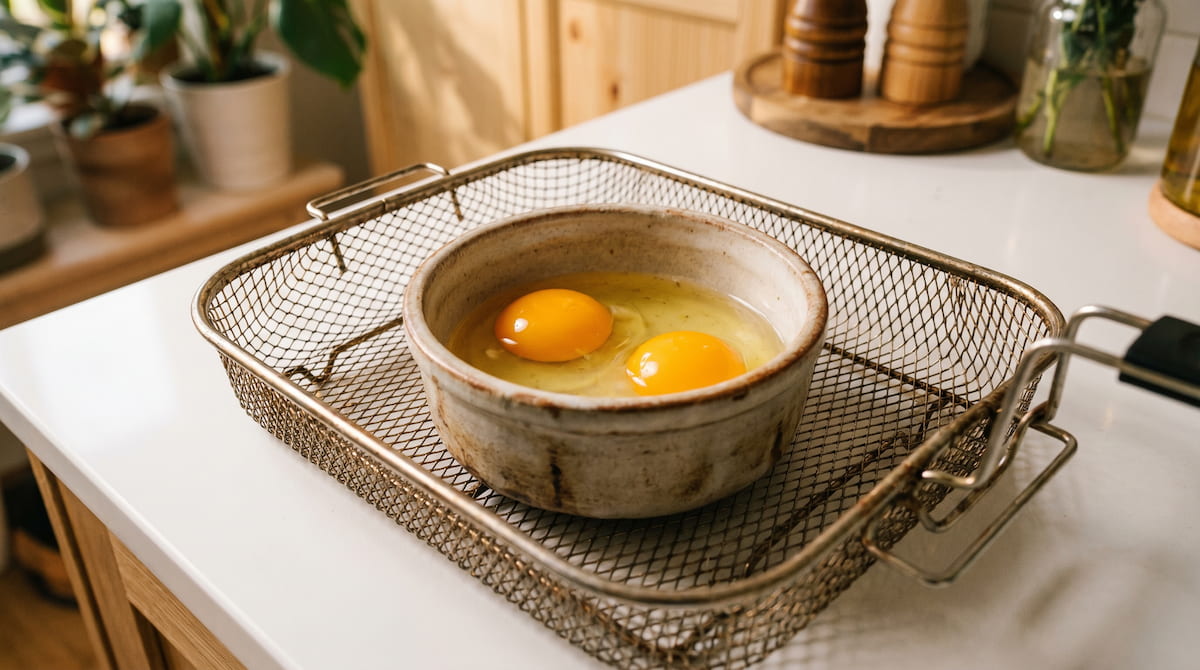
A ceramic ramekin inside the air fryer keeps eggs completely away from any basket coating — the safest setup for daily egg cooking.
How to Cook Eggs in Air Fryer Safely: Four Methods
There are four main ways to cook eggs in an air fryer, and each has its own safe temperature and timing profile.
| Method | Temp | Time | Container Needed |
|---|---|---|---|
| Hard-boiled (in shell) | 250°F | 15–17 min | None — shell protects egg entirely |
| Soft-boiled (in shell) | 250°F | 11–12 min | None — shell protects egg entirely |
| Fried / sunny side up | 300°F | 6–8 min | Ceramic or stainless ramekin — never direct on basket |
| Scrambled | 300°F | 8–10 min | Ceramic ramekin — stir once at 5 min mark |
Step-by-Step: Hard-Boiled Eggs in Air Fryer (Safest Method)
Hard-boiled eggs in an air fryer are actually the safest egg method of all — the shell acts as a complete barrier between the egg and the basket, so basket material becomes irrelevant. This is also the method that produces the most consistent results with the easiest peeling.
| Step | Action | Why It Matters |
|---|---|---|
| 1 | Place eggs directly in basket, no preheating | Cold start prevents cracking from thermal shock |
| 2 | Set to 250°F | Low and slow is the key to easy-peel hard boiled eggs |
| 3 | Cook 15–17 min for hard, 11–12 for soft | Consistent results every time — no guessing |
| 4 | Transfer immediately to ice water bath | Stops cooking instantly, makes peeling much easier |
| 5 | Peel under running water | Water gets under the membrane and the shell slides off cleanly |
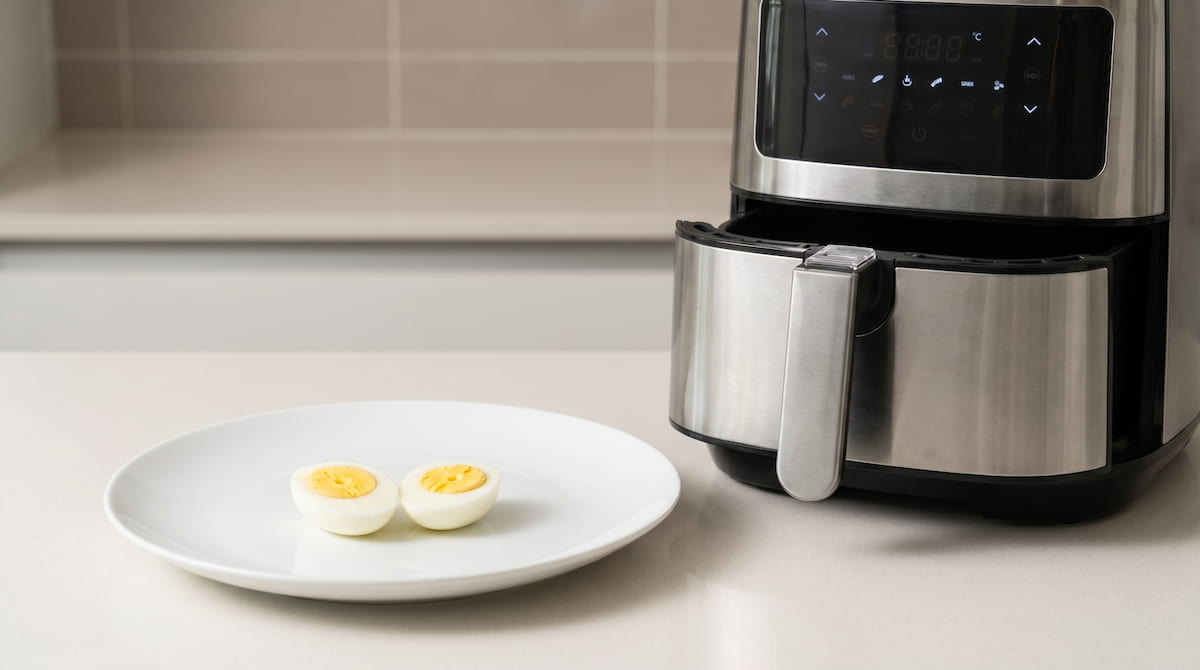
Perfectly cooked eggs from a non-toxic air fryer setup — clean results with zero PFAS exposure.
Best Air Fryer for Cooking Eggs Safely Every Day
The Ninja AF150AMZ is ideal for daily egg cooking. The ceramic basket is completely PTFE-free — for in-shell eggs, that’s academic since the shell is the barrier, but for fried or scrambled eggs in a ramekin placed inside the basket, ceramic means zero chemical risk from the basket surface itself. The compact 5.5-quart size is perfect for a morning egg routine without heating up a large oven-style unit.
For more on the ceramic basket’s material safety and why it matters for daily cooking, see our full review at Ninja Air Fryer Ceramic Basket: Is It Actually PFAS-Free?
If you’re cooking eggs as part of a larger family breakfast with other items running simultaneously, the Instant Pot Omni Plus 18L gives you stainless steel trays and enough capacity to run eggs alongside bacon or vegetables in one session.
For a complete breakdown of the safest air fryer materials for daily cooking, visit our PFAS-Free Air Fryer Guide.
Tips for Safe, Perfect Eggs in an Air Fryer Every Time
- Never crack eggs directly onto the basket surface — always use a ceramic or stainless steel ramekin for any egg that leaves its shell during cooking
- Use room temperature eggs for in-shell cooking — cold eggs from the fridge are more prone to cracking from the temperature change when placed in a preheated basket
- Don’t exceed 320°F for egg cooking — above this temperature, egg whites toughen quickly and yolks overcook before the whites finish
- Ice bath is non-negotiable for hard-boiled — skipping it means the eggs keep cooking internally from residual heat and you lose the soft, clean yolk center
- Silicone ramekins work too — food-grade silicone is a safe container material for air fryer egg cooking if you don’t have ceramic ramekins
The Bottom Line
Eggs in an air fryer are fast, consistent, and genuinely better than stovetop for hard-boiled results — but because eggs are cooked daily in most family kitchens, the basket material matters more here than for any occasional meal. Keep in-shell eggs at 250°F, use a ceramic ramekin for fried or scrambled, and make sure your basket is PTFE-free. Those habits protect your family from chemical exposure at the meal they eat most often.