Disclosure: This post contains affiliate links. If you purchase through them, I earn a small commission at no extra cost to you. I only recommend products I personally trust for my family.
How to store air fryer safely is something most people never think about — until they pull it out after a few weeks and notice moisture inside, a musty smell, or worse, a basket coating that’s started to peel from being stored improperly. I’m Wook, a bus driver and dad who cooks for my family almost every night. On the occasions we store our air fryer between heavy-use seasons, I’ve learned a few things that make a real difference in how the unit holds up.
This guide covers everything you need to know about storing your air fryer safely — whether it’s going away for a weekend or a few months.
Why Proper Storage Matters for Safety
Improper storage is one of the most overlooked causes of air fryer coating damage. Moisture trapped inside a stored basket accelerates coating degradation. Stacking heavy items on top of a stored unit can warp the exterior and damage internal components. And storing without cleaning first means grease and food residue sit and harden, becoming nearly impossible to remove later — and a potential fire risk when you use it again.
According to the U.S. Consumer Product Safety Commission, proper appliance storage and maintenance directly reduces kitchen fire and electrical hazard risks at home.
How to Store Air Fryer Safely: Step-by-Step
Step 1 — Clean Thoroughly Before Storing
Never store a dirty air fryer. Grease and food residue left inside will harden, attract pests, and create odors that are very difficult to remove. Before storage, deep clean the basket, tray, and interior walls completely. Make sure there’s no visible grease on the heating element either.
Step 2 — Dry Every Component Completely
This is the most critical step. Any moisture left inside the basket or interior will cause mold growth and accelerate coating breakdown during storage. After washing, dry all components with a clean towel and then leave them to air dry for at least 2–3 hours before reassembling.
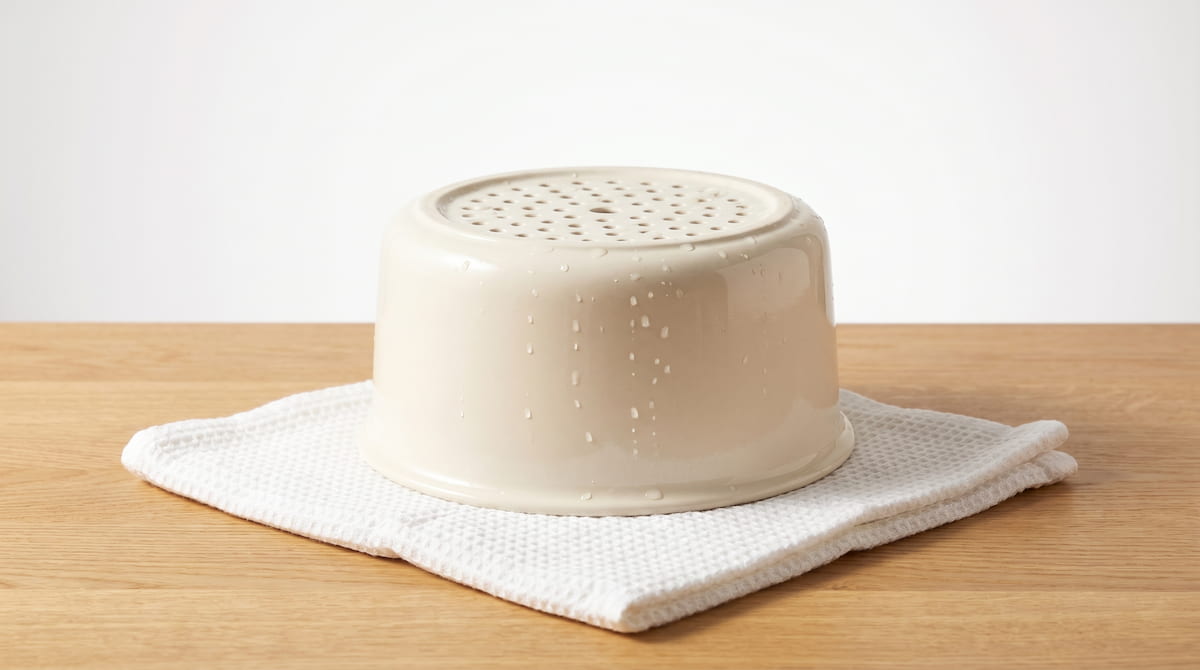
Always allow the basket to air dry completely before storing — trapped moisture damages coatings over time.
Step 3 — Wrap the Cord Loosely
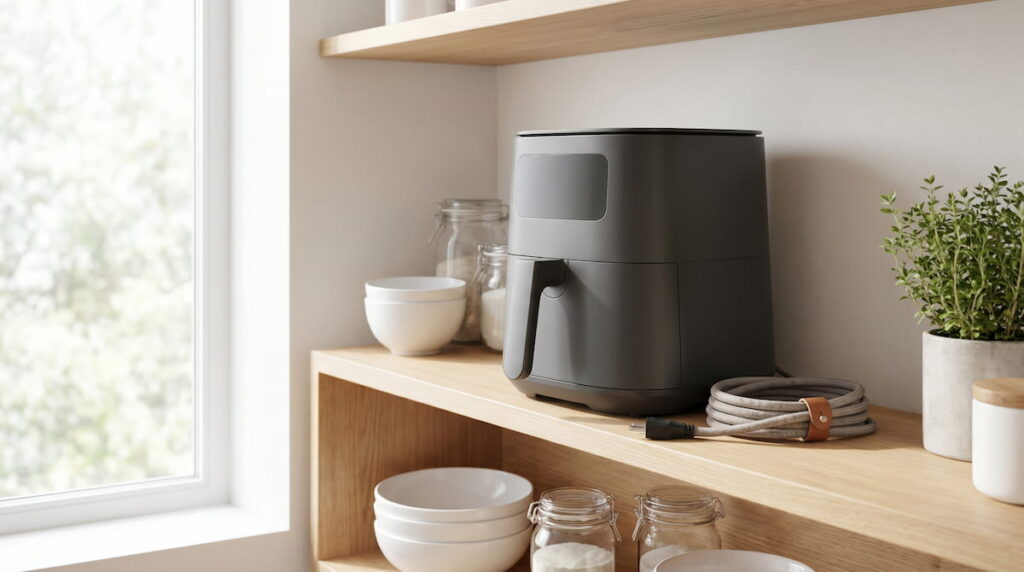
Never wrap the power cord tightly around the unit. Tight cord wrapping creates kinks and internal wire damage over time — a fire hazard you won’t notice until the unit is plugged back in. Wrap the cord loosely in a wide loop and secure it gently with a velcro tie if needed.
Step 4 — Use a Dust Cover
A breathable cotton dust cover keeps dust and grease particles from settling into the air vents during storage without trapping moisture inside. Avoid plastic covers or plastic bags — they trap humidity and create exactly the moisture problem you’re trying to prevent.

A breathable cotton dust cover protects the air fryer during storage without trapping moisture.
Step 5 — Choose the Right Storage Location
Store your air fryer in a cool, dry location away from heat sources, direct sunlight, and humidity. Avoid storing it under the sink, near the stove, or in a garage where temperature swings are extreme. A kitchen cabinet shelf or pantry is ideal.
Step 6 — Never Stack Heavy Items on Top
Air fryer exteriors are not designed to bear weight. Stacking pots, pans, or other appliances on top can crack the housing, damage the control panel, or put pressure on the basket that warps the internal tray. Store it on its own shelf with nothing stacked on top.
Storage Guide by Duration
| Storage Duration | Key Steps | Extra Precautions |
|---|---|---|
| A few days | Clean, dry, cover with cloth | Leave on counter is fine |
| 1–4 weeks | Deep clean, fully dry, dust cover | Store in cabinet away from heat |
| 1–3 months | Deep clean, fully dry, breathable cover | Remove basket separately, cool dry location |
| 3+ months | Deep clean, fully dry, breathable cover | Store basket separately wrapped in cloth, check monthly for moisture |
What to Check Before Using Again After Storage
Before plugging in a stored air fryer, run through this quick checklist:
- Inspect the power cord — check for any kinks, fraying, or cracking that may have developed
- Check the basket coating — look for new scratches, flaking, or discoloration that appeared during storage
- Wipe the interior — remove any dust that settled inside despite the cover
- Run empty for 5 minutes — burn off any residual dust or odors before cooking food
- Check the vents — make sure no debris has blocked the air intake or exhaust vents
The Basket Worth Storing Properly
If you’re going through the effort of storing your air fryer correctly, make sure you have a basket worth protecting. Our family uses the Ninja AF150AMZ ceramic basket — PFAS-free, easy to clean before storage, and the ceramic coating holds up well through proper storage cycles.
Full details: Ninja Air Fryer Ceramic Basket: Is It Actually PFAS-Free?
And if you’re thinking about upgrading before your next heavy-use season, the PFAS-Free Air Fryer Guide covers every safe option worth considering in 2026.
Bottom Line
Storing an air fryer safely comes down to six steps: clean thoroughly, dry completely, wrap the cord loosely, use a breathable cover, choose a cool dry location, and never stack anything on top. The most important of these is complete drying before storage — moisture is the number one cause of coating damage and mold during storage. Follow these steps and your air fryer will be ready to perform safely every time you bring it back out.
Affiliate Disclosure: As an Amazon Associate, I earn from qualifying purchases. This helps keep the site running — thank you for your support.