Disclosure: This post contains affiliate links. If you purchase through them, I earn a small commission at no extra cost to you. I only recommend products I personally trust for my family.
Can air fryers damage kitchen air quality is a question that matters more than most people realize — especially for families cooking in smaller kitchens, homes with limited ventilation, or households with members who have respiratory sensitivities. I’m Wook, a bus driver and dad who cooks for my family almost every night. After reading about indoor air quality studies involving cooking appliances, I started paying much more attention to what our air fryer was actually releasing into the kitchen air — and what we could do about it.
What Do Air Fryers Actually Release Into Kitchen Air?
Air fryers release several types of compounds into kitchen air during normal operation. The quantity and chemical composition of what’s released depends significantly on the basket coating material, the food being cooked, and the condition of the unit.
1. Volatile Organic Compounds (VOCs) From Cooking
Cooking any food at high temperature produces VOCs — organic chemical compounds that evaporate at room temperature and enter the air. These include aldehydes, acrolein, and other compounds produced when fats and proteins are heated. Air fryers produce these compounds in quantities comparable to other high-heat cooking methods. For most people in a ventilated kitchen, these levels are manageable. For people with asthma or respiratory conditions, they’re worth taking seriously.
2. PTFE Decomposition Products
This is the category that distinguishes air fryers with traditional nonstick coatings from those with ceramic or stainless steel interiors. When a PTFE-based nonstick coating degrades — whether from age, scratching, or overheating — it releases fluoropolymer decomposition products into the air. According to the U.S. EPA, these PFAS-related compounds are persistent in both the environment and the human body, with ongoing research into long-term health effects.
3. Grease Aerosols
High-fat foods release grease aerosols during air frying — microscopic grease particles that become airborne and can be inhaled. These aren’t unique to air fryers, but the high-speed fan creates more aerosol dispersion than lower-airflow cooking methods. Grease aerosols are a particular concern for respiratory health in enclosed kitchens without adequate ventilation.
4. Acrylamide
Starchy foods cooked at high temperatures — potatoes, bread, grains — produce acrylamide, a compound classified as a probable human carcinogen. Air fryers can produce acrylamide in concentrations comparable to other high-heat dry cooking methods. Lower temperatures and shorter cook times reduce acrylamide production in starchy foods.
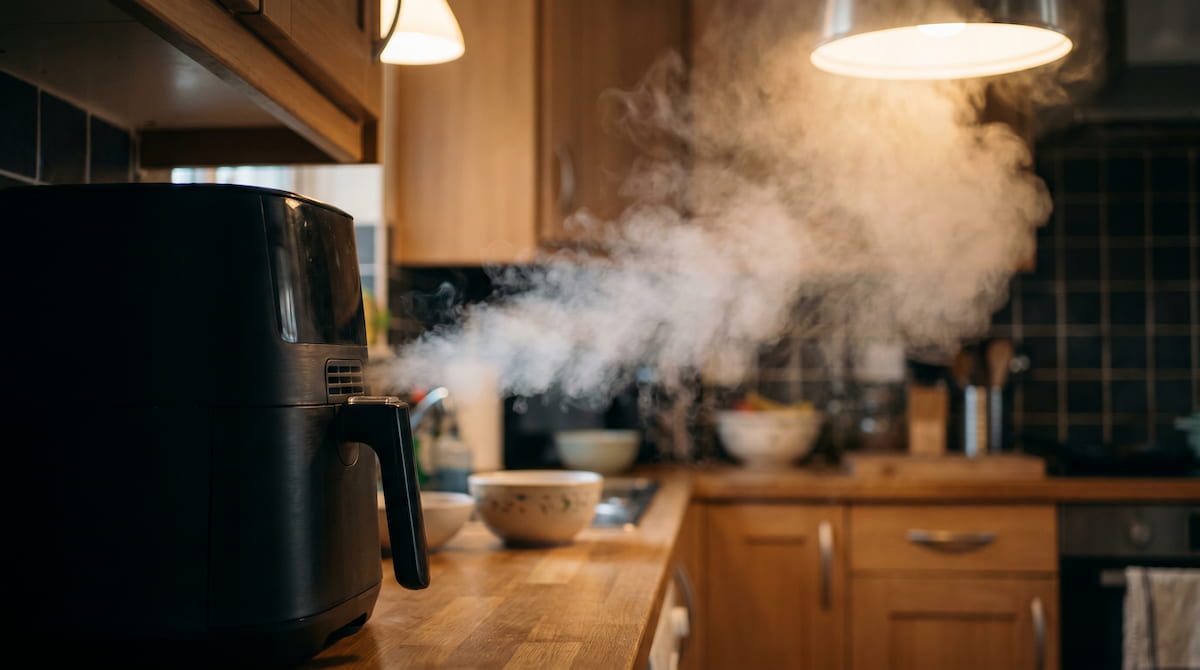
Every air fryer releases compounds into kitchen air during cooking — the type and quantity depend heavily on coating material and food type.
Which Situations Create the Highest Air Quality Risk?
| Situation | Air Quality Risk | Primary Concern |
|---|---|---|
| Old nonstick basket, no ventilation | High | PTFE decomposition products |
| High-fat foods, small kitchen | Medium-High | Grease aerosols, VOCs |
| Starchy foods at max temp | Medium | Acrylamide production |
| Ceramic basket, ventilated kitchen | Low | Normal cooking VOCs only |
| Stainless steel, window open | Very Low | Minimal beyond food VOCs |
How to Protect Your Kitchen Air Quality When Air Frying
1. Ventilate During Every Cook
Open a window, run the range hood fan, or use a portable air purifier with a HEPA and activated carbon filter during air fryer cooking sessions. Ventilation is the single most effective way to reduce the concentration of any compounds released during cooking — regardless of what the source is.
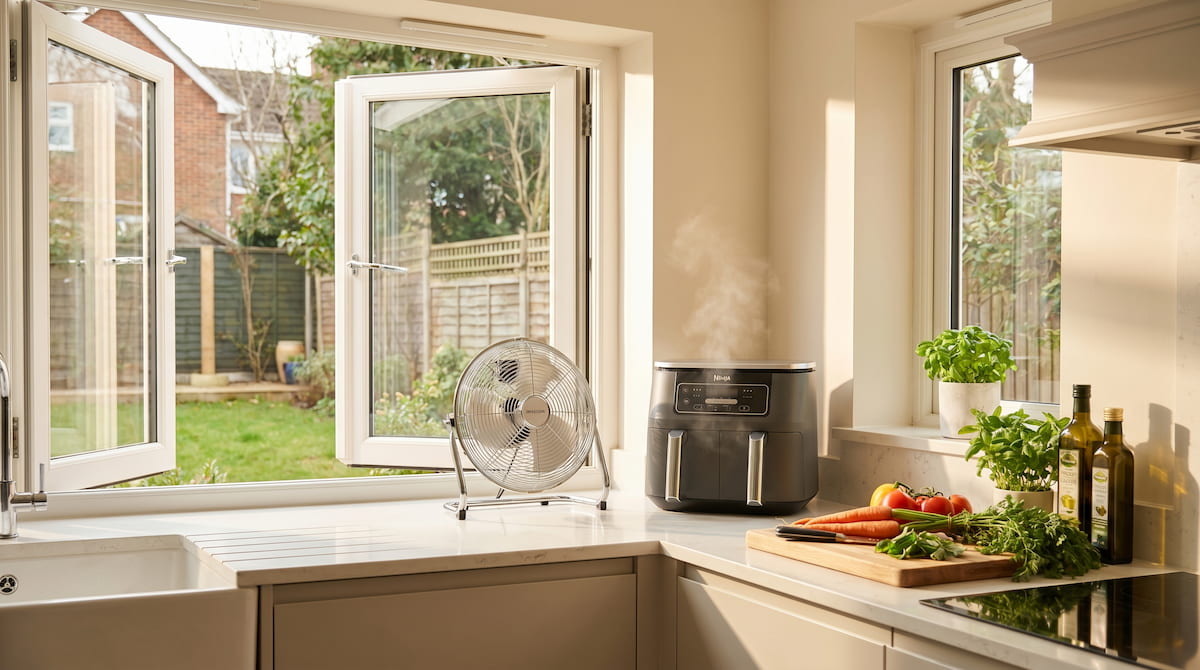
Opening a window during air fryer cooking is the simplest and most effective way to protect kitchen air quality.
2. Choose a PFAS-Free Basket
Switching from a traditional nonstick basket to ceramic or stainless steel eliminates the PTFE decomposition product category entirely. This is the highest-impact single change for families concerned about air quality — particularly for daily cooking.
3. Keep the Unit Clean
Grease buildup on the heating element and basket surfaces is a significant contributor to VOC production during cooking. A clean unit produces fewer compounds than a dirty one running the same recipe. Regular cleaning directly improves the air quality profile of every cook.
4. Avoid Maximum Temperature for Starchy Foods
Cooking potatoes, bread, and grains at 350°F rather than 400°F+ significantly reduces acrylamide production. The texture difference is minimal for most recipes, and the air quality benefit is real.
5. Replace Aging Nonstick Units
An old nonstick basket in poor condition is the worst-case scenario for kitchen air quality. If your unit has a degraded traditional nonstick coating and you’re cooking in a small or poorly ventilated kitchen, replacement is a genuine health priority.
Who Should Be Most Concerned
For most healthy adults in ventilated kitchens with ceramic or stainless steel air fryers, the air quality impact of daily air frying is manageable. The populations with the most reason to be attentive are households with asthma or respiratory conditions, families with young children cooking in small unventilated spaces, and anyone using a degraded traditional nonstick unit daily.
For how air fryer fumes specifically affect people with asthma: Is Air Fryer Safe for Someone With Asthma? (Fume Guide)
And for the full breakdown of what air fryer fumes actually contain: Are Air Fryer Fumes Dangerous? What You’re Actually Breathing
Bottom Line
Can air fryers damage kitchen air quality? Yes — under specific conditions, and most significantly when using a degraded traditional nonstick basket in an unventilated space. The combination of a PFAS-free ceramic basket, consistent ventilation, regular cleaning, and avoiding maximum temperatures for starchy foods addresses the majority of the air quality concern. For daily family cooking, these four habits together bring the air quality impact of air frying to a level comparable to other normal cooking methods — manageable rather than concerning.