Disclosure: This post contains affiliate links. If you purchase through them, I earn a small commission at no extra cost to you. I only recommend products I personally trust for my family.
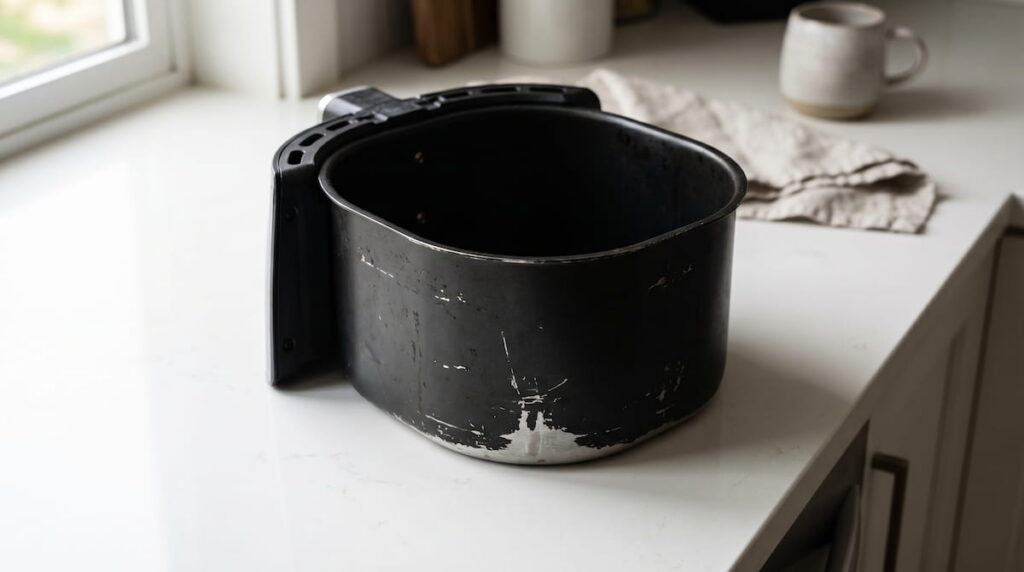
Is it safe to use scratched air fryer basket is a question that comes up for almost every family that uses an air fryer regularly — because scratches happen, and replacing the basket every time one appears feels excessive. I’m Wook, a bus driver and dad who cooks for my family almost every night. I kept using our old scratched basket far longer than I should have, telling myself the scratches were minor. Understanding what those scratches were actually doing changed that decision quickly.
Does It Matter What Kind of Coating Is Scratched?
Yes — significantly. The safety implications of a scratched basket depend almost entirely on what the coating is made of. A scratched ceramic basket and a scratched PTFE nonstick basket present very different risk profiles, and treating them the same leads to either unnecessary replacement or dangerous continued use depending on which direction you err.
Scratched Nonstick (PTFE) Basket: What’s Actually Happening
The Risk Is Real and Progressive
Traditional nonstick coatings contain PTFE — polytetrafluoroethylene — and in many older formulations, PFAS-related compounds used in the manufacturing process. When this coating is scratched, two things happen simultaneously: the physical coating material begins to flake into food, and the scratch creates a new degradation point where heat accelerates further breakdown of the surrounding coating.
According to the U.S. EPA, PFAS chemicals are persistent in both the body and the environment with ongoing research into health effects. A scratched nonstick basket is not a static situation — it gets worse with every cook cycle as the scratch expands and the surrounding coating continues to degrade.
When to Stop Using a Nonstick Basket
For traditional nonstick baskets, the threshold is lower than most people assume. Light surface scratches that haven’t broken through to bare metal warrant close monitoring and more frequent inspection. Any scratch that exposes metal beneath the coating is a replacement trigger — not a “monitor and see” situation. Flaking coating is an immediate stop-use signal.
Scratched Ceramic Basket: A Different Situation
Lower Chemical Risk, Different Performance Impact
Ceramic coatings don’t contain PTFE or PFAS compounds, which means a scratched ceramic basket doesn’t carry the same chemical release risk as a scratched nonstick basket. The primary impact of ceramic coating scratches is performance — food sticks more in scratched areas, cleaning becomes harder, and the basket’s nonstick properties gradually diminish.
When Ceramic Scratches Become a Safety Concern
Ceramic coating scratches become a genuine safety concern when they expose the underlying aluminum base layer. Aluminum can leach into acidic foods at cooking temperatures, and a heavily scratched ceramic basket with significant aluminum exposure warrants replacement. Light surface scratches on a ceramic basket are a performance issue; deep scratches reaching metal are a replacement signal.
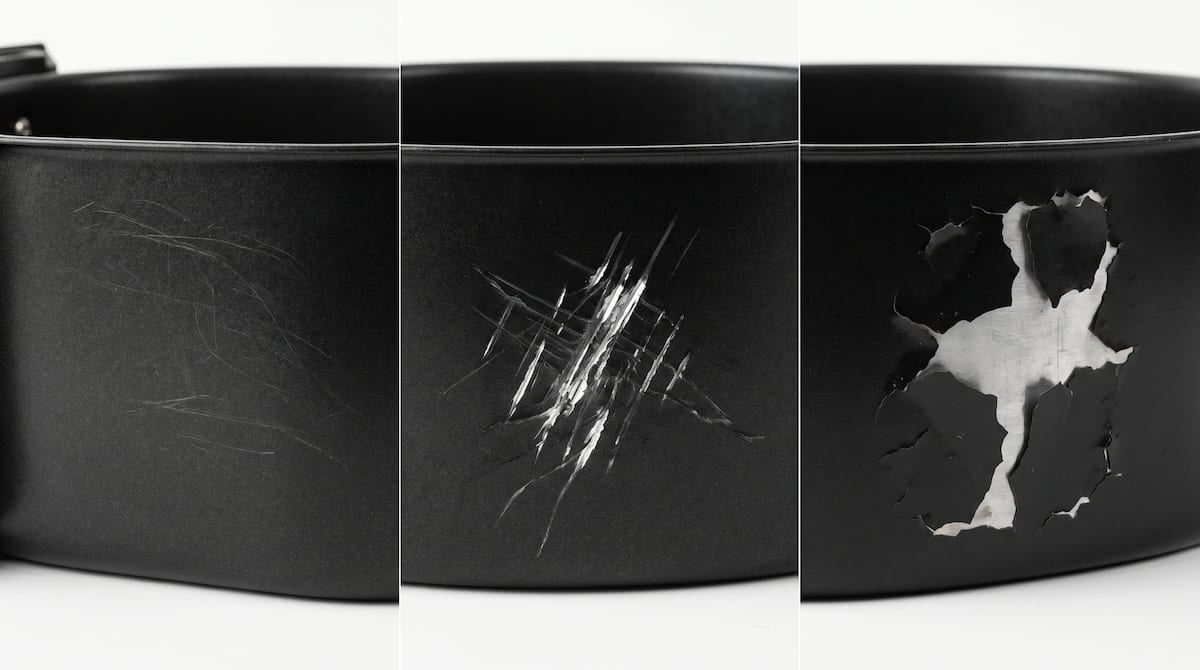
Light surface scratches, deep metal-exposing scratches, and flaking coating represent three very different risk levels — knowing which stage you’re at determines the right action.
Scratch Safety Guide by Coating Type
| Scratch Type | Nonstick (PTFE) | Ceramic | Action |
|---|---|---|---|
| Light surface marks | Monitor closely | Performance impact only | Continue with caution |
| Scratches through coating | Replace now | Monitor, replace soon | Nonstick: immediate replacement |
| Metal visible beneath | Stop using immediately | Replace now | Both: immediate replacement |
| Flaking or peeling | Emergency stop | Emergency stop | Both: stop immediately |
What Causes Basket Scratches — And How to Prevent Them
Most basket scratches come from four sources that are largely avoidable:
- Metal utensils — tongs, forks, and spatulas scratching the coating when handling food. Switch to silicone or wooden utensils entirely.
- Abrasive cleaning tools — steel wool, rough sponges, and abrasive pads. Use only soft sponges and microfiber cloths.
- Stacking and overfilling — food pieces pressing against and scraping the basket walls during cooking. Single layer cooking prevents most contact abrasion.
- Dishwasher use — the combination of high heat, alkaline detergent, and water pressure degrades coating integrity and increases scratch susceptibility over time.
Can You Repair a Scratched Air Fryer Basket?
No — there is no safe, effective way to repair a scratched nonstick or ceramic coating at home. DIY coating products marketed for this purpose are not food-safe and should never be used on cooking surfaces. Once a coating is scratched to the point of concern, replacement is the only safe resolution.
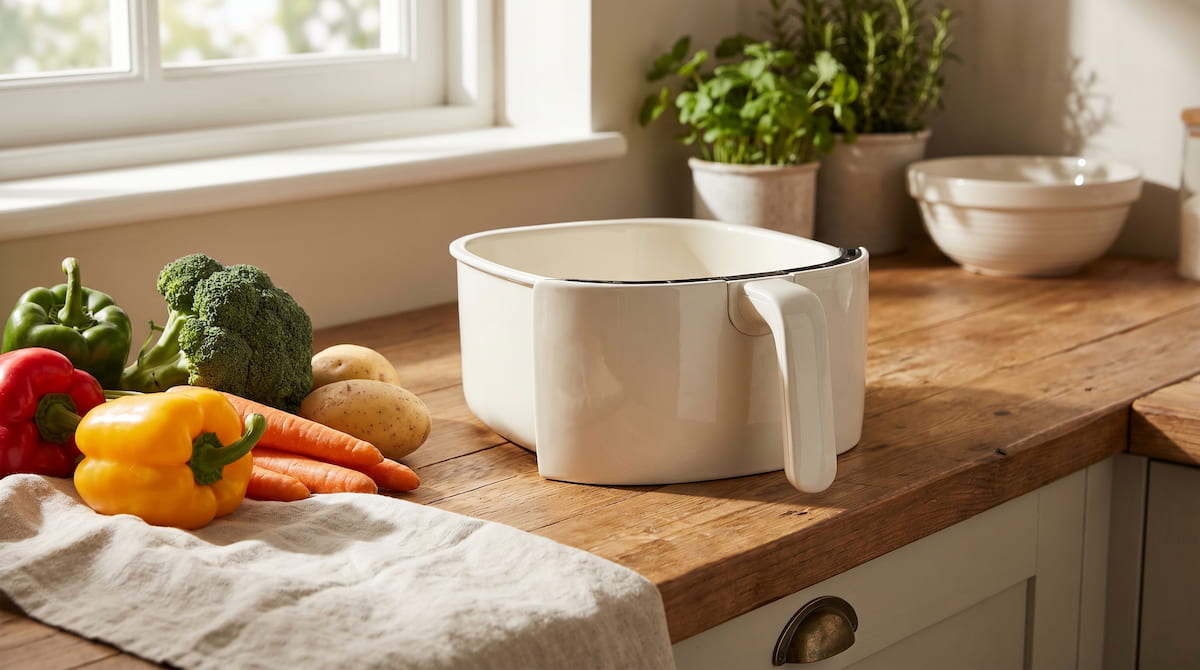
Replacing a scratched basket with a new ceramic option provides a clean slate without the PFAS concerns of traditional nonstick.
What to Replace It With
When our old nonstick basket reached the scratched-through-to-metal stage, we replaced the entire unit with the Ninja AF150AMZ ceramic basket. The ceramic coating doesn’t carry PFAS concerns, handles daily use without the same scratch-to-chemical-release risk, and has held up significantly better over the same period of use with the same cooking habits.
For the full picture on PTFE safety concerns that make scratched nonstick baskets a real issue: Is Teflon Air Fryer Safe? What the Science Actually Says
And if your basket is scratched and you’re also noticing coating-related smells: What Happens If Your Air Fryer Coating Gets Scratched?
Bottom Line
Is it safe to use scratched air fryer basket long-term? For ceramic baskets with light surface scratches, continued use with monitoring is reasonable. For nonstick baskets with any scratch that penetrates the coating, replacement is the right call — not because one scratch causes immediate catastrophic harm, but because scratches in PTFE coatings are progressive, not static. They get worse with every cook, and the chemical release risk increases with every new degradation point. Replace before you reach the flaking stage, and when you do replace, choose a material that doesn’t carry the same risk profile going forward.