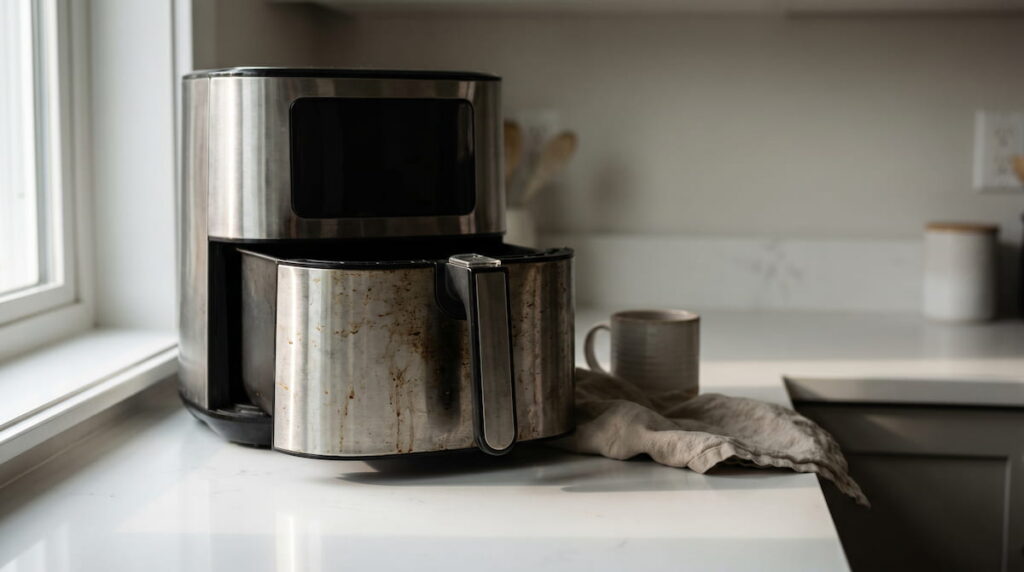
Disclosure: This post contains affiliate links. If you purchase through them, I earn a small commission at no extra cost to you. I only recommend products I personally trust for my family.
Signs of a toxic air fryer are something most families never look for — until a chemical smell, a strange food taste, or a news story makes them wonder whether the appliance they use every night is actually safe. I’m Wook, a bus driver and dad who cooks for my family almost every night. When I started researching what makes an air fryer toxic versus safe, I realized the answer isn’t just about whether the unit is broken — it’s about the materials it’s made from and how those materials change over time.
What Makes an Air Fryer “Toxic”?
An air fryer becomes a source of toxic exposure through two pathways: the materials it’s made from releasing compounds into food and air during normal use, and the degradation of those materials over time increasing the rate and quantity of that release. Both pathways matter — and both are detectable with the right knowledge.
Signs of a Toxic Air Fryer: 8 Things to Check
1. Traditional Nonstick Coating — The Starting Point
The most fundamental sign of a potentially toxic air fryer is having a traditional PTFE-based nonstick coating in the first place. PTFE coatings are stable when intact at normal temperatures, but they represent a risk category that ceramic and stainless steel don’t. According to the U.S. EPA, PFAS chemicals used in the manufacture of traditional nonstick coatings are persistent in both the environment and the human body. A PTFE-coated basket is not automatically toxic — but it carries a risk profile that increases with age and wear.
2. Chemical or Plastic Smell During Cooking
A chemical or plastic smell that developed gradually over months of use — and that returns after cleaning — is the most reliable behavioral indicator of a coating that’s off-gassing. New units have a mild smell during first use from manufacturing residues that resolves within 3 uses. A persistent chemical smell in an older unit is the coating breaking down and releasing compounds into the cooking environment. This smell is the clearest sign that chemical exposure is actively occurring.
3. Visible Coating Damage — Scratches, Flaking, Peeling
Any visible damage to the basket coating creates direct exposure points between food and degraded coating material. The progression matters: light surface scratches represent early-stage risk, scratches through to metal represent active particle release, and flaking coating represents immediate stop-use territory. Flaking coating pieces are going directly into food with every cook cycle.
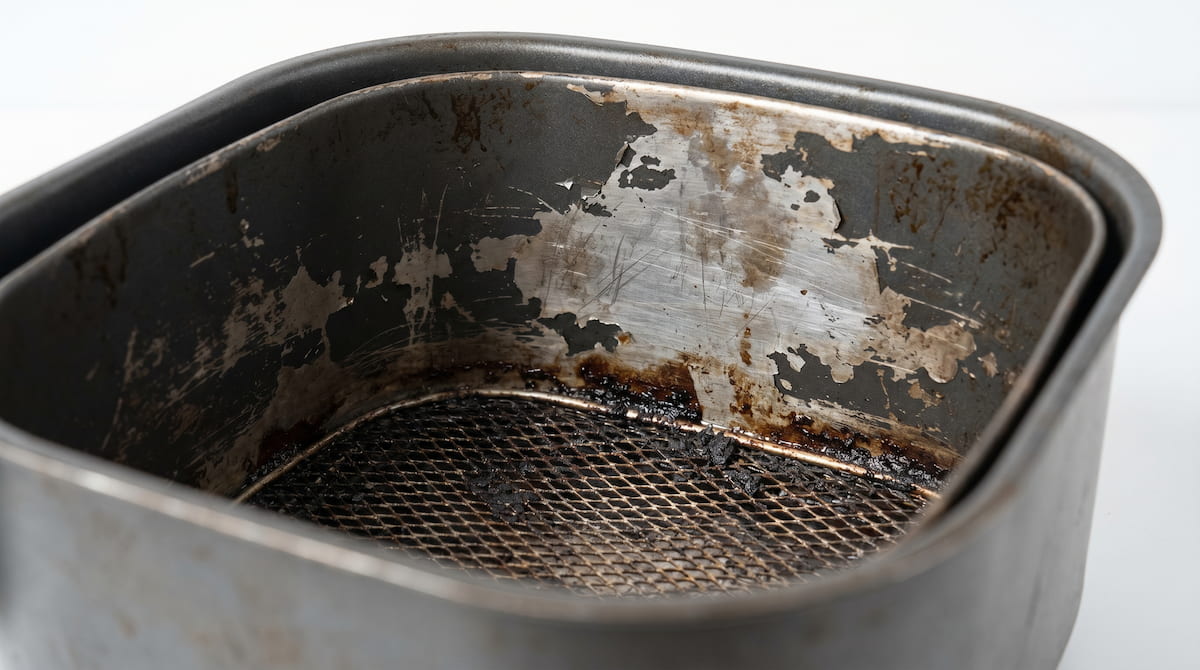
Scratches, dark residue, and visible metal beneath the coating are the clearest physical signs of a toxic air fryer basket.
4. Food That Tastes Metallic or Chemical
When food consistently tastes off — with a metallic edge, a chemical undertone, or simply a flavor that doesn’t match the ingredients — coating particles or decomposition products are reaching the food. This is confirmation that transfer is already happening. A food taste change that correlates with the unit’s age and coating condition is one of the most actionable toxic air fryer signals because it means exposure is occurring, not just at risk of occurring.
5. Discoloration of the Basket That Won’t Wash Off
Dark staining or discoloration that remains after thorough cleaning indicates the coating structure has been compromised by heat or chemical damage. This discoloration is often accompanied by changes in surface texture — the coating feels different in the affected areas. Both changes indicate structural coating damage rather than surface residue.
6. Unknown or Unlisted Coating Materials
Budget air fryers — particularly those from unfamiliar brands with minimal product documentation — may use coating compounds that aren’t clearly identified. A unit where the manufacturer can’t or won’t confirm the basket coating materials is a unit where you’re cooking with unknown chemistry. Reputable brands with ceramic or stainless steel claims provide documentation; opacity about coating materials is a red flag.
7. Unit Older Than Its Coating’s Safe Lifespan
Traditional nonstick coatings used daily have a realistic safe lifespan of 1–2 years before degradation becomes significant. A unit that’s been in daily use beyond this window with a traditional nonstick coating is statistically likely to have coating degradation even if no obvious visible damage is apparent. Age combined with daily use is a toxicity risk factor even without other symptoms.
8. Smoke or Fumes at Normal Cooking Temperatures
A unit producing smoke or visible fumes at normal cooking temperatures — from a clean basket with food that doesn’t normally smoke — is burning its coating at temperatures below what an intact coating should withstand. This accelerated degradation temperature indicates severe coating breakdown and active toxic exposure risk.
Toxic Air Fryer Signs: Urgency Guide
| Sign | Exposure Status | Action |
|---|---|---|
| Flaking coating | Active — particles in food now | Stop immediately, replace |
| Food tastes chemical | Active — transfer confirmed | Stop immediately, replace |
| Chemical smell during cooking | Active — off-gassing occurring | Replace now |
| Scratches through to metal | High risk — replace promptly | Replace within days |
| PTFE coating, 2+ years daily use | Elevated risk — assess condition | Inspect closely, plan replacement |
| Unknown coating materials | Unknown — unverifiable | Replace with documented safe option |
What a Non-Toxic Air Fryer Looks Like

The difference between a degraded nonstick basket and an intact ceramic basket represents the difference between active chemical exposure and genuinely safe cooking.
A non-toxic air fryer has clearly documented PFAS-free materials — ceramic coating or stainless steel interior — with no chemical smell during normal operation, an intact surface with no scratches or flaking, and a manufacturer that can confirm the coating composition. Our family switched to the Ninja AF150AMZ ceramic basket after our old nonstick unit started showing the chemical smell and scratch signs. The difference in cooking confidence is significant.
For how PFAS chemicals specifically get into air fryer coatings and what that means: What Is PFAS and Why Does It Matter in Your Air Fryer?
And for what air fryer chemical smells actually indicate about what you’re breathing: Why Does My Air Fryer Food Taste Like Chemicals?
Bottom Line
The signs of a toxic air fryer fall into two categories — signs of active exposure happening now, and signs of elevated risk that indicate replacement should happen soon. Flaking coating, chemical food taste, and persistent chemical smell during cooking are active exposure signals that warrant immediate stop-use. Scratches through to metal, aging PTFE coatings, and unknown coating materials are elevated risk signals that warrant prompt replacement. The fix in every case is the same: switch to a clearly documented PFAS-free ceramic or stainless steel option and eliminate the risk category entirely.