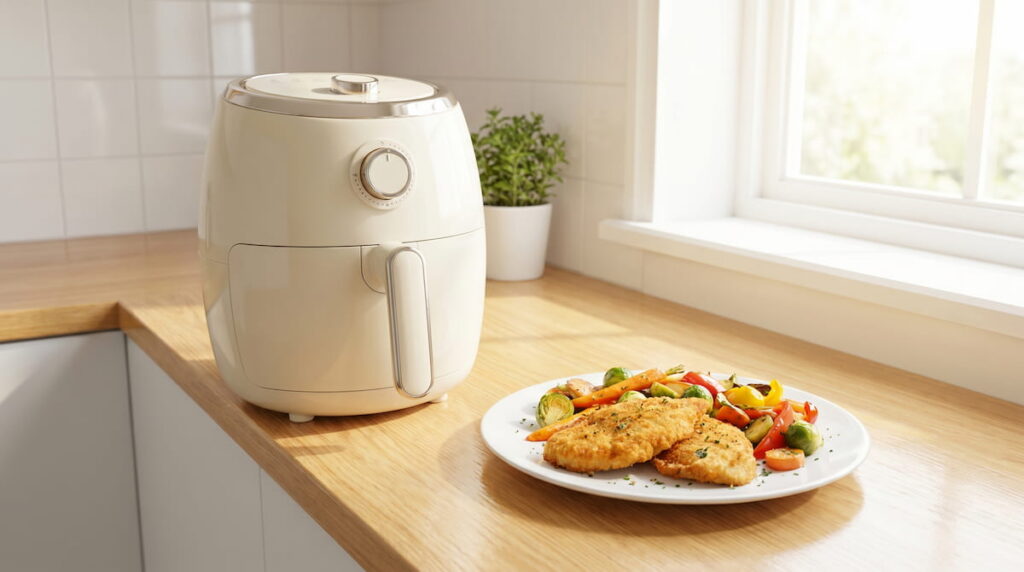
Air fryer food tastes like chemicals — that’s one of those complaints that sounds minor until it happens to your dinner. I’ve been there. The first time my chicken came out with a faint plastic aftertaste I couldn’t figure out if it was the food, the basket, or something else entirely. After going through every possible cause, here’s what I found.
Why Air Fryer Food Tastes Like Chemicals
The chemical taste in air fryer food almost always comes from one of four sources: factory residue on a new unit, a degrading nonstick coating, grease buildup on the heating element, or the food itself absorbing odors from a basket that hasn’t been cleaned properly between uses. Each cause has a different fix, and knowing which one you’re dealing with saves a lot of trial and error.
Factory residue is the most common cause in new air fryers. Manufacturing processes leave behind protective coatings, lubricants, and packaging chemicals on the basket, heating element, and interior walls. These residues don’t always burn off completely during the first use — sometimes they transfer to food for the first several cooks before fully volatilizing. The fix is a proper burn-off cycle before cooking any food: run the empty unit at maximum temperature for 15 minutes with windows open, let it cool, wash the basket with warm soapy water, and repeat once more if the taste persists.
Air Fryer Food Tastes Like Chemicals: Cause-by-Cause Breakdown
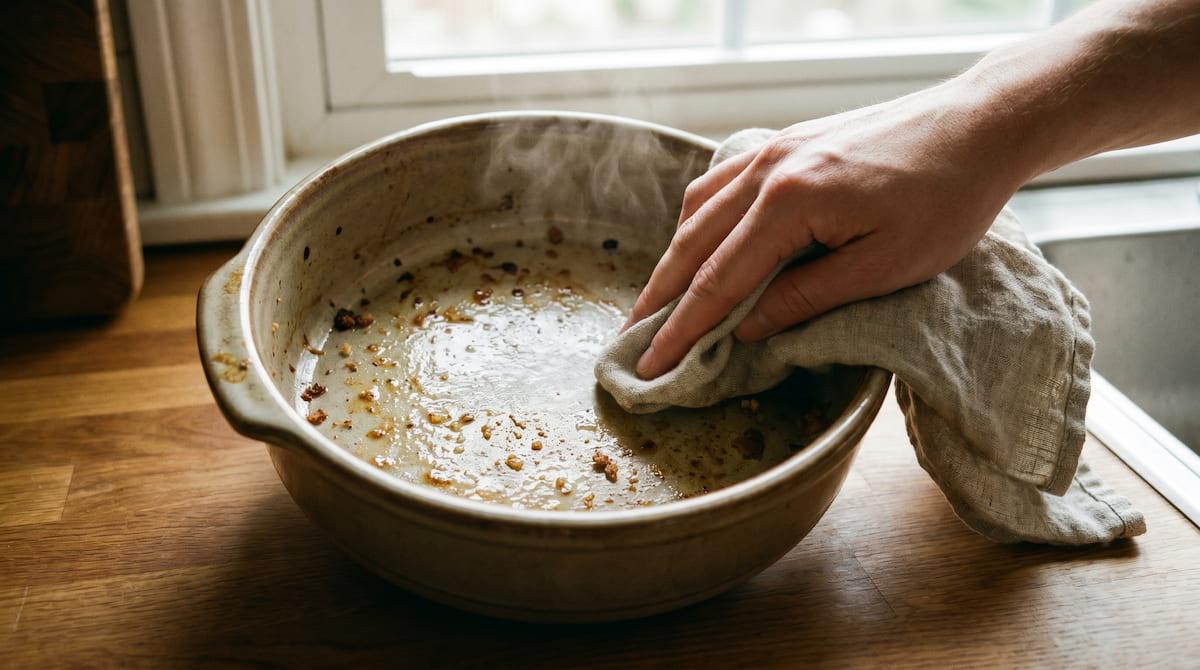
Wiping down the basket after every use prevents grease buildup that transfers chemical flavors to your food over time.
| Cause | When It Happens | Fix |
|---|---|---|
| Factory residue | First 1–5 uses of a new unit | Empty burn-off cycle at max temp, then wash basket |
| Degrading PTFE coating | After months of use, scratched basket | Replace basket or switch to ceramic model |
| Grease buildup on heating element | After extended use without deep cleaning | Deep clean heating element area, replace drip tray liner |
| Dirty basket cross-contamination | When basket not cleaned between uses | Wash basket thoroughly after every use |
| Low-quality plastic components | Budget models, especially under heat | Replace unit with a higher-quality model |
The Coating Problem: When the Taste Doesn’t Go Away
If your air fryer food tastes like chemicals and the unit is not new, the most likely culprit is a degrading PTFE nonstick coating. PTFE is the nonstick compound used in the majority of budget air fryer baskets. It’s considered stable under normal conditions, but when it gets scratched — from metal utensils, abrasive cleaning, or simply heavy use — the surface starts to break down at cooking temperatures.
Decomposing PTFE doesn’t just produce fumes — it transfers taste compounds to food in direct contact with the damaged surface. If you notice a faint metallic or chemical aftertaste specifically on foods that sit directly in the basket, and you can see scratches or worn patches on the coating, that basket is the source. The EPA has flagged PFAS-related compounds — the chemical family that includes PTFE breakdown products — as an area of ongoing health concern.
The fix is replacement, not cleaning. A scratched PTFE basket that’s causing taste transfer will continue to do so regardless of how thoroughly you wash it. Either replace the basket if your model sells them separately, or replace the unit entirely with a ceramic-coated model.
How to Do a Proper Burn-Off Cycle on a New Air Fryer
If the chemical taste is coming from a new unit, this is the process that resolves it in almost every case. Start by removing all packaging materials from inside the basket and unit — including any cardboard inserts or foam pieces. Open at least one nearby window for ventilation.
Run the air fryer empty at its maximum temperature — typically 400°F — for 15 minutes. When the cycle ends, let the unit cool completely. Remove the basket and wash it with warm water, a small amount of dish soap, and a soft sponge. Rinse thoroughly and dry completely before placing it back in the unit. Run another empty cycle at 400°F for 10 minutes. At this point the factory residue should be fully off-gassed and the basket clean enough that food cooked in it won’t pick up any chemical flavor.
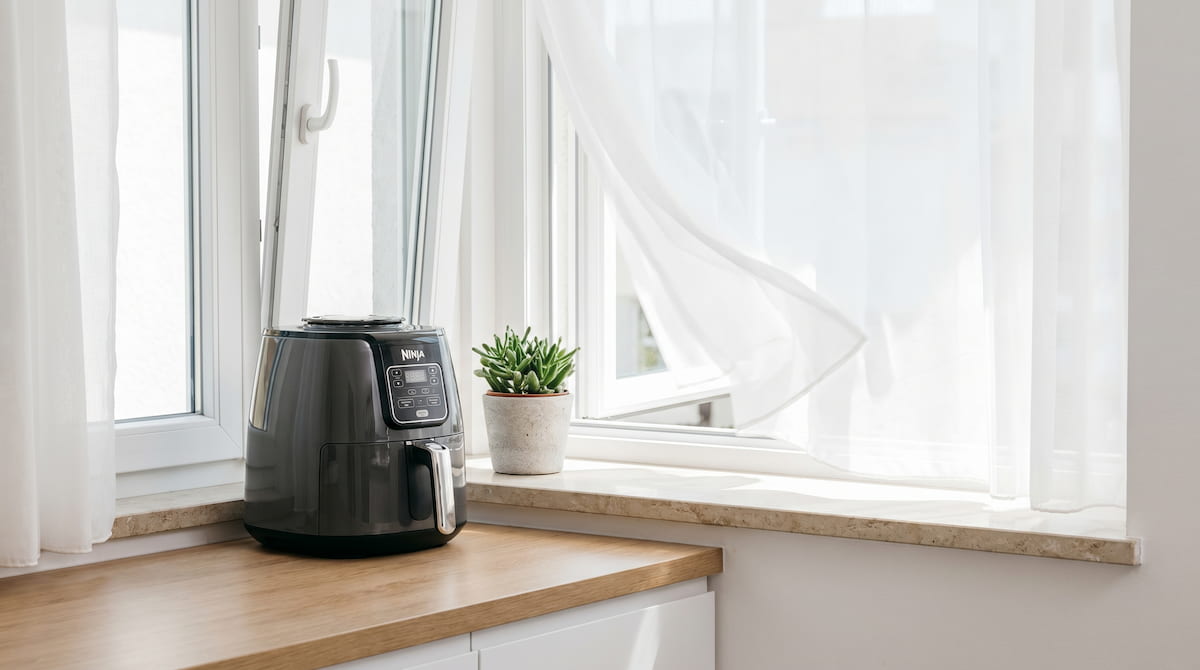
Opening a window before and during the burn-off cycle clears factory residue fumes faster and prevents them from settling back onto cooking surfaces.
The Long-Term Fix: Switch to a Ceramic Basket
Ceramic-coated baskets contain no PTFE and no PFAS. There is no coating to degrade, no chemical decomposition products to transfer to food, and no persistent chemical taste to troubleshoot after the initial burn-off. If you’ve been dealing with recurring taste issues from a PTFE-coated basket, switching to ceramic solves the problem at the source rather than managing it indefinitely.
The Ninja AF150AMZ is the model I’d recommend for anyone making that switch. The ceramic coating is durable, holds up under daily use without chipping or degrading, and the food that comes out of it tastes exactly like the food going in — no chemical aftertaste, no plastic flavor, nothing. After months of daily use I’ve never had a taste issue with this basket.
Cleaning Habits That Prevent Chemical Taste From Coming Back
Once you’ve resolved the immediate issue, these habits keep chemical taste from returning regardless of which model you’re using. Wash the basket after every use with warm soapy water and a soft sponge — never abrasive scrubbers that scratch the surface. Let the basket cool before washing to prevent thermal shock that accelerates coating wear. Clean the drip tray every one to two uses if you’re cooking fatty proteins, and wipe down the interior walls of the unit monthly to prevent grease from building up on surfaces near the heating element.
For a full cleaning routine that keeps any air fryer basket in good condition long-term, our guide on how to clean an air fryer basket without ruining the coating covers every step. And if you’re ready to move to a PFAS-free model that won’t give you taste issues in the first place, our PFAS-free air fryer guide is the right starting point.