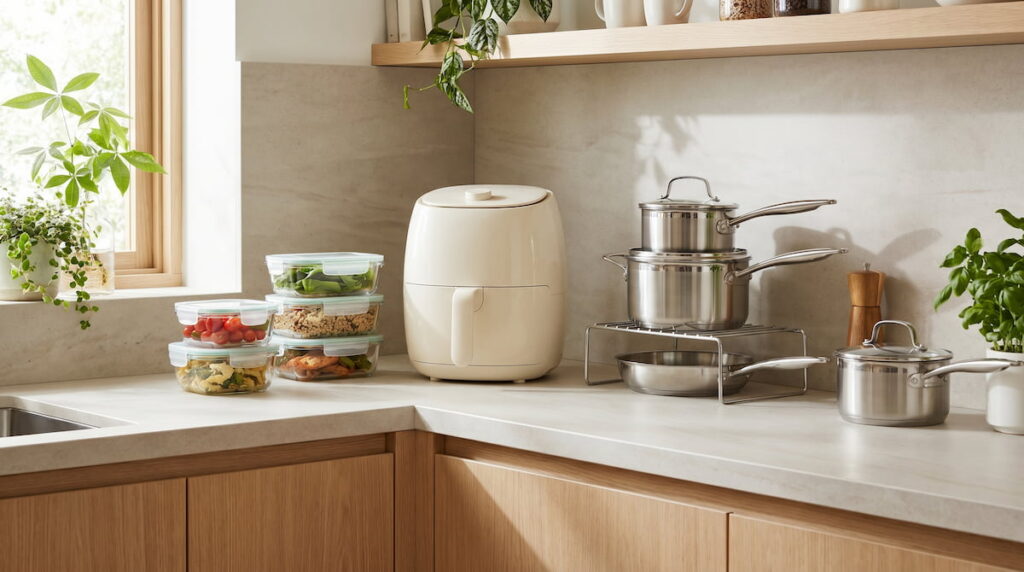
How to reduce PFAS exposure in your kitchen is a question I started taking seriously after I noticed a chemical smell coming from our air fryer and went down a research rabbit hole I couldn’t climb back out of. PFAS are everywhere in a standard kitchen — coatings, containers, packaging — but the good news is that the highest-exposure sources are also the easiest to swap out. Here’s where to start.
What PFAS Are and Why Your Kitchen Is the Main Exposure Point
PFAS — per- and polyfluoroalkyl substances — are a family of synthetic chemicals used for their nonstick and water-resistant properties. They’ve been used in cookware coatings, food packaging, and kitchen appliances for decades. The EPA has identified PFAS compounds as an area of serious ongoing health concern, linking chronic exposure to immune system effects, hormone disruption, and increased cancer risk in long-term studies.
The kitchen is the primary PFAS exposure point for most households because it’s where PFAS-coated surfaces meet high heat — the combination that causes these compounds to off-gas and potentially transfer to food. Reducing PFAS exposure at home starts with identifying the highest-risk sources and replacing them in order of impact.
The Biggest PFAS Sources in a Standard Kitchen
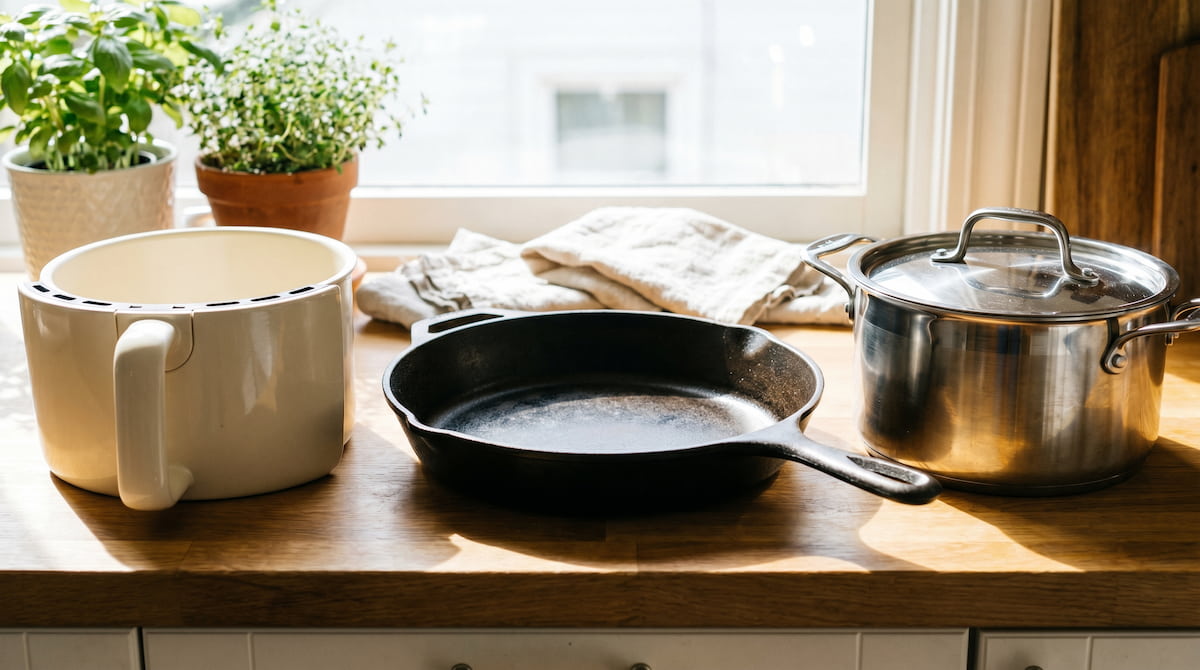
Replacing PTFE-coated cookware with ceramic, cast iron, and stainless steel is the single highest-impact step to reduce PFAS exposure in any kitchen.
| Kitchen Item | PFAS Risk Level | Safe Replacement |
|---|---|---|
| Nonstick frying pan (PTFE) | 🔴 High | Ceramic, cast iron, or stainless steel |
| Air fryer with PTFE basket | 🔴 High | Ceramic-coated or stainless steel air fryer |
| Nonstick baking sheets | 🟠 Medium-High | Uncoated stainless steel or silicone mat |
| Microwave popcorn bags | 🟠 Medium-High | Stovetop or silicone popcorn maker |
| Plastic food containers | 🟡 Medium | Glass or stainless steel containers |
| Fast food packaging | 🟡 Medium | Cook at home using non-toxic cookware |
Step 1: Replace Your Air Fryer Basket First
If you have an air fryer with a PTFE-coated basket, that’s the highest-priority swap in your kitchen. Air fryers run at temperatures between 350°F and 400°F — right in the range where PTFE coatings begin to off-gas detectable compounds, especially if the basket is scratched or worn. Unlike a stovetop pan where you control the heat carefully, an air fryer runs at high heat automatically for extended periods with food in direct contact with the basket surface.
Ceramic-coated air fryer baskets contain no PTFE and no PFAS. The Ninja AF150AMZ uses a ceramic basket that has held up under daily high-heat use without any coating degradation in my experience. It’s the first swap I’d make and the one with the highest daily impact on PFAS exposure for a family that cooks regularly.
Step 2: Replace Nonstick Pans With Ceramic or Cast Iron
The standard PTFE-coated nonstick frying pan is the second-highest PFAS exposure source in most kitchens. It’s used daily, often at high heat, and the coating degrades faster than most people realize — especially when metal utensils are used or the pan is put in the dishwasher repeatedly.
Ceramic-coated pans are the easiest direct replacement — same nonstick performance, no PTFE. Cast iron and stainless steel require a small adjustment in cooking technique but last indefinitely and contain no synthetic coating at all. For large-volume cooking like the kind families do on weeknights, the Instant Pot Omni Plus covers the oven and air fry functions without any PTFE contact surface — stainless steel interior throughout.
Step 3: Switch to Glass or Stainless Food Storage
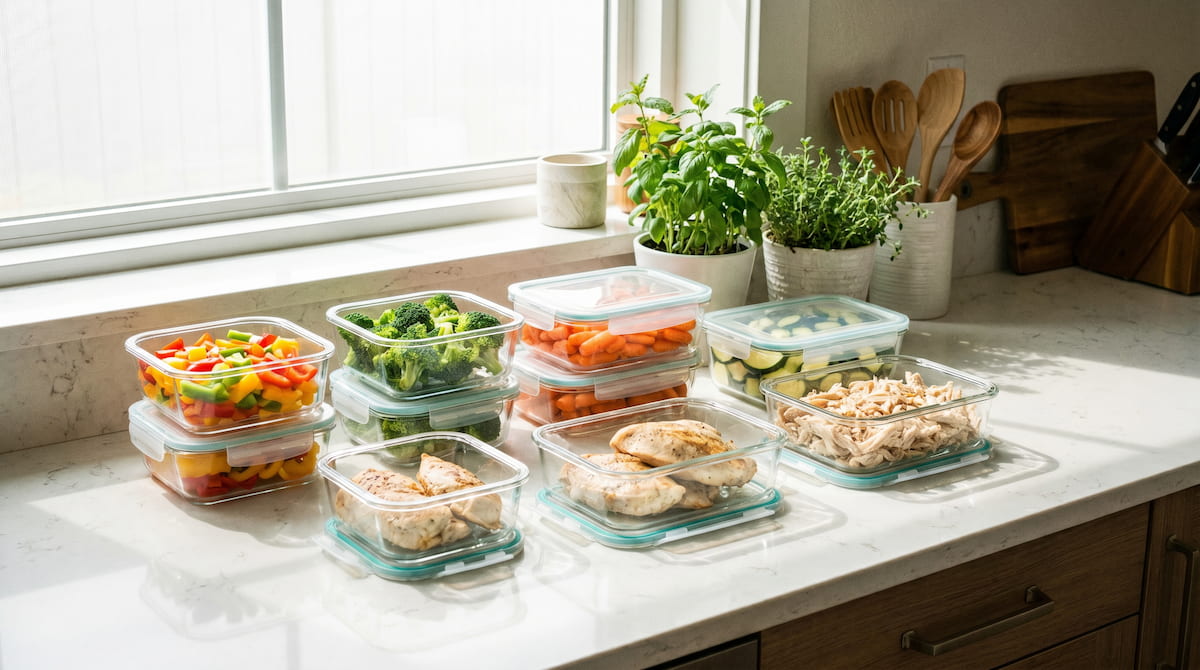
Glass food storage containers eliminate PFAS leaching from plastic containers — especially important when storing hot food or reheating leftovers.
Plastic food storage containers are a lower-level but consistent PFAS exposure source, particularly when used to store hot food or reheated in a microwave. Heat accelerates chemical migration from plastic surfaces into food. Glass containers eliminate this variable entirely — nothing migrates from glass regardless of temperature.
This swap is also one of the cheapest to make incrementally. Replace plastic containers one set at a time as they wear out rather than all at once. Start with the containers you use most often for hot food storage and microwave reheating — those are the highest-exposure pieces in your current rotation.
Step 4: Eliminate PFAS-Coated Baking and Cooking Surfaces
Nonstick baking sheets, muffin tins, and roasting pans often use the same PTFE-based coatings as nonstick pans — with less attention paid to their condition because they’re used less frequently. A baking sheet that’s been through hundreds of oven cycles may have significant coating wear that’s easy to overlook because you’re not looking at it the same way you look at a pan.
Uncoated stainless steel baking sheets are the cleanest replacement — no coating at all, easy to clean, and they last indefinitely. Silicone baking mats are another good option for lining existing pans. Neither introduces any synthetic coating chemistry into your oven environment.
How to Reduce PFAS Exposure in Your Kitchen — Priority Order
| Priority | Swap | Impact |
|---|---|---|
| 1st | PTFE air fryer → ceramic air fryer | Highest — daily high-heat food contact |
| 2nd | Nonstick pan → ceramic or cast iron | High — daily cooking surface |
| 3rd | Plastic containers → glass storage | Medium — hot food and reheating |
| 4th | Nonstick bakeware → stainless steel | Medium — oven cooking surfaces |
| 5th | Microwave popcorn → stovetop | Lower — occasional use |
For a full breakdown of PFAS-free air fryer options and what materials to look for, our PFAS-free air fryer guide covers every safe material in detail. And if you want to understand what PFAS actually are before making any swaps, our post on what PFAS are and why they matter in your air fryer is a good starting point.