Disclosure: This post contains affiliate links. If you purchase through them, I earn a small commission at no extra cost to you. I only recommend products I personally trust for my family.
Air fryer safety checklist everyday use is something most families never think about until something goes wrong. I’m Wook, a bus driver and dad who cooks for my family almost every night. After going through my own air fryer problems — smoke, coating wear, thermal shutoffs — I developed a simple routine that takes less than two minutes before each cook and catches the issues that cause real problems. This is that checklist, organized so you can actually use it daily without it feeling like homework.
Why a Daily Safety Checklist Matters
Most air fryer safety incidents don’t happen suddenly — they develop gradually from small issues that go unnoticed over many cook cycles. Grease builds up layer by layer. Coating scratches accumulate one by one. Clearance gets reduced as items migrate onto the counter. A brief pre-cook check catches these gradual changes before they reach the point of creating smoke, fire risk, or chemical exposure.
The Daily Air Fryer Safety Checklist
✅ Before Every Cook — 60 Seconds
1. Check basket coating condition
Pull the basket out and look at the interior surface in good light. You’re looking for any new scratches, discoloration, or areas where the coating looks different from the last time you checked. For nonstick baskets, any scratch that reaches metal is a replacement trigger. For ceramic baskets, look for areas that have lost their smooth surface feel.
2. Confirm clearance on all sides
Before plugging in, verify that nothing has migrated onto the counter near the unit. You need 5 inches minimum on the sides and back, 8 inches above. Kitchen counters accumulate items quickly — a bag of groceries, a cutting board, a paper towel roll placed nearby can all become heat hazards within a single cook cycle.
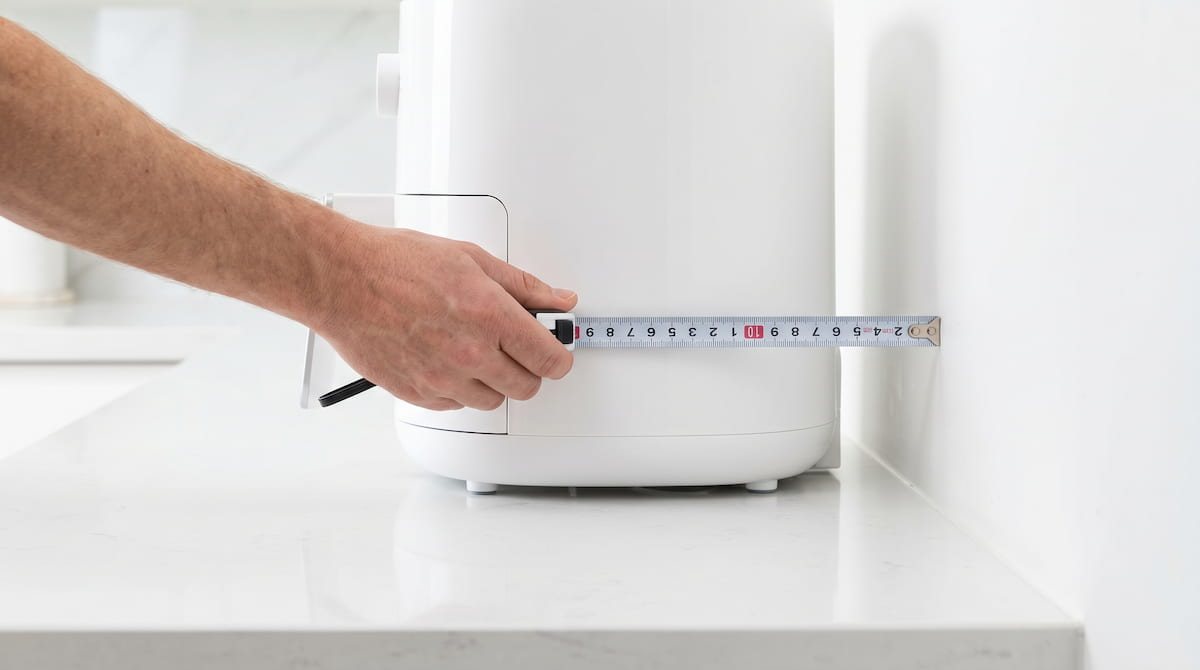
Confirming clearance takes 10 seconds and eliminates one of the most common air fryer fire risk factors before every cook.
3. Check basket and drawer for leftover residue
Look inside the basket and drawer for any food particles or grease from the previous cook that wasn’t cleaned. Even small amounts of old grease can smoke significantly when heated, and food particles left from the previous meal will burn and affect the taste of the current one.
4. Verify basket is fully seated
Push the basket in firmly until you hear or feel it click. A basket that isn’t fully locked triggers the safety shutoff mid-cook — confirming it’s seated before starting saves the interruption.
5. Check the power cord
A 5-second visual check of the cord from unit to outlet. You’re looking for any kinking, fraying, or changes since the last use. A cord that has been caught under something, stepped on, or pulled at an angle may have developed internal damage that isn’t obvious until it’s a problem.
✅ After Every Cook — 60 Seconds
6. Wipe the basket and drawer while still warm
Fresh grease wipes away easily while still warm — it takes under a minute and prevents the layering effect that makes deep cleaning necessary. Use a paper towel or damp cloth to remove surface grease before it bakes on with the next cook cycle.
7. Check the bottom drawer for grease accumulation
For fatty foods — bacon, sausage, chicken thighs — check how much grease has collected in the drawer. More than a tablespoon of accumulated grease warrants emptying and wiping before the next use, regardless of how soon that is.
8. Allow to cool before storing
Never store the unit or cover it while still warm. Heat trapped inside with a cover creates the moisture conditions that cause mold growth and accelerate coating degradation. Cool completely — 30 minutes minimum — before covering or putting away.
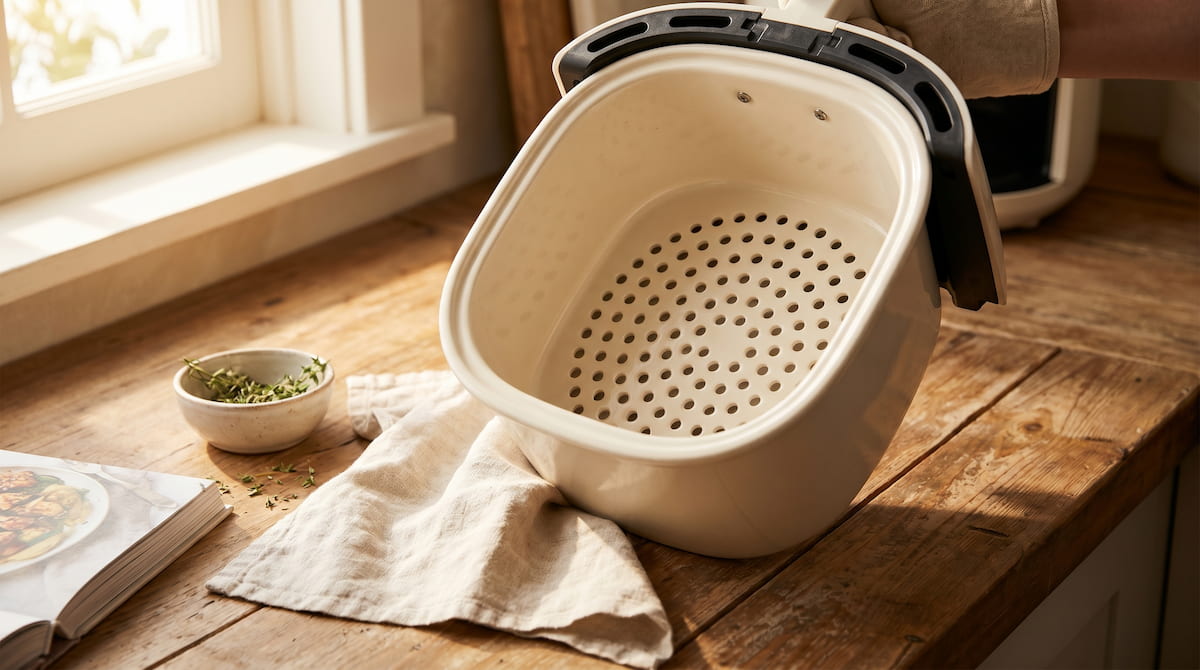
A quick pre-cook basket inspection takes seconds and catches coating changes before they become food safety concerns.
The Weekly Air Fryer Safety Check — 5 Minutes
| Weekly Check | What to Look For | Action if Found |
|---|---|---|
| Full basket wash | Baked-on residue after soak | Baking soda paste treatment |
| Interior wall wipe | Grease splatter on chamber walls | Damp microfiber wipe |
| Gap seam inspection | Trapped food in drawer gap | Soft toothbrush clean |
| Fan sound check | New grinding or unusual sound | Clean fan area, monitor |
| Empty preheat smell test | Chemical or unusual smell | Inspect coating, consider replacement |
The Monthly Safety Inspection — 10 Minutes
- Clean the heating element — soft brush and damp cloth with unit flipped upside down
- Full basket coating inspection — in strong light, checking for new scratches or discoloration
- Power cord full-length check — from unit to outlet, looking for damage at flex points
- Temperature accuracy test — oven thermometer at 350°F confirming within 15°F of set temp
- Clearance remeasurement — confirming kitchen hasn’t gradually encroached on the unit’s space
The Safety Habits That Prevent Most Problems
Beyond the checklist, these are the daily habits that keep air fryer use consistently safe without requiring active checking every time:
- Always use silicone or wooden utensils — never metal, which scratches any coating
- Never use aerosol cooking spray — use a pump mister or skip oil with ceramic baskets
- Always cook in single layers for proteins — no stacking raw chicken or meat
- Never leave the house with it running — under any circumstances
- Ventilate during every cook — open a window or run the range hood
For the complete breakdown of all air fryer safety risks and how to address each one: How to Use Air Fryer More Safely Every Day (10 Rules)
And if your checklist reveals coating issues that need addressing: How to Tell When Your Air Fryer Needs to Be Replaced (Safety Signs)
Bottom Line
An air fryer safety checklist for everyday use doesn’t need to be complicated to be effective. Two minutes before each cook — basket condition, clearance, residue, basket seating, cord — and one minute after — warm wipe, drawer check, cooling before storage — catches the gradual issues that cause real problems. The weekly and monthly checks fill in the gaps that daily use misses. Build these into your cooking routine and air fryer problems become exceptions rather than inevitabilities.