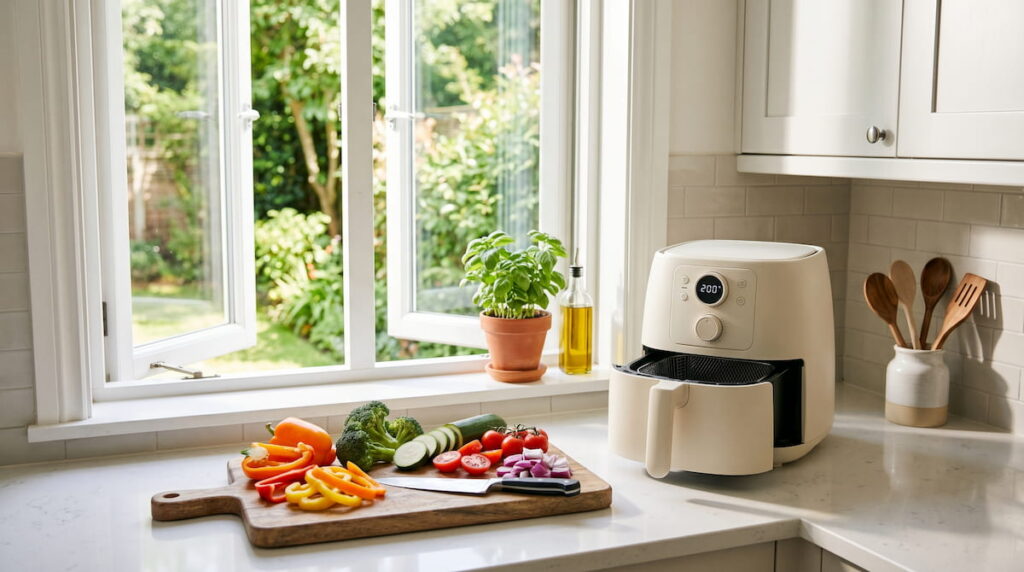
How to use air fryer more safely is something I thought about seriously after switching to a ceramic model and realizing the basket was only part of the equation. The way you place it, clean it, and cook with it matters just as much as what it’s made of. Here are the 10 rules I follow in my own kitchen — all of them practical, none of them complicated.
Why Safe Air Fryer Habits Matter as Much as the Model You Choose
Most air fryer safety guides focus on which model to buy. That’s a good starting point, but it’s only half the picture. A ceramic-coated, PFAS-free air fryer used incorrectly — wrong placement, infrequent cleaning, wrong accessories — can still create unnecessary risks. And a well-chosen model used consistently with good habits performs safely for years without issues.
The 10 rules below cover the full range of air fryer safety: from the moment you set it up on your counter to the daily habits that protect your family over months and years of regular use. Our full PFAS-free air fryer guide covers model selection in detail — these rules pick up where that guide leaves off.
How to Use Air Fryer More Safely: 10 Rules
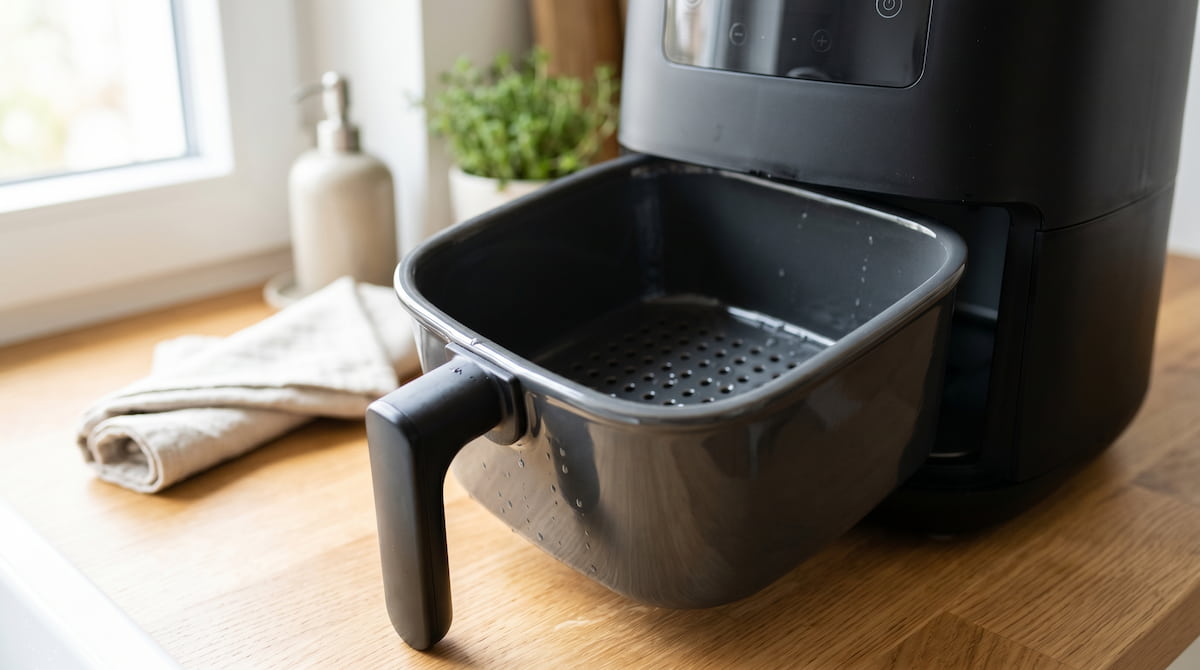
A clean ceramic basket after every use is the single most important daily habit for safe long-term air fryer use.
Rule 1: Run an Empty Burn-Off Cycle Before First Use
Every new air fryer — including ceramic-coated models — arrives with factory residues on the basket, heating element, and interior surfaces. Before cooking any food, run the unit empty at maximum temperature for 15 minutes with at least one window open. Let it cool, wash the basket with warm soapy water, and run one more empty cycle. This removes manufacturing residues that would otherwise transfer to your first few meals.
Rule 2: Choose Ceramic or Stainless Steel — Avoid PTFE
The basket coating is the highest-impact safety decision you’ll make. PTFE-coated baskets off-gas fluorinated compounds when scratched or overheated — compounds the EPA has flagged as an ongoing health concern. Ceramic-coated and stainless steel baskets contain no PTFE and no PFAS. If you’re still using a PTFE-coated model, replacing it is Rule 2 before any other habit matters.
Rule 3: Always Open a Window Before Cooking
Even with a ceramic basket, air frying produces cooking vapor, steam, and food-based fumes that benefit from ventilation. Open at least one nearby window before every cook session. If you have a range hood fan above or near your air fryer, run it during cooking. Good ventilation takes 30 seconds and meaningfully reduces any airborne cooking byproducts in your kitchen — especially in smaller spaces.
Rule 4: Maintain 6 Inches of Clearance on All Sides
Air fryers vent hot air from the back or sides depending on the model. That hot air needs somewhere to go. Placing an air fryer flush against a cabinet wall or directly under a shelf creates heat buildup that stresses the unit and poses a fire risk over time. Measure six inches of clear space on all sides — including above — before every use, and make that placement a fixed habit rather than something you eyeball each time.
Rule 5: Clean the Basket After Every Use
Grease and food residue left in the basket between uses burns during the next cook session, producing smoke and compounds that transfer to your food. Wash the basket with warm water, a small amount of dish soap, and a soft sponge after every use — not every few uses, every use. Let it cool before washing to prevent thermal shock to the coating. For ceramic baskets, this routine takes two minutes and keeps the surface performing exactly as it did on day one.
Rule 6: Clean the Drip Tray Every 1–2 Uses
The drip tray catches rendered fat and food debris during cooking. It needs more frequent attention than the basket in households that cook proteins regularly. Grease buildup in the drip tray at air fryer temperatures smokes heavily and — in worst cases — can ignite. Empty and wipe the drip tray every one to two uses when cooking chicken, sausage, bacon, or other fatty proteins.
Rule 7: Use Silicone or Wooden Utensils Only
Metal tongs, spatulas, and skewers are the most common cause of basket coating scratches in daily-use air fryers. On a ceramic basket, metal scratches remove the protective surface layer and eventually expose the underlying material to direct food contact. Switch to silicone-tipped tongs and wooden or silicone spatulas for anything you need to move mid-cook. This single change significantly extends basket life.
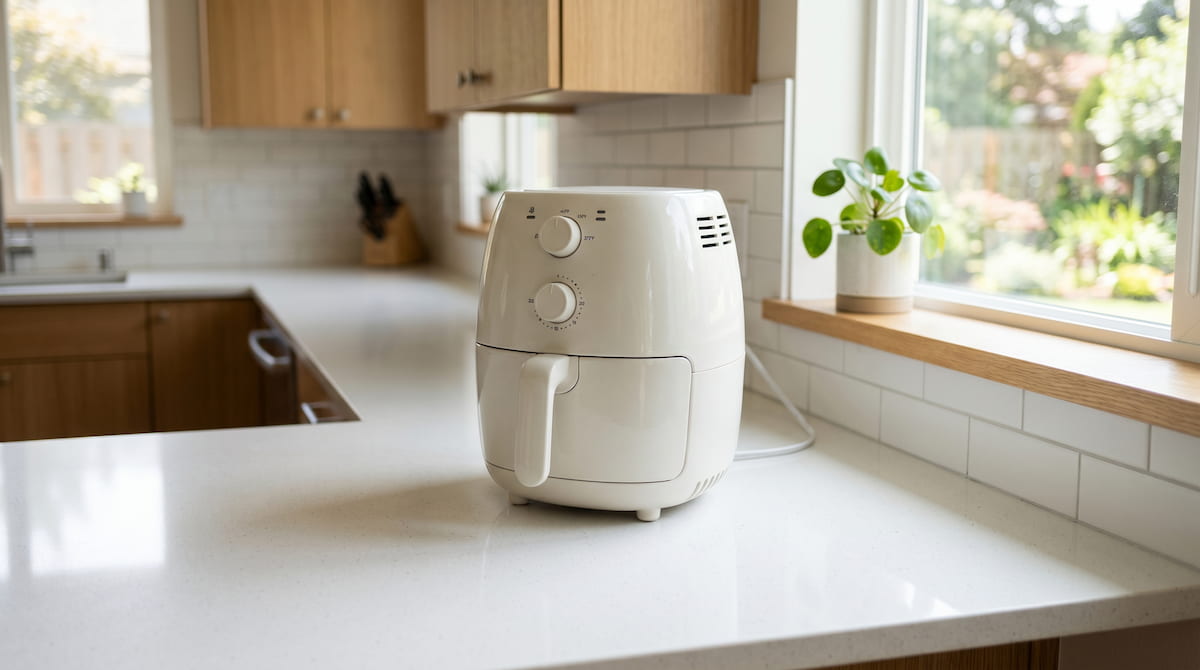
Clear counter space on all sides isn’t just good practice — it’s the placement rule that prevents heat buildup and reduces fire risk over time.
Rule 8: Don’t Overcrowd the Basket
Overcrowding forces the air fryer to work harder to circulate heat, extends cook times, and produces uneven results that tempt you to push the temperature higher. More practically, a packed basket traps moisture between food pieces that would otherwise escape as steam — which increases the chance of undercooking and pushes you toward longer, hotter cycles that increase acrylamide formation in starchy foods. Cook in batches when volume demands it rather than pushing a single overloaded basket.
Rule 9: Never Use Parchment Paper Without Food on Top
Parchment paper is a safe and useful air fryer liner — but only when food is placed on top of it before the cook cycle starts. Parchment paper placed in an empty basket can be lifted by the fan and come into contact with the heating element, where it scorches or ignites. Always load food onto the parchment before pressing start. Pre-cut round parchment liners sized for your specific basket model make this foolproof.
Rule 10: Inspect the Basket Monthly
A monthly basket inspection takes two minutes and catches coating degradation before it becomes a health concern. Under good lighting, look for any chips, deep scratches, or areas of discoloration on the basket surface. On a ceramic basket, surface dulling is normal — chipping or cracking is not. If you see coating damage, replace the basket. Most manufacturers sell replacement baskets separately, and the cost is a fraction of replacing the whole unit.
10-Rule Quick Reference
| # | Rule | Frequency |
|---|---|---|
| 1 | Run empty burn-off cycle before first use | Once (new unit) |
| 2 | Use ceramic or stainless — no PTFE | One-time decision |
| 3 | Open a window before cooking | Every use |
| 4 | Maintain 6-inch clearance on all sides | Every use |
| 5 | Wash basket after every use | Every use |
| 6 | Clean drip tray every 1–2 uses | Every 1–2 uses |
| 7 | Use silicone or wooden utensils only | Every use |
| 8 | Don’t overcrowd the basket | Every use |
| 9 | Never use parchment without food on top | Every use (if using parchment) |
| 10 | Inspect basket coating monthly | Monthly |
The model I use for daily cooking — and the one I’d recommend if you’re looking for an air fryer that makes these rules easy to follow — is the Ninja AF150AMZ. Ceramic basket, compact footprint, auto shut-off, and a design that’s easy to clean and inspect. It’s built for the kind of consistent daily use these habits are designed to support.
For more on the specific risks these rules are designed to address, our guides on air fryer fumes and what happens when your air fryer coating gets scratched cover the details behind the habits.