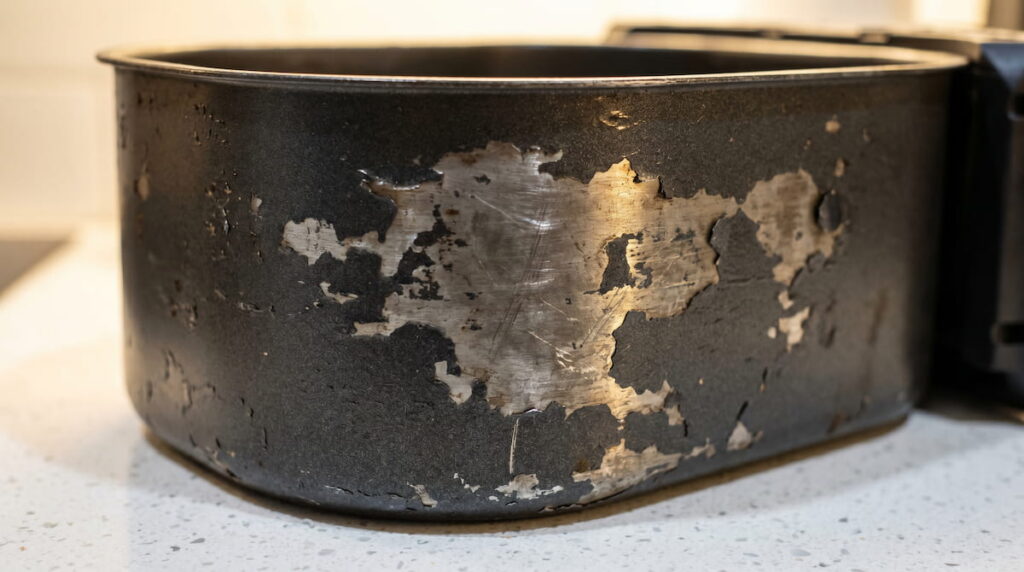
What happens when air fryer coating peels? The short answer is that flakes of the coating material end up in your food — and depending on what that coating is made of, that’s either a minor inconvenience or a real health concern worth taking seriously.
I’m Wook, a bus driver and dad of two teenage boys. When I started noticing dark specks on food coming out of our air fryer, I spent weeks researching exactly what those flakes were and whether our family had been exposed to anything harmful. Here’s what I found.
What Is the Coating Made Of?
Before understanding what happens when it peels, you need to know what the coating actually is. Most air fryer baskets use one of these three surfaces:
- PTFE (polytetrafluoroethylene) — the chemical name for Teflon-style nonstick coatings. Part of the broader PFAS chemical family.
- Ceramic — a silica-based coating applied over metal. Marketed as PTFE-free and PFAS-free.
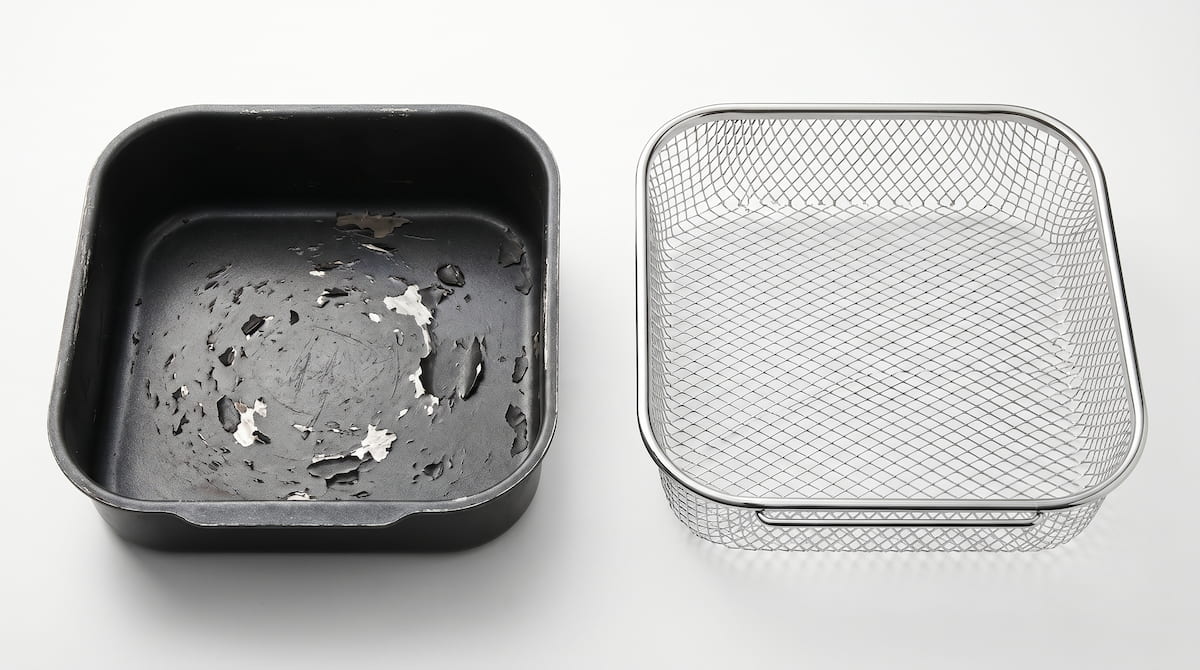
- Stainless steel — no coating at all. The safest option when scratched or worn.
According to the EPA’s PFAS resource page, certain fluoropolymer chemicals including those historically used in nonstick coatings have raised health concerns with long-term exposure. PTFE itself is considered stable when intact — the problem starts when it breaks down.
What Happens When Air Fryer Coating Peels?
When the coating begins to peel, three things happen simultaneously:
1. Flakes Enter Your Food
Visible dark or black specks in your cooked food are almost always coating fragments. With ceramic coatings, these flakes are chemically inert — they pass through the body without being absorbed. With PTFE coatings, the particles are also considered largely inert at room temperature, but the real concern is what happens next.
2. The Exposed Metal Begins to Oxidize
Once the coating peels away, bare aluminum or steel is exposed directly to high cooking heat and food acids. This accelerates further peeling and can introduce trace metal particles into food over time.
3. High Heat Releases Fumes
A peeling PTFE coating cooked above 500°F can release fluoropolymer fumes. At normal air fryer temperatures (350–400°F) this is less of a concern, but a basket that’s already peeling is often being used past its safe lifespan — meaning accidental overheating becomes more likely.
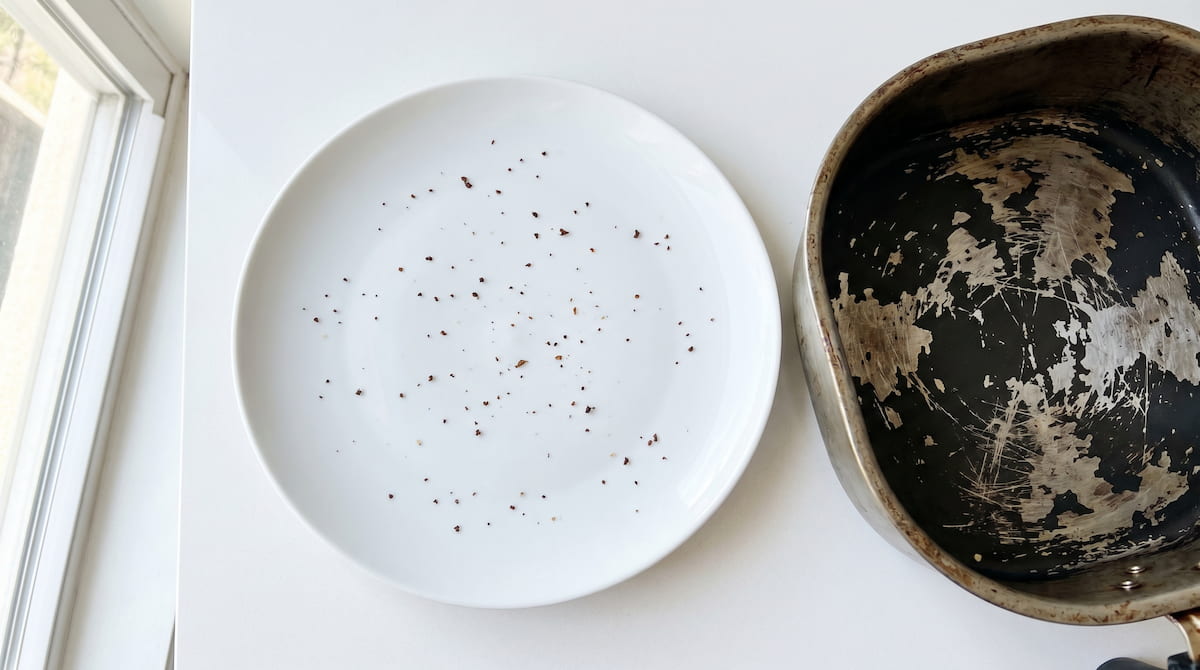
Is It Dangerous to Eat Air Fryer Coating Flakes?
Here’s the honest breakdown by coating type:
| Coating Type | If Flakes Enter Food | Risk Level |
|---|---|---|
| PTFE (Teflon) | Passes through body; fume risk at high heat | ⚠️ Medium — replace immediately |
| Ceramic | Chemically inert, not absorbed | 🟡 Low — but still replace soon |
| Stainless Steel | No coating to peel | ✅ None |
The key takeaway is that no peeling basket should stay in active daily use — regardless of coating type. Once flaking starts, it accelerates. What begins as a few specks becomes significant coating loss within weeks of continued high-heat cooking.
Quick Safety Checklist
- ✅ No peeling, coating smooth and intact — safe to continue using
- ✅ Light surface scratches on ceramic, no flaking — monitor monthly
- ⚠️ Small peeling patches appearing — stop using, order replacement
- ⚠️ Dark specks visible in food after cooking — stop immediately
- ❌ Large sections of coating missing — discard basket now
- ❌ Chemical smell during normal cooking — replace unit entirely
What Our Family Did When We Found Peeling
When I found peeling on our old basket, my first instinct was to keep using it carefully. After two days of research I realized that wasn’t a safe call — especially with two teenage boys eating out of it every night.
We replaced ours with the Ninja AF150AMZ, which uses a PTFE-free, PFAS-free ceramic basket. The coating is harder and more resistant to scratching than what we had before, and knowing there’s no fluoropolymer chemistry involved gives our whole family peace of mind.
For families who want to skip the coating question altogether, our PFAS-Free Air Fryer Guide covers every coating-free and PFAS-free option worth considering in 2026.
Safer Alternatives When Your Coating Starts to Peel
You have three practical options depending on your budget and how much the rest of your unit is worth keeping:
Replace Just the Basket
If your air fryer is otherwise working well, check whether a ceramic replacement basket fits your model. Many Ninja models support this, and it’s the fastest, cheapest fix — often under $20.
Upgrade to a Ceramic Air Fryer
If a replacement basket isn’t available for your model, upgrading to a ceramic unit eliminates the PTFE concern going forward. The Ninja AF150AMZ is the most popular PFAS-free ceramic option for families at a reasonable price point.
Switch to Stainless Steel or Glass
For families who want zero coating risk permanently, the Big Boss 16Qt Glass Air Fryer cooks entirely in a glass bowl — nothing touches your food except glass and stainless steel. No coating, no peeling, no question.
See Today’s Price on Amazon →How to Make Your Next Basket Last Longer
- Use only silicone or wooden utensils — never metal inside the basket
- Hand wash with a soft cloth — no abrasive pads, no dishwasher
- Let the basket cool completely before washing — thermal shock accelerates peeling
- Use parchment paper liners for sticky or acidic foods
- Inspect the surface monthly under bright light
Frequently Asked Questions
What are the black flakes in my air fryer food?
Almost always coating fragments from the basket surface. If they’re coming from a PTFE-coated basket, stop using it immediately. Ceramic flakes carry lower chemical risk but still indicate the basket needs replacing.
Is it safe to eat food cooked in a peeling air fryer?
Occasional exposure to ceramic flakes is considered low risk. PTFE flakes are also considered largely inert when swallowed, but continued daily exposure from a visibly peeling basket is not something we’d recommend for any family — especially with kids.
Can I repair a peeling air fryer basket?
No safe repair method exists for a peeling coating. Any attempt to patch or re-coat a basket at home introduces additional unknown chemicals. Replacement is the only safe path.
How quickly does peeling get worse?
Faster than most people expect. Once the surface integrity breaks down, heat and moisture from daily cooking accelerate the process significantly. A basket with minor peeling today can lose large sections of coating within 2–4 weeks of continued use.
Does ceramic coating peel the same way as Teflon?
Ceramic coatings can peel but are generally more durable than PTFE when treated properly. The key difference is that ceramic flakes carry no fluoropolymer chemistry, making them lower risk — but a visibly peeling ceramic basket still needs to be replaced.
Next in this series: can you actually replace an air fryer basket, and which replacement options are worth buying? We cover the full breakdown in our guide on whether you can replace an air fryer basket.