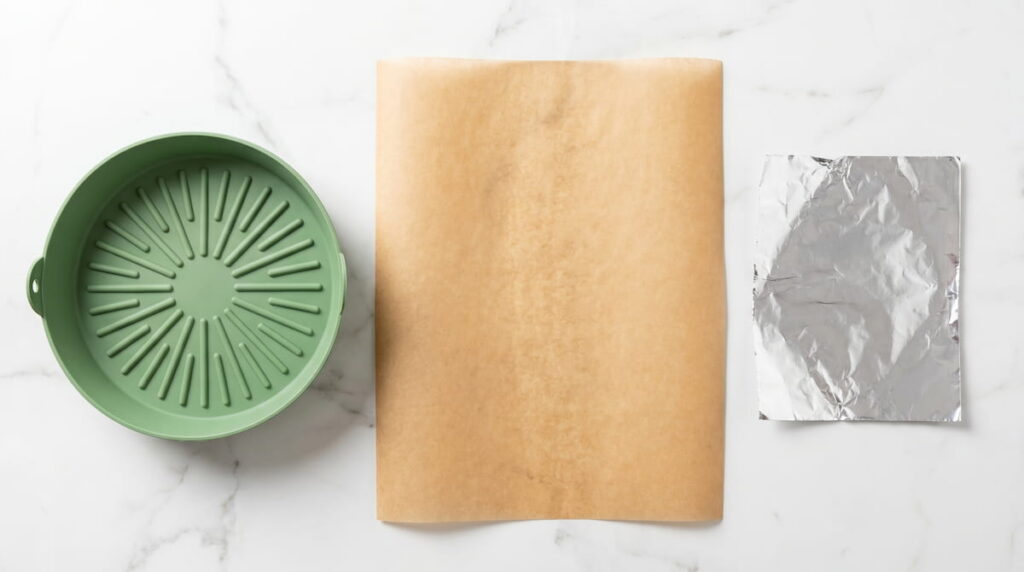
Choosing the best air fryer liners non toxic option comes down to understanding what each liner type is actually made of and how it behaves at air fryer temperatures. Not all liners are created equal — and some popular options introduce the exact chemical concerns you’re trying to avoid with a PFAS-free basket. Here’s the complete breakdown for a genuinely non-toxic setup.
Why Air Fryer Liners Matter for Non-Toxic Cooking
If you’ve already invested in a ceramic or stainless air fryer basket, the liner you use is the next variable in your non-toxic cooking chain. A food-grade silicone or unbleached parchment liner completes the setup — protecting your basket while keeping the food contact surface chemical-free. A bleached parchment liner, low-grade silicone mat, or solid foil sheet can undo the work your basket material is doing.
The liner sits directly under your food during cooking. Whatever it releases at high heat goes directly into what you’re eating. That’s why material quality matters as much for liners as it does for baskets. Our full guide on air fryer liner safety covers every liner type in detail.
The Three Liner Types — Ranked for Non-Toxic Cooking
| Liner Type | Non-Toxic? | Reusable? | Airflow? | Verdict |
|---|---|---|---|---|
| Food-grade silicone (perforated) | ✅ Yes | ✅ Yes | ✅ Yes | 🥇 Best for daily use |
| Unbleached parchment (perforated) | ✅ Yes | ❌ Single use | ✅ Yes | 🥈 Best for saucy foods |
| Bleached parchment | ⚠️ Chemical residue risk | ❌ Single use | ✅ Yes (if perforated) | ❌ Avoid |
| Low-grade silicone | ❌ Off-gassing risk | ✅ Yes | ✅ Yes | ❌ Avoid |
| Aluminum foil (solid) | ⚠️ Acidic food concern | ⚠️ Limited | ❌ Blocks airflow | ❌ Avoid in basket |
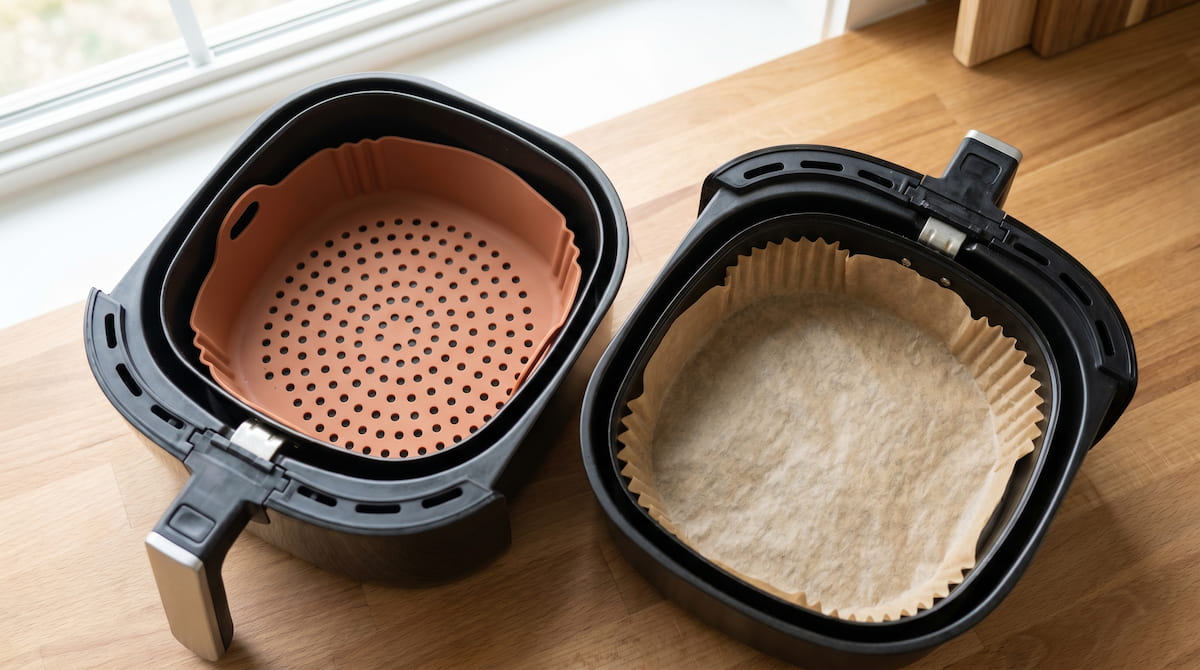
Food-grade silicone and unbleached parchment are the two non-toxic liner options worth using in an air fryer.
Best Non-Toxic Liner Pick #1: Food-Grade Silicone
For daily air fryer use, reusable food-grade perforated silicone liners are the most practical non-toxic choice. They handle every cooking task — roasted vegetables, proteins, reheated leftovers, sticky glazed foods — without releasing fumes, without staining the basket, and without generating waste after every use.
The key specs to verify before buying: explicitly labeled food-grade silicone, temperature rated to 450°F or higher, perforated design, and BPA-free certification. A liner that meets all four of these criteria is safe for daily use at any temperature your air fryer can reach. Pair it with a ceramic basket air fryer and you have a fully non-toxic cooking surface from basket to food.
Best Non-Toxic Liner Pick #2: Unbleached Parchment
For saucy foods, strongly scented proteins, or situations where you want disposable cleanup, unbleached perforated parchment is the right liner. The natural brown color indicates no chlorine bleaching — and unbleached parchment burns cleanly at air fryer temperatures without releasing the chemical residues that bleached versions can.
It’s also the better choice for foods that permanently stain silicone — beet-based dishes, turmeric-heavy marinades, or heavily sauced proteins. Disposable parchment takes the staining with it, keeping your silicone liner in better condition for longer. Use it for specific situations rather than as your primary daily liner, and always use the perforated version for proper airflow.
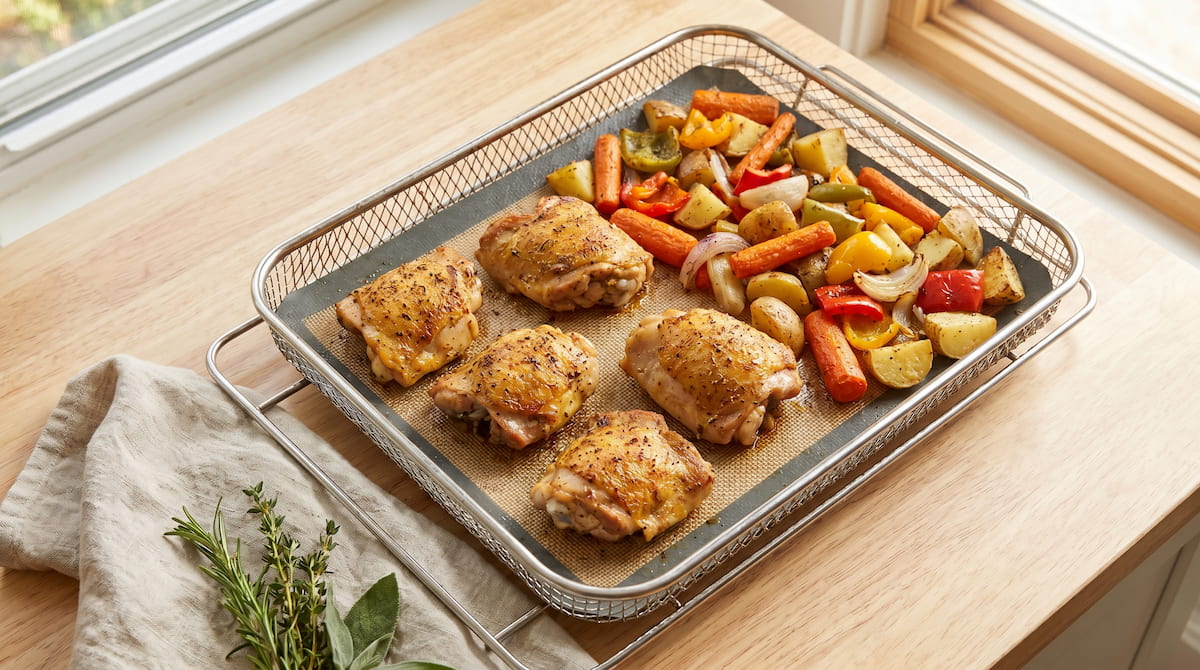
Non-toxic liners protect the basket surface while keeping the food contact zone completely chemical-free.
What to Avoid: Liner Types That Undermine Non-Toxic Cooking
Bleached White Parchment
The bright white appearance of standard parchment comes from chlorine bleaching. At air fryer temperatures, these chemical residues can transfer to food. Always choose natural brown unbleached parchment for a non-toxic setup — the color difference is the easiest way to tell them apart on store shelves.
Low-Grade Silicone Without Food-Grade Rating
Not all silicone is food-grade. Low-grade silicone with fillers and plasticizers can off-gas at high heat — releasing the same category of compounds you’re trying to avoid by switching away from nonstick. If the packaging doesn’t explicitly say “food-grade” and list a temperature rating, don’t use it in your air fryer.
Solid Aluminum Foil
Solid foil in an air fryer basket blocks the hot air circulation that makes air frying work. It also poses a risk with acidic foods — tomatoes, citrus, vinegar-based marinades — which can cause aluminum to leach into food. If you use foil at all, use it only to loosely cover food to prevent over-browning, never as a basket liner.
Dyed or Printed Liners
Some decorative parchment liners use food-safe dyes on the surface. At high air fryer temperatures, these dyes can transfer to food. Plain, undyed liners are always the safer choice.
How to Use Non-Toxic Liners Correctly
- Silicone: Place in basket after preheating with food already on top — never preheat empty. Clean after every use. Replace if any tearing or smell develops.
- Parchment: Place in basket after preheating with food weight holding it flat — lightweight empty parchment can lift and hit the heating element. Discard after single use.
- Both types: Must be perforated — solid liners block airflow and turn your air fryer into a slow oven. Size must fit flat with clearance on all sides.
Which Liner Works Best With Each Air Fryer?
- Ninja AF150AMZ (round basket): 7″ round perforated silicone liner for daily use, round parchment liners for saucy foods
- Cosori TurboBlaze (round basket): Same sizing as Ninja — 7″ round liners fit most models
- Instant Pot Omni Plus (oven tray): Rectangular silicone tray liners or unbleached parchment sheets cut to tray size
- Big Boss Glass (rack): Liners not typically needed — glass bowl and stainless rack are already non-stick enough for most foods
Quick Safety Checklist: Non-Toxic Air Fryer Liners
✅ Safe liner setup:
- Food-grade silicone rated 450°F+ (perforated)
- OR unbleached natural brown parchment (perforated)
- Correct size — flat fit with side clearance
- Food added before inserting into preheated basket
- Clean silicone after every use
- Discard parchment after single use
❌ Never use:
- Bleached white parchment
- Solid non-perforated liners of any type
- Low-grade silicone without food-grade rating
- Dyed or printed decorative liners
- Solid aluminum foil as basket liner
FAQ
What is the safest liner to use in an air fryer?
Food-grade perforated silicone rated to 450°F is the safest and most practical option for daily use. Unbleached perforated parchment is the best disposable option for specific foods or situations where silicone isn’t ideal.
Can I use regular parchment paper in an air fryer?
Only if it’s perforated and unbleached. Regular bleached parchment from the baking aisle works at the right temperature but isn’t ideal for a non-toxic setup. Solid sheets of any parchment block airflow and should never be used as basket liners.
Do I need a liner if I have a ceramic basket?
Not always — ceramic baskets handle most foods without sticking. Liners are most useful for heavily sauced foods, sticky marinades, and protecting the ceramic surface from scratches. For dry-cooked proteins and vegetables, a ceramic basket alone is sufficient.
How often should I replace silicone air fryer liners?
With proper care, food-grade silicone liners last 6–12 months of regular use. Replace immediately if any tearing, stickiness, discoloration, or unusual smell develops during cooking.
Are bamboo fiber air fryer liners safe?
Bamboo fiber liners are generally considered safe if they’re unbleached and uncoated. Check that no silicone coating or chemical treatment has been applied — some bamboo liners are coated with materials that aren’t rated for air fryer temperatures. For our full non-toxic air fryer setup guide visit the PFAS-free air fryer guide.