Air fryer burnt plastic smell is one of those things that’s easy to dismiss the first time — but if it keeps coming back, it’s telling you something specific about your basket coating. Unlike the normal smell of food cooking, a chemical or plastic odor during air fryer use almost always points to the coating material, not the food itself.
I noticed this with our old air fryer about eight months in. The smell wasn’t there at first, then started showing up occasionally, then became something my wife could detect from the next room. By the time we looked closely at the basket, the coating was visibly thinning in spots. That smell was the early warning we almost ignored.
Here’s exactly what causes that burnt plastic odor, when it becomes a genuine safety concern, and what to do about it.
What Causes Burnt Plastic Smell in an Air Fryer?
The smell has two possible sources — and they carry very different risk levels.
Source 1: New Unit Off-Gassing (Normal)
Brand new air fryers often smell chemical or plastic-like during the first few uses. This is manufacturing residue — lubricants, adhesives, and coating cure compounds — burning off under heat for the first time. It typically fades completely after 3–5 uses and isn’t a long-term concern.
Source 2: Coating Degradation (Not Normal)
This is the one that matters for family safety. When a nonstick coating — especially PTFE or Teflon-based — begins to degrade from scratches, age, or repeated high-heat exposure, it starts off-gassing chemical compounds that produce exactly that burnt plastic odor. Unlike new-unit smell, this type gets worse over time and doesn’t go away with more use.
The distinction is straightforward: if the smell appeared in the first week and faded, it was off-gassing. If it appeared months into ownership, returned after a period of no smell, or is getting stronger — that’s coating degradation. Our guide on what chemicals air fryers release explains exactly which compounds produce this odor.
Is Burnt Plastic Smell From an Air Fryer Dangerous?
It depends on the source and how often you’re exposed to it.
| Smell Type | Likely Cause | Safety Risk | Action |
|---|---|---|---|
| Chemical smell, first 1–5 uses only | Manufacturing residue | ✅ Low | Ventilate, run empty 2–3 times |
| Plastic smell after months of use | Coating degradation | ⚠️ Moderate | Inspect basket immediately |
| Strong chemical smell every cook session | Active PTFE off-gassing | ❌ High | Stop using, replace basket or unit |
| Smell with visible peeling or flaking | Severe coating failure | ❌ Very High | Discard immediately |
| Burnt food smell only — no chemical note | Grease residue burning | ✅ Low | Deep clean the basket |
According to the EPA’s PFAS research, repeated exposure to fluorinated compounds from degrading coatings is the primary health concern — not a single incident. But families with children, people with asthma, or anyone with respiratory sensitivity should treat a persistent chemical smell as a reason to act sooner rather than later.
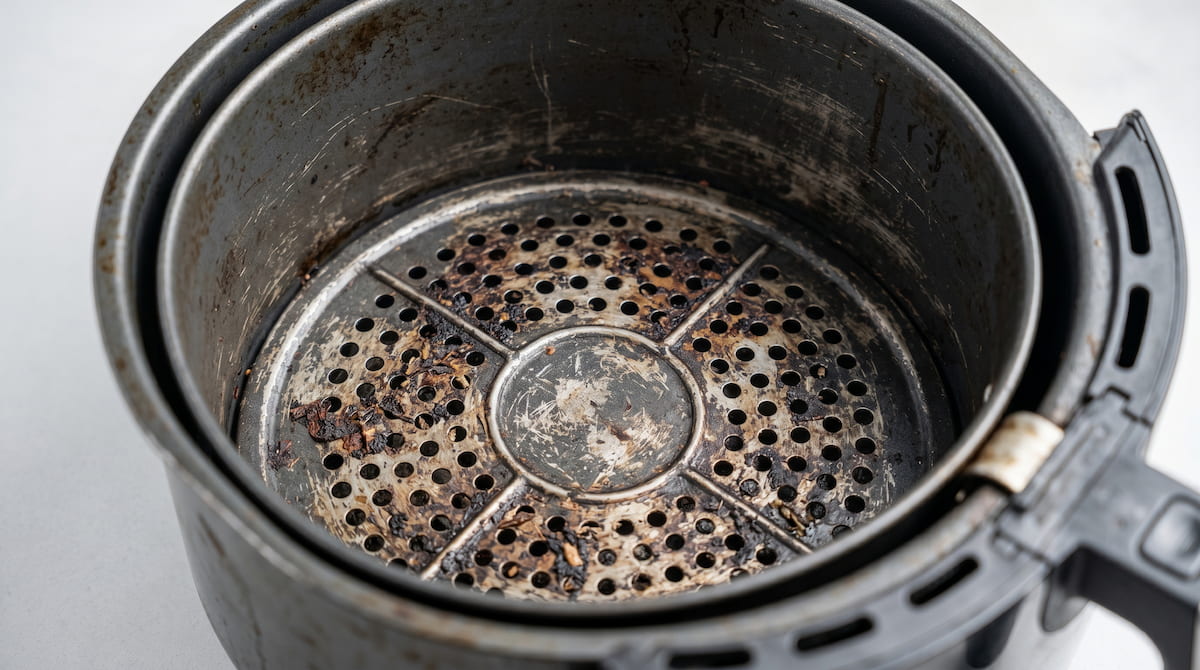
Visible wear and discoloration on a nonstick basket surface are early signs that the coating is beginning to degrade — often before the smell becomes obvious.
How to Tell If Your Air Fryer Burnt Plastic Smell Is a Coating Problem
Run through this checklist when you notice the smell:
✅ Likely just new-unit off-gassing (low concern):
- Smell appeared within the first week of ownership
- It’s fading with each use, not getting stronger
- Basket surface looks smooth and intact with no visible wear
- Unit is less than 3 months old
⚠️ Possible coating degradation (inspect now):
- Smell appeared after months of regular use
- It comes and goes but keeps returning
- Basket surface looks dull, discolored, or slightly rough in spots
- You’ve been cooking at high temperatures frequently
❌ Active coating failure (stop using immediately):
- Strong chemical smell every single cooking session
- Visible scratches, chips, or peeling on the basket interior
- You can see a color difference where the coating has worn through
- Family members notice headaches or eye irritation after cooking
For a broader look at what these compounds do to indoor air quality, see our guide on air fryer breathing safety for families.
How to Fix Air Fryer Burnt Plastic Smell
The right fix depends on which type of smell you’re dealing with:
For New-Unit Smell:
- Run the air fryer empty at 350°F for 10 minutes with a window open — repeat 2–3 times
- Wash the basket with warm soapy water before first food use
- Cook a small batch of something neutral (plain bread, potato wedges) to help cure the coating naturally
- Keep ventilating for the first week — the smell should be gone by use 5 or 6
For Coating Degradation Smell:
- Inspect the basket carefully under bright light — look for scratches, dull patches, and any area where color has changed
- If damage is visible, stop using that basket immediately
- Check whether your model sells replacement baskets — for the Ninja AF150AMZ, replacement ceramic baskets are available separately
- If a replacement basket isn’t available or the unit is old, use this as the trigger to upgrade to a PTFE-free model
For Grease Buildup Smell (Burnt Food, Not Chemical):
- Deep clean the basket with warm water, dish soap, and a soft brush — never abrasive scrubbers on coated surfaces
- Clean the heating element area carefully with a damp cloth when the unit is cool and unplugged
- Use parchment liners going forward to reduce direct grease contact with the basket

Opening a window during and after air fryer use is essential — especially when investigating a chemical smell for the first time.
Which Air Fryers Don’t Have a Burnt Plastic Smell Problem?
The smell problem is almost entirely a coating material issue. Air fryers with ceramic-coated, stainless steel, or glass interiors don’t contain PTFE — so even as they age and wear, they don’t produce the same chemical off-gassing that creates that burnt plastic odor.
Our family made the switch to the Ninja AF150AMZ after dealing with exactly this issue on our old nonstick model. The ceramic basket is PTFE-free and PFAS-free — and after more than a year of daily use, we haven’t had the chemical smell return. The basket surface has also stayed visibly intact, which is a direct result of not having a PTFE layer that degrades under heat stress.
For families who want to eliminate the coating variable entirely, the Big Boss 16Qt glass air fryer uses a borosilicate glass cooking chamber — nothing to degrade, nothing to off-gas, no plastic smell ever. See our full PFAS-free air fryer guide for a complete comparison of safe materials.
See Ninja AF150AMZ on Amazon → See Big Boss Glass Air Fryer on Amazon →Frequently Asked Questions
Is it safe to use an air fryer that smells like burnt plastic?
If the smell appeared in the first few uses and is fading, it’s likely manufacturing residue and low risk with ventilation. If it appeared after months of use or is getting stronger, stop using the unit until you’ve inspected the basket coating — a degrading PTFE coating is the most likely cause and warrants replacement.
Why does my air fryer smell like plastic after cleaning?
Cleaning agents left on the basket surface can burn off during the next cook. Make sure to rinse thoroughly after washing. If the smell persists through multiple cooking sessions after cleaning, the coating itself is the source — not residual soap.
Can a burnt plastic smell from an air fryer make you sick?
A single brief exposure in a ventilated kitchen is unlikely to cause lasting harm for most adults. Repeated exposure to PTFE decomposition byproducts in an enclosed space is more concerning — particularly for children, people with asthma, and pet birds, which are extremely sensitive to fluorinated fumes.
How long should a new air fryer smell like plastic?
The new-unit chemical smell should fade significantly by the third use and be completely gone by the fifth or sixth. If it’s still present after a week of regular use, the coating quality may be lower than expected — inspect the basket and contact the manufacturer.
Does a ceramic air fryer smell like plastic?
A quality ceramic-coated air fryer may have a very mild smell in the first couple of uses as the coating settles, but it should be far less pronounced than PTFE-based models and should disappear quickly. Ceramic coatings don’t contain PTFE, so they don’t produce the same class of chemical compounds as the coating degrades.
The Bottom Line on Air Fryer Burnt Plastic Smell
Air fryer burnt plastic smell is either a temporary off-gassing issue from a new unit — or an early warning sign of coating degradation that deserves immediate attention. The difference between the two is timing: new-unit smell fades, coating degradation smell grows.
If your basket is scratched, the smell is getting stronger, or you’ve had the unit for more than two years with heavy use, that’s your signal to inspect carefully and consider upgrading to a ceramic or glass-interior model. Our Ninja ceramic basket guide and PFAS-free air fryer guide are good next steps if you’re ready to make the switch.