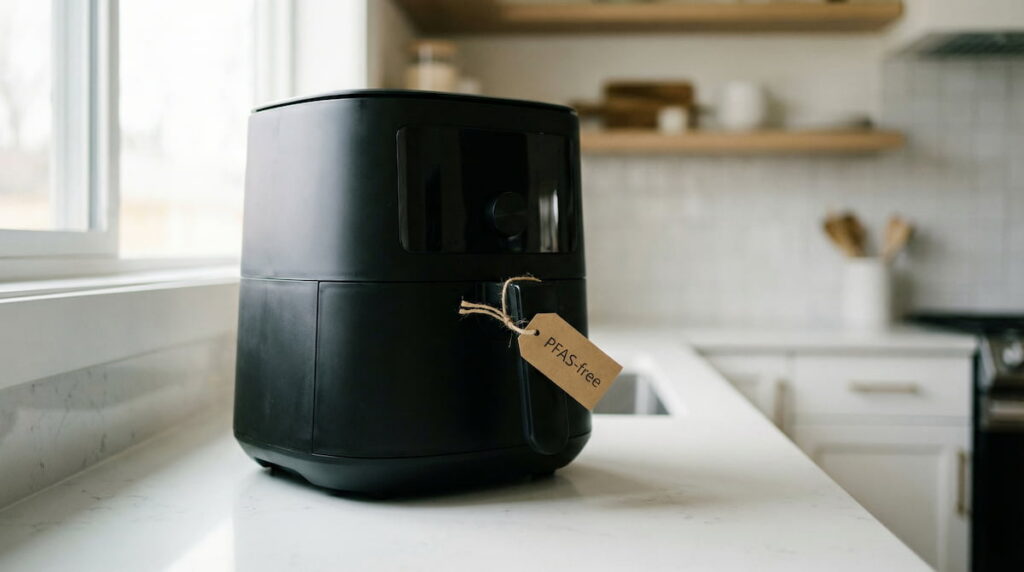
PTFE vs PFAS — I kept seeing both terms thrown around when I started researching non-toxic air fryers, and for a while I genuinely couldn’t tell them apart. Once I understood how they relate, a lot of the confusing marketing language started making sense.
If you’re trying to figure out which labels to trust when buying an air fryer, this is the one distinction worth understanding first.
What Is PFAS?
PFAS stands for Per- and Polyfluoroalkyl Substances — a broad family of thousands of synthetic chemicals used across many industries. In kitchen appliances, they show up mainly because of their heat resistance and non-stick properties.
They’re sometimes called “forever chemicals” because they break down extremely slowly and can accumulate in the environment and in the body over time. That’s the core reason so many buyers are now specifically looking for PFAS-free air fryers.
What Is PTFE?
PTFE (Polytetrafluoroethylene) is one specific chemical within the PFAS family — the substance most people know as Teflon. It’s been the standard non-stick coating in cookware and air fryer baskets for decades.
The key relationship to understand:
- All PTFE is part of the PFAS family
- But not all PFAS are PTFE
This matters because a product can be labeled “PTFE-free” and still contain other PFAS compounds. The label sounds reassuring but doesn’t tell the whole story. I went deeper on this in my guide on whether air fryers contain PFAS.
Why Are People Concerned?
From what I’ve found, the concerns around PTFE specifically come from two situations: overheating and physical wear.
- Very high temperatures (above ~500°F / 260°C) — PTFE coatings can begin to degrade and release fumes at these temperatures
- Scratched or worn surfaces — once the coating is damaged, fragments may potentially transfer to food
- Old or degraded baskets — coating that’s visibly peeling should be replaced immediately
For most people cooking at normal temperatures with an intact basket, the risk is low. But if you want to remove the variable entirely, that’s where PFAS-free materials come in.
What the Labels Actually Mean
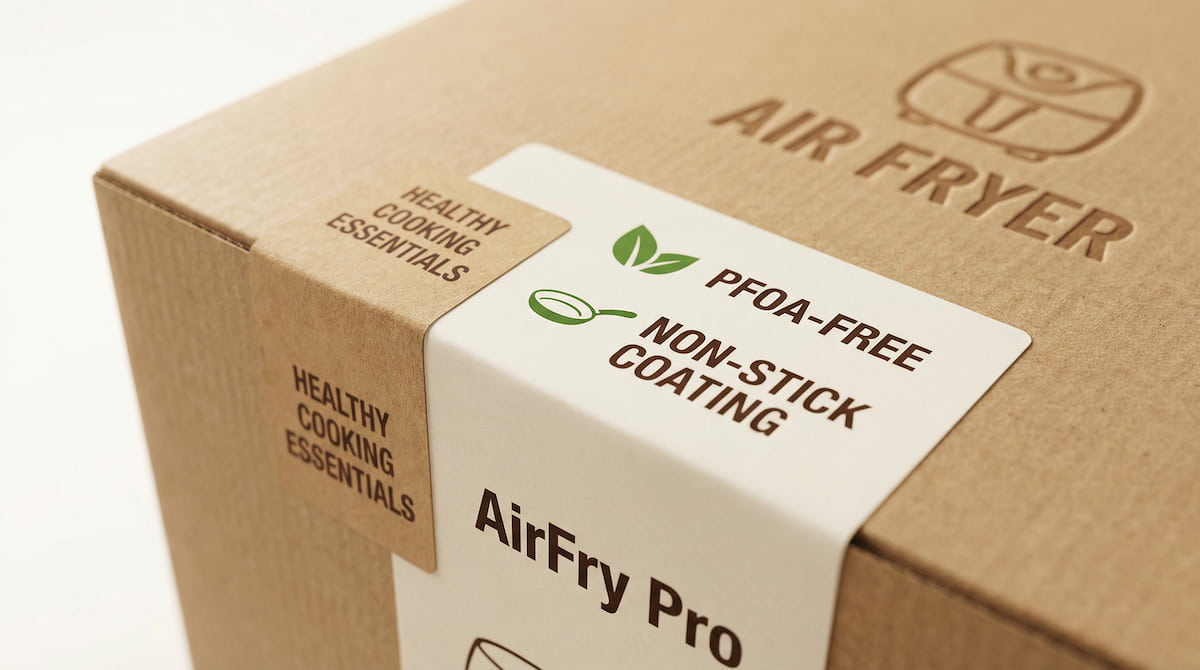
This is where it gets confusing in stores and on Amazon listings. Here’s how to read the common claims:
- PFOA-Free — may still contain PTFE and other PFAS compounds
- Non-Stick — often PTFE-based unless stated otherwise
- Ceramic-Coated — usually PFAS-free, but verify certifications
- Stainless Steel Interior — no coating at all
- Glass Bowl — no coating at all
“PFOA-free” was a meaningful claim in 2013 when PFOA was phased out — in 2026, it’s the baseline, not a differentiator.
PFAS-Free Air Fryer Options in 2026
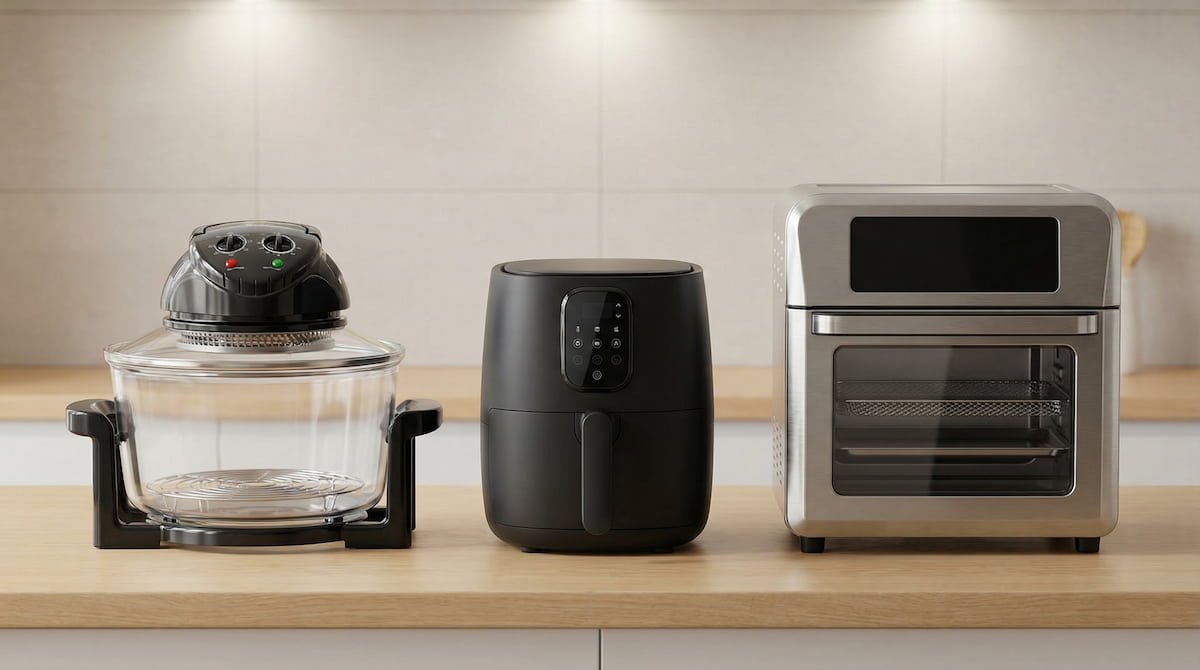
| Model | Material | Best For |
|---|---|---|
| Ninja AF150AMZ | Ceramic | Everyday use |
| Instant Pot Omni Plus | Stainless Steel | Large families |
| Big Boss 16Qt | Glass | Batch cooking |
Best Ceramic: Ninja AF150AMZ
PFAS-free ceramic coating, compact size, easy cleanup. The most practical everyday option for most households.
Best Stainless Steel: Instant Pot Omni Plus
No coating at all — just stainless steel throughout. Durable, zero degradation concern, large capacity.
Best Glass: Big Boss 16Qt
Full glass cooking chamber, nothing between your food and the heat source. The most transparent option available.
For a full breakdown of all three materials, see the complete non-toxic air fryer guide.
The Bottom Line
PFAS is the broad chemical family. PTFE is one specific member of that family — the one most commonly used in non-stick coatings. A product can be PTFE-free and still contain other PFAS compounds, which is why the specific label matters.
If your goal is to minimize synthetic coating exposure, the safest options are stainless steel and glass — no coating at all. Ceramic is the best practical middle ground if you want non-stick convenience without PTFE chemistry.
Related: Ceramic vs Stainless Steel Air Fryer · Best Air Fryer Without Teflon
This article is for informational purposes only. Always verify manufacturer specifications before purchasing.