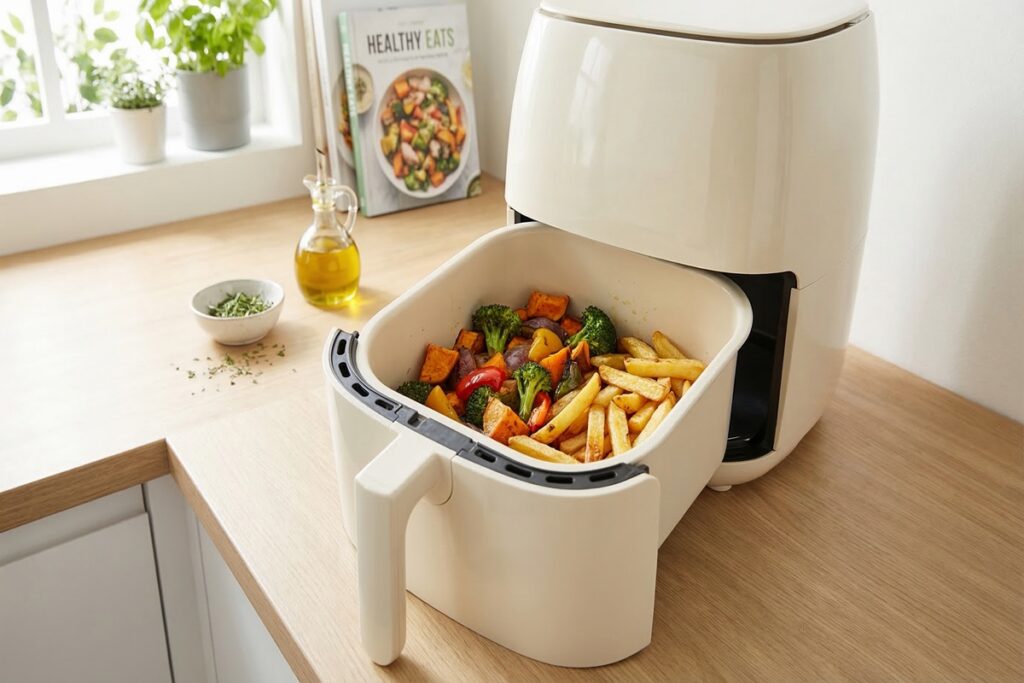
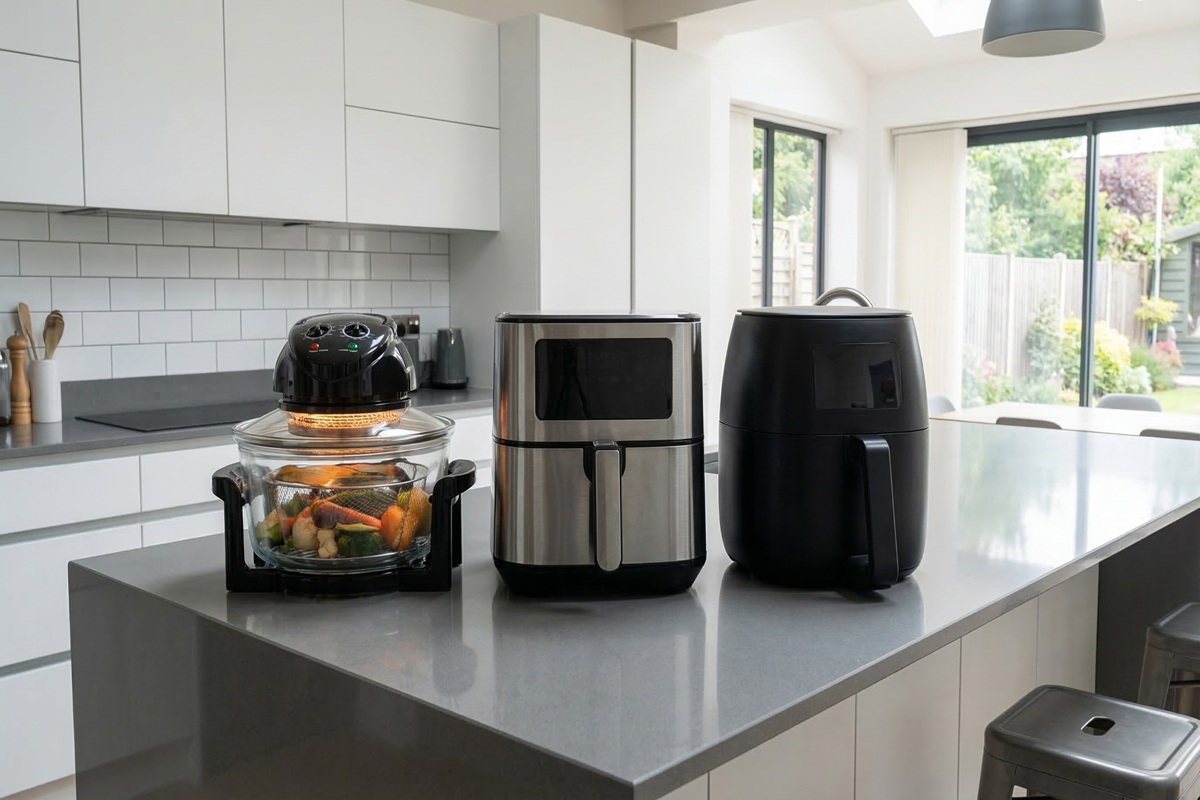
When I started replacing my kitchen appliances one by one, ceramic air fryers kept coming up as the “safe” option. PTFE-free. PFOA-free. PFAS-free. The labels were everywhere.
But after digging into what PFAS actually means in air fryer coatings, I realized the marketing language and the actual chemistry don’t always match. Here’s what I learned.
What “Ceramic Coated” Actually Means
Most ceramic air fryers aren’t made from solid ceramic — they’re metal baskets with a ceramic-based coating layer applied on top. That coating is typically made from silica, the same mineral compound found in sand and glass. It’s baked onto the metal surface at high heat, creating a smooth, non-stick layer without relying on PTFE chemistry.
That distinction matters. Traditional non-stick coatings use polytetrafluoroethylene (PTFE) — the substance in Teflon — which can release fumes when overheated and has been linked to PFAS contamination concerns. Ceramic coatings sidestep that entirely. The inorganic silica base doesn’t contain fluorine-based compounds, which is why the PFAS-free label is generally accurate for reputable brands.
The catch: “generally accurate” isn’t the same as “universally guaranteed.” Some manufacturers use hybrid formulations or vague ingredient disclosures. If a brand won’t tell you exactly what’s in the coating, that’s worth paying attention to.
So Is Ceramic Actually PFAS-Free?
For certified brands — yes. The Sol-Gel process used to create quality ceramic coatings is fundamentally different from PTFE chemistry. There are no fluoropolymers involved, which means no PFAS by definition.
What to look for: FDA compliance and LFGB certification (the European standard, which is stricter). These certifications mean the coating has been tested for lead, cadmium, and other heavy metals — not just PFAS. A brand that carries both is worth trusting. A brand that just says “non-toxic” without specifics is not.
I covered the full certification breakdown in my ceramic air fryer safety guide if you want to go deeper on what the labels actually mean.
Ceramic vs. Stainless Steel vs. Glass
| Material | PFAS Risk | Non-Stick | Durability |
|---|---|---|---|
| Ceramic coated | None (if certified) | Excellent | Medium — wears over time |
| Stainless steel | None — no coating | Poor — needs oil | Very high |
| Glass bowl | None — no coating | Fair | Low — breakable |
The honest takeaway: ceramic is the most practical PFAS-free option for daily cooking. Stainless steel and glass remove the coating question entirely, but they come with trade-offs — stainless requires more oil and scrubbing, glass is heavy and fragile. For most households, ceramic hits the right balance.
If you’re weighing ceramic against stainless specifically, I put together a full comparison on ceramic vs stainless steel air fryers.
The Best Options in 2026
Best Ceramic: Ninja AF150AMZ
Ninja’s ceramic-coated basket is one of the most tested and trusted options available. PTFE-free, compact, and easy to clean. The ceramic holds up well with proper care — hand wash only, no aerosol sprays.
Best Stainless Steel: Instant Pot Omni Plus
No coating whatsoever — just stainless steel interior throughout. Larger footprint, but the build quality is exceptional and there’s zero coating degradation to worry about over time.
Best Glass: Big Boss 16Qt
Full glass cooking chamber, nothing between your food and the heat source. Heavy and takes up counter space, but if you want maximum material transparency, this is it.
For a full side-by-side comparison of all three, see the complete non-toxic air fryer guide.
FAQ
Are ceramic air fryer coatings completely chemical-free?
Quality ceramic coatings don’t contain PFAS or PTFE, but may include mineral binders. Look for FDA and LFGB certification to confirm the coating has been properly tested.
How long does ceramic coating last?
With proper care — no metal utensils, no aerosol sprays, hand washing — a good ceramic basket should last 2 to 3 years of daily use before the coating noticeably thins.
Is glass safer than ceramic?
Glass has no coating at all, so it eliminates the question entirely. But ceramic from a certified brand is a very close second, and far more practical for everyday cooking.
The Bottom Line
Ceramic air fryers are genuinely PFAS-free — when you buy from brands that are transparent about their coating process and carry proper certifications. The marketing isn’t wrong, it’s just incomplete. “PFAS-free” on its own doesn’t tell you about durability, additives, or long-term performance.
Buy certified, treat it carefully, and ceramic is one of the safest and most practical non-toxic cooking surfaces available right now.
Related guides: Best Non-Toxic Air Fryer · Best Air Fryer Without Teflon · Glass vs Stainless Steel Air Fryer