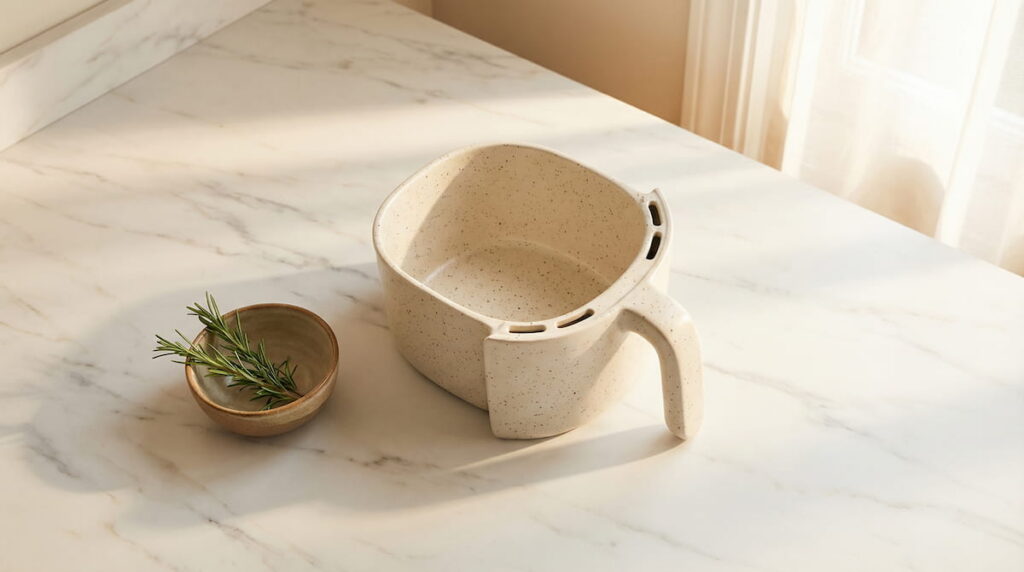
Do air fryers contain PFAS? That’s the question I kept coming back to after noticing a sharp chemical smell every time I used our old air fryer. I drive a city bus for a living, and during my route breaks I started pulling out my phone to research what was actually inside these things. What I found surprised me — not all air fryers are built the same, and the materials inside matter more than most people realize.
PFAS, short for per- and polyfluoroalkyl substances, are a group of synthetic chemicals often linked to non-stick coatings. They’ve been used in cookware for decades, and some research has raised concerns about long-term exposure. If you’re looking for safer options for your family, knowing which air fryers use PFAS-related materials — and which ones don’t — is a good place to start.
Do All Air Fryers Contain PFAS?
No — not all air fryers contain PFAS. The answer depends almost entirely on what the cooking surface is made of. Air fryers with traditional non-stick coatings may include PFAS-related materials such as PTFE (commonly known as Teflon), while models built with ceramic, stainless steel, or glass interiors are generally considered safer alternatives.
When I first started comparing models, I assumed “non-stick” and “safe” went together. They don’t automatically. Some non-stick coatings rely on PFAS chemistry to achieve that slippery surface. Others — like ceramic-coated baskets — are designed to perform similarly without using those same chemical compounds.
What PFAS Actually Are in Air Fryer Coatings
PFAS is a broad category of thousands of synthetic chemicals. In air fryers, the most commonly discussed is PTFE (polytetrafluoroethylene), which forms the base of many traditional non-stick surfaces. PFOA, another well-known PFAS compound, was used historically in the manufacturing process and has since been phased out by major brands — but the broader PFAS family is still a concern for many shoppers.
The issue isn’t just one chemical. It’s a class of substances that resist breaking down in the environment and can accumulate over time. For a household with kids, that’s worth paying attention to. My wife and I decided we’d rather switch to something we felt better about than wonder every time we cooked chicken tenders.
If you want a deeper breakdown of how PTFE fits into the picture, this guide covers it in detail: PTFE vs PFAS — What’s the Difference?
The 3 Safest Air Fryer Materials (PFAS-Free)
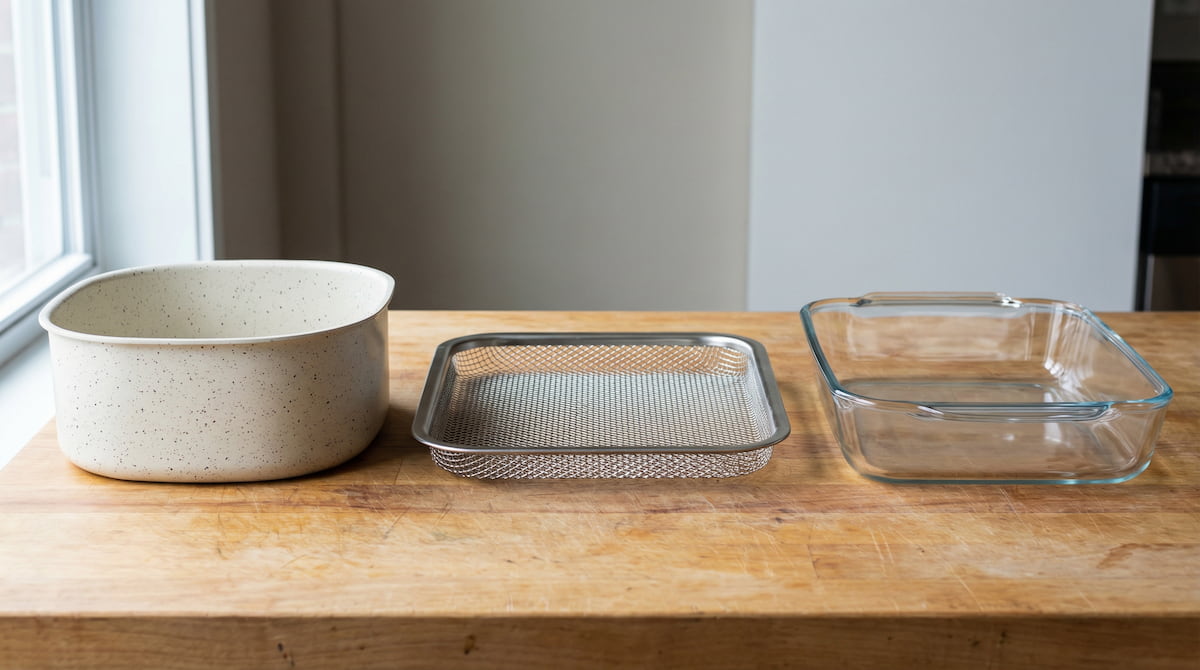
When I narrowed down my research, three materials kept coming up as the main alternatives to traditional coated baskets:
- Ceramic — A mineral-based coating applied over metal. Most ceramic-coated air fryers are marketed as free from PTFE and PFOA. They still provide non-stick performance but use a different coating chemistry. Durability varies by brand.
- Stainless Steel — No coating at all. Food can stick more easily, but there’s nothing to degrade or flake. If you’re willing to adjust your cooking habits slightly, it’s one of the most straightforward options.
- Glass — Chemically inert and easy to inspect visually. Glass air fryers aren’t common, but they eliminate coating concerns entirely. They’re also heavier and typically slower to heat than metal basket models.
Each material has trade-offs. Ceramic is convenient but can wear down if you’re rough with it. Stainless steel is durable but less forgiving during cooking. Glass gives you full transparency — literally — but it’s bulkier.
PFAS-Free Air Fryer Options Worth Looking At
| Model | Material | Type | Capacity | Best For |
|---|---|---|---|---|
| Ninja AF150AMZ | Ceramic-Coated Basket | Basket Air Fryer | 4 qt | Everyday Use |
| Instant Pot Omni Plus | Stainless Steel Interior | Air Fryer Oven | 18L | Large Families |
| Big Boss 16Qt | Glass | Air Fryer Oven | 16 qt | Batch Cooking |
Ninja AF150AMZ — Ceramic Basket, Compact Size
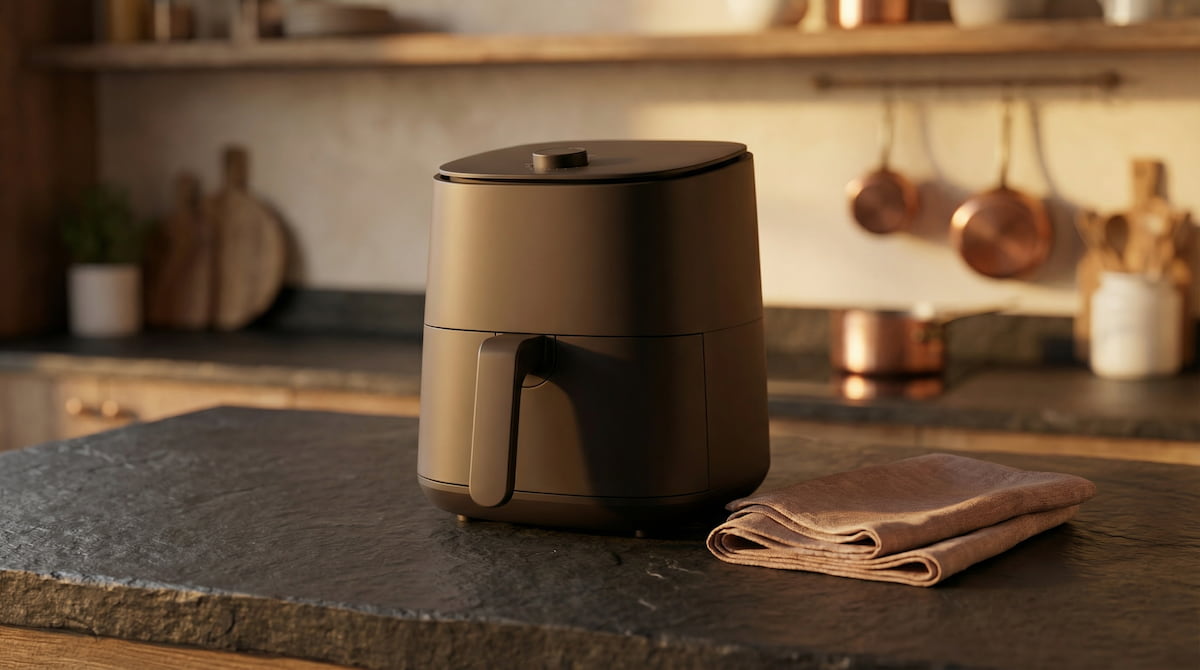
This is the one I ended up recommending to my sister-in-law. It uses a ceramic-coated basket that avoids traditional PFAS-based coatings while still delivering solid non-stick performance. At 4 quarts, it’s sized well for two to three people. It’s not huge, but for daily cooking it holds up well. The basket is also dishwasher-safe, which my wife appreciated immediately.
Instant Pot Omni Plus — Stainless Steel Interior, Family-Sized
For a household with multiple people eating at different times — which is basically every night at my house with two teenage boys — the 18-liter capacity makes a real difference. The stainless steel interior means there’s no coating to worry about at all. It also works as an oven, toaster, and dehydrator, so it replaces a few appliances at once. Cleanup takes a little more effort than a ceramic basket, but nothing unreasonable.
Big Boss 16Qt — Glass Construction, Nothing Hidden
This one gets the most questions when I mention it. A glass air fryer sounds unusual, but the appeal is straightforward: there’s no coating on the cooking surface at all. You can see exactly what’s happening inside, and there’s nothing to degrade over time. It’s heavier and takes up more counter space than a standard basket fryer, but for people who want the most transparent PFAS-free option available, it’s hard to argue with.
How to Check If Your Current Air Fryer Contains PFAS
If you already own an air fryer and want to know what’s in it, start with the product listing or manual. Look for these terms:
- PTFE — Indicates a traditional fluoropolymer non-stick coating
- PFOA-free — Means PFOA was not used in manufacturing, but the coating may still contain other PFAS compounds
- Ceramic-coated — Generally PFAS-free, but verify with the manufacturer if you want to be certain
- Stainless steel interior — No coating, so no PFAS concern on the cooking surface
For a broader look at which models score well across all safety criteria, the Best PFAS-Free Air Fryers guide is where I’d start. And if you’re specifically comparing coating types, the Ceramic vs Stainless Steel Air Fryer breakdown goes into more detail on the trade-offs.
Frequently Asked Questions
Do all air fryers contain PFAS?
No. Air fryers with ceramic, stainless steel, or glass cooking surfaces are generally free from traditional PFAS-based coatings. Models using standard non-stick surfaces may include PTFE or related compounds.
Is PFOA-free the same as PFAS-free?
Not exactly. PFOA is one type of PFAS. A product can be PFOA-free and still contain other PFAS chemicals. If avoiding PFAS entirely is the goal, look for ceramic, stainless steel, or glass construction.
Can PFAS coatings be removed from an existing air fryer?
No. The coating is bonded to the basket surface and can’t be safely removed at home. If the coating is visibly scratched or flaking, it’s generally time to replace the basket or the unit.
Is ceramic always PFAS-free?
Most ceramic-coated air fryers are marketed and manufactured without PFAS-based chemistry, but it’s still worth checking the manufacturer’s spec sheet if you want confirmation before buying.
Are air fryers with PFAS dangerous to use?
At normal cooking temperatures, intact PTFE coatings are considered stable. The concern increases if the coating is overheated past around 500°F or if it’s visibly damaged. Switching to a PFAS-free model removes that variable entirely.
Disclosure: This post contains affiliate links. If you purchase through these links, I may earn a small commission at no extra cost to you. I only recommend products I’ve researched and would consider for my own kitchen.