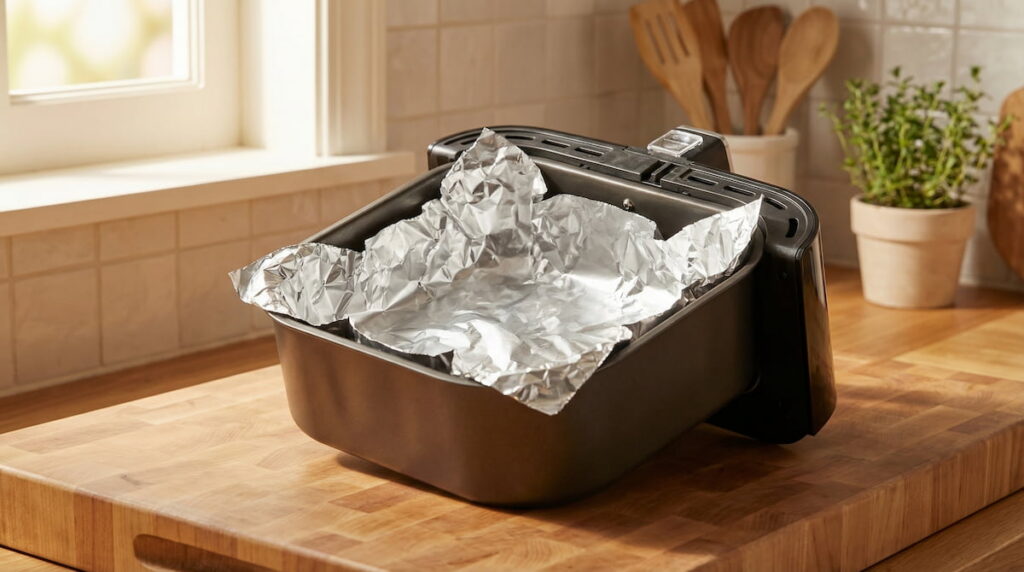
Can you put aluminum foil in an air fryer? I used it for months before I actually stopped to think about whether I should. It seemed obvious — foil keeps the basket clean, wraps food neatly, cuts down on cleanup. I’d been doing it with my oven for years.
Then one evening I found out why an air fryer is different. In a way I’d rather not repeat.
Why Air Fryers Are Different from Ovens
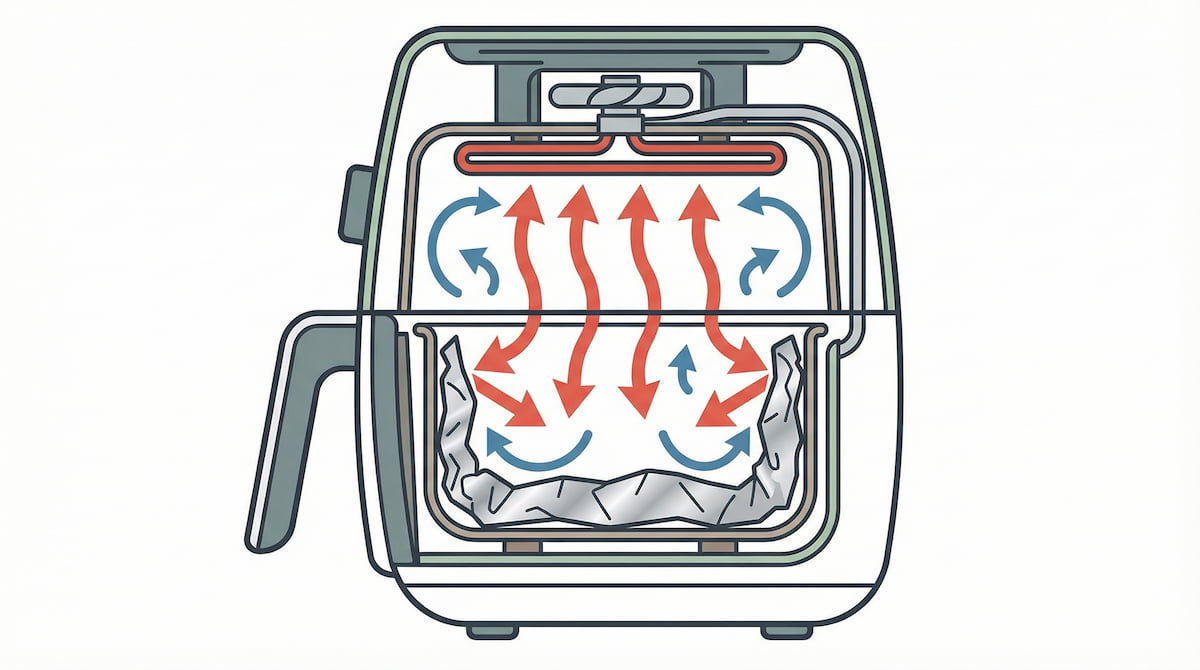
In a conventional oven, heat radiates from elements at the top and bottom. Foil sitting flat on a tray just sits there — it might block some heat from below, but it’s not going to cause any drama.
An air fryer works completely differently. It’s essentially a small, high-powered convection oven. A fan blasts hot air at high speed in a circular pattern around the food. That airflow is the whole mechanism — it’s what makes food crispy without oil and cooks things faster than a standard oven.
When you line the entire basket with foil, you block that airflow. The food sits on a sealed surface instead of being surrounded by moving air. The result: uneven cooking, soggy bottoms, and a machine working harder than it needs to.
And if the foil isn’t weighted down by food? That’s where it gets dangerous. Loose foil can lift in the circulating air and hit the heating element. That’s not hypothetical — it happened to me. The foil touched the element, started to smoke, and I had to shut the machine off immediately. Nothing caught fire, but it was close enough to make me rethink everything.
The Health Question: Does Foil Leach into Food?
This is the part that doesn’t get talked about enough, especially on a blog focused on air fryer safety.
Aluminum does leach into food — the question is how much, and whether it matters. Research shows that leaching increases significantly when foil comes into contact with acidic foods like tomatoes, citrus, or vinegar-based marinades, especially at high temperatures. The combination of acid and heat accelerates the transfer of aluminum particles into whatever you’re cooking.
For most people cooking plain proteins or vegetables, the amounts involved are well within safe limits. But if you’re regularly cooking marinated meats or acidic foods directly on foil at 400°F, it’s worth knowing that the foil isn’t as inert as it looks.
This is part of why I got interested in ceramic and stainless steel baskets in the first place — cooking directly on a non-reactive surface removes this variable entirely.
When Foil Actually Works Fine
I still use foil occasionally. Here’s when it genuinely makes sense:
- Small pieces that fall through the basket. Thin asparagus spears, small shrimp, chopped vegetables — foil keeps them from dropping into the drawer below.
- Sticky glazes or sauces. If you’re cooking something with a heavy glaze that would bond to the basket, a small piece of foil under the food saves a lot of scrubbing.
- Reheating leftovers. Lower temperatures, shorter times — the risk profile is much lower.
The key word in all of these is small. A piece of foil that covers 50–60% of the basket floor, weighted down by food, with the edges of the basket still open — that’s fine. A full liner that seals the entire basket is not.
The Rules I Follow Now
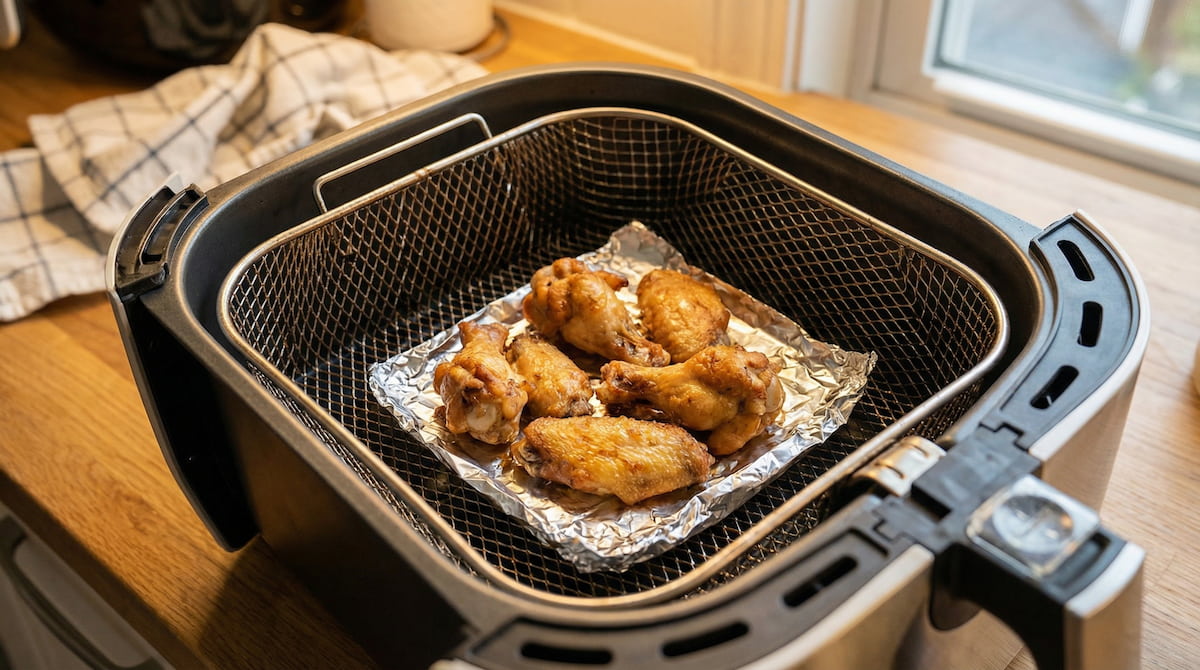
- Never preheat with foil in the basket. An empty air fryer with foil inside is the fastest way to send it flying into the heating element. Always put the food in first, then start the machine.
- Leave the edges open. Foil should never go up the sides of the basket or cover the air holes. The perimeter needs to stay clear for airflow.
- No acidic foods on foil at high heat. Lemon chicken, tomato-based dishes, anything with vinegar — I cook these directly on the basket or use parchment instead.
- Food must always weigh down the foil. If there’s a corner of foil sticking up with nothing holding it, fold it back or cut it off before you hit start.
What About Parchment Paper Instead?
Parchment is actually a better option for most situations where you’d reach for foil. It’s non-reactive, handles acidic foods without any leaching concern, and doesn’t conduct heat the way metal does — so there’s less risk of hot spots.
The same rules apply: don’t preheat with it empty, don’t cover the entire basket, and make sure it’s rated for the temperature you’re cooking at. Most parchment paper is rated to 420–450°F, which covers the majority of air fryer recipes.
Pre-cut parchment liners with perforated holes are worth the small extra cost — the holes let air circulate while still protecting the basket. If you’re already thinking about silicone liners, perforated parchment is a simpler, cheaper alternative for most everyday cooking.
The Basket Material Makes a Difference
If you’re reaching for foil mainly to protect a worn or damaged non-stick basket, that’s the real problem worth addressing. A well-maintained ceramic basket releases food cleanly without foil most of the time — and there’s no PTFE coating to worry about degrading.
The basket I use now is the Ninja AF150AMZ — ceramic-coated and PFAS-free. Since switching, I use foil maybe once a week at most, only for genuinely messy recipes. The real cleanup problem usually comes from not cleaning often enough anyway — not from the basket material itself.
Aluminum Foil in an Air Fryer: The Simple Rule
Small piece, food weighing it down, edges clear, never during preheat. That’s the whole rule. Follow those four conditions and foil is fine for occasional use.
The bigger question is whether you need it at all. If you’re using foil to cover up a basket that’s past its prime, that’s the thing worth replacing — not just covering up.
Have you had a foil incident in your air fryer? Drop a comment below — you’re probably not the only one.
Affiliate Disclosure: This post contains Amazon affiliate links. If you purchase through these links, I earn a small commission at no extra cost to you. I only recommend products I’ve personally researched or used.